One Flew Over The Cuckoo’s Nest – Old Vic ★★★★★

One Flew Over the Cuckoo’s Nest is revitalised in Clint Dyer’s new version at the Old Vic.

Ken Kesey’s “One Flew Over the Cuckoo’s Nest” is one of America’s most challenged and banned novels, while the film version is considered by critics to be one of the best films ever made, and one of a handful to win all five major Academy Awards. Yet, undaunted by this weight of expectation, director Clint Dyer (Othello at the NT) has delivered a bold new take on Dale Wasserman’s stage adaptation, re-shaped with intelligence and sensitivity, for the Old Vic’s In the Round configuration.

The story is well known. Randle Patrick McMurphy, gambler, brawler and opportunist, arrives in a psychiatric hospital having persuaded a judge to commit him rather than send him to prison, assuming he’ll have an easier ride. He immediately locks horns with Nurse Ratched, who runs the ward with absolute authority and scant medical oversight, constantly seeking to undermine her authority and exert his free will. As their battle of wills escalates, McMurphy survives a round of electro-shock therapy without lasting side-effects, empowering him to push the boundaries further and further until the final, tragic denouement, triggered by a booze-soaked, drug-laced party with two prostitutes that McMurphy has smuggled onto the ward.

The material is undeniably dark, probing power struggles, curtailed freedom, the grim apparatus of 1950s American psychiatric care and the eternal question of what sanity even is. But, despite these weighty themes, this is a warm-hearted, often funny piece of theatre: fully engaging, unexpectedly uplifting and never losing the tension, bite or clarity of the original.

Images by Manuel Harlan

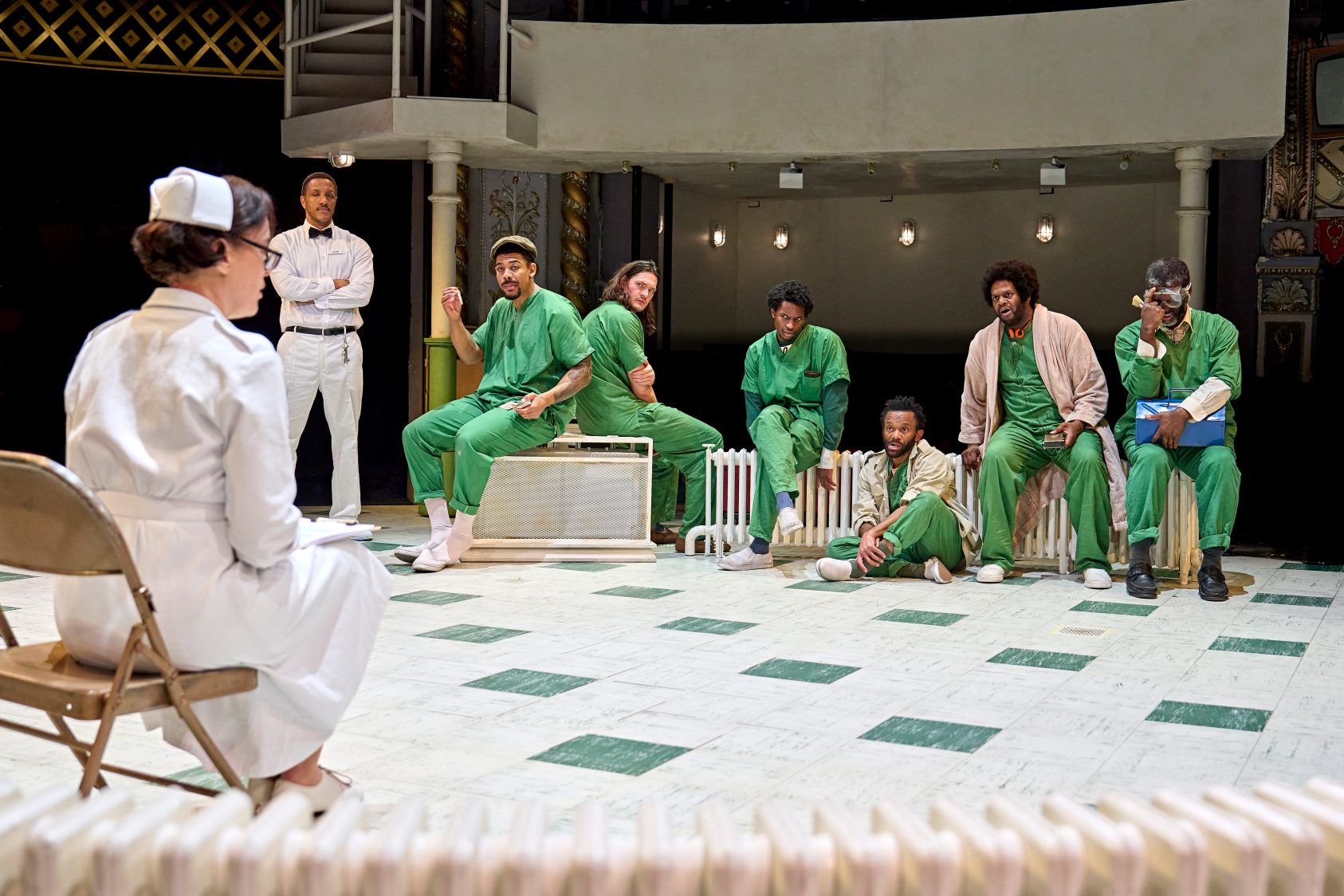
Dyer has also created a production in which the audience feels genuinely part of the action. Designer Ben Stones’ simple, static set blurs the boundary between performer and spectator, turning the aisles into ward “corridors” and inviting occasional moments of direct interaction (most notably, the “Disturbed” ward at the back!). The effect is immersive without ever feeling gimmicky. And, with the medical office perched on a balcony above the stage, Stones makes the power imbalance between staff and patients visually inescapable. 

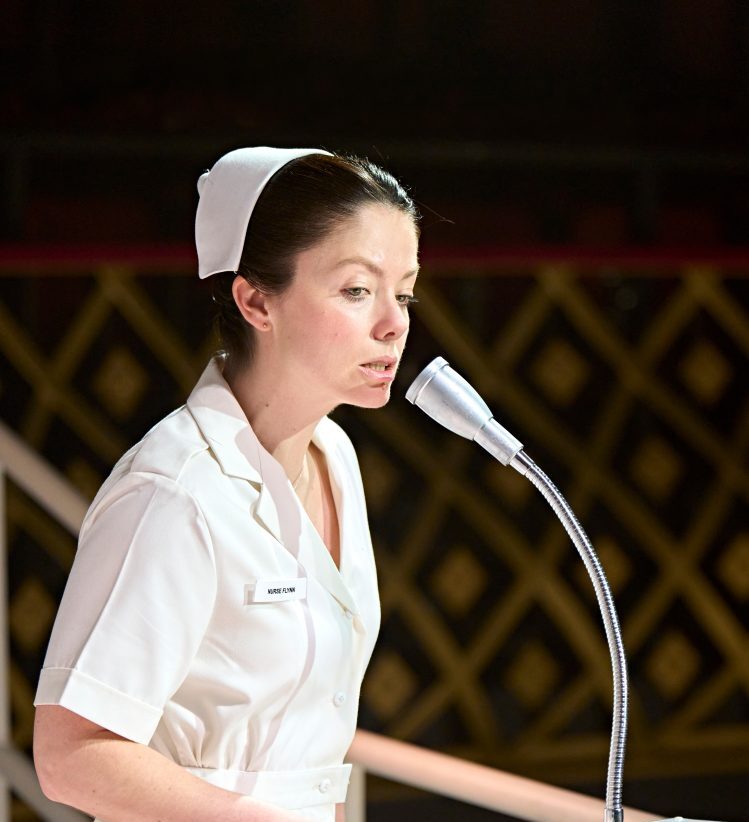
Aaron Pierre (Othello at The Globe, King Hedley II at Stratford East) oozes charisma as McMurphy, all nervous energy and swagger as he looks to dominate his surroundings. Olivia Williams (Marys Seacole, Donmar Warehouse; Richard III at the NT), by contrast, is quiet, deliberate and chillingly understated as Nurse Ratched. Williams delivers a study in controlled menace, as her character diminishes and coerces the patients in the name of treatment and recovery, with a calmness far more frightening than any overt cruelty.  This contrast between their portrayals underscores the feeling of inequality: his energetic spontaneity is no match for her cold, calculated ruthlessness.   

With two such strong leads, in such a literal setting, there was a risk of the wider ensemble being overshadowed. But, instead, their finely judged performances allow plenty of space for the supporting cast, who fill it with skill and quality. 

As the story develops, the audience is drawn in to the individual lives of the ragtag bunch of misfits who inhabit the ward, learning not just their back stories but their personalities, physical afflictions and private fears. It is a testament to the ensemble, and Lucie Pankhurst’s movement direction, that none of this feels voyeuristic or exploitative. The humour (of which there is a surprisingly refreshing amount) is with them, not at their expense.  By the end, they are no longer just mental patients, but people that the audience is genuinely rooting for. 

Ene Frost (To Kill a Mockingbird, Theatr Clwyd) deserves special mention for his haunting turn as Ruckley, a man who’s lost everything (including bodily control) by a botched lobotomy. Though often at the edge of the action, even Frost’s smallest movements draw the eye, and the physical comedy built on this most tragic of figures is handled with remarkable sensitivity and respect. He works hard for his money!

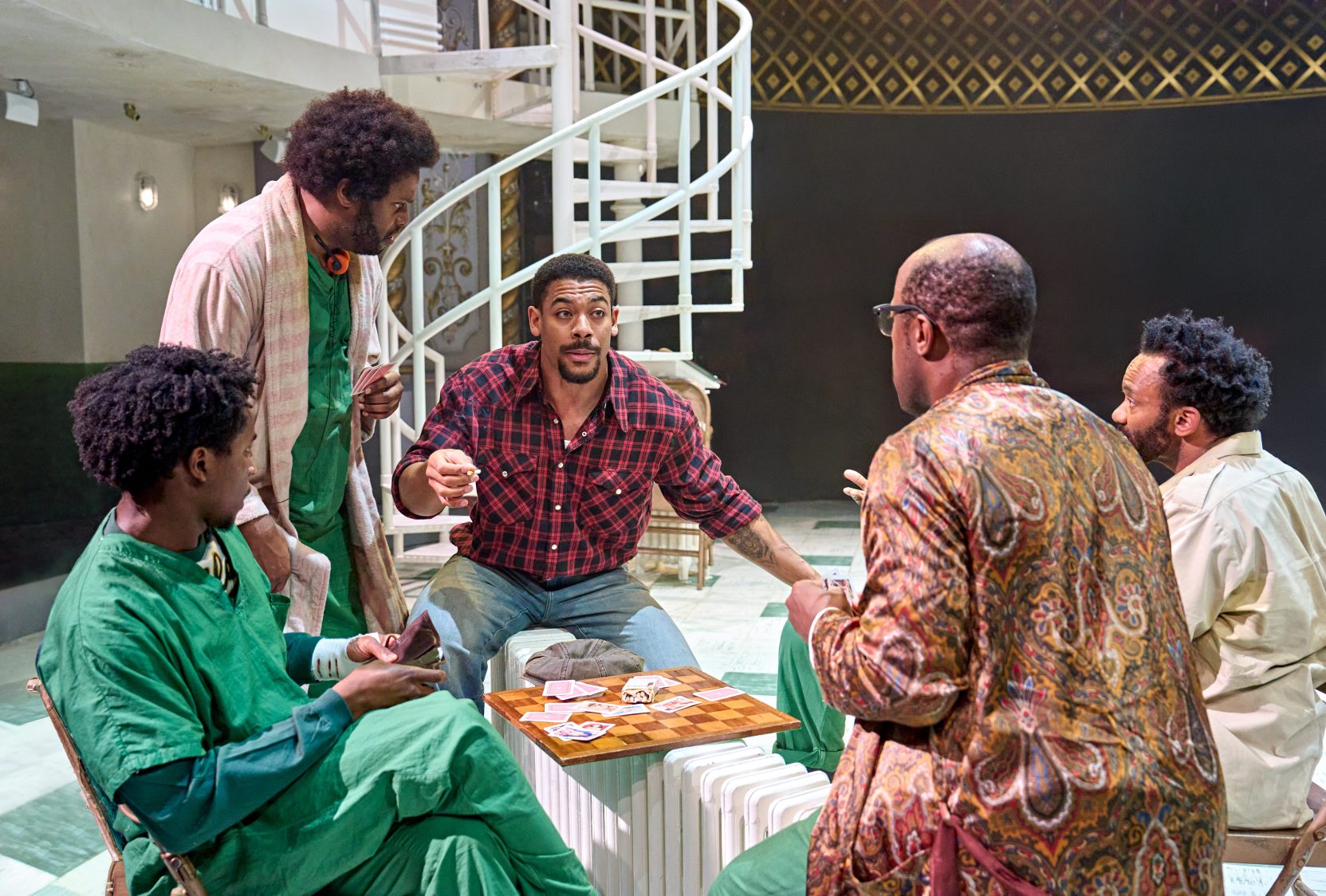
Kedar Williams-Stirling (Red Pinch, West End/ Bush) stammers and fawns brilliantly as the emasculated Billi Bibbit, a young man fearful of authority in all its forms, although his brief moment of fluency when he finally stands up to Nurse Ratched could have been allowed to land with greater force. And Arthur Boan (Elektra and Oklahoma! in the West End) beautifully charts the evolution of Chief Bromden (the physically imposing Native American, who is so diminished by his experiences of racist abuse that he chooses silence and distance), from mute observer to unlikely hero, as he strives to become “bigger” again.   

The ending is no less shocking for being expected. It’s played with a powerful combination of conviction and restraint, such that the audience experiences it as much as watches it. But Dyer has managed to get the balance of dark and light, tragedy and comedy, friend and foe exactly right, delivering a production that both appals and enthrals, capped with a final flourish that is the cherry on the icing on the cake… even as it leaves the audience with the uneasy realisation that the gap between sanity and madness may be far narrower then we like to imagine. In an age still wrestling with questions of institutional power, mental-health stigma and systematic racism, One Flew Over The Cuckoo’s Nest feels anything but dated.

This is a tremendous piece of theatre: a compelling story, brilliantly staged, superbly acted and asking some difficult questions.  ★★★★★ 5 stars

Author Profile

The Recs SW