Krapp’s Last Tape / Godot’s To Do List ★★★★★

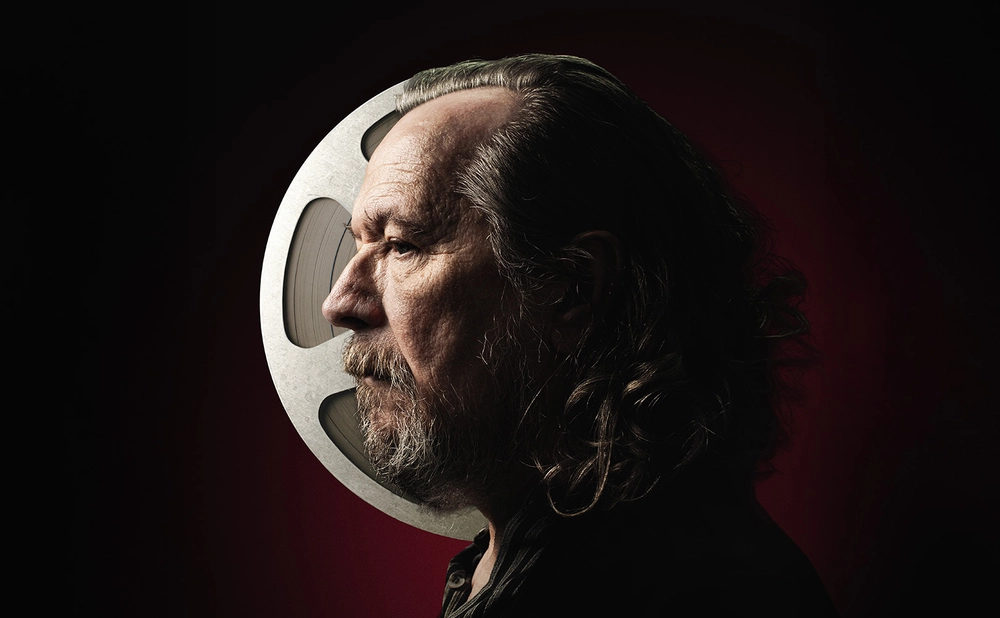
Starring and directed by Gary Oldman, Samuel Beckett’s Krapp’s Last Tape returns to the Royal Court, in a production first seen at York Theatre Royal last year.

No playwright divides a room quite like Samuel Beckett. Some find his work profound, precise and piercing, while others feel it drifts, seemingly without purpose and never quite arrives anywhere. Which is why their handling on stage is so crucial to the audience’s experience of these pieces.
 
It’s a bold choice, then, for Gary Oldman (multi award-winning actor, writer and director, most recently seen in Apple TV’s Slow Horses) to make Krapp’s Last Tape the vehicle for his long-awaited return to the stage. He joins a formidable line of Krapps, from John Hurt and Harold Pinter, to Corin Redgrave, Brian Denehy, Michael Gambon and Stephen Rea. And here, he’s not just the performer but the director and designer as well. No pressure then!
 
And he doesn’t seem to be feeling any. From his first moment on stage, he is mesmerising!
Krapp's Images by Jack English.
Oldman arrives slowly, shuffling up a staircase before settling sluggishly at the desk onstage. He eats a banana, then, with a flicker of mischief, eats a second one and even teases the audience with the threat of a third. Only then does he turn his attention to the real business of the evening: audio recordings. On reel-to-reel tapes, to be precise, cutting-edge technology in 1958 when the play debuted. For he is Krapp, and this is Krapp’s birthday ritual: to record his reflections on the past year, before archiving the tape for future birthdays. Today is Krapp’s 69th birthday, and he has chosen to revisit a recording made three decades ago.
 
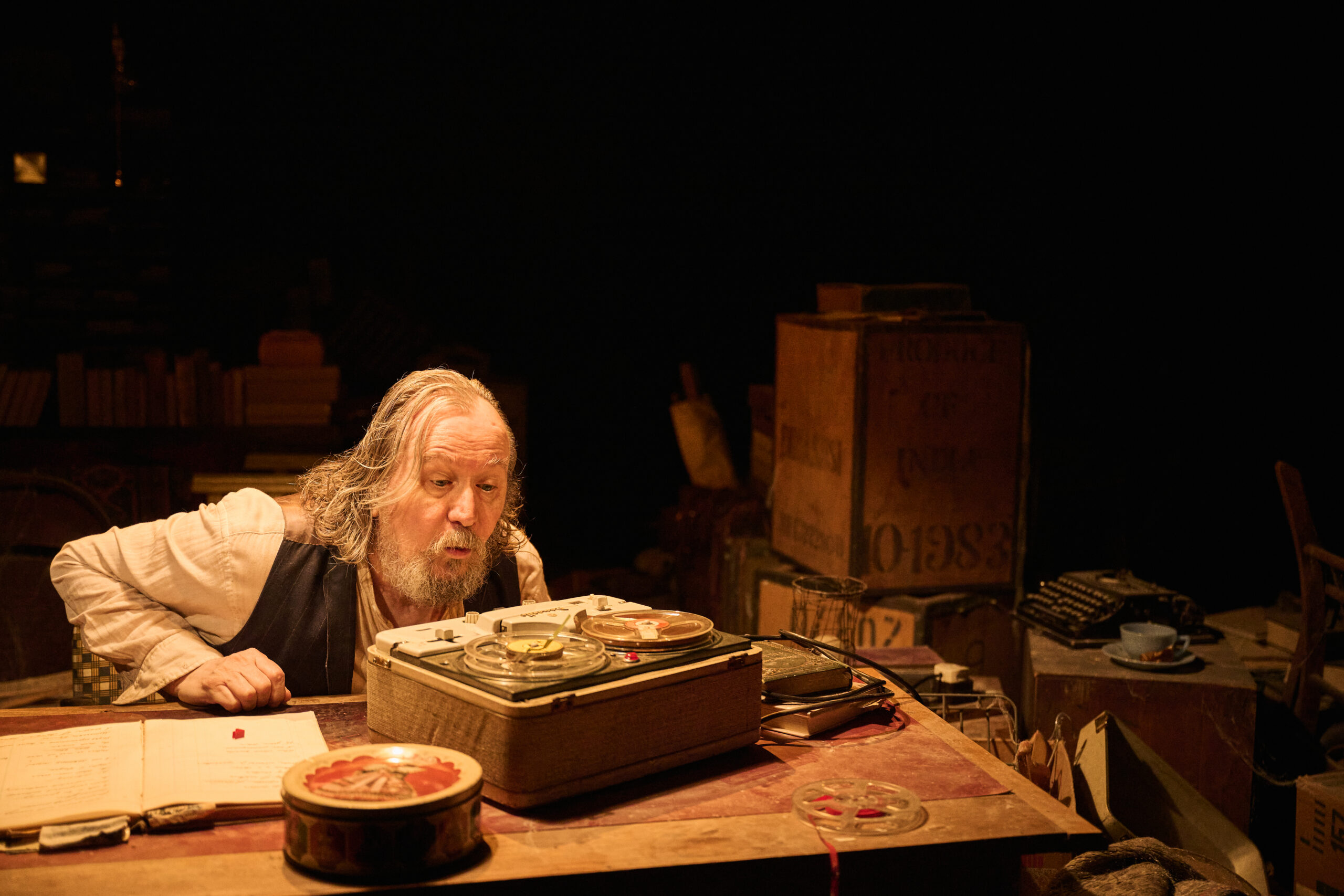
For much of the play, Oldman is quiet and still. There are muttered grumbles as he cues the tape, fast forwards, rewinds and searches for the moment he wants; the occasional outburst as age frustrates him; the odd stagger to the back of the set in pursuit of an object he’s looking for; and a small, private delight in the word “spool”. But mostly, he sits and listens. And yet, in that near silence, weariness, loneliness and regret seep out of him. Every tiny shift of his body suggests a man both mystified and appalled by the younger self he’s hearing.
 
From the machine, we hear younger Krapp speak of sorrow (the death of his mother), pleasure (a tender encounter with a young woman in a punt), and his own reflections on an even earlier tape, from his late twenties. This younger voice, also Oldman, is startlingly different: energetic, eager and buoyed by the promise of what lies ahead. It stands in stark contrast to the grumbling, diminished figure on stage, and the dissonance between the two amplifies the older Krapp’s desolation as he confronts a life that has fallen short of his earlier ambitions.
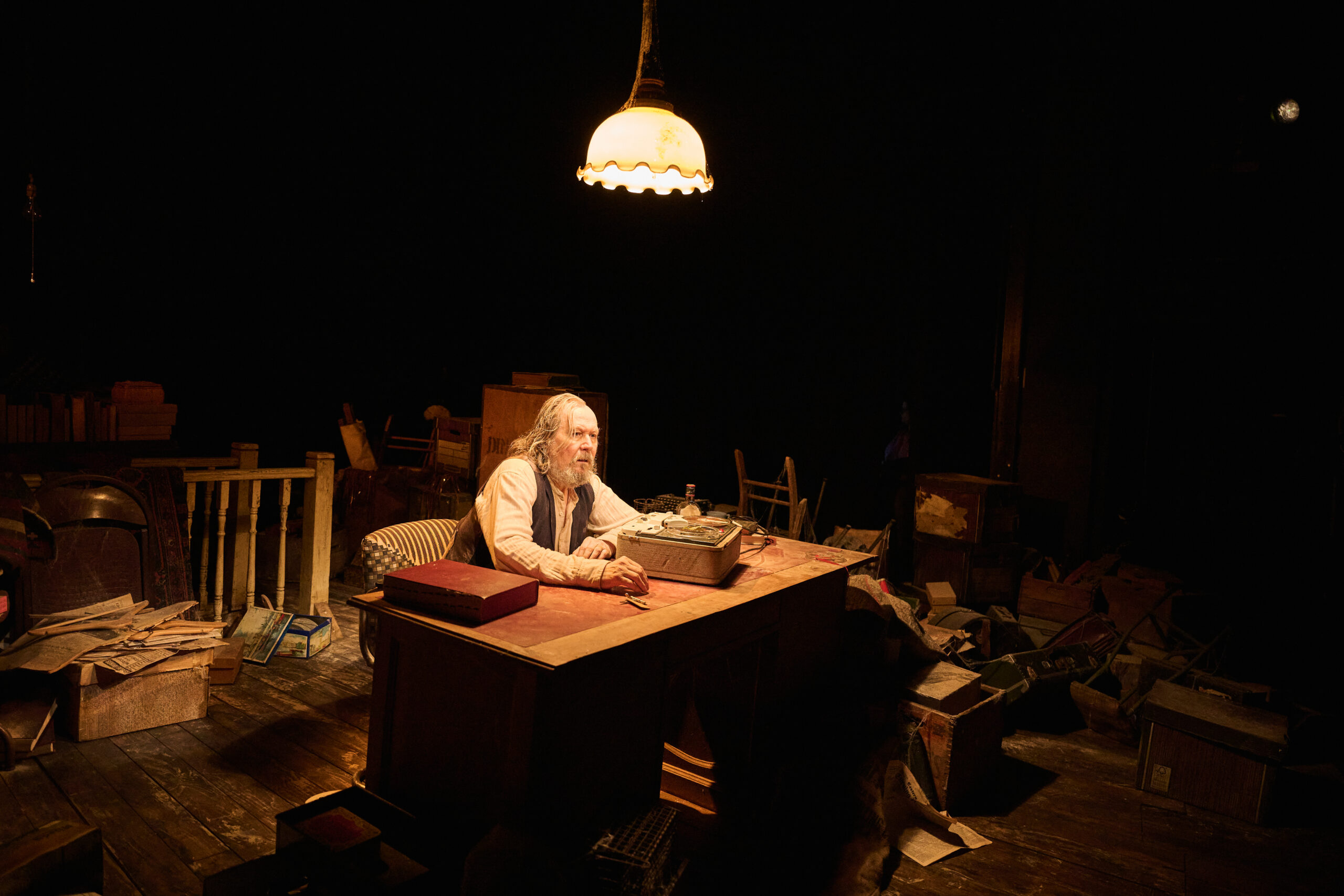
Oldman’s stage design mirrors this sense of desolation. Krapp’s attic office verges on squalor. A lone desk stands isolated in the centre. Belongings are carelessly discarded, with packing boxes in a state of chaos. A single overhead lamp casts a narrow cone of light, leaving the rest of the stage in shadow. The whole space cries neglect.
 
Malcolm Rippeth’s lighting is similarly stark: one light for the staircase (perfectly judged for Oldman’s entrance), one for the desk, and a faint glow at the back, when needed, to catch Krapp’s rummagings. Guy Speanza’s costume design deepens the sense of dereliction: clothes rumpled, hair unkempt, the look of a man who has long since stopped tending to himself. The effect is voyeuristic in nature, as though the audience has slipped into someone’s private unguarded space. It’s quietly unsettling.
 
At the centre of attention sits the tape recorder, the vessel in which Krapp’s past still lives, even though it disappoints him so profoundly. In a lovely nod to the play’s own history, this very machine was used by both John Hurt in 2001 and Michael Gambon in 2010, a physical reminder times steady march, indifferent to the fate of those along its path. Given the bridge it forms between past and present, one could argue that this tape recorder is the production’s true star.  
 
And, in the end, it’s the tape recorder that has the final word. After Krapp records this year’s reflections, he returns once more to the hopeful voice of his 39-year-old self. As the light over the desk fades, the audience is gently pulled back from its voyeurism, leaving Krapp alone with the machine and the thought of what might have been.
 
Oldman has chosen his return well and handles the piece with exquisite control. What could easily become a self-indulgent, ponderous meditation on futility is instead given shape and purpose. Through the profound sadness that exudes from his Krapp, Oldman shows his audience the dangers of failing to seize the moment and the slow erosion of a life left unfulfilled, perhaps even wasted. The fact that so little “happens” is irrelevant.  The result is riveting, thought-provoking, and unbearably sad!
Godot's To List image by Camilla Greenwell
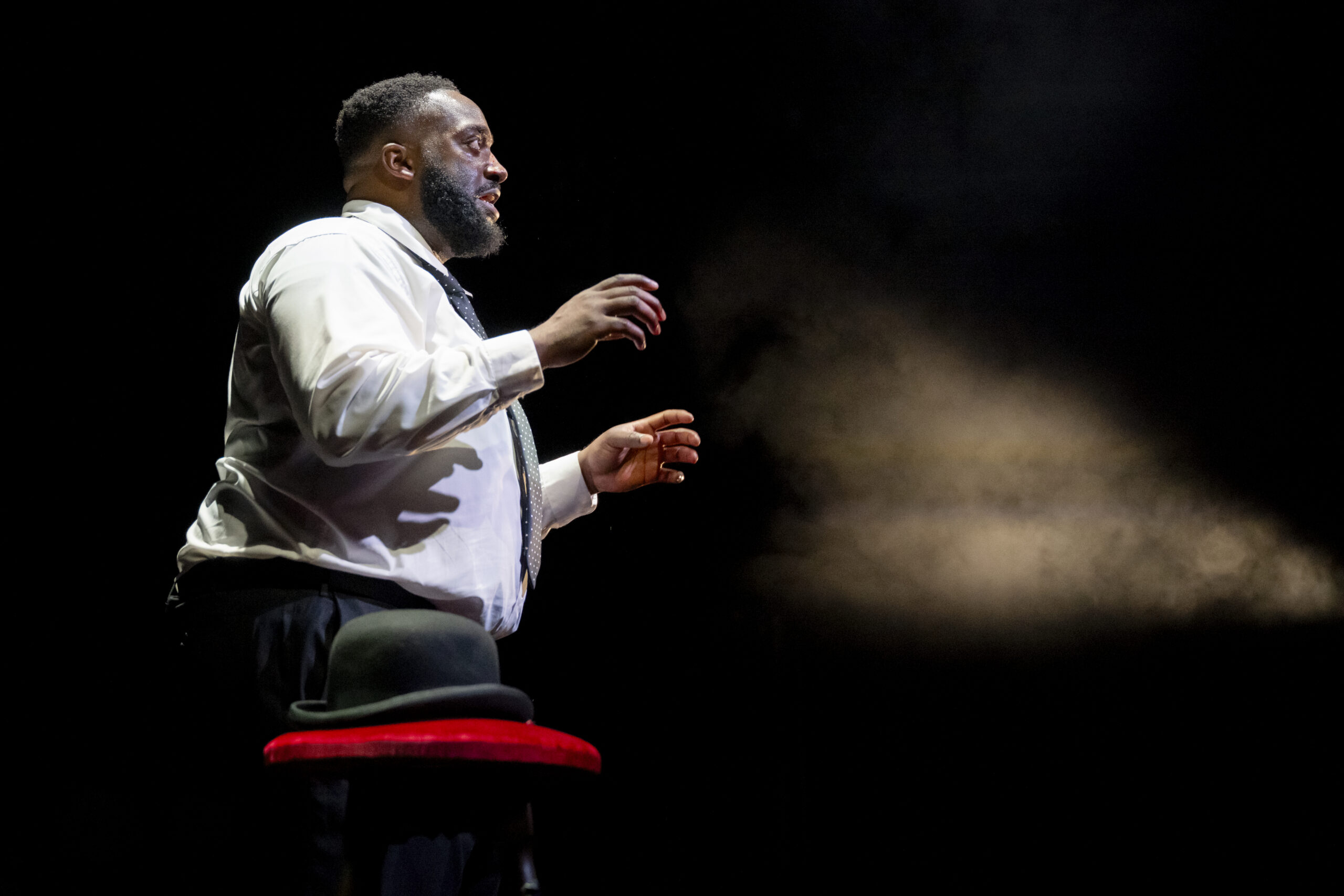
Krapp’s Last Tape first appeared as a curtain-raiser to the English version of Beckett’s Endgame in 1958, also at the Royal Court. To mark its 70th Anniversary, the theatre has added a curtain raiser of its own. Each performance will open with Godot’s To-Do List, a Beckett-inspired short play by Leo Simpe-Asante, winner of the 2025 inaugural Royal Court Young Playwrights Award and a Jerwood New Playwright for 2026. Sparked by the simple question “what could Godot have been doing to make him so late?”, this piece imagines the long list of tasks that might have delayed him. The list is absurd, as is the Alexa-like disembodied voice that delvers it. But, unlike Vladimir and Estragon, Godot doesn’t have the luxury of waiting. He must simply crack on with the tasks! A wry comment on the relentlessness of modern life, perhaps?  
 
Shakeel Haakim (For Black Boys… in the West End) makes a wonderfully put-upon Godot, while Flora Ashton (making her debut) brings charm and wit as the voice of the to-do list. Their interplay is clever, amusing and unexpectedly engaging. It’s a delightful prelude, and a wonderful introduction to a promising young playwright we’ll hopefully be hearing more from soon.

Gary Oldman mesmerises in this through-provoking replay of Beckett’s famous short,

prefaced by a novel spin on Godot as a curtain-raiser.

★★★★★ 5 stars

Krapp's Last Tape / Godot's To Do List Tickets

Krapp's Last Tape / Godot's To Do List runs at the Royal Court until Sat 30 May 2026

Book Now

Author Profile

The Recs SW