Deep Azure – Shakespeare’s Globe ★★★★★
By The Recs SW 3 weeks agoChadwick Boseman’s ‘Deep Azure’ hits the Sam Wanamaker Playhouse.
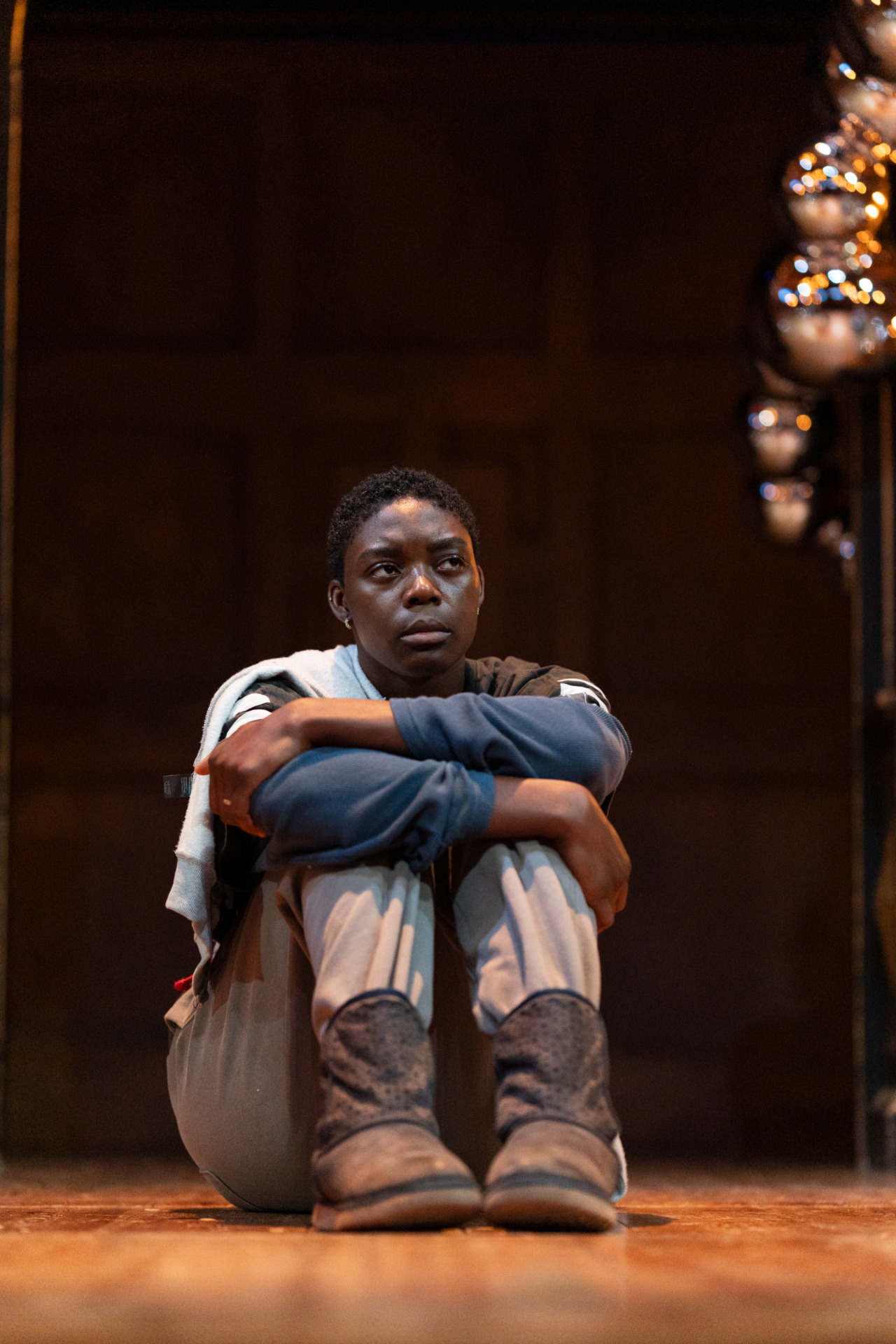
A contemporary play about a Black student killed by a police officer in a modern American city isn’t the first thing one would instinctively associate with The Globe, even with its appetite for experimental work. Yet, Deep Azure settles into the Sam Wanamaker Playhouse with startling ease, as if the space had been waiting for it.
Written by Black Panther star Chadwick Boseman, it opens with the fatal shooting of Joshua Smith (known as Deep), an enigmatic student and sometime poet whose absence shapes everything that follows. The play traces the emotional fallout for Deep’s fiancée, Azure, and his two closest friends, Roshad and Tone, as they navigate the aftermath of his death. Through the memories they share, they work through their loss and gradually introduce the audience to the friend they’ve lost.
Over nearly three hours, what begins as a study of grief gradually morphs into a morality tale about social justice and revenge. It then evolves again into a kind of whodunnit, as the truth of what happened to Deep on that fateful night is slowly revealed. All the while, the play keeps circling back to the theme of identity and hate, of others and of self.
The Sam Wanamaker Playhouse is about as low-tech as it’s possible to get today. Created to revive the spirit of early 17th‑century indoor theatre, it is lit by candles, with no sound system or scenic infrastructure to speak of. So, it’s theatre at its most stripped back. Which means it’s the actors themselves who have to generate most of the atmosphere and create the staging.
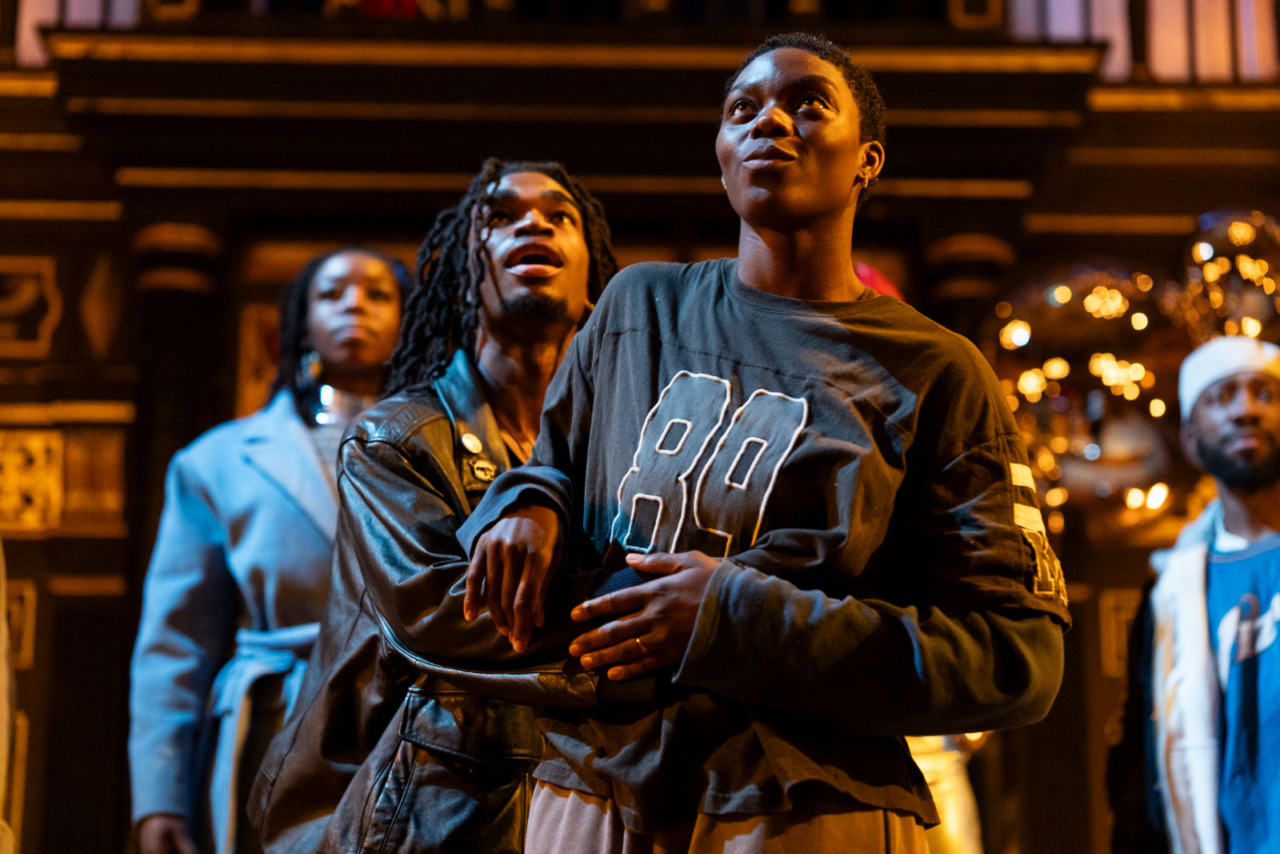
Cue the “Heavenly MCs of Street Knowledge”, a contemporary riff on the idea of a Greek chorus. They set the tone, comment on the action and generate the entire soundscape using just their voices, shifting effortlessly from beatbox to brass band, from love songs through gospel to the Cheers theme tune… and even from a car engine to a flock of pigeons (yes, pigeons!). In a story steeped in sorrow and anguish, they also provide much-needed comic relief, most notably reenacting what Roshad and Tone are watching on TV (with Jerry Springer and Power Rangers among the highlights). Their first-half costumes (a peculiar mash-up between Barbarella and glam rock) are a little disconcerting and undermine their narrative power. But they settle down a bit in the second half, at least until the pigeon moment. Crucially, their versatile vocal work and tight choreography (courtesy of movement director Tanaka Bingwa and his team) create such a vivid backdrop that traditional scenery becomes unnecessary.
Special mention for the leaders of the Chorus. Aminita Francis (Red Riding Hood at Liverpool Everyman, Bugsy Malone at the Lyric Hammersmith) as Street Knowledge of Good and Imani Yahshua (Urinetown at the Vaults, Sex Education for TV) as Street Knowledge of Evil are both multi-talented performers who can sing, act, dance and quickly switch between comedy and serious. Without them, it’s unlikely the chorus would have worked so well.
The chorus are aided in their management of mood by designer Paul Wills, whose chrome “bauble” motif decorating the back of the stage is echoed in movable demi-spheres on stage, which are used to evoke physical props. Lighting designer, Azusa Ono, plays her part too, changing the atmosphere by simply varying the height of the candelabras and changing the colour of the diffuse light coming through the windows at the top. It’s simple but incredibly effective, especially when combined with the work of the chorus.
Director Tristan Fynn-Aiduenu (For Black Boys Who Have Considered Suicide When The Hue Gets Too Heavy, New Diorama/Royal Court/Apollo) has somehow kept this collision of unusual elements in hand, drawing them together into an immersive, intimate environment that holds the audience’s attention. He uses every space at his disposal to give life to the story, most strikingly by creating “surround sound” the old-fashioned way, having performers speak from the rear gallery. In doing so, he creates a world that frames the four leads in their best (candle)light.
And all four respond very positively.
Jayden Elijah (The Lion King, The Bear Maxim Experiment) brings a spiritual and enigmatic feel to the role of Deep. Conjured up through described memories and Azure’s reading of his poems, he establishes a calming, almost messiah-like, presence among the harsh emotions around him.
Justice Ritchie (Born with Teeth) convincingly charts Roshad’s unravelling with painful clarity as his rage builds in the face of injustice, and he slips slowly into dependency and revenge in a desperate attempt to numb his grief. While Elijah Cook (Jesus Christ Superstar while in training, The Diplomat for TV) deftly handles the role of Tone, tracing his shift from supportive observer to burdened protagonist with a subtlety that lets his evolution emerge only when needed.
But this production belongs to Selina Jones (Provenance, Under the Kunde Tree). Her portrayal of Azure’s torturous journey of grief is visceral, as Azure’s insecurities, her unfounded guilt over Deep’s death and her troubled relationship with food slowly surface. At times it is painful to watch and painful to hear, yet it’s impossible to look away. She commits completely and turns in a mesmerising performance.
Of course, none of this would be possible without Chadwick Boseman‘s triumphant script. Although best known for his screen roles, most famously Black Panther, Boseman’s artistic roots were in the theatre, and that foundation is unmistakable in Deep Azure. In it, he shapes modern American street language into a rhythm that feels eminently Shakespearian, so much so that someone who didn’t speak English might struggle to tell the difference. The effect is beautiful, as if the words themselves were music, their rhythm inescapable. Calling it “hip-hop meets Shakespeare” somehow feels oversimplified; it’s closer to imagining how Shakespeare himself might write this story. And it remains as relevant as it was 20 years ago, when he wrote it.
This might not be for everyone, but, while the staging may prompt the occasional raised eyebrow, Deep Azure is an energetic and enthralling (nearly) three hours of glorious linguistic craftsmanship and commanding performances, which not even the uncomfortable seats of the Sam Wanamaker Playhouse can disturb. And it feels completely at home here.
A tale of modern tragedy that’s found its spiritual home at the Globe – ★★★★★ 5 stars
Deep Azure Tickets

Deep Azure runs at the Sam Wanamaker Theatre within Shakespeare's Globe until 11 April 2026
Book NowAuthor Profile
- The Recs SW
Latest entries
- 20 February 2026DramaDeep Azure – Shakespeare’s Globe ★★★★★
- 11 February 2026DramaDear Liar ★★★★
- 10 February 2026DramaIndian Ink (touring) ★★★★★
- 27 January 2026DramaHigh Noon ★★★★