
Black Diamonds and the Blue Brazil ★★★

Family and football coincide in Gary McNair’s brand-new stage adaptation of Ron Ferguson’s beloved book ‘Black Diamonds and the Blue Brazil’
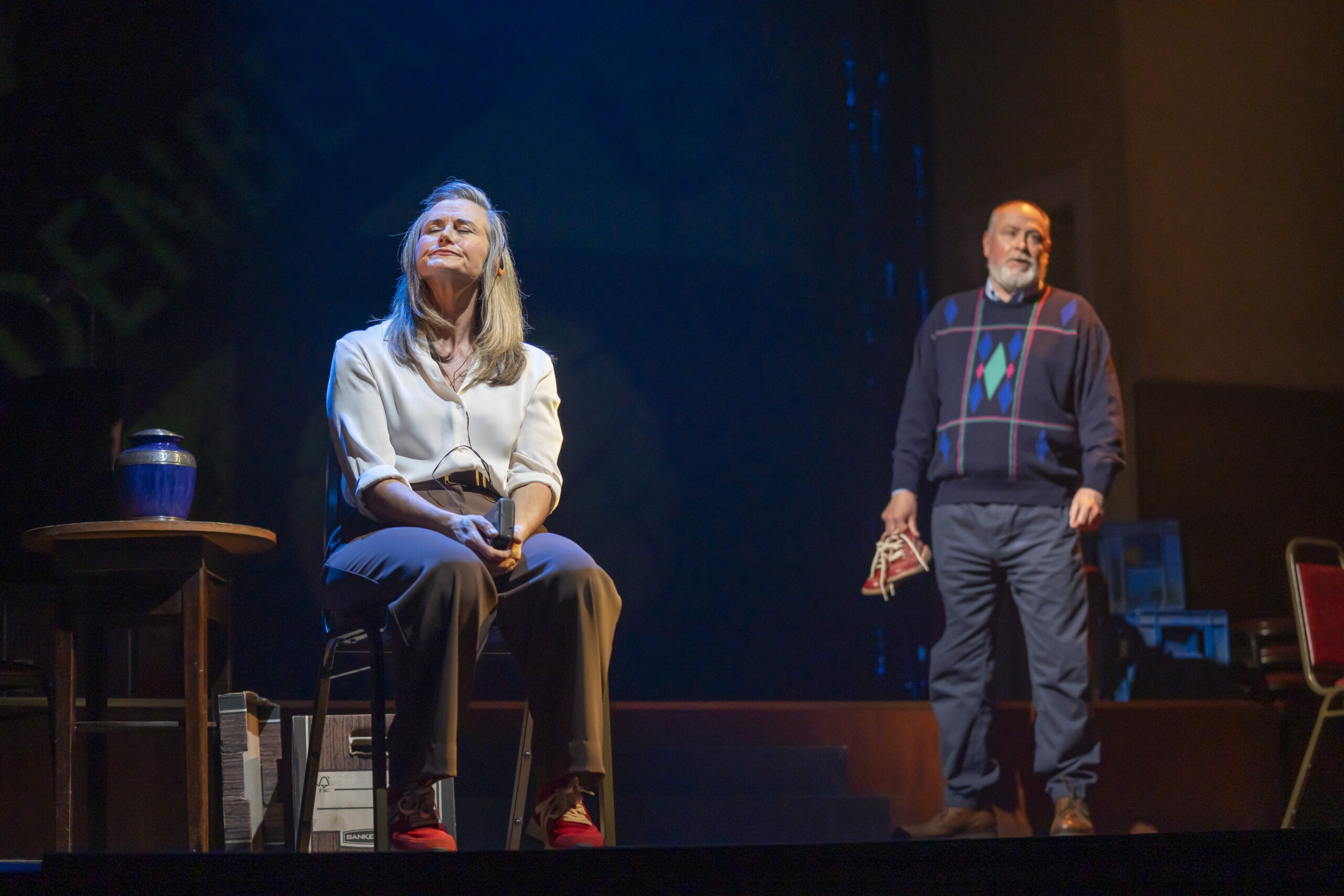
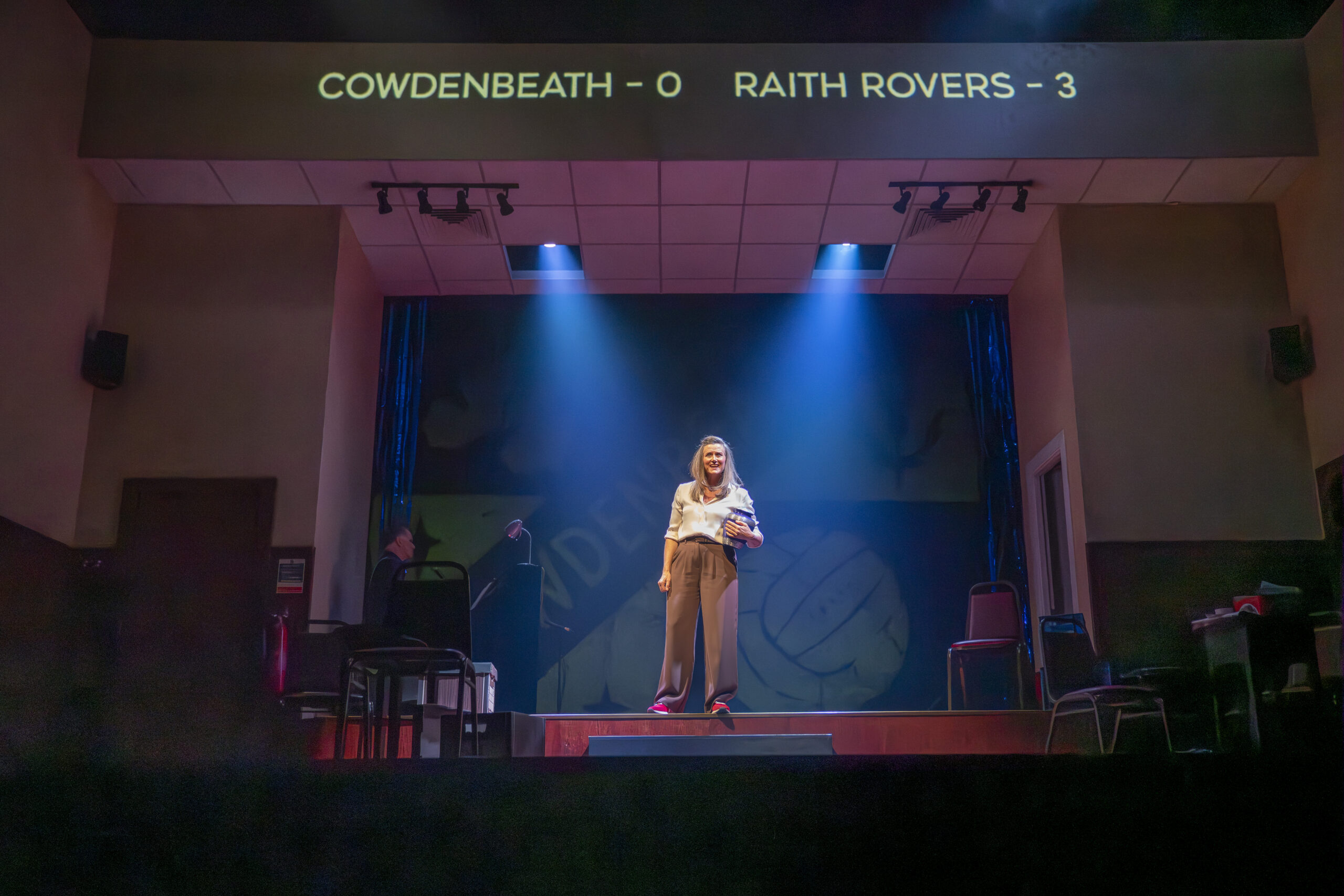
The comparison of reality against expectations is often brutal. Sally, the protagonist of Black Diamonds and the Blue Brazil, often reminds us that “this is not a sports movie,” an accurate description of the events that unfold after small-town football side Cowdenbeath FC is promoted to the second division of Scottish football.

The concept of fashioning a compelling narrative through a miserable season of club football is executed in an exceptional fashion by playwright Gary McNair. Grounding the play is a plot anchored around an impressive Dawn Steele, portraying a woman caught between two worlds: grief and loyalty to her family. Though, McNair argues, the two are intrinsically linked.

Images by Aly Wight

Based on Ron Ferguson’s book, Black Diamonds and the Blue Brazil, the play showcases the community of Cowdenbeath as a town genuinely united in their support for the affectionately named “Blue Brazil” club, which allows people to reminisce about the past glories and even forms communities of football-supporting families.

When Sally’s father dies soon after Cowdenbeath FC is promoted for the first time in decades, she is thrust into carrying out the wishes of her father’s pact—he must have his ashes spread over the centre of Cowdenbeath FC’s home pitch after a home win. One crucial detail complicates this seemingly simple wish: Cowdenbeath FC are shockingly bad. Cowdenbeath FC are shockingly awful.

Indeed, this has, as argued by Sally, the makings of a sports movie. This could easily be the tale of a charming small-town team uniting behind their players and achieving glory, but this is not a sports movie. Sally is driven into insanity by an existential absurdity, her need to honour her father’s wishes despite her general apathy to football, and the generally terrible performances of her home side.

This is where the show shines—bolstered by an original score by Ricky Ross, there is an indescribable magnetism about the team. Its folkiness and absurdity are the charm. Reminiscing about past failures and victories allows Sally to connect with her deceased father, who appears to her as a ghost. Barrie Hunter grounds his performance through measured delivery and pinpoint comic timing. While Sally grows frustrated over having to wait for a win that may or may not ever come, she learns about the storied history of the club and what it means to the people who support it.

Where the show is less successful, dragging it down from being truly remarkable, is its second act. The first is witty, fast-paced, and engaging. This tone is not maintained, however, and as the show continues on, there are elements that feel repetitive. Not enough time is spent on discussing the element of class; Cowdenbeath’s players come from working-class backgrounds and coal-mining families. The eponymous “Black Diamonds” should have been discussed in more detail. These elements distract from the ending, where the show’s conclusion feels like the end of a long and arduous season rather than a title-winning one. Though perhaps this may be the point; this is not a sports movie.

A show of two halves ★★★ 3 stars

Black Diamonds and the Blue Brazil Tickets

 

Black Diamonds and the Blue Brazil runs at Royal Lyceum Edinburgh until Sat 23 May 2026

Book Now

Author Profile

The Recs BK - Brandon Kiziloz