Company of Wolves’ The Bacchae ★★★★

Blurring the lines between binaries, Company of Wolves adaptation of The Bacchae is touring Scotland
The act of adaptation is a difficult process, considering the vastness of a classical work. In the case of The Bacchae, its adaptors deal with how a great number of themes are expressed in Euripides’ original work, and oftentimes audience members cite missing thematic ideas and complain about how faithful the adapted work is. Company of Wolves’ defiant interpretation of The Bacchae stands out amongst the others for its ingenious consideration of the source material, reimagining it as their own.

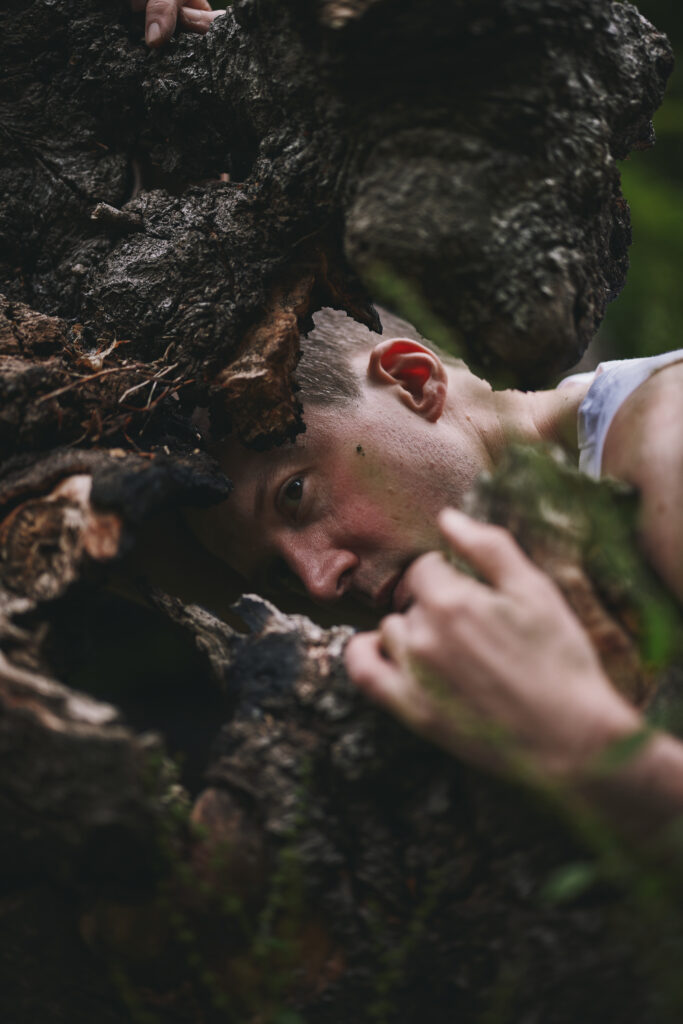
Reimagined as both an expressive physical dance piece and a verbose poem, the Glasgow-based production group uses The Bacchae to tell a multi-layered story of desire, violence and intense emotionality. Written and performed by Evan Downie, this version of The Bacchae depicts three narratives, all centred around the Greek god Dionysus.

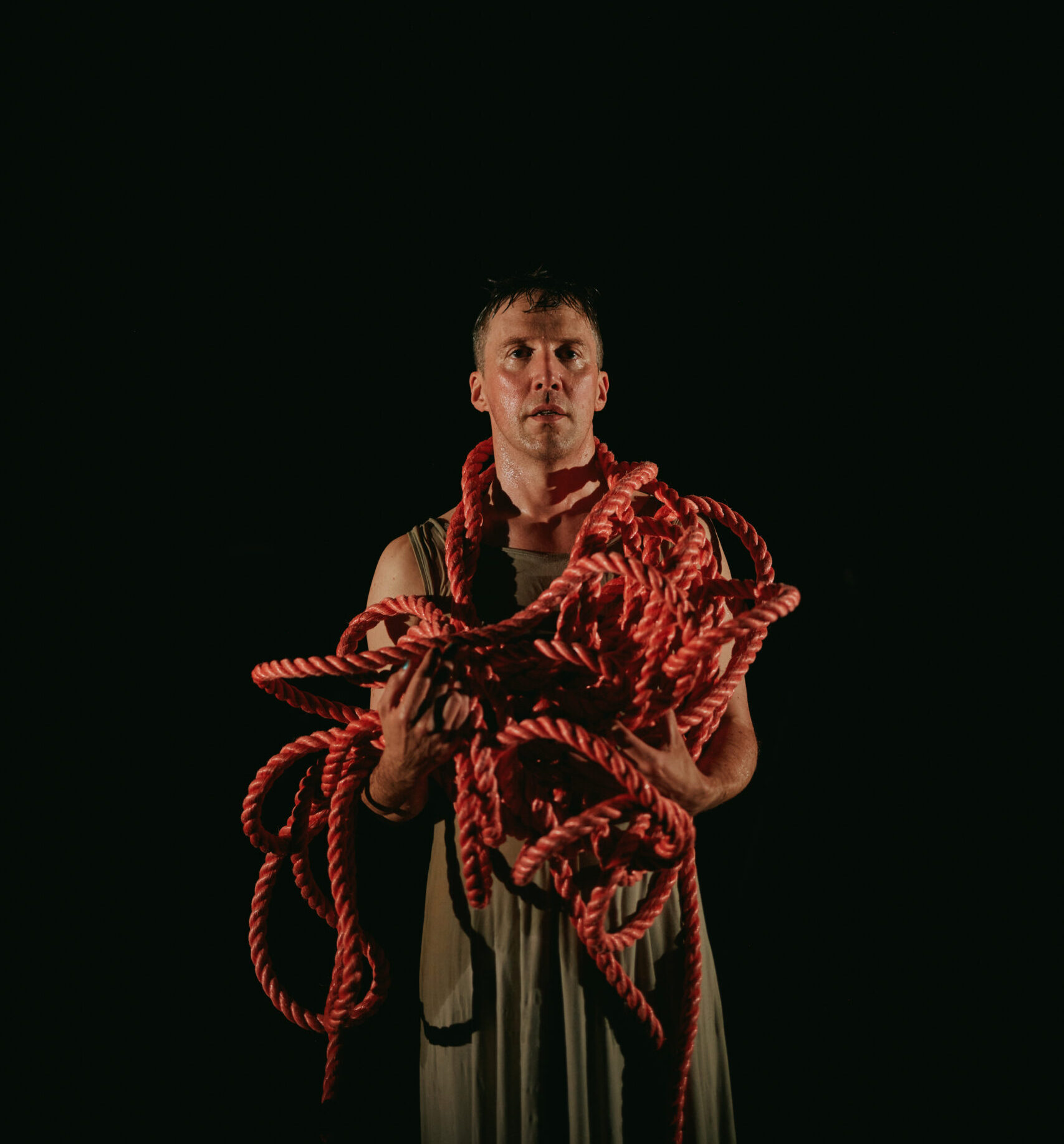
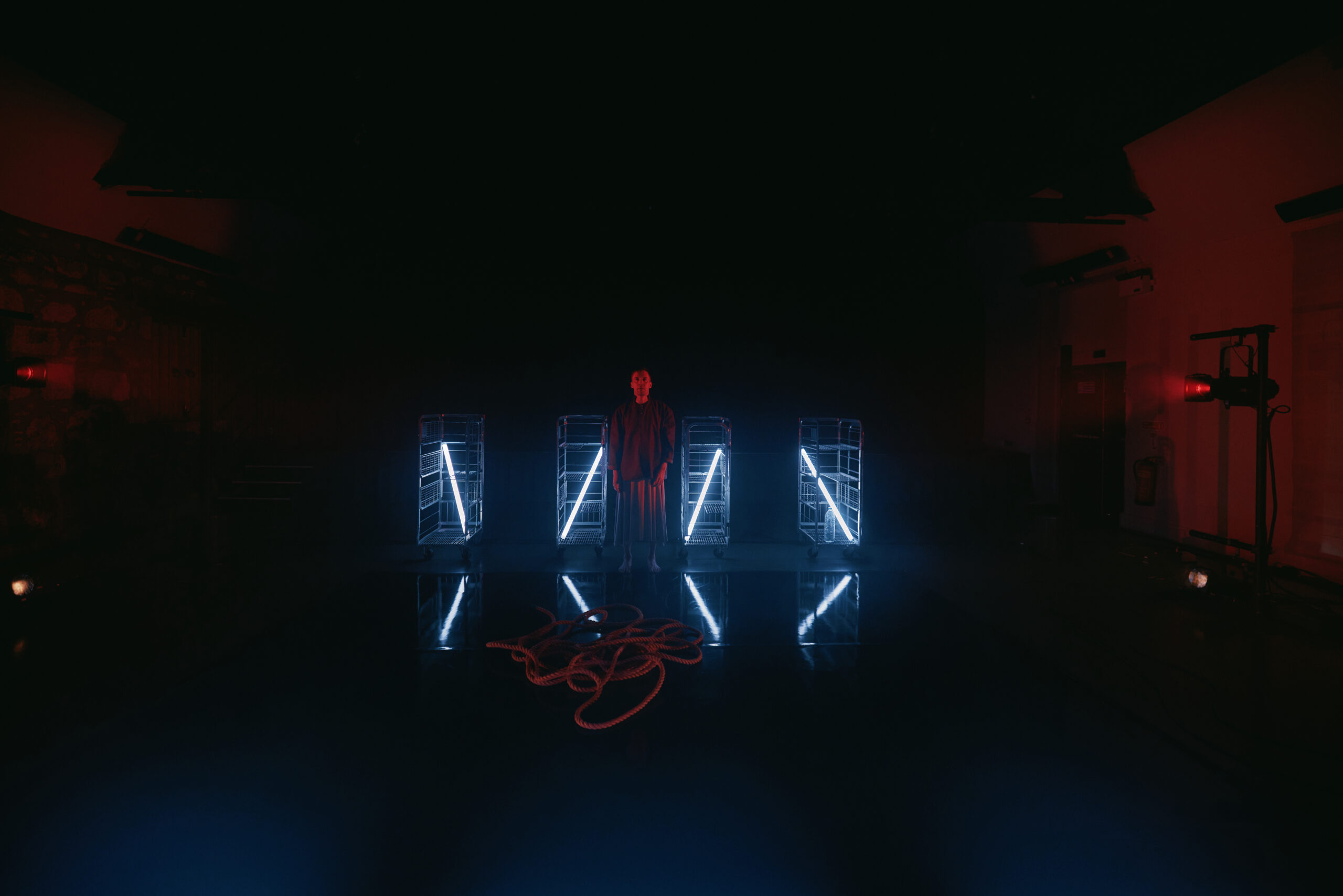
Images by Louise Mather

The Bacchae begins with the birth of Dionysus. His mother, Semele, literally disintegrates after viewing Zeus’ true form, and the baby is then inserted into Zeus’ thigh. What springs forth and eventually grows into a god becomes a legend. His followers, women usually, party and reach a state of euphoria, leaving their village behind to perform rituals in the forest. The myth also presents the story of the king of Thebes, Pentheus, who eventually falls under Dionysus’ spell.

Who is Dionysus? As an elusive figure that seems to represent the hedonistic and creative qualities of life – dancing, partying, and wine – we constantly ponder on his existence. The mystery of his conception, itself an unbelievable myth, is tackled by Euripides and subsequent adaptations of his work. The term ‘bacchanalia’ itself is derived from the act of fervent revelry, often drunk, often violent and full of desire. Here, Downie embodies these aspects of Dionysus and his followers through a kaleidoscope of physically conveyed emotion. Culminating in a ritualistic dance, Downie’s performance leaps, crawls, runs, and stomps across a bare stage, singing and dancing along to a constant atmospheric soundtrack.

This performance is ethereal. While Katharine Williams uses a simple lighting plan of tube lights, they work in tandem in creating a strange environment. The staging is cold and almost seems devoid. This allows Downie’s storytelling to be laid bare. The audience, like the inevitability of Dionysus’ coming to Thebes, is forced to witness a deluge of pure emotion. Anna Porubcansky’s sound design uses drones to create an oppressive atmosphere.

With such a strong central performance, it can be hard to find issues with its staging, but there are unfortunately some elements that prevent this from being a truly magnificent production.

With minimalism, it is important to make sure that everything that is on stage has relevance. While Downie’s period costume is appropriate to the staging, some anachronistic elements, like the metal shelves holding up the lights, a water bottle and modern rope, distract and distance the audience from the story.

Nevertheless, despite some issues with its verbosity, Company of Wolves has extracted an enthralling dramatic adaptation of The Bacchae, a virtuosic performance that itself contains multitudes.

Myth in motion ★★★★ 4 stars

The Bacchae Tickets


The Bacchae is touring Scotland 

Book Now

Author Profile

The Recs BK - Brandon Kiziloz