Starstruck – Scottish Ballet ★★★★★

Scottish Ballet horours the legacy of Gene Kelly in ‘Starstruck’
It’s difficult to quantify the immaculate genius of Gene Kelly. Perhaps the wide variety of projects he has embarked on may shine a light on his virtuosity—he has choreographed musicals, acted, directed films, and staged ballets at the highest level. In Scottish Ballet’s original production of Starstruck, choreographer Christopher Hampson captures magic in a bottle, or rather, ballet.
 
Adapted from Kelly’s original ballet, Pas de Dieux, Hampson has both paid homage to Kelly and restaged his work faithfully; this difficult feat was overseen, in a wholesome touch, by Patricia Ward Kelly, Gene Kelly’s widow and preserver of his memory. From its opening number to its last, Hampson lands each set piece gracefully, taking on the complicated task of blending a multitude of musical styles, from waltz to jazz ballet.
Images by Andy Ross
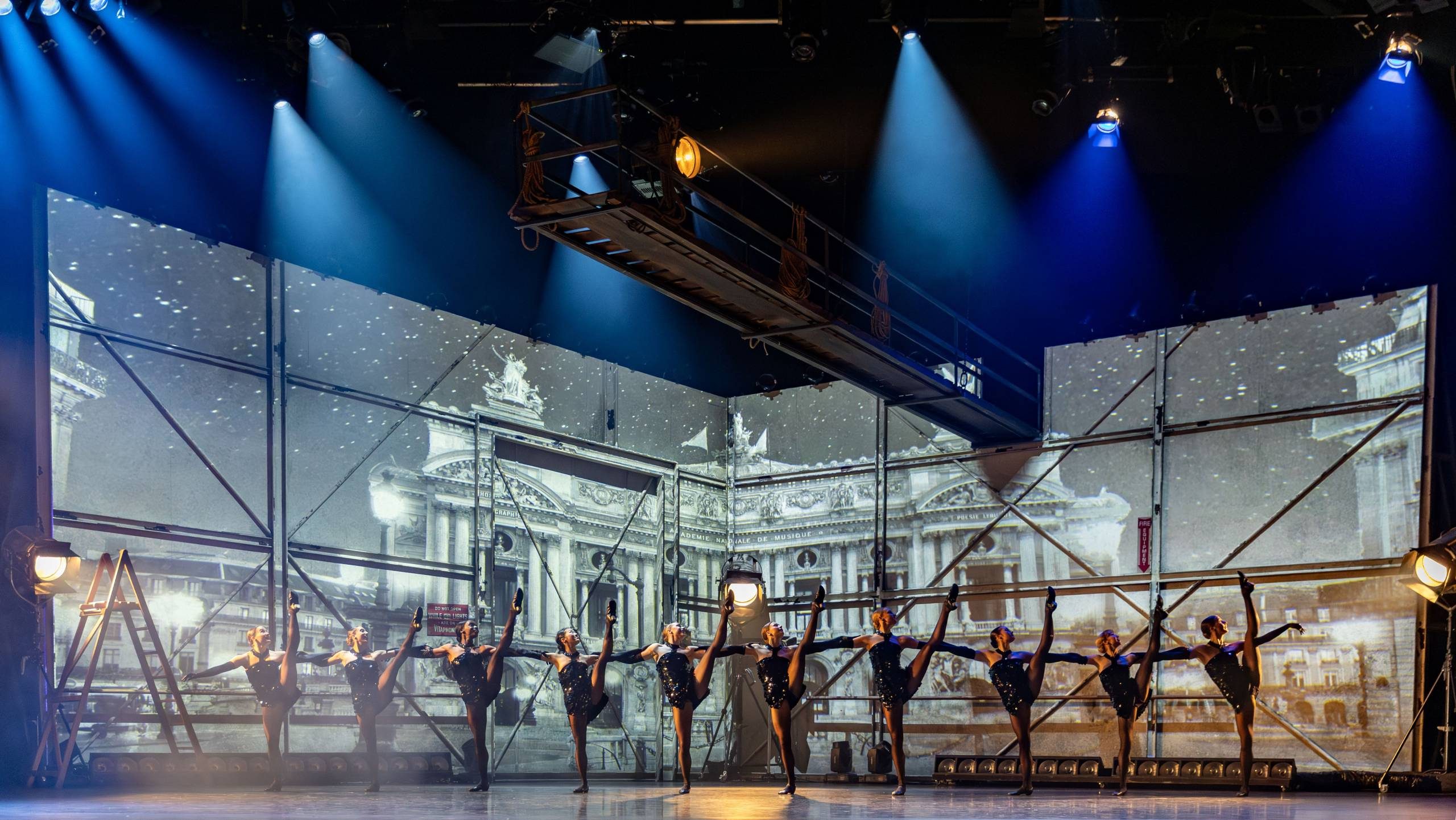
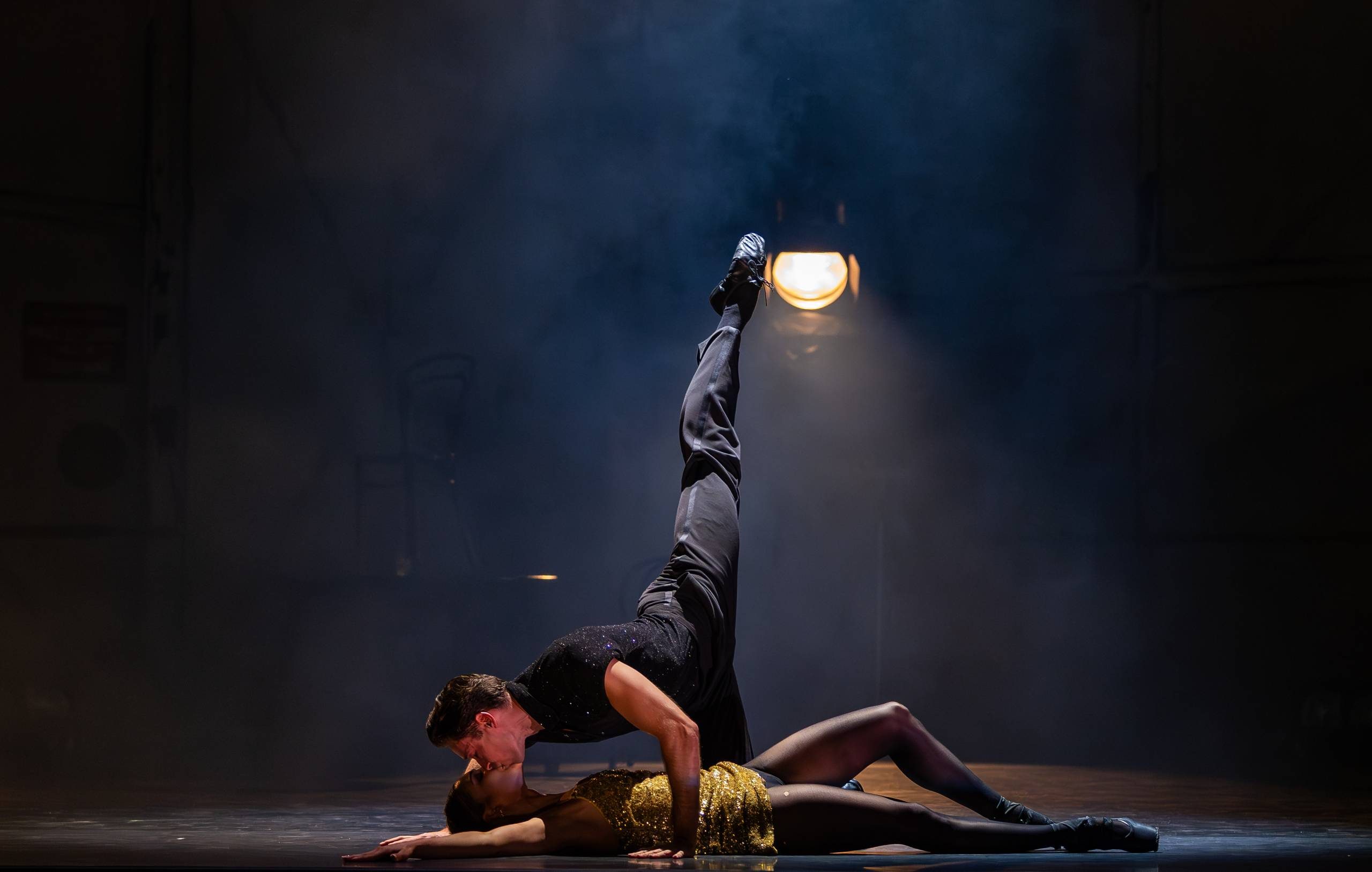
The original Pas de Dieux makes up the second act of the production and is given a prologue by Hampson. Here, we witness the blossoming and eventually complicated relationship between a masterful choreographer and the newly cast star ballerina. The rest of the piece depicts the choreographer at work with his ballet, which will eventually become Pas de Dieux.
 
This opening half, with its focus on the behind-the-scenes of Hollywood glamour, has echoes of the work of Bob Fosse. A rehearsal with the dancers in preparation for the show shares similarities with a group dance from All That Jazz.
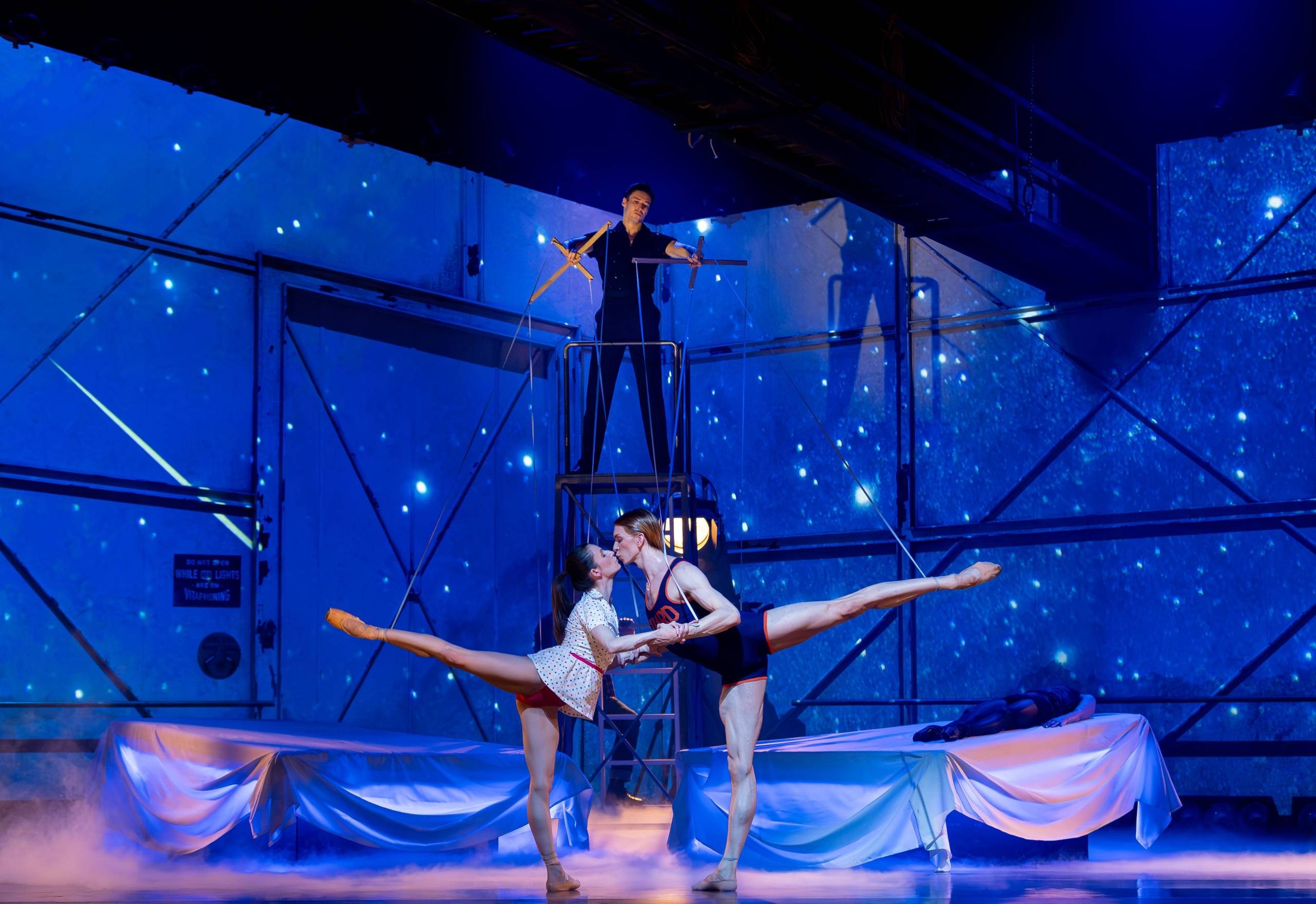
When the second act opens, and Kelly’s Pas de Dieux is staged, that is where the magic actually happens. Kelly’s mythological tale of a meddling Eros who gleefully tricks Zeus and Aphrodite is engaging and light on its feet. The switch from the music of Chopin and Ravel to Kelly’s preferred Gershwin is fluidly orchestrated, a difficult feat only made possible through the performers’ expertise. Jessica Fyfe presents Aphrodite as a graceful and defiant deity. Her dance talent complements her character, with her form on jetés and sissones quite impressive.
 
Particular attention should be paid to the performance of Bruno Micchiardi, who balances the brooding genius of his Choreographer well with the omnipotence of Zeus. One glorious scene in which he fights a stagehand who has flirted with his love interest showcases his turn from one character to another. Thomas Edwards executes Eros with a satisfying amount of cheek.
Like a pirouette that feels endless, Hampson’s production is worthy of praise at every turn, from its expressive lighting by Lawrie McLennan that at times evokes paparazzi cameras and Zeus’ thunderbolts, to Lez Brotherston’s design, which features an innovative use of mirrors.
 
The most prominent reminder the company leaves the audience with, however, can only be the loving memory of Gene Kelly, whose image of him dancing in the Palais Garnier opera house lingers during the curtain call. Hampson argues in the end that Kelly’s influence has graced dancers, choreographers, designers, and directors—a fitting homage to a renaissance man of performance.

★★★★★ 5 stars

Author Profile

The Recs BK - Brandon Kiziloz