The Pianist – Park Theatre ★★★★★
By The Recs SW 1 month agoNew musical, ‘The Pianist’, premieres at the Park Theatre this month, setting the extraordinary story of Wladyslaw Szpilman, to the stage.
In a list of candidates for potential future musicals, a memoir by a Jewish-Polish pianist charting the horrors of the Nazi occupation of Warsaw in the Second World War would surely not even make the long list, let alone the short one. But that’s where theatre (and musical theatre in particular) comes into its own: telling fascinating stories in new and creative ways, connecting with the audience on a personal level and perhaps opening eyes to new perspectives and understandings.
And so it is with this new musical stage adaptation of Wladyslaw Szpilman’s memoir (and 2002 film), The Pianist, which received its official world premiere at the small but perfectly formed Park Theatre this month. Produced in collaboration with Szpilman’s son, Andreas, it shouldn’t work. But it does!
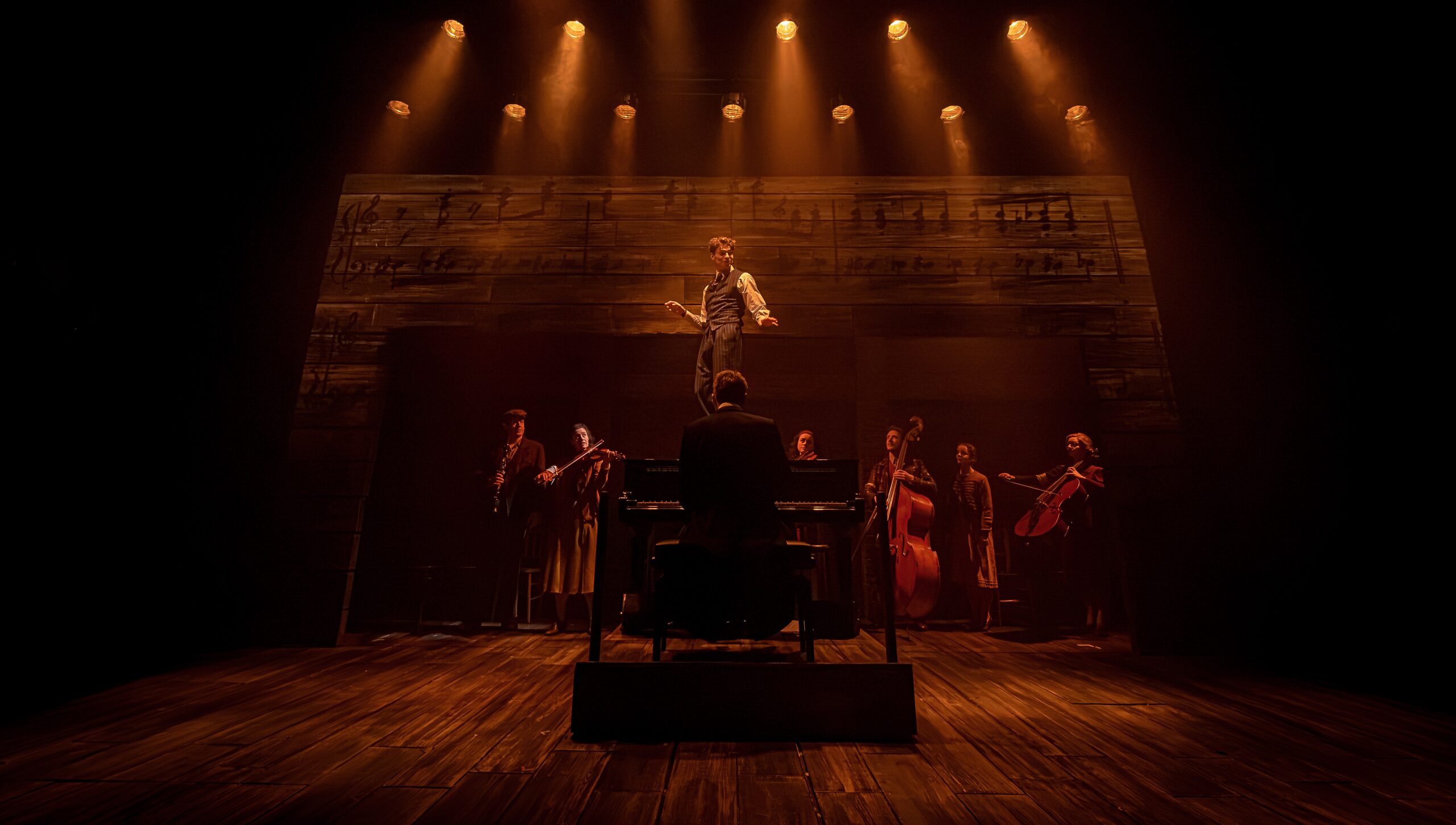
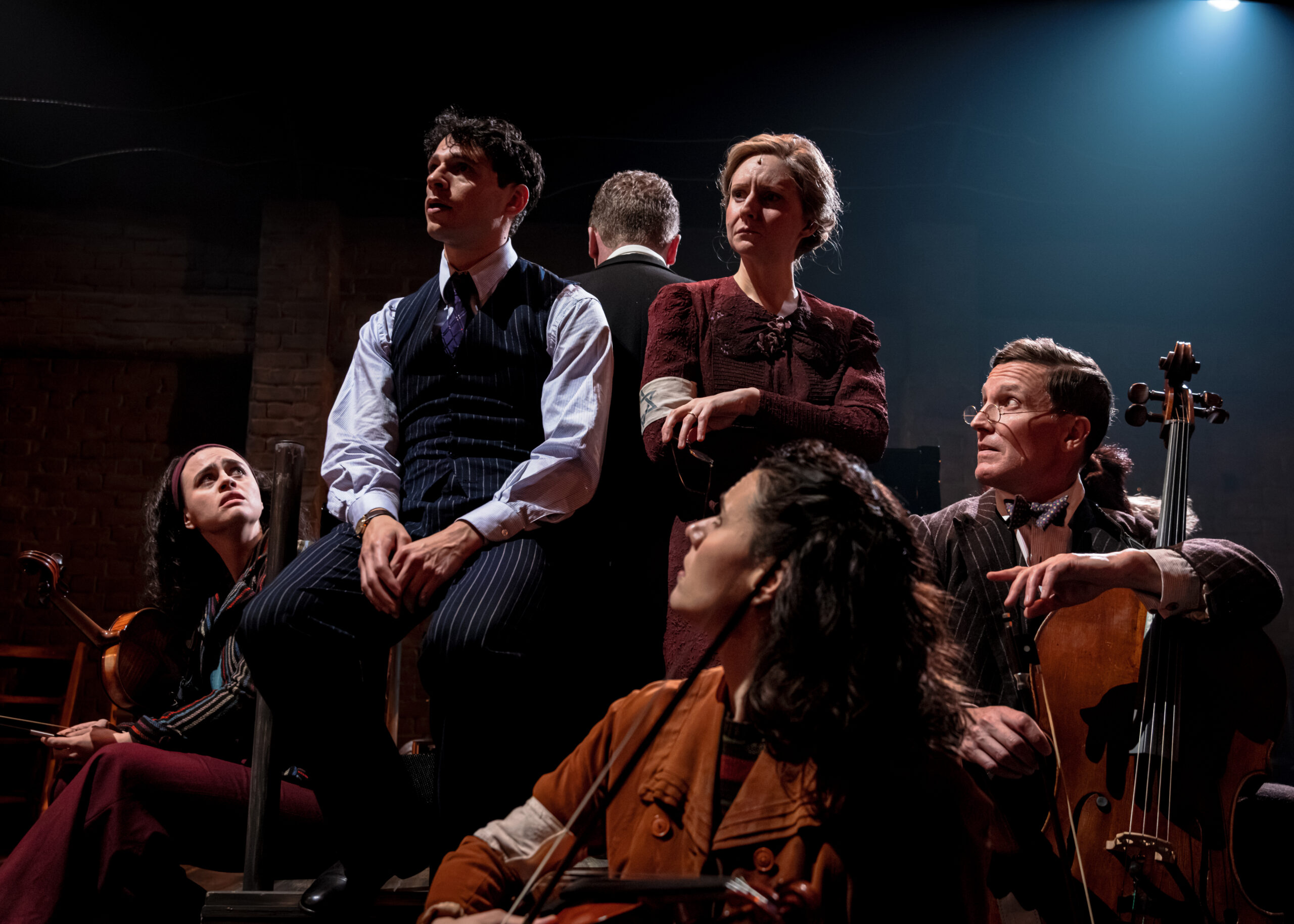
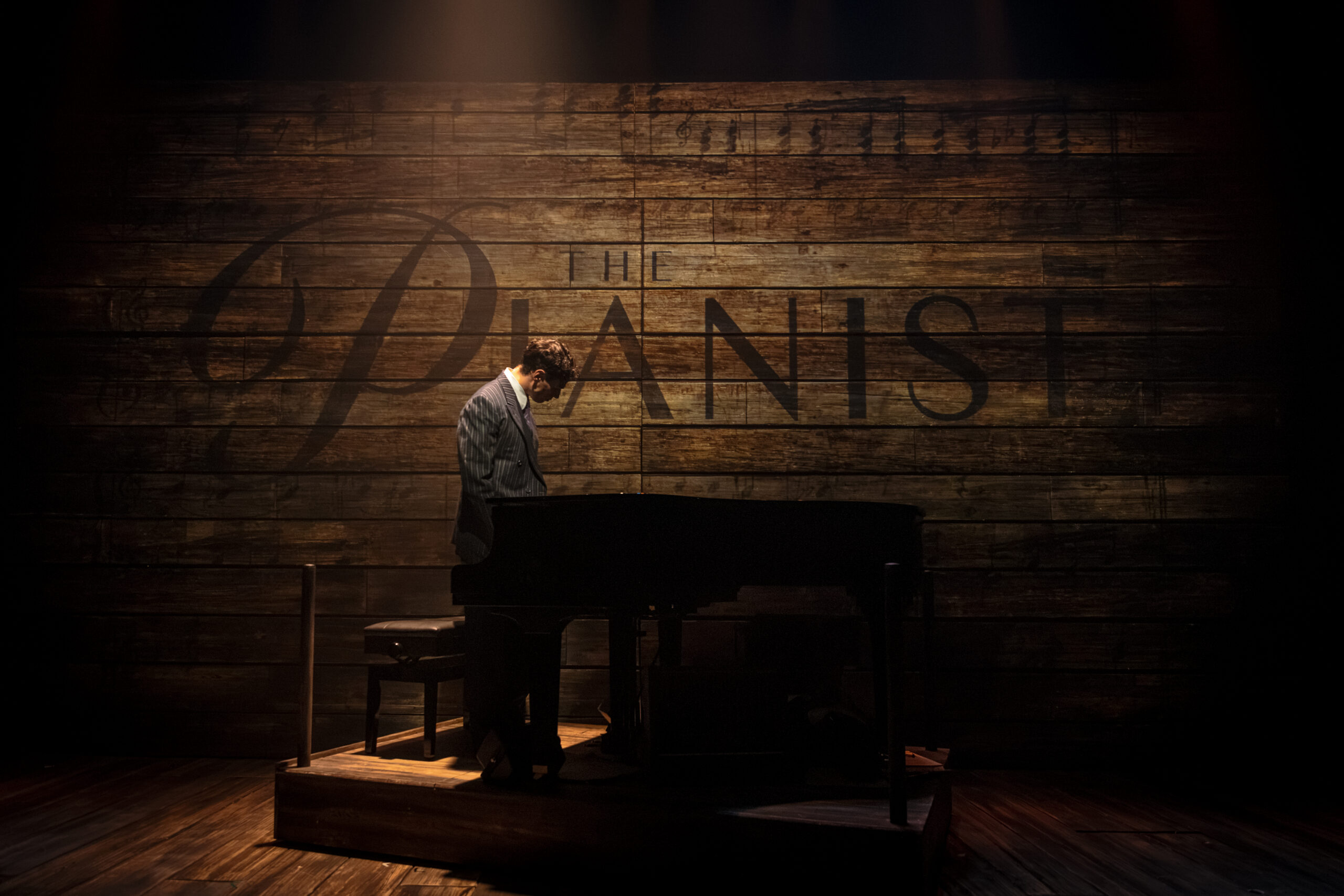
Szpilman’s original memoir is a stark first‑person account of his survival through a gruelling and tragic time in European history, and that starkness is reflected in the production from the outset. Designer Andrzej Goulding’s set, which greets the audience on entry, is austere: just a wood floor, wooden backdrop (reconfigurable in a limited way) and a movable piano. The costumes by designer Jonathan Lipman are muted, serving as a portent of things to come. The lighting by Robbie Butler is low key with spotlights used sparingly to accentuate key moments (for example, the barbed wire that appears as the ghetto is established). And there are very few props: a sack of contraband, scattered papers as a result of bombing, “Star of David” arm bands, and a red shawl, used as a devastatingly effective representation of a child beaten to death by a Nazi soldier, as Szpilman tries to save him.
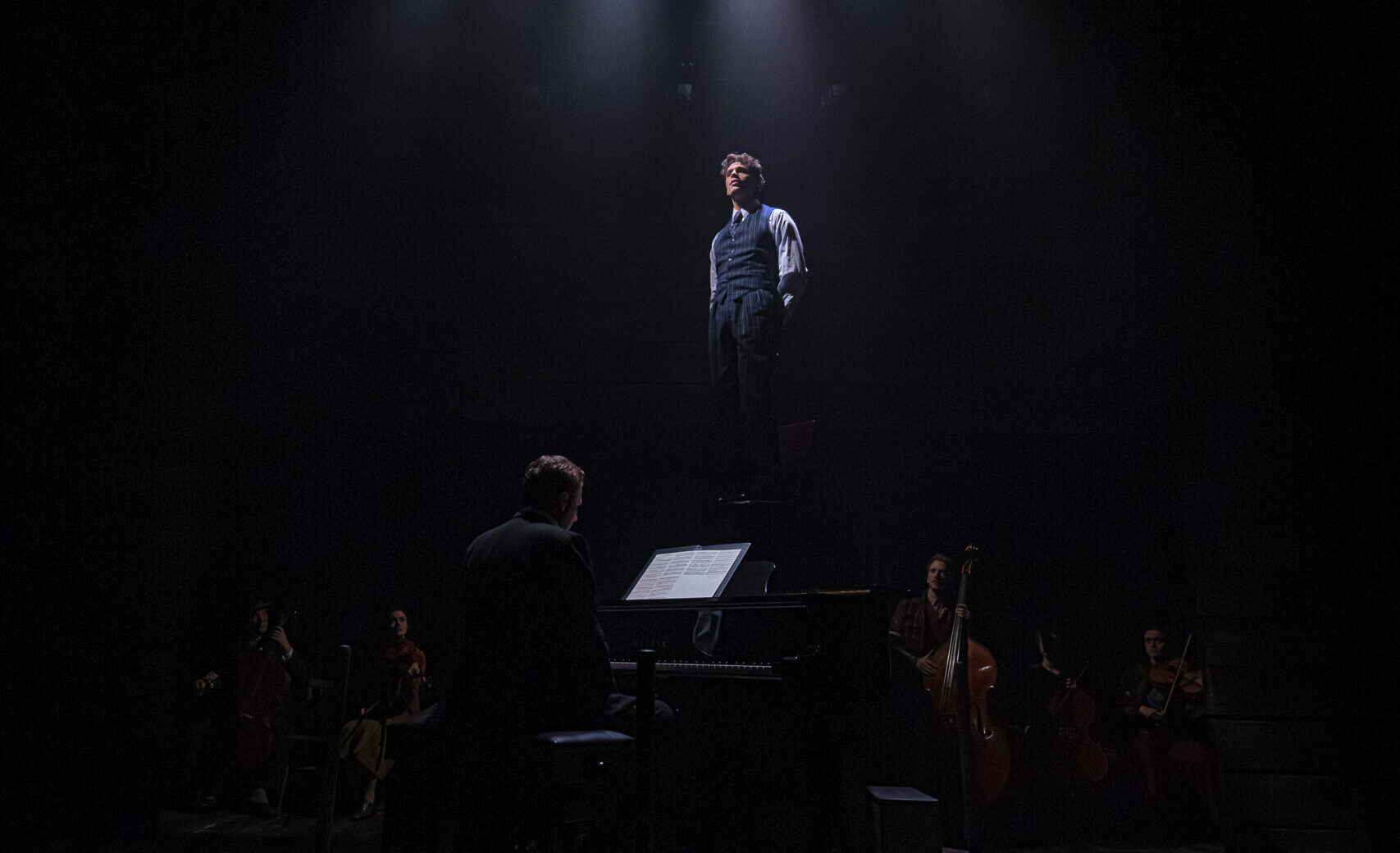
With so little in the way of props and scenery, it falls to the cast to bring the story to life, through pacy dialogue, neatly choreographed movement… and the music. Here, the production excels. The story is punctuated throughout by Szpilman’s own music, newly arranged by Simon Lee (Andrew Lloyd Webber’s long-time musical director) and played/ sung by the multi-talented actor‑musicians who make up the cast. In their hands, the music becomes a character in its own right, conveying atmosphere and bringing the emotional reality of being there to the forefront of the production. The placement of each piece within the story arc speaks perfectly to the dramatic mood (love, hope, loss, memory, loneliness) and having Malcolm Forbes-Peckham (also the musical director) in a tuxedo performing the piano pieces as Szpilman, allows Daniel Krikler, who plays Szpilman, to focus on leading the storytelling, while his alter-ego plays on his behalf.
Under the direction of Thom Southerland, for whom this has clearly been a labour of love and utmost respect, these elements combine with remarkable power to evoke an atmosphere of pre‑war Jewish Warsaw and the cultural world Szpilman inhabited. The audience is transported back there as the production deftly charts the personal impact on Szpilman of the collapse of the city, the tightening noose of Nazi rule, the creation and liquidation of the ghetto, his family’s deportation to Treblinka, his own escape (thanks to a member of the Jewish Police who knew him and rescued him), the lonely months of hiding and his rescue by a German officer, who recognised him and hated Nazi policies enough to risk helping him.
The way this story is told also echoes the memoir, in both chronology and style. Krikler’s Szpilman both narrates (providing dates, historical context and personal circumstance to frame the story) and interacts with the rest of the cast in the unfolding drama, moving seamlessly between observing and participating, before slipping back into the role of narrator.
Daniel Krikler (Fiddler on the Roof, Regents Park/ Barbican transfer; The Motive and the Cue, West End) is captivating as Szpilman, his performance simultaneously subtle and incredibly powerful as he portrays Szpilman’s gentleness, vulnerability, increasing desperation and ultimate resilience. He has a lot to do in the production but never loses his focus on the role or the attention of the audience. The only time he gets time to pause is to listen to his alter ego playing Chopin’s Nocturne in C# minor, as Szpilman sits at a piano he can’t play for fear of discovery, imagining how it would sound (and feel) if he could play it. A poignant moment where you could have heard a pin drop!
Rosalind Ford as Mother and TJ Holmes as Father work brilliantly together as the calming maternal presence and the proud family man who, while desperate to protect his family, can’t (or won’t) accept what’s coming until it’s too late, which has the effect of asking the audience: what would you do?
And then there are the siblings. Nitai Levi as Henryk, Szpilman’s brother, offers a tempestuous and passionate counterpoint to Szpilman’s cautious, considered character, with the contrast the source of rivalry and tension between them. Elżbieta Kalicka and Melania Maggiore as sisters Regina and Halina provide excellent support, both musically and dramatically. Although smaller roles, both actresses prove essential to creating a realistic family dynamic that will resonate with most people from a large family, where differing personalities, intimate understanding, bickering and unconditional love underpin everything.
The rest of the cast deserve mention too. Mischa Jardine as Janina (Szpilman’s friend), Max Roll as Gimpel (the Jewish Policeman who saved Szpilman the first time by pulling him from the deportation line) and Oliver Grant as Hosenfeld (the German officer whose unexpected humanity saves Szpilman the second time) all provide vital supporting input, with ensemble members Erin Rowlatt and Oliver Magor completing the talented line-up. Together, they combine to deliver well-judged, perfectly coordinated, interlocking performances, which elevate the presentation while delivering the all-important supporting soundtrack.
It would be fair to say that the first half is a little more involving for the audience than the second. That’s because the first half is driven by the energy of Szpilman’s relationship and interactions with family, friends and wider community, while the second half is focussed on just him and the story of his personal fight for survival (albeit with the help of others and his memories of family) and the hunger/ loneliness that drive him to the brink of suicide. One could argue that the second half is too long on telling and too short on showing but, given the ground being covered, that’s not necessarily a bad thing. In the intimacy of a small theatre, some details (such as the description of the reflection that Szpilman sees of himself in a broken pane of glass) would likely be too distressing to show and too difficult to stage realistically. Sometimes compromise is needed.
Bisecting these two very different halves is an intensely emotional scene immediately before the interval, where Szpilman’s father spends 50 Zlotys (“a fortune”) on one caramel as they wait to be deported, and splits it between all six of them. This turns out to be their last meal together as a family, as, shortly afterwards, Szpilman is rescued and his family are last seen with the door of the transport closing to seal them in. There’s a lot to think about during the interval!
This, then, is some difficult subject matter which will, and should, provoke a strong emotional reaction but it is delivered relatively gently in places, albeit with unexpected punch every now and then. Despite this thoughtful approach (totally understandable when seeking to encourage audiences to attend), some theatregoers will doubtless prefer to avoid it because of the subject matter. This would be a shame for two reasons. Firstly, in the current global climate, it feels more important than ever to keep the memory of what happened to Szpilman (and the many others impacted by the war) alive to ensure the lessons learned then are not forgotten in future. Secondly, they will be missing out on a thoroughly engaging two hours which, for all the tragedy and melancholy embodied in the production, is warm, uplifting and offers hope for humanity, alongside a little humour. As Thom Southerland says “It is a story about compassion, courage and the moments of kindness that can change the course of a life”. Now there’s a notion to take forward…
In a world crowded with new musicals, The Pianist has emerged as a true virtuoso! ★★★★★ 5 stars
Author Profile
- The Recs SW
Latest entries
- 12 November 2026London DramaHamlet Hail To The Thief – Barbican ★★★★★
- 1 November 2026London DramaThe Lives of Others ★★★★
- 29 October 2026London MusicalsCeilidh The Musical (touring) ★★★★
- 28 October 2026London DramaGirls – Young Vic ★★★★★