Dolly – Omnibus Theatre ★★★★★

London’s Omnibus Theatre stages ‘Dolly’ by Charlotte Ashton, a one-woman show with a lot to say.

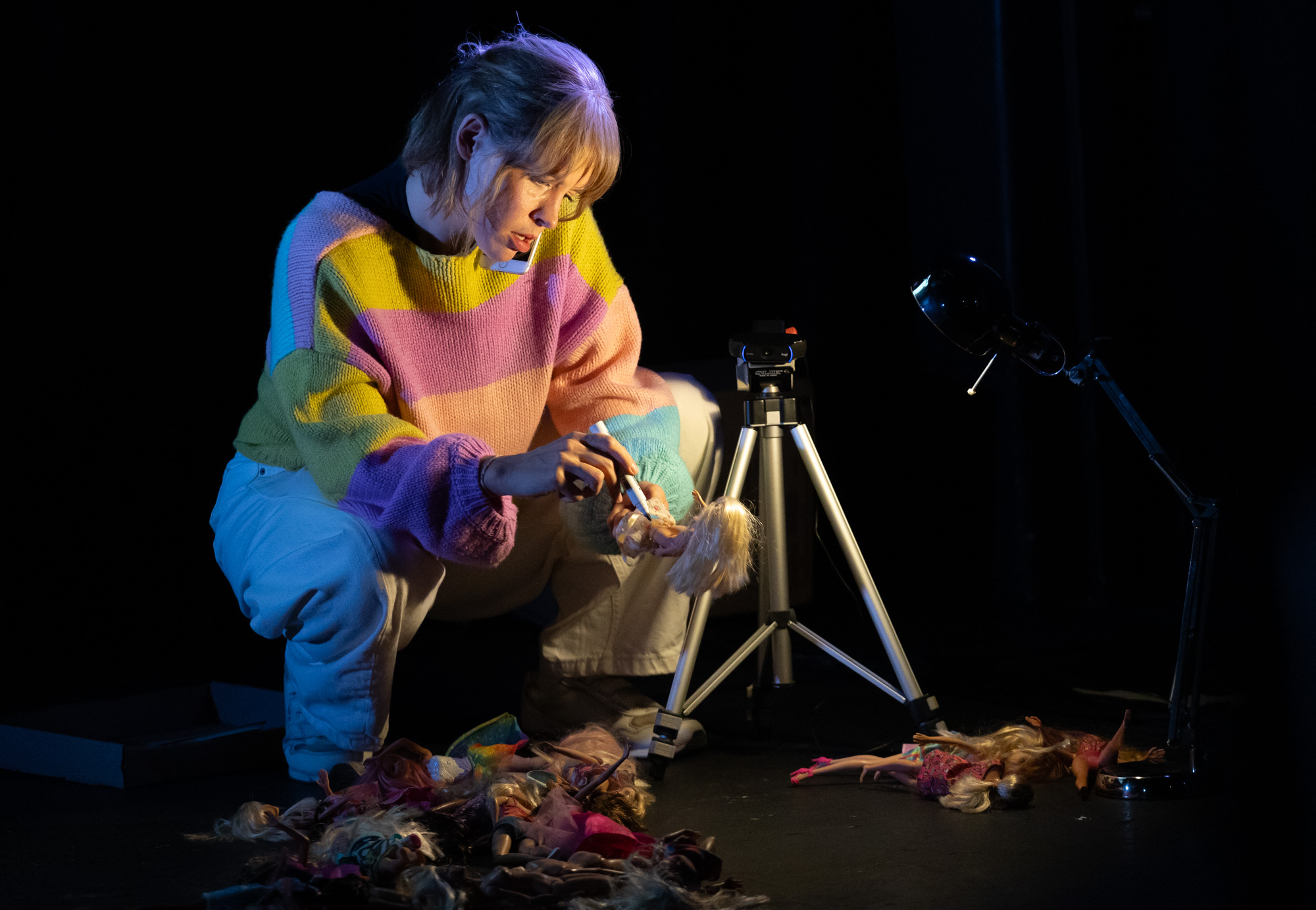
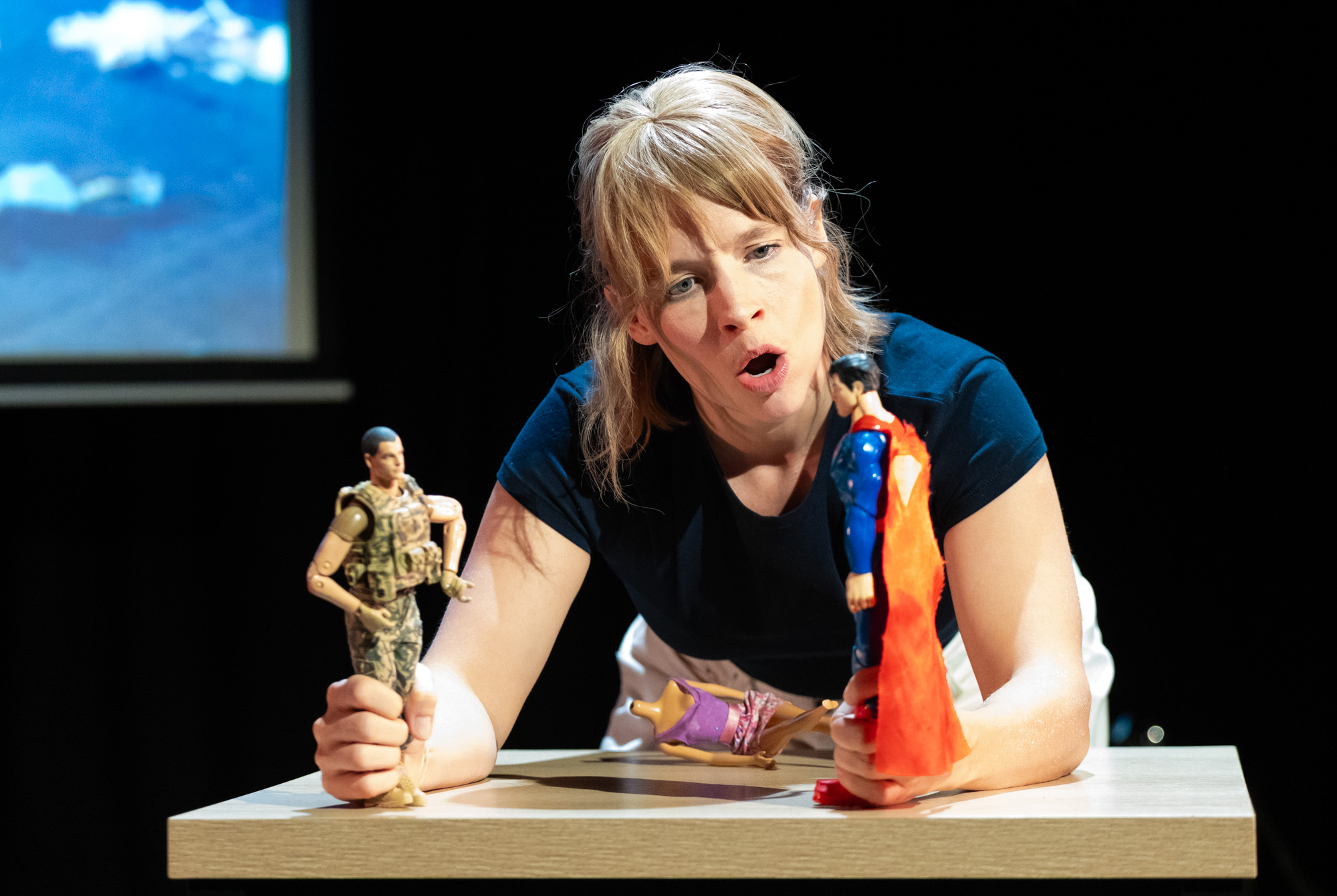
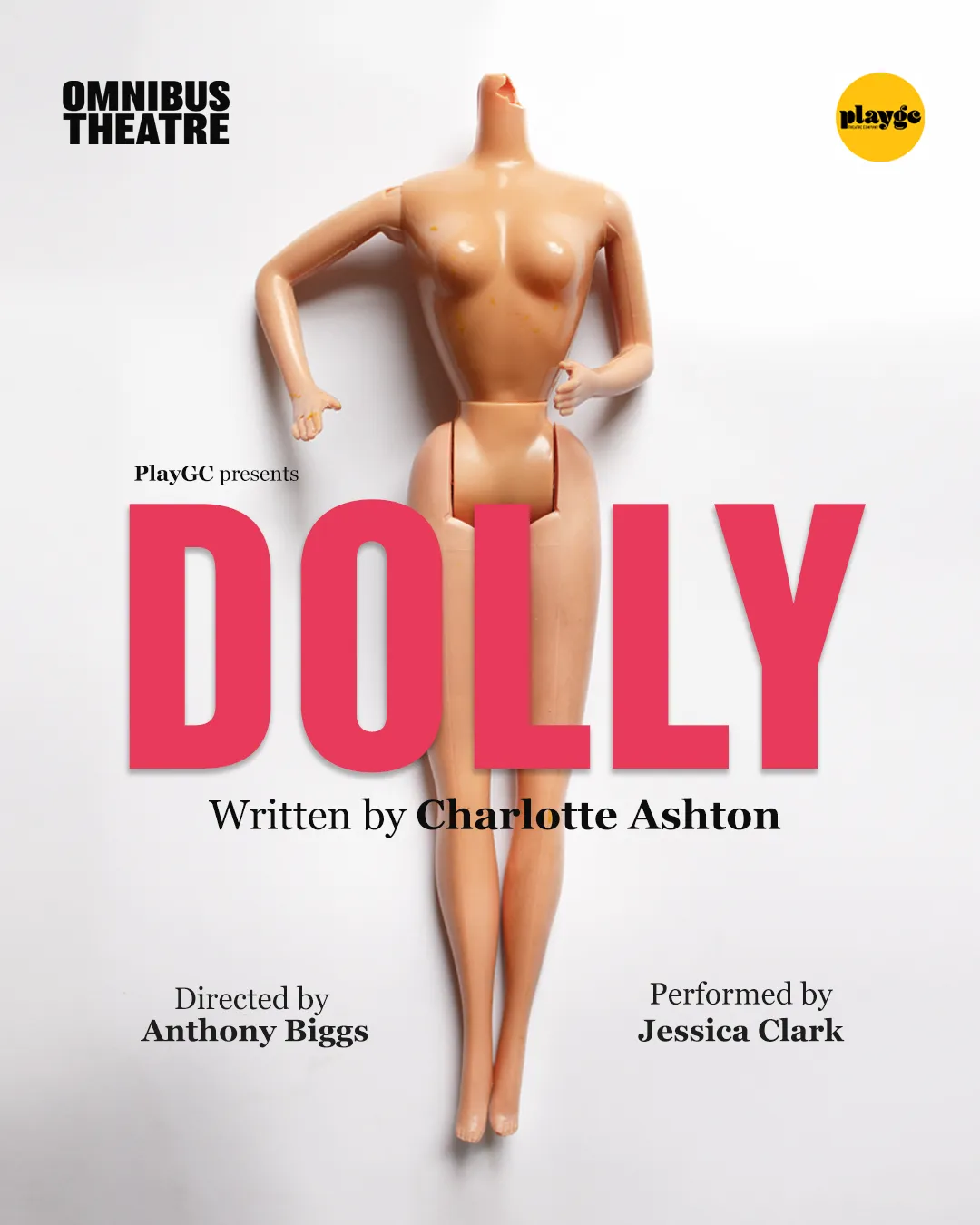
On an oppressively rainy Friday night in Clapham Common, Charlotte Ashton’s very own storm is brewing in the Omnibus Theatre. Dolly is her debut play, a tireless 75-minute show that refuses to be pencilled into any singular theatrical box. In just over an hour, sole actress Jessica Clark (Sap) plays a minimum of six characters, the central voice being Dolly’s, telling a twisted story with a comic edge. According to her doctor, she is a normal woman living a normal life! However, Ashton’s rebellious writing really questions: what is a normal experience? Further, why does your gender determine the answer?

Images by Carla Joy Evans

The play begins with a bubbly woman’s stand-up routine. We later find out she is Dolly. She makes crude jokes about stag-dos and blow-up sex dolls, asking her audience to repeat uncomfortable chants made at her by groups of men at the TexMex she works in. Dolly is the ‘everywoman’. She is charming and well-versed in masking her own pain, perhaps from years of having to harden up. As Charlotte Ashton mentions in her writer’s note, she believes ‘humour is the fourth emergency service ’, and this is easily proved in Dolly’s dialogue. She consistently relies on humour to deflect from the trauma she has suffered – the full, unspoilable story of which unfolds as the play runs on.

The first thing you may notice upon walking into the theatre is that you are being filmed. A projector screen lines the back wall. It serves multiple purposes throughout the play, but initially it projects a mirrored image of Dolly’s audience, while words type over the top of it that would perhaps be given to a jury before witnessing a trial. This panopticon-like setup gives the impression you are not just a voyeur, but also being watched for your reactions, perhaps enhancing the sense of urgency that becomes the propeller for Ashton’s story. But also, designer Ash Özüak is providing a literal mirror, encouraging reflection, especially since the rest of the set is fairly stripped back. A necessary design choice that gives room to the power in Ashton’s story and Clark’s superb acting.

Although it is clear from its sense of authenticity that this production has been a collaborative effort from the whole team, Dolly is written entirely from a woman’s perspective. Ashton, as a writer, is not only able to flawlessly and meticulously outline patriarchal structures in the justice system that prevent women’s safety, but she also provides a gripping drama to be entertained by. The team uses real video evidence of a 1980s police interview of a woman reporting sexual assault, accompanied by a statistic that will certainly unsettle you. Of 74 thousand rapes reported in the UK in 2026, just 3.4% of them went to trial. Balancing these figures with Jessica Clark’s unnerving wit is what makes Dolly a satisfying piece of theatre. Female trauma is something the world may seem to be obsessed with, but Dolly doesn’t satisfy that compulsion.

She is an unlikely victim. One that gives you anger and facts, throwing sexism and violence straight back to the perpetrators.

As Jessica Clark cycles through multiple roles, she hits every mark. She makes all roles identifiable with clear mannerisms that characterise many different reactions to female sexual trauma. Ranging from doting boyfriend ‘Paws’ to the unsympathetic therapist ‘Dr. Doctor’, Clark is able to embody every character as if it’s simple. What’s also interesting is how she portrays Dolly’s spiral into madness alongside the unchanging characters in her story. The choice to make this a one-woman show is fundamental to its success. It adds a certain weight to an already heavy story. The psychological process of watching one woman tell the story of a brutal rape, while taking on the emotions and roles of everybody around her (including decent men who continuously let her down) kind of forces you to carry this as well. The onus is on you now to watch this happen, to watch this woman carrying it all. Now you must carry this pain, this story, but most interestingly, you must carry Dolly’s confusion. The play is unpredictable; Dolly is unpredictable. When she acts impulsively in a vengeful manner towards the loving men in her life, there is surface-level anger but, beneath that, helplessness. Anthony Biggs has directed Dolly with equal sensitivity and angst. It’s as if she is aware of her multi-rolling, aware of her role as a storyteller. On one hand, this could be the natural result of using alienation techniques. On the other hand, the show feels engaging, true and unforgiving. Dolly feels like performance art, as if the pure existence of a play like this is a form of activism.

Charlotte Ashton has definitely not gifted you an easy piece of theatre to watch. There is no happy ending where justice prevails (even if she has set it up in a way that tricks you into thinking this will be the case). Nor has she produced a fearmongering, isolating lecture on how to treat women. Instead, it appears as if the creative team have worked together to relate a truly vulnerable experience on stage, utilising an unfortunately familiar feminist story to shake some urgency into you. Dolly makes you want to act.

Ain’t nothin’ plastic about this Dolly! ★★★★★ 5 stars

Dolly Tickets

Dolly runs at Omnibus Theatre until 7 November 2026

Book Now

Author Profile

The Recs EM - Erin Muldoon