Girls – Young Vic ★★★★★

In April 2014, Boko Haram militants kidnapped 276 girls from a secondary school in Chibok, northern Nigeria. Inspired by that event, writer Theresa Ikoko created Girls, a one-act play exploring themes of resilience, love, loss and the distorting effects of coercive control. It won the Alfred Fagon Award for best new play in 2015 and premiered at the Soho Theatre in 2016. Now, the Young Vic has offered director Ewa Dina and designer Raphae Memon the opportunity to revive it.  

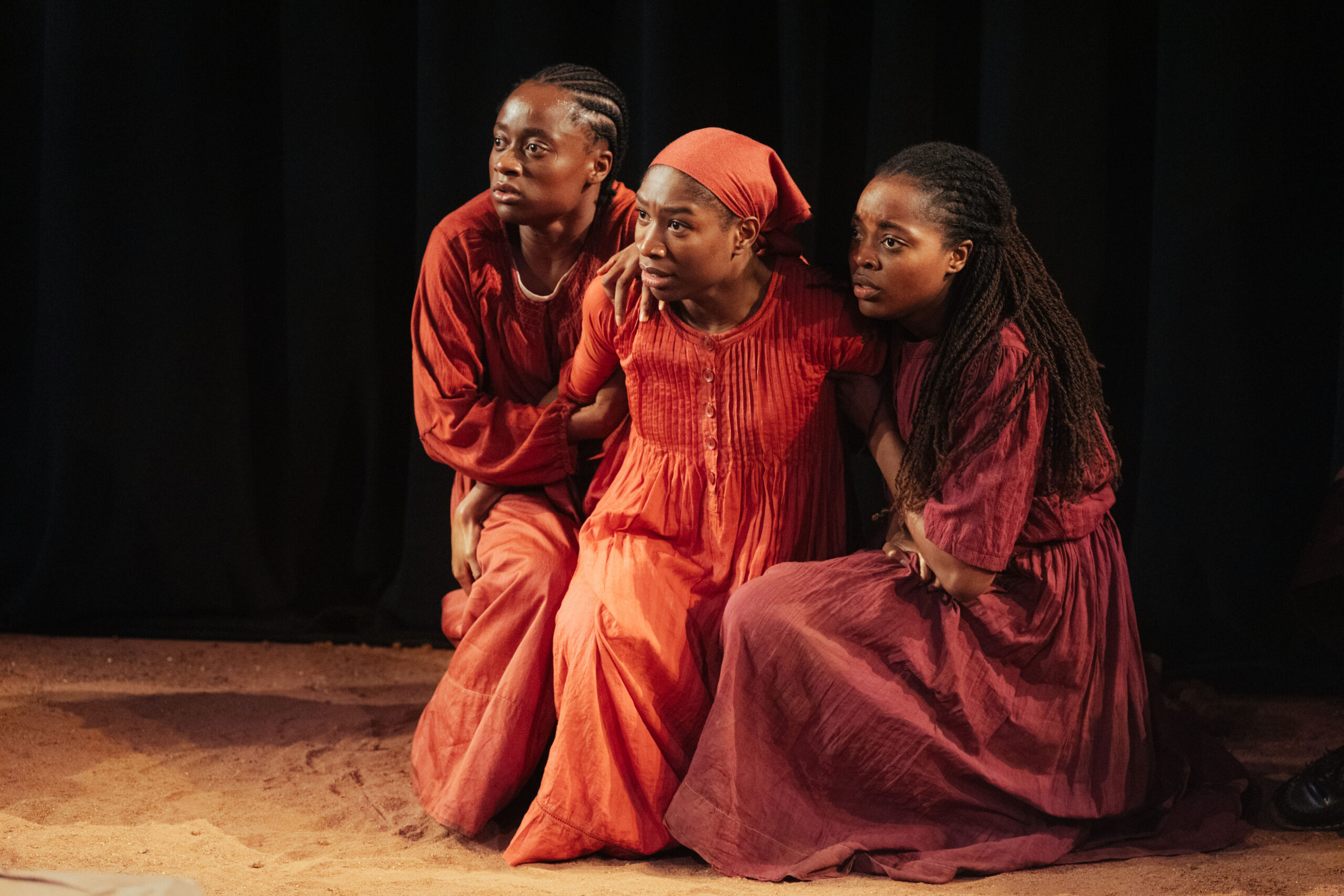
Ikoko’s response to those events is not a political or journalistic one, but a deeply human one, centred on three friends. Tisana, Rahab and Haleema are interested in the usual teenage stuff, including TV, dancing, their looks and, of course, boys. They’re having fun and enjoying themselves. But it soon becomes apparent that they’re not actually living the lives on show but reminiscing about how it was “before”.
Images by Helen Murray
Over the next two hours, the Girls share with the audience their current circumstances, how they got there and what their lives had been like “before”, through both their conversations and their actions. As they do, the audience also gets to know each one of them as individuals: their hopes, fears and motivations… and the distinct forms of inner strength that sustain them. Ikoko’s intimate portrait invites the audience to imagine what their world of captivity might be like.  It crackles with energy, as the pacy, sharp and witty dialogue ricochets between the Girls. The text is served magnificently by three tremendous actresses whose passionate and animated performances are so convincing that the boundary between actor and character all but disappears.  
 
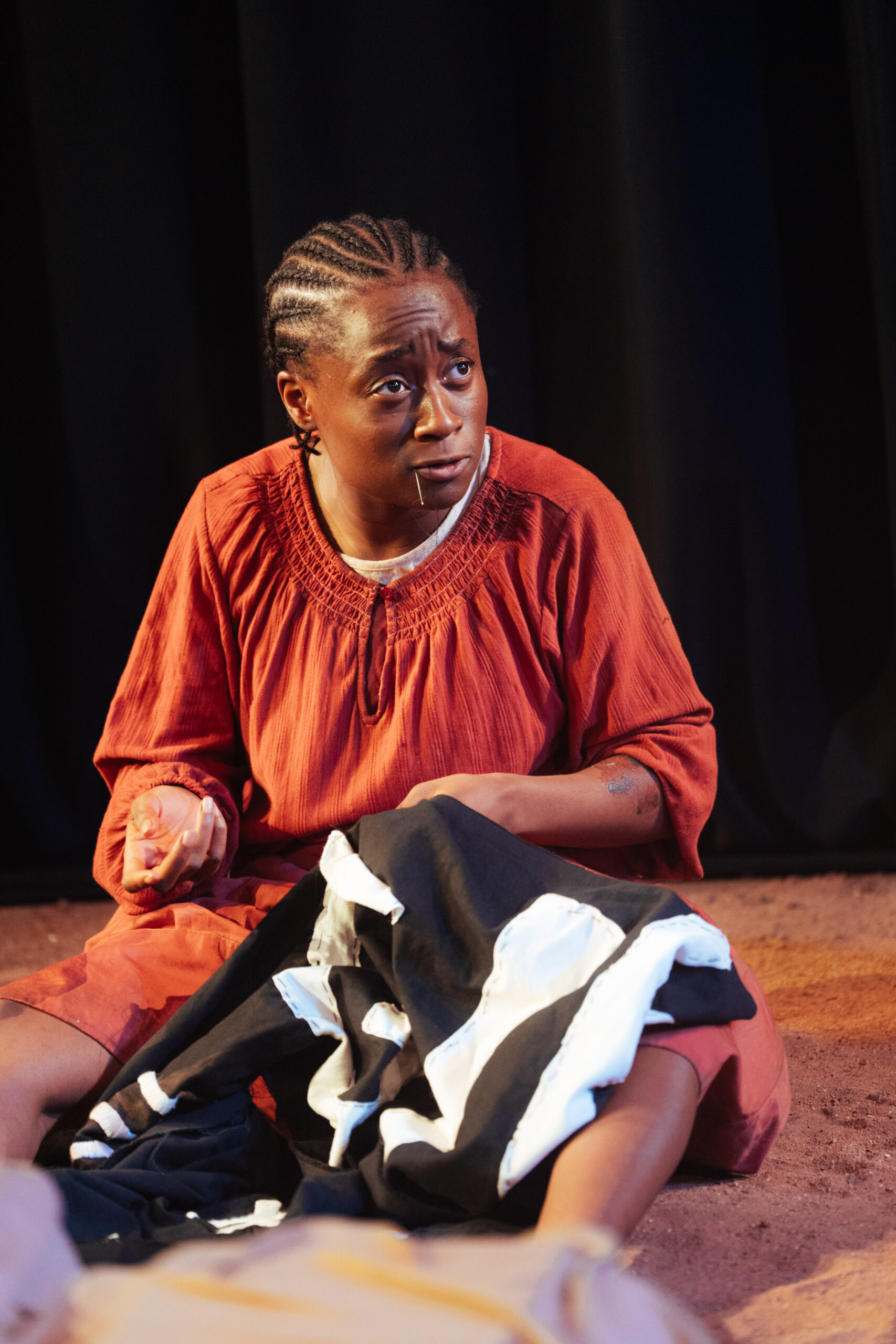
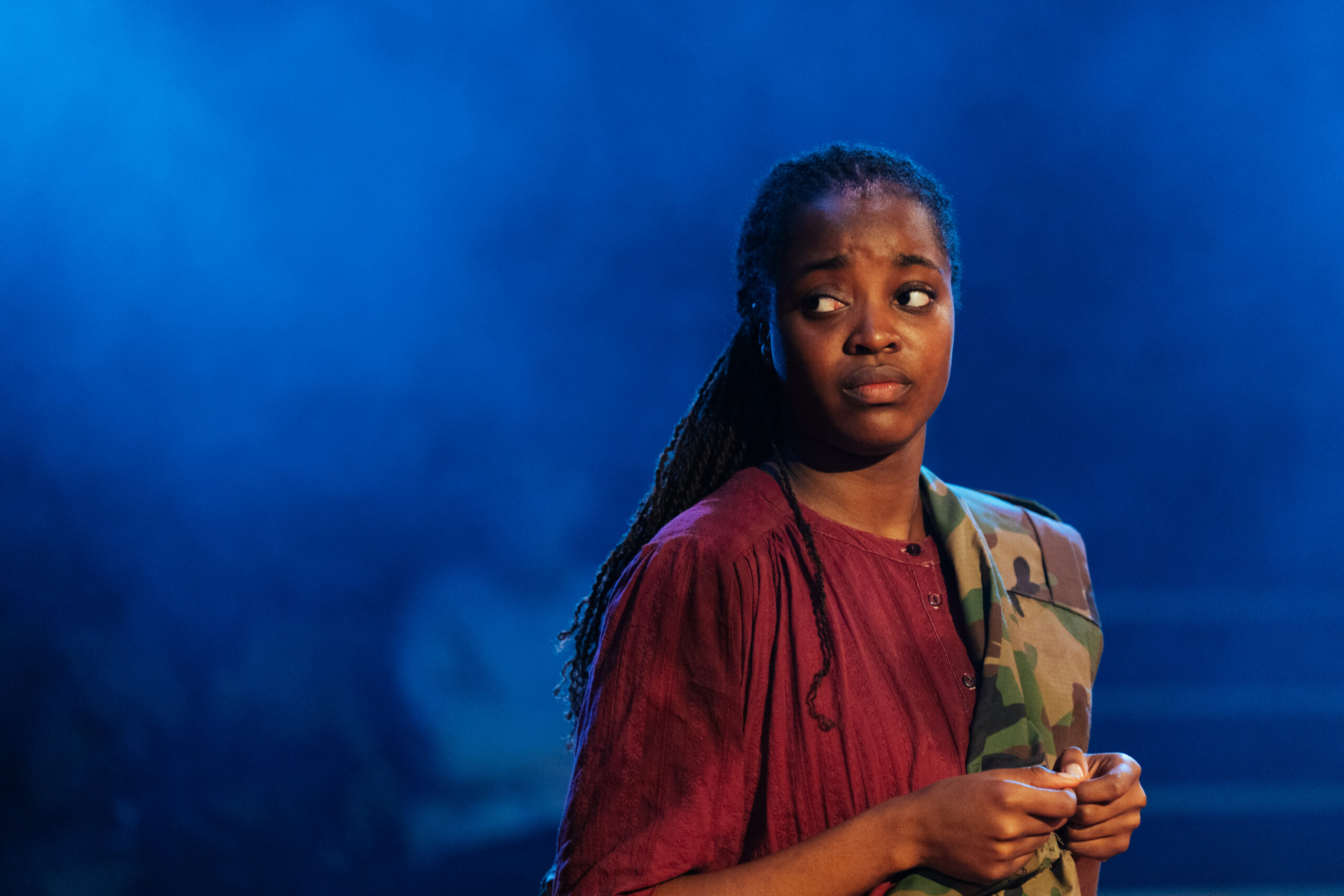
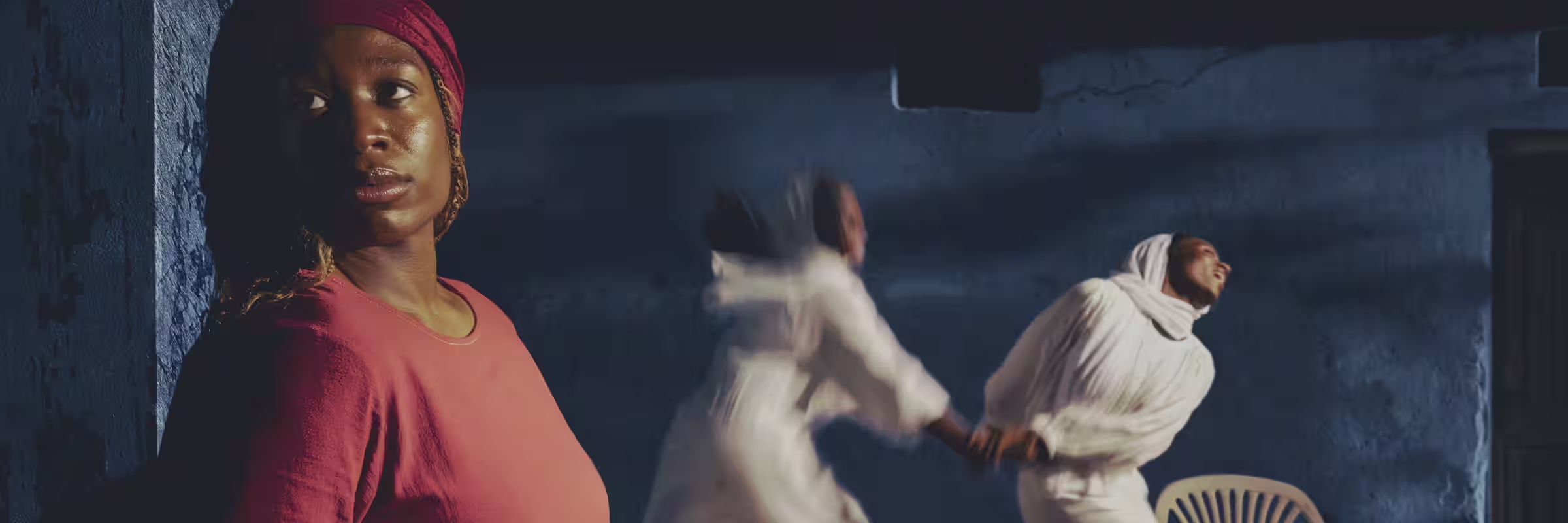
First among equals is Tara Tijani (A Midsummer Night’s Dream at The Globe, The School for Scandal, RSC) as cynical and driven Haleema. Her charisma, energy and expressiveness, both in dialogue and movement, set her slightly apart from her more reserved co-stars. That’s partly the nature of the role, as the group’s informal leader, but may also explain why she was cast in it. Tijani commands attention whenever she’s on stage, bringing both force and vulnerability to a character determined to survive on her own terms.  

Hannah Akalu (Every Leaf a Halleluja, Regents Park Open Air) provides the perfect counterpoint. As Tisana, she captured the character’s naïve optimism and mental fragility, charting her emotional unravelling with subtlety, sensitivity and complete commitment. Where Tijani’s performance is outwardly dynamic, Akalu’s power lies in her restraint, making Tisana’s resistance to betraying her beliefs and subsequent struggles all the more affecting.

Completing the trio is Sewa Zamba (Shakespeare with Dame Judi Dench, the Mill at Sonning), who gives a refined and deeply moving performance as Ruhab. Peacemaker and pragmatist of the group, she is gradually drawn into the ideology of their unseen captors, a journey that slowly isolates her from her friends. Zamba handles this evolution with great intelligence, allowing the character’s shifting loyalties and inner conflict to emerge naturally and heartbreakingly.

Separately, they are all impressive, but it is in their collective dynamic that the production truly flourishes. Their performances are so closely intertwined that each seems elevated by the others, creating something greater than the sum of their individual contributions. Under the guidance of movement director dkfash, their movement around the stage is almost choreographic, injecting teenage exuberance and physical comedy into performances already rich in nuance.  Most compelling of all is the chemistry between them. They are irresistible company while on stage, so vivid and fully realised that their absence is keenly felt after the play is over.

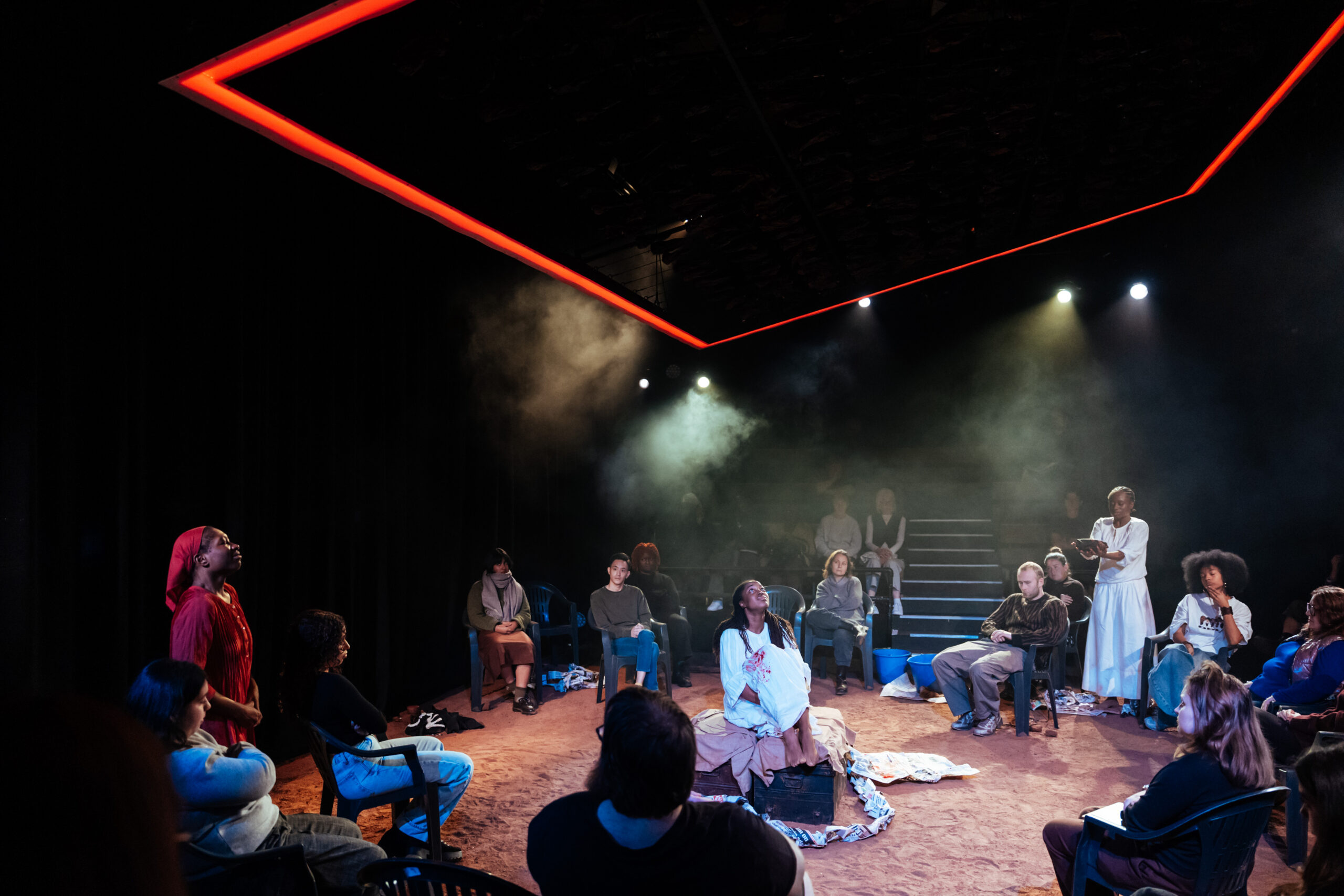
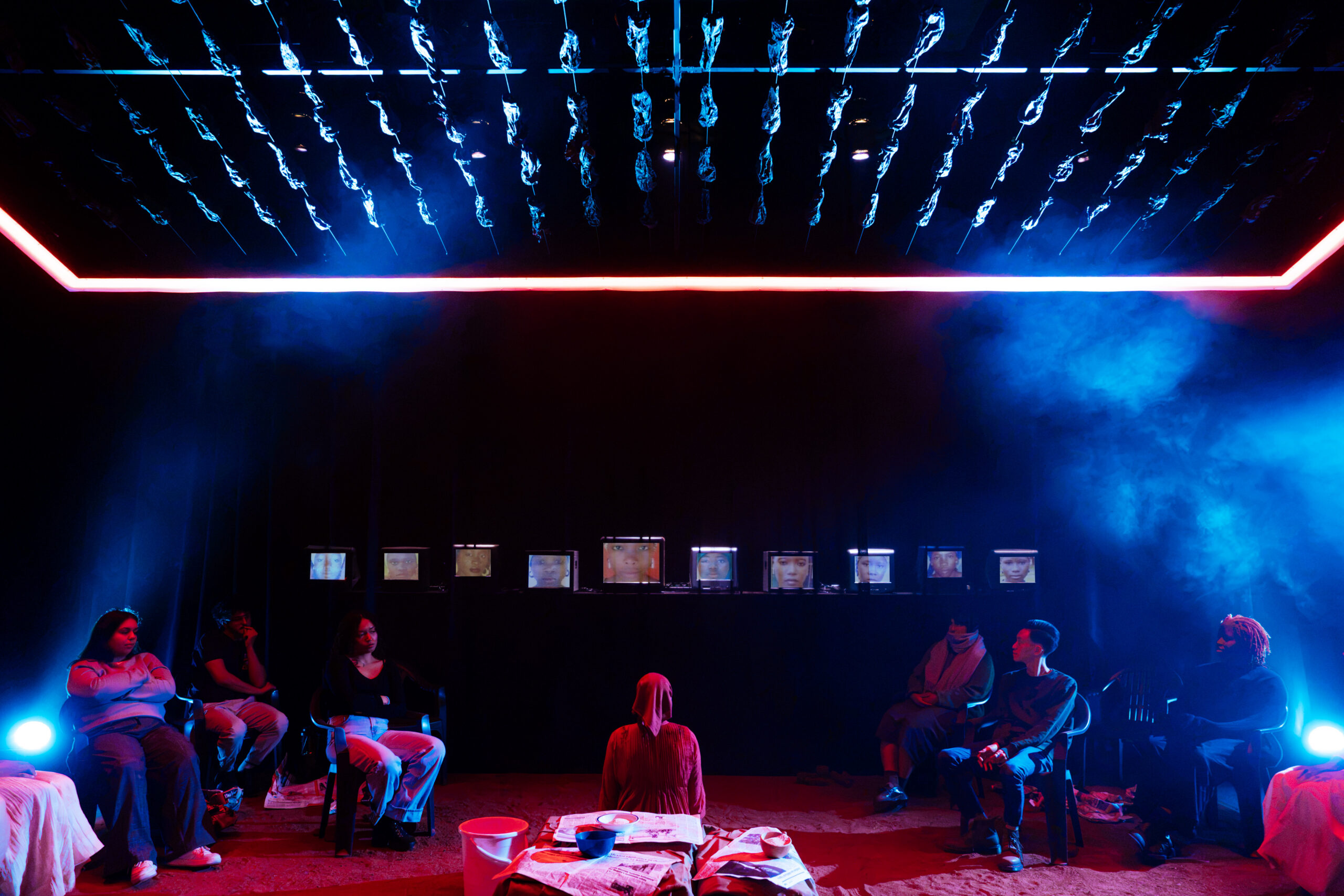
The minimal staging, comprising little more than a dirt floor, a handful of boxes and a sparse collection of props introduced over the course of the play, gives ample room for these expansive performances, while also reflecting that the Girls have lost everything. This small place (representing first a tent, then a hut in a ransacked village) is where they live and is the only part of their world visible to the audience. Yet the audience develops a remarkably clear and vivid sense of what’s happening beyond it, through the Girls’ words, their physical reactions to the sounds of the events taking place “outside” and their nuanced responses to the horrors they have witnessed.  In some ways, it resembles one of the claustrophobic reality TV shows they reminisce about, albeit with considerably more menace. Although none of this wider world is shown directly, it is described so vividly that it feels both tangible and ever-present.

The lighting design reinforces this sense of vulnerability. Floor-level spotlights evoke the dangers of night-time, while small screens at the rear of the stage display images that accentuate key moments in the narrative. Occasional strobes suggest explosions and occasionally punctuate the dialogue, accompanied by a visible shudder from the Girls.  This device appears intended to represent the sudden intrusion of traumatic memories, though the lack of dramatic explanation behind these short interludes makes them feel slightly intrusive to the flow of the story. It is, however, a minor gripe.
The soundscape complements the action beautifully, creating an immersive backdrop to the events outside and the Girls’ lives inside. But it’s hard to resist the urge to scratch when the Girls swat away mosquitoes to an appropriately mosquito-ey soundtrack!

And then there are the costumes. The simple outfits the Girls wear acquire a sinister significance as the story progresses, becoming a symbol of the extent to which they are surrendering to their captors’ wishes. It’s an effective and unsettling device.  

Director Ewa Dina has woven all these elements into a cohesive and compelling production, each component working in harmony with the others. Like the pieces of a jigsaw, they come together to create the full picture.
It can be difficult to watch and harder still to hear, as the play traces the impact of trauma, captivity and deprivation on the Girls’ friendship. It also takes aim at powerful Western nations for whom such atrocities are too distant to command sustained attention, and at campaigns of outrage such as the global #BringBackOurGirls movement which followed the April 2014 abductions; causes that attract celebrities and politicians eager to be seen on the right side of history but too rarely translate into meaningful action. For all that, Girls is never relentlessly bleak. Although it packs considerable emotional punch, it is warm and entertaining. Ikoko skilfully weaves in moments of joy into circumstances where they seemingly have no place and provides plenty of contemporary references to remind the audience that this is a modern-day issue.

Dina’s stated goal, as director, is to begin a conversation about collective action to make the world safer and more welcoming for women and girls. Of the 276 girls kidnapped from Chibok in April 2014, over 80 are estimated to still be missing, presumed still in captivity. Meanwhile, violence against women and girls continues to rise globally while, in many parts of the world, reproductive, educational and social rights are being eroded rather than expanded.
It is a worthy but undeniably ambitious agenda and one whose political context might deter some theatregoers. But please don’t let it!  Girls is, first and foremost, a tremendously accomplished coming-of-age story, which makes its points naturally and without hectoring, trusting its audience to draw their own conclusions. Throughout its uninterrupted two-hour running time, it holds the audience’s undivided attention, and its emotional impact lingers long after the curtain call.

It deserves to be seen… and you deserve to see it!
An evening with these Girls is time well spent! ★★★★★ 5 stars

Girls Tickets

Girls runs at the Young Vic until 21 November 2026

Book Now

Author Profile

The Recs SW