Supposing ★★★

‘Supposing’ uses Greek chorus as a contemporary metaphor
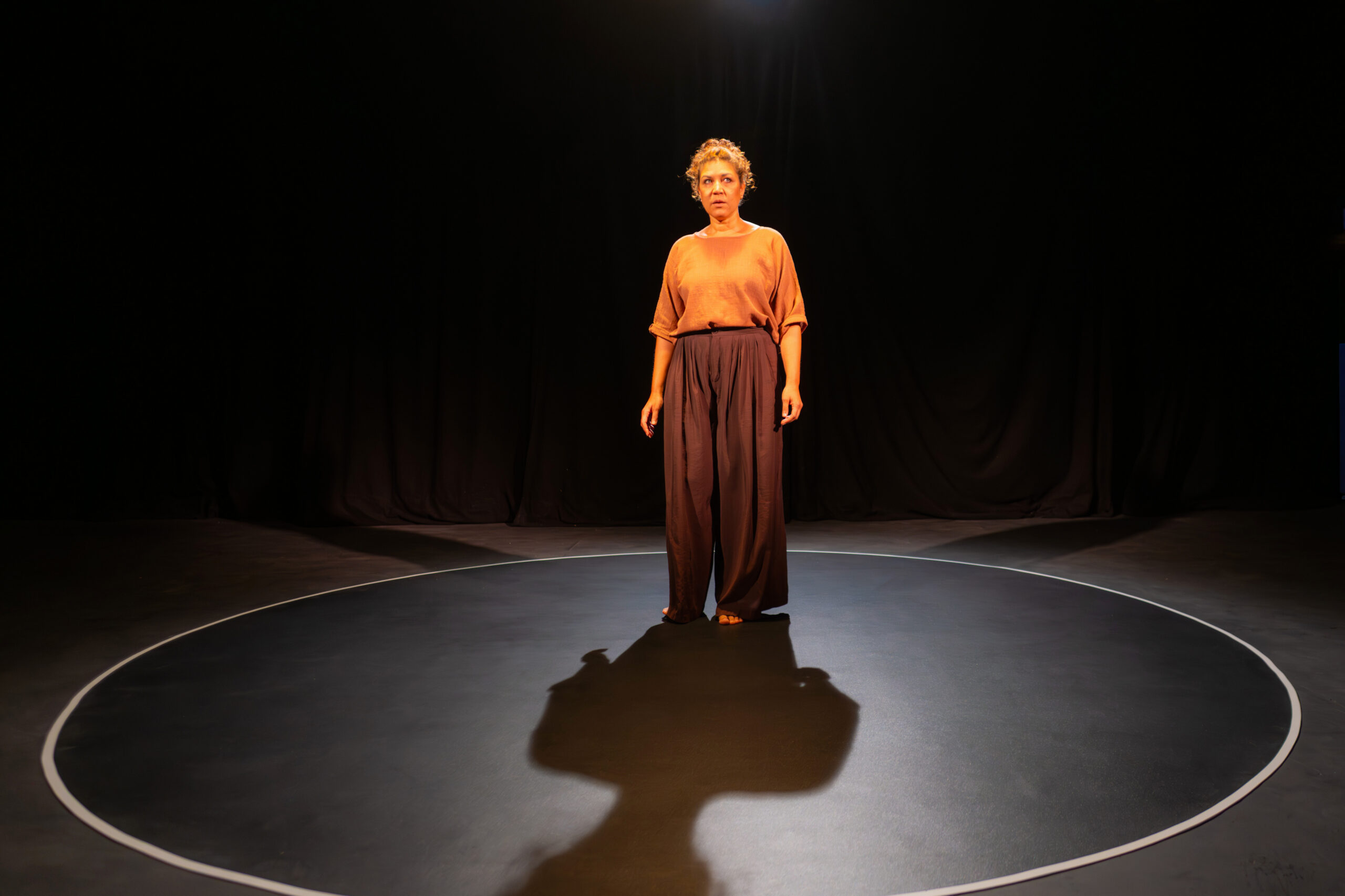
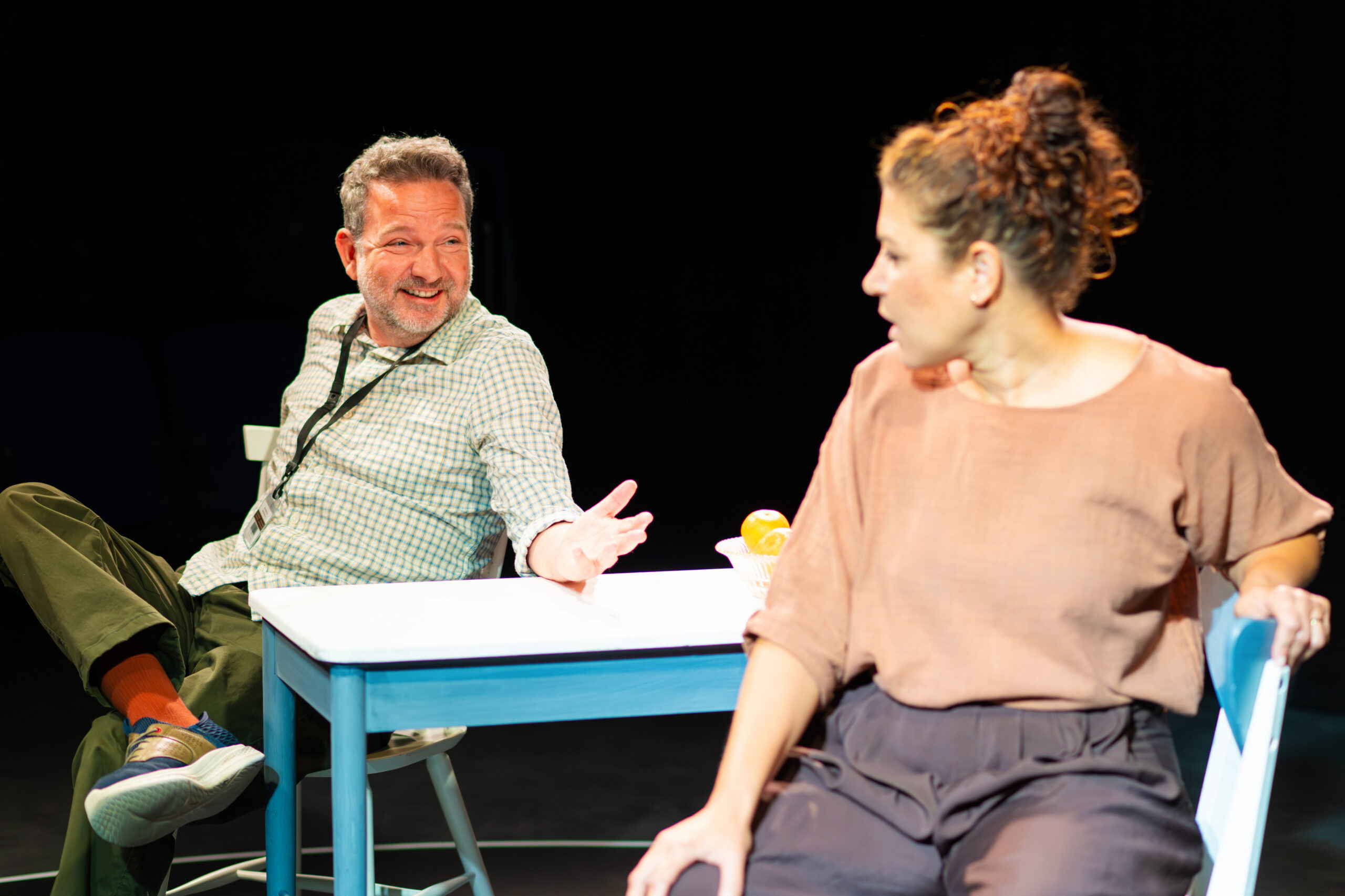
Starting from a rather unconventional staging setup, arrives playwright and director Zinnie Harris’ new play, the fascinating and, at times, perplexing work by the longtime Traverse Theatre director. Supposing contains the bones of interesting theatre, touches on fascinating topics and yet contains moments that render the show a bit incomprehensible.

Images by Mihaela Bodlovic

It begins with a fall. Sally, played with enthusiasm by Nicole Cooper, is a down-on-her-luck unemployed middle-aged woman who takes a fall down a pit on her way to a job interview for a local theatre. She subsequently begins to hear voices akin to that of a classical Greek chorus – a crescendo of voices that spell certain doom in both her life and at the state of the world.

This is an interesting idea. The play uses the metaphor of the chorus as a ringer for the topic of mental health – a supposed metaphor for schizo-affective patients who hear voices. The voices spell inevitable disasters in her life and for those around her. She hears that her therapist will commit suicide and that her neighbour will die. Issues of environmentalism are touched on later by the voices, though these are introduced as the plot progresses.

As her marriage with her husband Richard (a convincing and compelling performance by Richard Colon) deteriorates, she begins to give into the ubiquitous Greek chorus of voices. There is a sense of inevitability – coinciding with the idea of certain death. Sally and Richard’s marriage is at the heart of the play; Richard constantly demonstrates his inability to understand how Sally feels or how the weight of her thoughts plays into her welfare.

As mentioned, these have the bones for a fascinating exploration of the effect of politics on the everyday person. But this is not executed with the subtlety that Harris desires. Cooper and Colon’s performances are nuanced – both performers demonstrate an ability to read between the lines, and their dynamic is naturalistic, but Richard’s neglect for Sally often reads as ludicrously inattentive. He misses the obvious.

One aspect that is compelling is the political stance the production takes. Its keen eye for contemporary society is intelligent. Discussions about the spread of Reform and the debate around immigration are cleverly woven into the idea that Sally’s outbursts and prophetic calculations of the future might’ve been taken seriously if she were a man.

Cooper’s performance is indeed magnetic. Her portrayal of Sally’s descent into hysteria begins through her physicality, and her facial expressions lend themselves to a degree of realism that is refreshing. She never hams it up. Colon similarly brings an honesty to Richard that counteracts some of the more ridiculous behaviours he demonstrates.

Ultimately, this is a script with the potential for compelling experimental theatre. Harris’ talent is evident through her ability to incorporate the tradition of Greek theatre into the everyday – the way ancient oral storytelling techniques can be modernised, and she demonstrates that in spades. However, with some strange directorial choices, Harris takes the audience out of the drama – and out of the pair’s story, which would’ve otherwise been more compelling.

Zinnie Harris’ complex new play is compellingly psychological ★★★ 3 stars

Edinburgh Fringe Tickets


Tickets for this show and 3000+ other titles are available to buy online at the Fringe's website

Book Now

Author Profile

The Recs BK - Brandon Kiziloz