
Mrs. Stern Wanders the Prussian State Library ★★★★

Hannah Arendt is put on trial for her ideas.
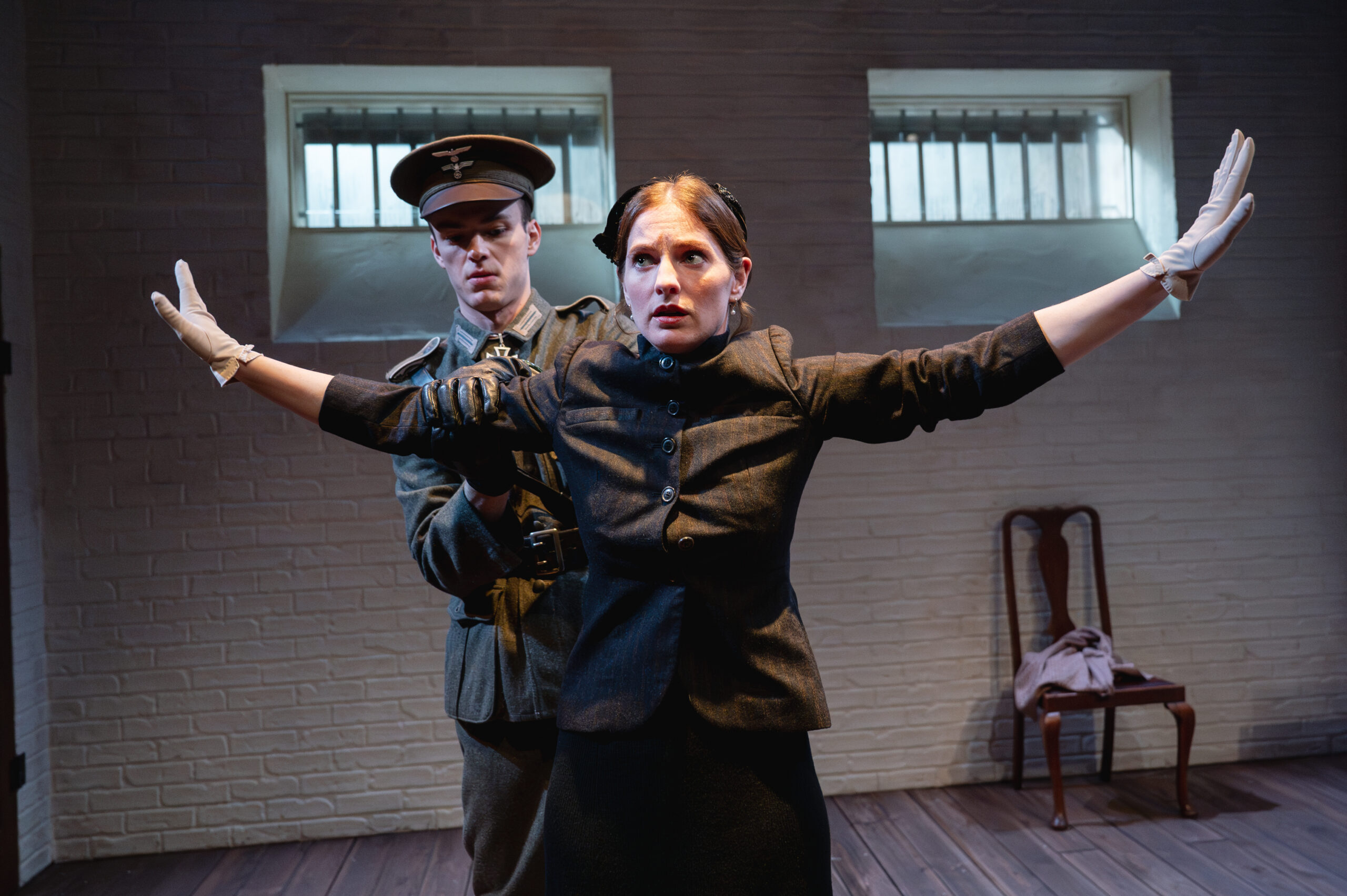
The concept of the banality of evil has never been more relevant today. In Jenny Lynn Bader’s new play about the interrogation of philosopher Hannah Arendt, parallels between the persecution of ideas back in the 30s and in the present are drawn almost immediately. Bader has crafted something acutely relevant to a contemporary political context.

It is also gripping theatre. In Mrs. Stern Wanders the Prussian State Library, “Mrs. Stern” is the married name of Hannah Arendt – a thinker who would theorise the term “banality of evil” – informed by her own captivity and persecution as a Jewish woman in Germany in the 30s. Though this theory would formally be written about after the trial of Adolf Eichmann in 1961, Arendt’s brush with certain execution was paramount in her writings about human morals.

Bader’s play takes the form of a long, arduous interrogation. Arendt is being investigated on her thoughts on German Zionism, Nazism, and whether or not these ideas are dangerous to the state. Ella Kaillie does an impressive job with handling the weight of playing a philosopher walking a tightrope. She engages in Bader’s verse with certainty, not shying away from the philosophical references that fill the script. Her interpretation of Arendt is delightfully spartan.

Images by Valerie Terranova

Her interrogator takes the form of a nervous, naive Nazi officer, Karl. Brett Temple focuses his performance on garnering some sympathy from the audience. He’s unaware of how to conduct the questioning, much less able to grasp the intellectualism of his captive. Temple’s affection for Arendt is apparent – he learns to respect her ideals and even regrets his position. Bader’s leanings towards the humanity of the situation are a welcome addition to an otherwise dour affair.

Adding to the mix is Erich, a German Zionist lawyer – who is a little more bashful than Arendt. Drew Hirshfield (now replaced by Daniel Adam Cantor) conveys a rebellious air well, contrasting Kaillie’s performance as a foil. While he doesn’t make an appearance often in the play, it’s an interesting perspective on the debates about humanity in the show.

Essential to any cat-and-mouse thriller is tight direction, which is executed by Ari Laura Kreith. Kreith injects much-needed tightness into the script, which can feel a little dense at times. The philosophical discourse is fascinating, but it is difficult to assess how much of it lands with a broader audience. Lauren Helpern’s stage design conveys the decrepiteness of the interrogation cell with a falling ceiling and a dingy brick wall. Sounds of prisoners occasionally screaming for help are reminiscent of Zone of Interest’s sound design, which in itself aligns with the banality of evil.

The play is a phenomenally executed script that allows the audience to draw comparisons with the contemporary world political stage. With a keen eye for how intellectuals are routinely persecuted elsewhere, Bader has captured not only how humanity can exist even in totalitarian dynamics but also allowed room for the performances to shine. A must watch for anyone, especially those interested in nail-biting history. 

Jenny Lynn Bader’s cat-and-mouse philosophical play is thrilling ★★★★ 4 stars

Edinburgh Fringe Tickets


Tickets for this show and 3000+ other titles are available to buy online at the Fringe's website

Book Now

Author Profile

The Recs RCD