Krapp’s Last Tape ★★★

‘Krapp’s Last Tape’ – Press Play
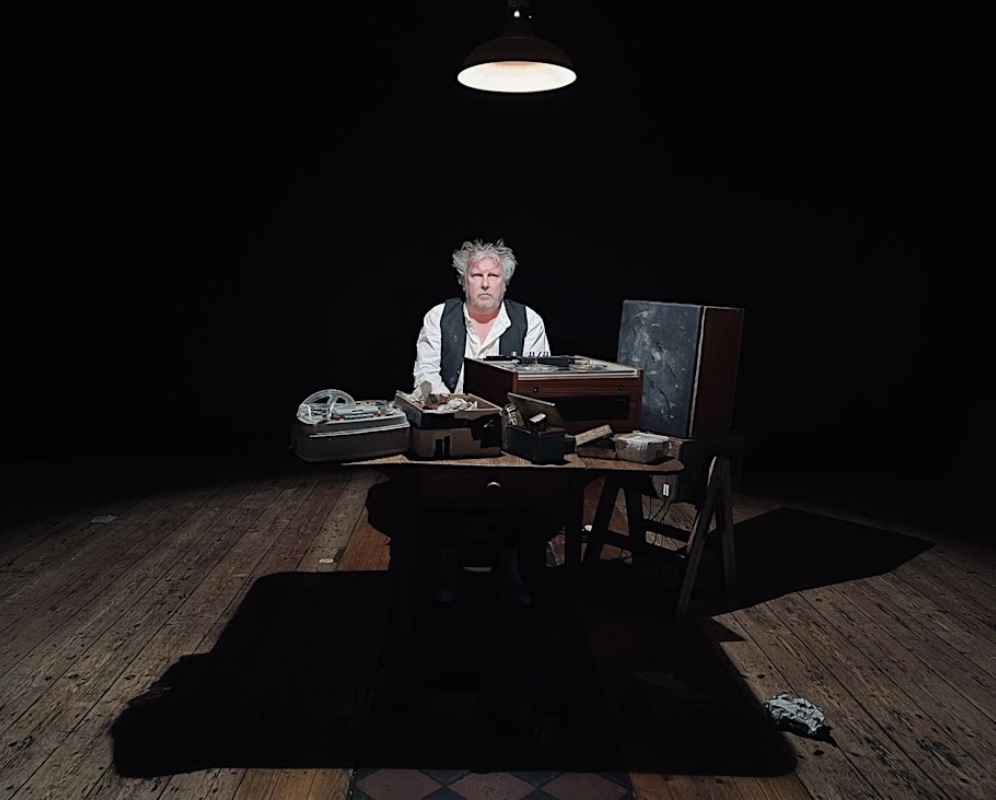
Playing Beckett’s despairing clown is no easy feat. The physical specificity of the stage directions, coupled with the fact that much of this play is reacting, makes Krapp’s Last Tape a challenge for any production, let alone performer. It is no small miracle that David Westhead was able to pull it together for a very commendable performance of Krapp.

Images by Alfred Westhead

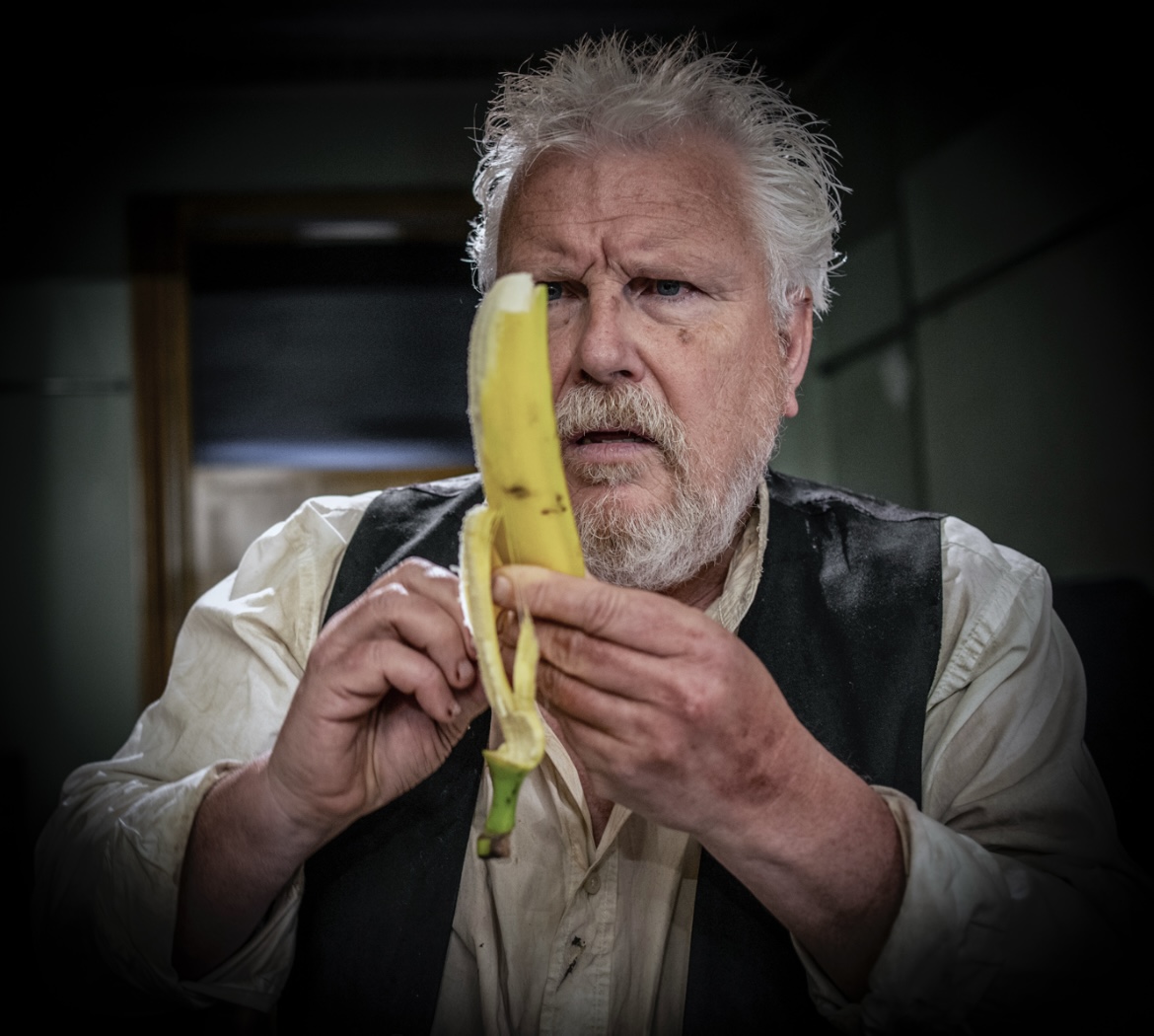
To summarise the legendary playwright Samuel Beckett’s play, Krapp is an old man who has, throughout much of his life, recorded diary entries into a tape recorder. Now celebrating his 69th birthday, Krapp listens to a tape he created when he was 39. Of course, there are plenty of idiosyncrasies to Krapp that make him one of Beckett’s most memorable characters. This includes an affinity to eating bananas in an incredibly discomforting manner, an oddly vivacious sexual desire (for his age), a tendency to slip on said banana peels, and a deeply poetical side.

Indeed, much of Krapp’s affinity for language comes across in his audio tapes and his brief description of a past love, which the tapes constantly return to. Westhead’s performance of the tapes themselves is sensitively portrayed. He conveys genuine affection for a love that is past gone – the lilt of his voice in these moments is pleasant to the ear. 

Of course, the play is a fairly straight interpretation of Beckett’s work, with such a restrictive literary estate preventing large-scale productions making their own interpretations. From that perspective, there are several aspects that the show does make missteps on. One crucial detail about Krapp is his shoes. Beckett describes these as being pristine, white cowboy boots. This contrasts from Krapp’s unkempt appearance, which the show does indeed nail.

Another unfortunate aspect to the production is its rather poor choice to allow late seating. Several moments throughout the show featured audience members coming in or coming out, letting the noise from outside pollute the space. Breaking up the rhythm set up by Westhead, these moments were an annoyance that detracted from the immersive nature of the show. Silence is one of the devices that is integral to the show – Krapp’s loneliness is accompanied by a stage bereft of noise, save for the tape recordings.

Ultimately, however, Westhead’s performance of Krapp is fantastic. Every grunt, giggle, and languish on the word “spool” is executed with the precision of a surgeon. It’s easy to indulge in the grotesqueness of the clown – it’s hard to then craft a character of it. Under the direction of Stockard Channing, Westhead’s vulnerability and humanity as Krapp is a clever shift that subtly undercuts some of the more caricatured portrayals of the central character. 

It is a delight to have Beckett at any capacity at the Fringe. Curiously, it works as a Fringe-length production on its own, fulfilling many of the constrictions that come with the festival. Its short length of 50 minutes and its minimal staging of a desk, tape recorder, and rubbish make the show a fantastic festival experience.

Krapp’s Last Tape feels very welcome at the Fringe ★★★ 3 stars

Edinburgh Fringe Tickets


Tickets for this show and 3000+ other titles are available to buy online at the Fringe's website

Book Now

Author Profile

The Recs BK - Brandon Kiziloz