Quartet in Autumn ★★★★★

Bacon at 46 pence, butter beans at 12 pence, and a prejudicial haughtiness against Dairy Crest milk bottles are some of the seemingly banal topics embedded in this poignant yet laughter-littered play based on Barbara Pym’s Booker Prize-shortlisted novel, first published in 1977.
 
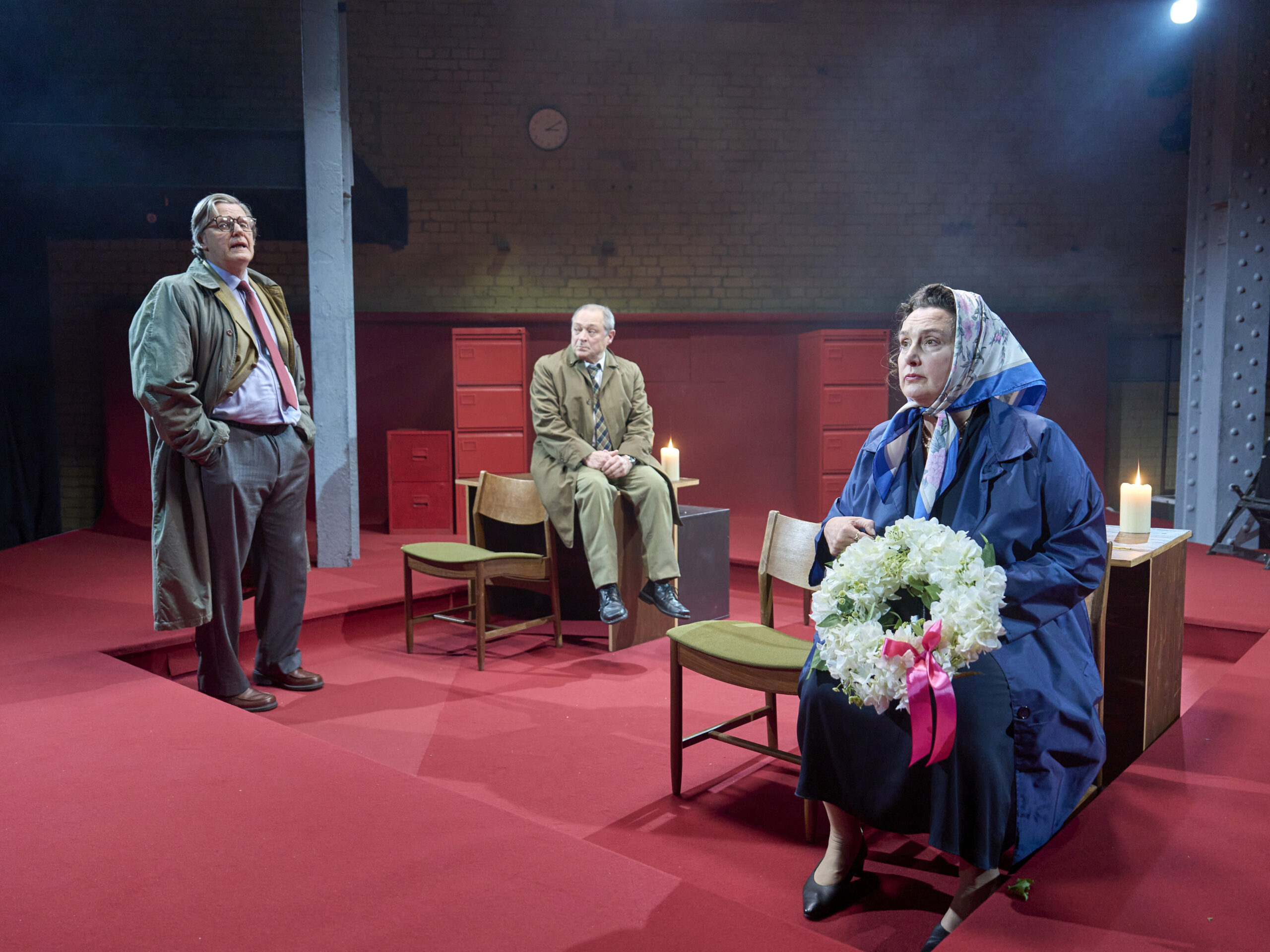
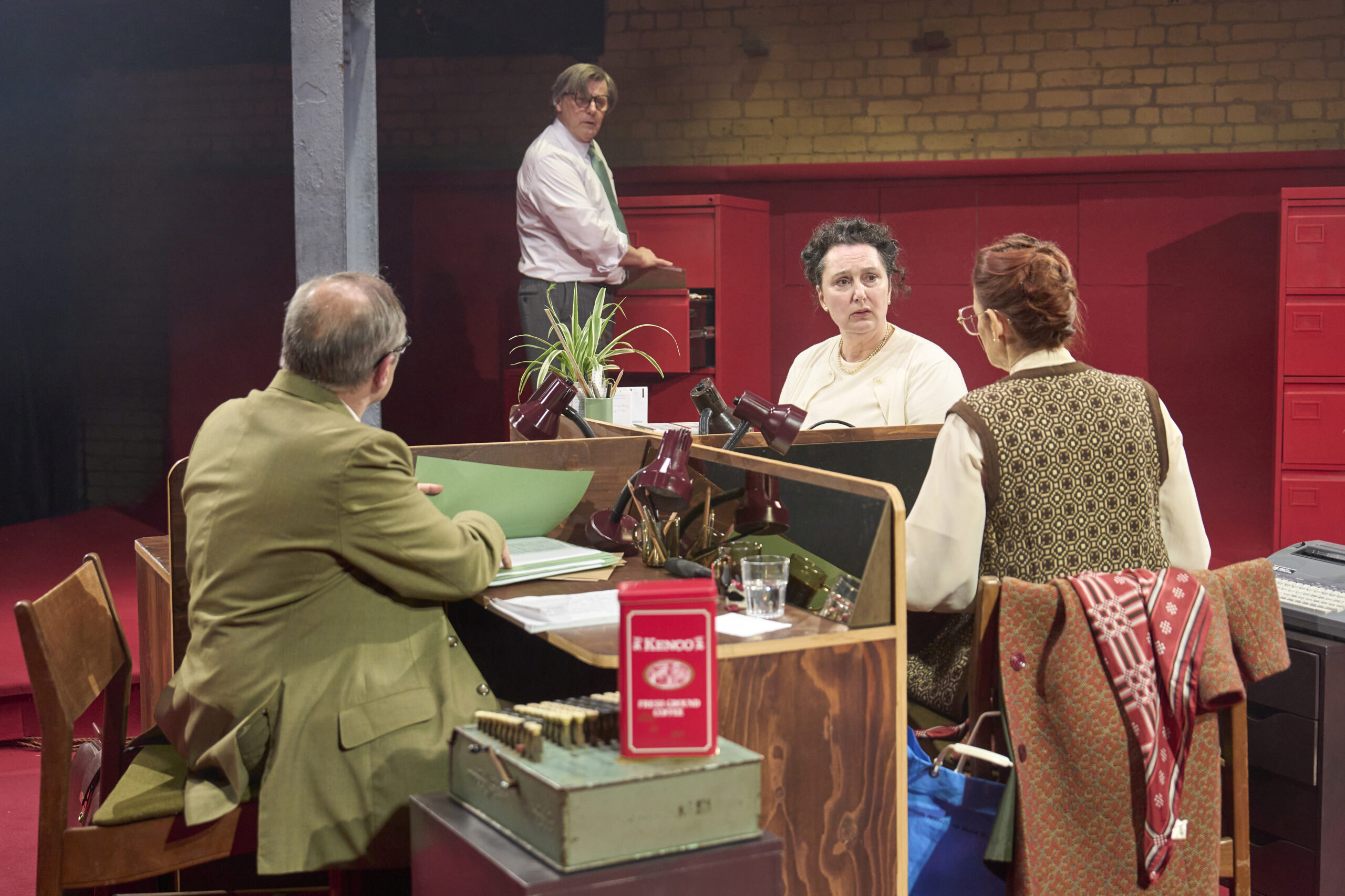
In Samantha Harvey’s play adaptation, the seventies era is resurrected in a beige, drab London office, with not a computer in sight. Sitting within the cubicle desks neatly adorned with pen organisers, staplers, buff-coloured folders, an adding machine, and Snopake, four colleagues (two ‘spinsters’, a bachelor, and a widower), all on the brink of retirement, present us with snapshots of their lives. Their opinions, hopes, and fears are revealed as they openly acknowledge their transition into the sunset years with the dread of what awaits them. Indeed, the office begins to become a holding room in which the death of working life is something grieved and a great cause of anxiety as the topics of hyperthermia, food prices, moving homes, and managing on reduced income become ever more real. Retirement is discussed as a problem to be solved and an uncomfortable period of time that one must get through as best as one can until the inevitable end.
Images by Manuel Harlan
Each character provides different views of their major concerns: “Warmth is all one needs,” according to Norman (Paul Rider), whilst for Letty (Kate Duchêne), her belief that holidays are an unnecessary expense underlies her concern about where to relocate at the end of her working life. This becomes her prevailing thought, catalysed by her friend Marjorie’s engagement to the much younger country vicar, David Lydell. Letty’s plan was to spend her retirement years with this friend, and even though the offer is still there, her unrealised expectations of love make it hard for Letty to see her friend romantically happy on a daily basis. Stuck between a rock and a hard place, the only other choice for Letty is to stay as a sitting tenant in new owner and Nigerian pastor Mr Olatunde’s house with its loud and energised worship services or the suffocating rules of cantankerous Mrs Pope, an elderly widowed landlady Edwin (Anthony Calf) has sourced for her.
 
What they each have in common is the sense of isolation that living alone can bring, particularly as people age; surrounded by the paper clips, biros, and A4 carbon paper, a touching conversation about being motherless and ungrounded ensues.
The script steers through moments of emotional unity to conflict and antagonism. Norman jointly shares a family-sized tin of instant coffee with defensive Marcia (Pooky Quesnel), who is as prickly and sharp-edged as he is boorish and attacking. His relentless, penetrative insistence on knowing about her health issues leads her to describe him as a “newt scurrying around.” However, what lies beneath the mutual carping is later revealed in a moving series of events and discoveries.
 
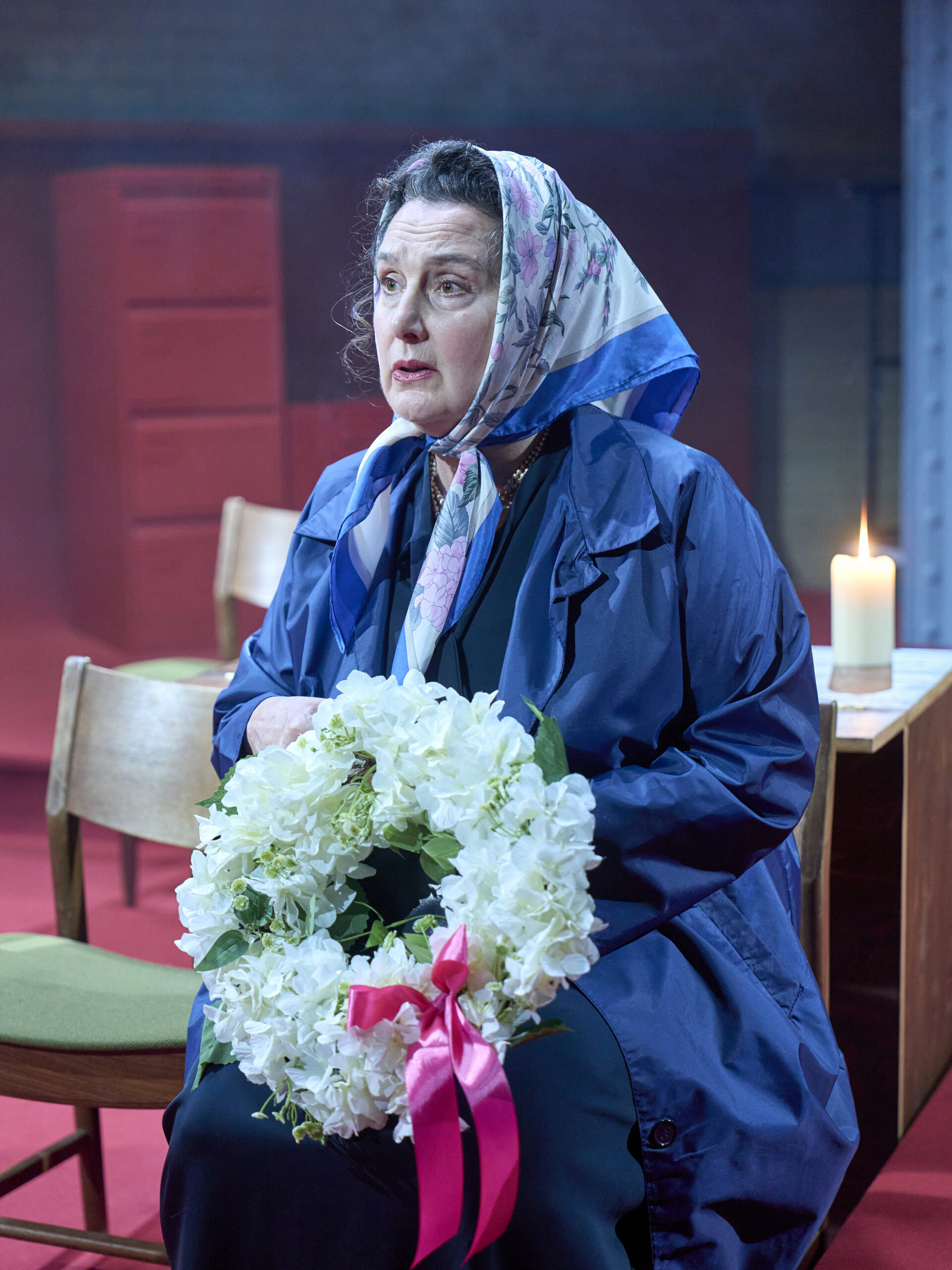
Edwin seeks solace in the church after the loss of his wife Phyllis, weaving obliviously through and between certain scenes, singing Anglo-Catholic plainsong or hymns, or quoting scriptures, in a reflection of an era when the Anglican Church still exerted religious-moral influence on a conservative society led by its first woman prime minister. Yet it is within this context that the gender discrepancies are foregrounded: Marcia and Letty retire before the men; Norman and Edwin laugh to the point of tears at the thought of intimacy with Letty. They are insensible to her quiet suffering of the status of ‘spinsterhood.’ In fact, their teasing of her is rather like that of Miss Bates in Jane Austen’s ‘Emma,’ where her status is a source of ridicule and derision. Like Miss Bates, Letty’s preponderance for reading Marjorie’s letters aloud to the group is reminiscent of Miss Bates relentless reading of Miss Fairfax’s letters to Emma. There is a contrast between Letty’s outward optimism, “I shall have a very pleasant life here when I retire,” and her underlying yearning to be stirred, “It seems I live a windless life…”
 
Marcia, however, commands a certain nervous and grudging respect. As the owner by inheritance of a large townhouse in Clapham, she has the consciousness of equity with Edwin and superiority over bedsit-dwelling Norman. Despite her fussy eating ways (tins only), her idiosyncrasies are tolerated by the men, less so by Letty, for whom Marcia is “potty” and, conversely, Letty is “an old sheep.”
 
The issue of Marcia having the means to end Letty’s dilemma of where to live is a source of contention between them. Marcia’s private life cannot accommodate anyone except herself due to a secret crush, and she is resentful of social worker Janice Brabner’s controlling intrusion into her life following major surgery; her loss of self-ownership is conveyed vociferously to her co-workers.
The unseen yet frequently mentioned characters (Marjorie, David Lydell, Mr Olatunde, Mrs Pope and Janice Brabner), are beautifully brought to life through the dialogue and monologues, which the cast performs brilliantly.

Ellie Wintour’s set design presents the theme of autumn by placing the brown-toned office in a sunken, red-carpeted stage where the office cabinets to the side are also red, and the unattainable Mr Strong’s house sits high and unreachable, also in red. Clever.
 
The punctuated lighting through scene changes and Bennett-like monologues brings the script sharply into focus.
 
Through Harvey’s adaptation, and a wonderful cast directed by Dominic Dromgoole, this debut staging of Quartet in Autumn brings the reality of ageing and what lies beyond in many moods and tones: sometimes as a harsh, sad, and bleak indictment where older people are “the lonely ones” who need looking after, it also keeps the piece light where the prosaic is droll: “I never get a chance to wear my dressing gown what with the pace of life.” (Norman). There is a hilarious scene at the reunion lunch where the four discuss how Chicken Forestier derived its name. The bittersweet beauty of ageing and companionship, even in the crabbiest of interchanges, is brought to light, where deep care, though often hidden, is found when needed.
 
Fun can also be had during the interval, recognising all the seventies TV theme tunes.

A masterclass in making the ordinary quietly profound. ★★★★★ 5 stars

Author Profile

The Recs GH