
Q&A: I Almost Died for This?!
By The Recs SCD - Steve Coats-Dennis 2 months agoKristina Libby is an artist, writer, and storyteller whose work has appeared in The New Yorker, The Boston Globe, Elle, and McSweeney’s. This year, Kristina is bringing her solo show I Almost Died For This? to the Fringe, and we are delighted that she’s agreed to tell The Recs all about it.
Hello Kristina! First off, I have to say that’s a terrific title for a show. I Almost Died For This? is both funny and intriguing – but it stems from something not funny at all in real life: a personal relationship crash and a physical crash on the same day?
Ah! Yes. At the time the relationship crash felt so truly tragic that it far exceeded the physical crash. Here’s the deal: I met my soulmate and (spoiler alert!!) it didn’t work out. That day on the beach was the moment where I really had to come face to face with the idea that I had failed at keeping my soulmate i.e. the one thing that (I thought and was told) was always going to work out. A soulmate is the whole fairy tale I had been working towards. And, then it was… over.
That far surpassed (at least in the early days) the trauma of the brain injury. Worse, I think that for a while I believed I deserved the brain injury because I had been so terrible as to scare off my soulmate.
So did something such as your traumatic brain injury give you pause for thought and almost the space to re-evaluate your choices and those narratives in our lives that we often don’t question?
Yes! In fact, the brain injury was the physical catalyst that made me re-evaluate everything in my life. But, the one topic I was fixated on was “how can you meet a soulmate and it doesn’t work out?” That went against every story I had ever seen or been told in my entire life. It was de-stabilizing and in large part, that was because I believe that everything I had been through was worth it and everything I wanted would be possible, if I found THE man. In retrospect, I can see how it sounds naïve. But, at the time, it felt so real. I believed that if I found my soulmate, I would finally be safe and feel loved. I think everyone wants that. When it didn’t work out, I had to really confront that myth that a soulmate was inevitable and a pathway to a better life. I had to figure out, if that wasn’t true than what was going to be true and what I found was a personal renaissance that led me to a huge creative career, a lot of self love, freedom and a different more profound sort of well-being.
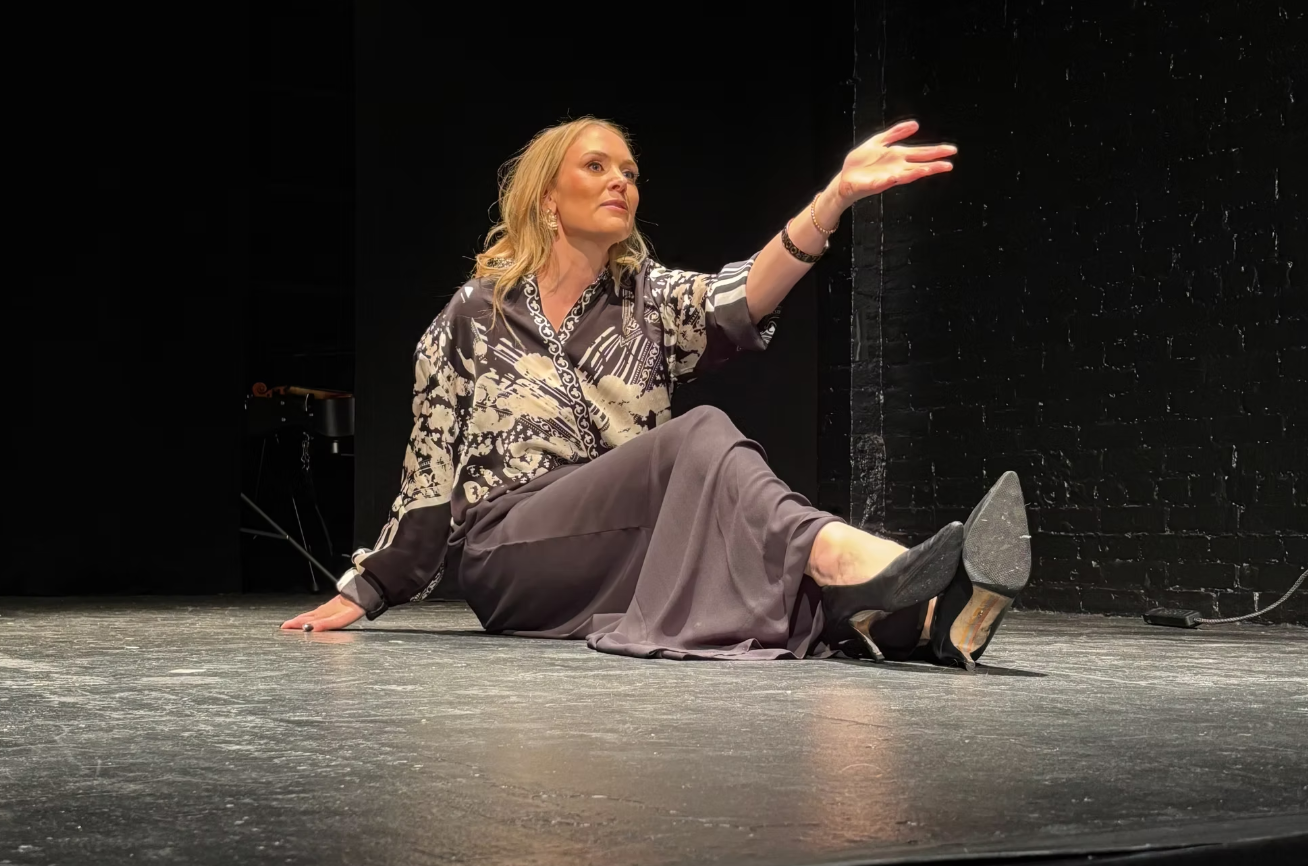
You’ve said, “I was raised to be a good girl. I did everything right. I nearly died. Turns out that’s a show.” And the show very much takes aim at the pop culture myths that pop culture relentlessly feeds women and manipulates their behaviour. This feels a very timely conversation…
It’s all such bullshit. The amount of make-up I bought, horrible men I put up with and things I did to be pleasing are staggering. I believe if I was good and did everything right, I’d find this perfect man and he would love me and I’d be safe. In truth, all that posturing is because I, and I believe we, are afraid for our own safety. Those trappings that we teach each other are tactics that we hope will help us survive and thrive. It’s all very Darwinian when we think about it. The problem is that when those tactics fail, if you’ve built your life on those tactics, you are left with nothing. That’s what happened to me: I nearly died. Everything that had helped me didn’t save me. I had to rethink it all. And, now we have a show!
At what point in recovering from your head trauma did the idea of turning all that had happened and all you had learned into a solo show occur? And where does the creative process for that venture begin?
It took me a few years until I could even admit out-loud what had happened. In fact, it wasn’t until my “soulmate” got married (to his mistress!) that I think I felt that talking about what I had really been through was acceptable. I had been so worried about hurting his relationship with his family. (Old habits are slow to die!) And, then I tried to do it in memoir, but I couldn’t nail the ending. A friend suggested Matt Hoverman’s solo show class, and it was extremely helpful in allowing me to frame the experience and figure out the structure for telling the story in a way that has the capacity to resonate with large audiences.
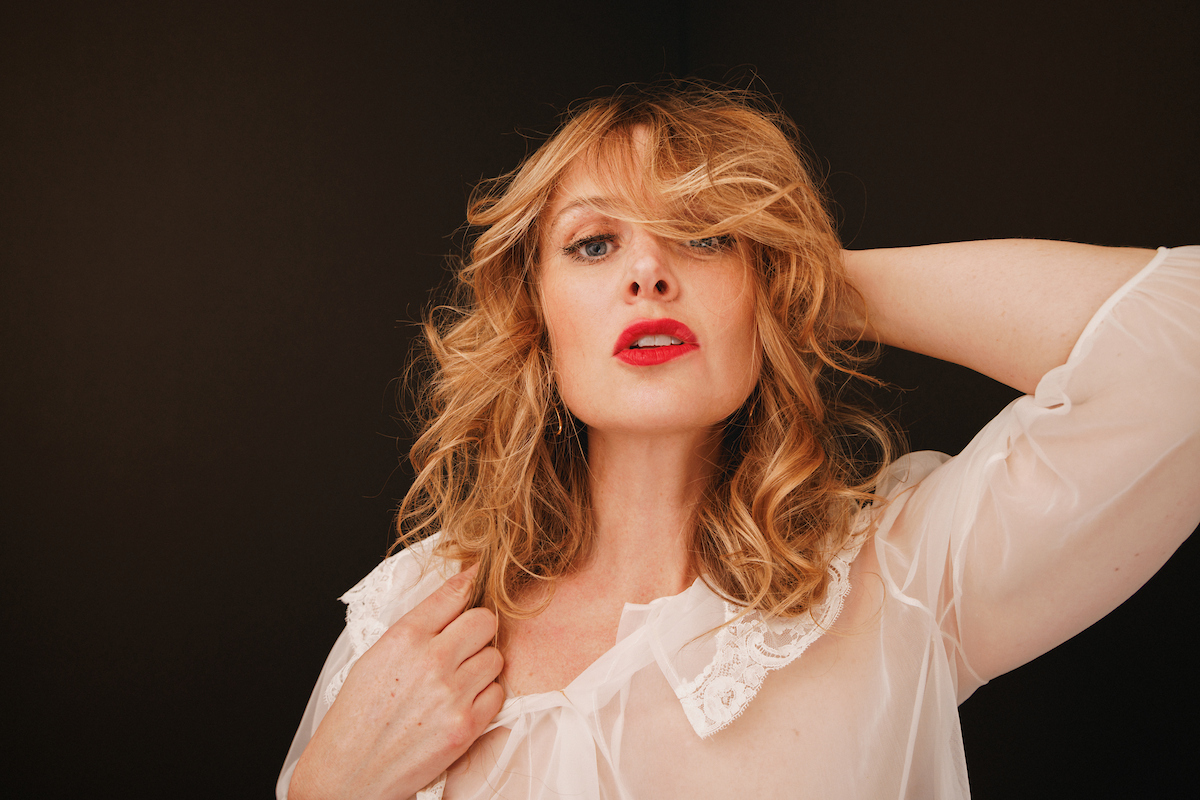
Solo shows, especially those drawn from personal experience, tread the balance between being interesting to an audience and important to the storyteller. How do you strike that balance between the personal and the universal?
I would not do this if it was only important to me. I did this show because I don’t want other people to have to learn the lessons that I learned, the hard way. Instead, come to the theatre. Let me laugh with you. Let’s have a little cry. And, then you can leave without making the choices I made. If it’s not for the audience first, it risks being a bit of a trauma dump. That is not this show. This show is entertainment. But, it’s like all good stories has strong themes and important ideas that I hope you leave with.
The show, your debut solo theatre performance, has been incredibly well-received in New York. You are an experienced writer but how have you found performing in front of an audience?
Oh, terrifying at first. And, than wonderful. As a writer, you never get of the moment feedback. As a performer you know exactly how you are doing at all times. And, the audience response is the most interesting part to me. The theatre is a conversation between performer and audience member and I love being there to have that every night.
And congratulations – it was the winner of NYC United Solo Festival’s Best Storytelling Show. What would you say is the secret of good storytelling?
It’s not my secret; it belongs to Matt Hoverman but it’s this. A story is a character who has a want and goes out to get it, they encounter obstacles before getting what they need, once and for all.
Why did you want to bring this show to the Edinburgh Fringe? What is it about Edinburgh that is so alluring?
I came last year to the Fringe and I loved it. I feel about it the way people feeling about Burning Man. It’s such an incredible experience to watch this great theatre, to hear these stories, to laugh and cry and fall in love, and I wanted to be part of that. But importantly, I was only going to do it if I thought I had a world class show that could complement those already there. So, I made a show that I believe in deeply, that I think is important and I think deserves to be on this stage.
Something that almost every woman doing a solo show in Edinburgh gets is the inevitable comparison to Fleabag. Is that annoying, as I Almost Died For This? is its own thing, or is there inspiration to be had with what Phoebe Waller-Bridge did with that show?
Of course there is SO MUCH inspiration to be had from Phoebe. Her show is miraculous BUT I also think the similarities stop at: we are confessional shows that are funny and also a little bit disturbing. Her character is so different than mine, has such a different life and you meet in a different moment. She’s sad, on the outs, depressed and finding meaning in sex. I’m exhausted, giving up on men, and finding meaning in love. Gosh, maybe they aren’t totally different. But, the only thing I kill in my show is … almost myself!
What is your goal for Fringe – both personally and professionally?
I want to bring in as many of the right people to see my show as possible and I want it to inspire others however it can. Personally, I just want to make it through. Fringe is a marathon. Here we go!
I Almost Died for This?! Tickets
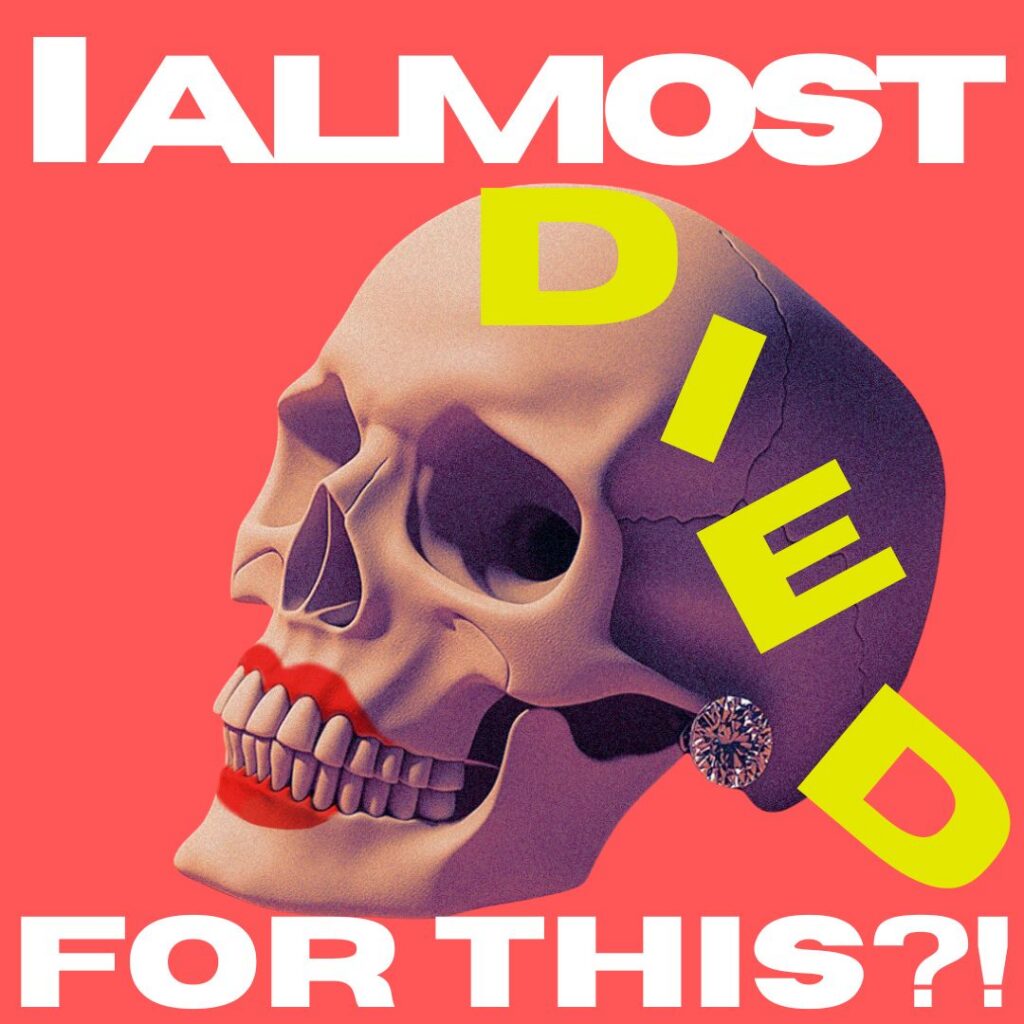
I Almost Died for This?! runs at Space 1 at theSpace on the Mile from 7 - 29 Aug (not 16, 23, 30)
Book NowAuthor Profile

- The Recs SCD - Steve Coats-Dennis
Latest entries
- 27 August 2026Edinburgh Fringe 2026Playback ★★★★
- 27 August 2026Edinburgh Fringe 2026Kate Butch: A Kate in the Hand is Worth Two in the Butch ★★★★★
- 26 August 2026Edinburgh Fringe 2026It’s A Mystery! ★★★★
- 25 August 2026Edinburgh Fringe 2026Cathy ★★★★★