
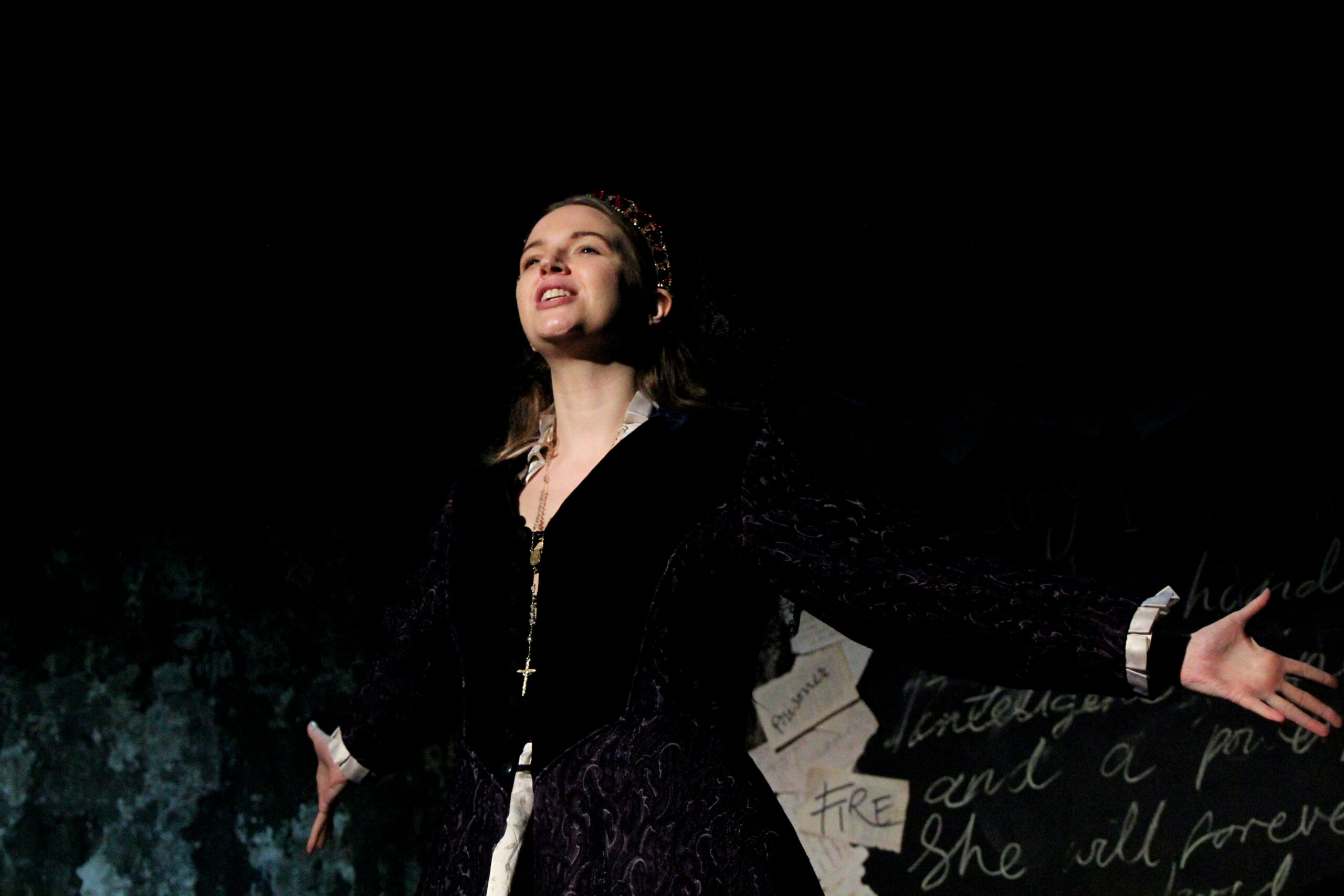
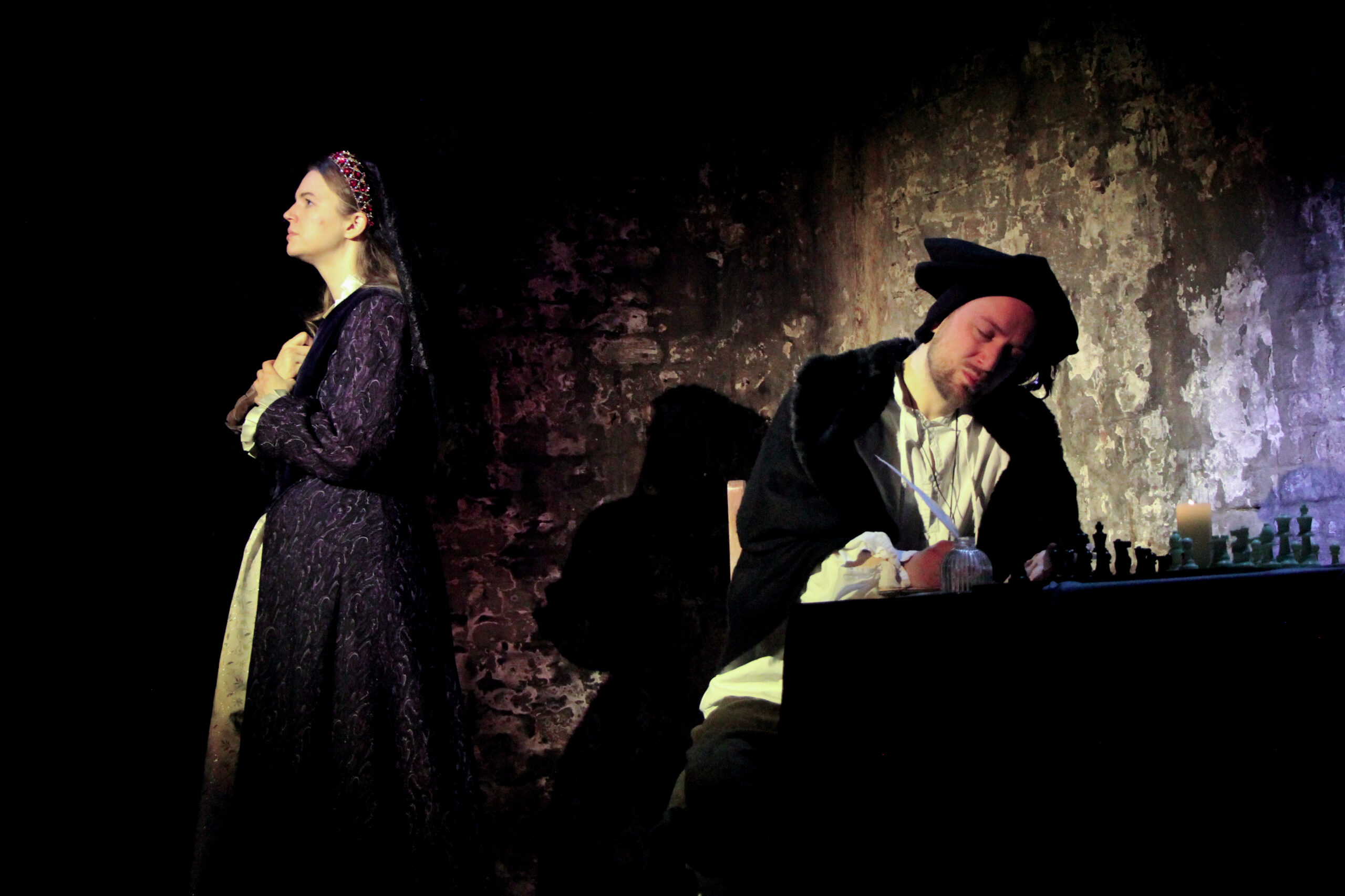
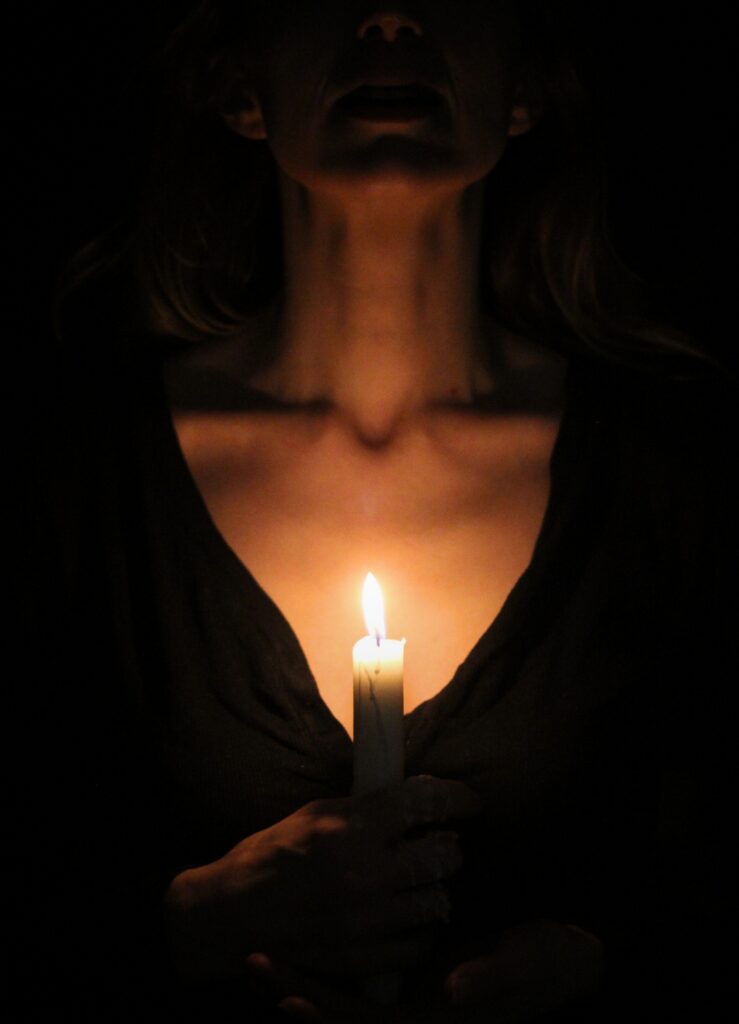
BURN aims to reclaim ‘Bloody Mary’ from centuries of misogynistic myth by asking some fascinating questions about history, reputation, and the stories we’re told. The Recs caught up with playwright Lucy Beresford-Knox to talk about revisiting one of England’s most controversial monarchs, challenging centuries of received wisdom, and bringing the show to the Edinburgh Fringe.

Hello Lucy and thanks for taking time to chat to us so close to the Fringe. How are you feeling about your first performance of BURN being less than a week away?

A glorious mixture of nerves and excitement! We’ve been full steam ahead with rehearsals and the final bits of preparation – so it feels like it’s crept up pretty quickly, but now we can’t wait to get to Edinburgh and get going!


We know that you graduated from Oxford with a degree in History – so at what point did Queen Mary I loom large in your interest, and at what point did you realise there was a play waiting to be written?

Well, I studied Mary as part of my degree, and since then I’ve been fascinated by the way history treats women, and particularly its villains – Mary is a woman whose history has been especially gendered (although she’s not the only one!) Her reputation is of a failed, angry woman, ordering the burnings of heretics out of spite… it’s a reputation that sources always link to her womanhood. So, when I started writing plays a few years later at drama school, I knew she was someone I would eventually use as a subject – I wanted to explore the woman behind the reputation.


The play asks audiences to reconsider the woman behind the nickname “Bloody Mary”. What do you think history has got most wrong about her?

I’d say the biggest thing history forgets is simply how pioneering she was; to be the first woman to rule England after centuries of Kings. She was definitely troublesome… but she was also a woman trying to find a way to rule in a man’s world, with the odds stacked against her.

Images by Burnt Flamingo Productions

Coincidentally, you count John Knox among your ancestors, which adds a remarkable personal spin to the play. How did you discover that ancestry?

It was certainly an odd thing to discover! John Knox’s writings about Mary are really vitriolic about how women couldn’t be trusted with power. I’d read his work as part of studying Mary, but it was only when I started working on the play that I looked into his background and how it might be connected to my own name. Needless to say, I don’t agree with his opinion… so it made me even more inspired to write this play and tell a different story!

Knox wrote in his 1558 tract that Mary “unworthy by reason of her bloody tyranny of the name of woman.” Does arguing with your own ancestor’s viewpoint, across the centuries, give the play an added vehemence – and knowing that BURN will be performed in Edinburgh about 13 minutes’ walk from John Knox’s house and 9 minutes from his final resting place, what are your feelings on that?

I think it does, yes. Whilst he might not have been the only one to write about Mary with such vitriol, history has absolutely stuck to Knox’s narrative about Mary ever since, and it needs a heavy dose of nuance! So it feels right that I reach back into history, and my own ancestry, to provide it. I also love the idea that history lovers in Edinburgh might visit Knox’s grave, then head over to Paradise in the Vault and hear a different narrative from the queen he so hated.

One of the play’s central questions is, to paraphrase Oprah, whether Mary was a villain or someone who has been vilified. Do you hope audiences leave with an answer, or with more questions?

The play isn’t necessarily trying to rehabilitate Mary – and she’s certainly not always easy to like. But I hope that audiences will leave questioning the established narrative about her, perhaps understanding a little bit more why she became the woman she was. I’m looking forward to asking audiences how they feel about both of the main characters (Mary and Archbishop Thomas Cranmer) on their way out!

Although the play is rooted in Tudor England, I wonder if there were modern parallels that kept emerging as you wrote?

Yes, I think despite its Tudor setting, BURN is at heart a piece about the power of stories and how they are written into history. In the play, Mary remarks that stories can take on a life of their own – and that’s how reputations are created. It’s something that feels equally relevant today, particularly given how fast news and media travels, and how powerful women in the public eye continue to be treated.

This marks Burnt Flamingo Productions’ Edinburgh Fringe debut – congratulations. What does it mean to be introducing both the company and this story to Fringe audiences?

It’s incredibly exciting – and it’s a real joy to be there amongst such a wide variety of shows. As a company, we’re passionate about new writing and platforming women’s voices, so this really feels like the perfect show to debut at the Fringe!

What are you most looking forward to being at the Fringe?

Being amongst so many other amazing performers, and really soaking in the whole atmosphere! We obviously can’t wait to share our own show and to talk about it to everyone and anyone we can (see you on the Royal Mile!) – but we’ll also be seeing as many new shows as we can possibly fit in, and meeting as many other artists as we can!

Lastly, if Queen Mary I could walk into the audience at The Vault at Paradise and watch BURN, what do you hope she’d make of it?

I hope she’d be glad to be given a voice and an hour to tell her version of history… though she’d probably walk straight onto the stage and take over (sorry Frankie!) I would LOVE to see that… and I’d absolutely buy her a Bloody Mary afterwards.

BURN Tickets


BURN runs at The Vault at Paradise in The Vault from 8 - 15 August 2026

Book Now

Author Profile

The Recs SCD - Steve Coats-Dennis