
Q&A: Don’t You Forget about Me
By The Recs SCD - Steve Coats-Dennis 2 months agoIn 1985, film writer and director John Hughes released a movie that, in many ways, revolutionised how teenagers were portrayed onscreen. Telling the story of five teenagers, seemingly from very different High School cliques, The Breakfast Club was praised for treating teen angst and mental health in a more honest, relatable way. Now, forty years later, two-time WhatsOnStage and multi-Offie Award nominee David Shopland picks up the narrative baton in his new show, Don’t You Forget about Me.
Hello David and thanks for taking the time to chat to The Recs. Let’s start with the iconic movie. I’m thinking you might have been too young to have seen the movie when it was released. When did you first see it, and what was your reaction?
Funnily enough that exact point regarding my age may well arise in the production itself..! I was born in 1988, so around 3 years after the film came out. I’m very much the baby of the family (my sister is 18 years older than me, my brother 21 years older) so by virtue of those age gaps I actually grew up on quite a heavy diet of 1980s pop culture and it’s something that has defined a lot of my taste, humour, style and creativity over the years. When I first saw The Breakfast Club, I was around 10 or 11, and I remember thinking it was the closest I’d ever seen a motion picture come to evoking the feeling of sitting in a theatre watching a play. Whether it’s the near-single room setting or the fact it’s a heavily dialogue driven script that takes place over the course of a few hours and prioritises character development over plot; ever since I first saw it I had this desire to try and somehow bring it to the stage in some form.
And at what point, as a theatre maker, did exploring the story and themes of The Breakfast Club become something you wanted to do within a solo show?
So although it had always been in the back of my mind that I would love to be involved with a theatrical adaptation of the film, there are obviously very strict copyright laws around any existing IP, and the expense and logistical difficulty of obtaining motion picture rights – especially from another country, always prevented me from seriously thinking about it. Then at last year’s Edinburgh Fringe festival, I was in the audience for James Seabright’s fantastic production of Biff To The Future (a one person retelling of another 1980s classic!); and I realised that by utilising the UK’s parody laws, I could actually create a show that acted as love letter and commentary without needing to recreate the movie in its entirety, and it actually opened up far more interesting narrative directions where I could blend autobiography, pastiche and homage.
Can you share some of the premise of Don’t You Forget about Me?
Essentially I have re-imagined myself as the forgotten 6th member of that particular iconic Saturday detention class; the one member of the club that is never shown or discussed in the film. The show picks up 20 years later where I’ve organised a reunion; as I wait for the 5 of them to arrive, I delve back into that storied day and re-tell the events of the film from a wholly unique perspective. As the show progresses, the lines of fact and fiction blur more frequently as it ramps up to a chaotic, nostalgic crescendo!
How long does it take to develop a show such as this? Where is the starting point, and how do you develop the work from there?
So I actually wrote the entire first draft over the course of only about 3 days whilst I was at the Fringe last year in my capacity as artistic director of Fake Escape. As I was there for the month simply to oversee the single production we had, of which I was the producer and co-director, I had quite a lot of time on my hands; as such the script sort of organically flowed out of my fingers quite rapidly. Since then, it’s been essentially a year of fairly continual rewrites, refinements and working closely with my director Roann Hassani McCloskey on getting the script the tightest it can be.
You are a multi-hyphenate. You’re a writer, a director, a performer and a producer. How do these various hats come into play when creating a new work? Are there times when the writer in you wants to go in a certain direction, but your producer side has to put the brakes on?
This is a great question, and a much nicer way of saying ‘Jack of All Trades’! For me the vitally important thing to always try to utilise the art of compartmentalisation. When I write, I try to not have any logistical part of my brain switched on. I want the script to be as raw and true to what I am wanting to say as possible, without being diluted or compromised because my producer’s brain is thinking about budgets! It’s my job as the producer, once the script is finish, to work out how we can achieve whatever I’ve put in the script, as opposed to the writer’s job being to make the producer in me have a slightly easier life! With anything in theatre, whether the jobs are undertaken by the same person or not, it should always come down to serving the text; even if it means one part of my job serving the other. I also would never direct anything I was also performing in; I’m a collaborator by nature so one of the reasons I’m able to be a multi-hyphenate is that I ensure I surround myself with really strong creatives fulfilling the roles I can’t do for particular productions. I was trained in the ensemble ethos, and I try to carry that forward.
Pop culture from the 80s seems to be a neverending story (sorry, could resist that) of revivals and reimaginings – whether that’s the new Masters of the Universe or The Running Man movies or The Lost Boys on Broadway or the UK tour of Back To The Future the musical. Why do you think the 80s holds so much sway to this day?
This might be a somewhat boring and quite cynical take – but the truth is I believe it’s related to the average age of theatre and cinema-going audiences; I think if you look at productions that were big hits 20 or 30 years ago; there was a huge resurgence of 50s and 60s nostalgia, with shows like DreamBoats and Petticoats taking over the West End for example. Now we are seeing 80s and 90s nostalgia because Generation X, who had their formative years in these decades, now have the disposable income, desire and family commitments to engage more with attending the theatre; and they like to see their youth reflected back to them; as was ever thus I think. More philosophically, I think we all gravitate towards a nostalgia that reminds us of a time when possibilities felt endless and life was yet unknown; there’s a comfort in taking a time machine back to a period where the whole world was your oyster. Especially in such a divisive, scary and times quite cruel-feeling world that we’re going through at the moment.
Do you think this affection to the 80s is something healthy, or is there a risk that nostalgia is often rose-tinted?
I’m not sure the two things are mutually exclusive. I definitely think nostalgia is rose tinted, especially when someone like me is exploring nostalgia for a time they didn’t even live through! However I don’t think idealism or optimism when looking back at a time is always unhealthy. I think if you acknowledge that memory is wholly unreliable, there’s nothing wrong with indulging in a little fantasy from time to time.
Naming your show after Scottish band, Simple Minds’ biggest international hit and enduring anthem has got to be a good luck charm for Edinburgh, surely?
I hadn’t even thought of that! Excellent point – and I certainly hope so! I’m a big fan of Jim Kerr’s writing and the band as a whole; in fact (and this is probably sacreligious given the title of my own show!) I actually think Alive and Kicking is PROBABLY a better song than DYFAM!
As Artistic Director of Fake Escape, a theatre production company founded in 2013, which has performed in Edinburgh, across the UK, in Paris and off-Broadway, how has the landscape changed for theatre makers?
It’s difficult answering this question without getting too political, so I guess I’ll have to! The truth is the twin economic explosions of Austerity and Brexit in the last 15 years have had a hugely detrimental effect on trying to make art that appeals to international audiences, not to mention successive governments who seem to deprioritise arts funding despite the fact theatre was the 3rd most profitable sector coming out of the pandemic. Since we founded Fake Escape, it’s fair to say each year it has progressively got harder to make work, but the positive is the longer you stick around, the more flexible and dynamic you can become as a company; and the more networks and alternative routes open up to you.
And this year, Fake Escape is celebrating ‘A Decade of Fringe’. There is often a lot of discussion about Edinburgh’s lack of affordability and how Fringe has become less accessible and risk-averse. You’ve been part of this scene for ten years – what’s your take and why, as a company, is Fringe still important for you to keep returning?
Unfortunately it’s true that the affordability of the fringe has become a huge barrier to entry, which for a traditionally totally open access festival that is meant to be nurturing the next generation of theatremakers, performers and artists, is really disappointing, and I think there needs to be serious conversations about how this can be changed. However it still remains essentially the theatre industry’s only real equivalent to a trade fair. It’s a place we can come to try out new productions, take risks and also feel supported by others in the industry in a way that just doesn’t happen anywhere else, at any other time. Edinburgh Fringe is one big family, where it feels like everyone is equal and pulling together for the same cause; as a died in the wool Socialist – to me that’s a feeling that’s all too rare most of the time!
Don’t You Forget About Me tickets
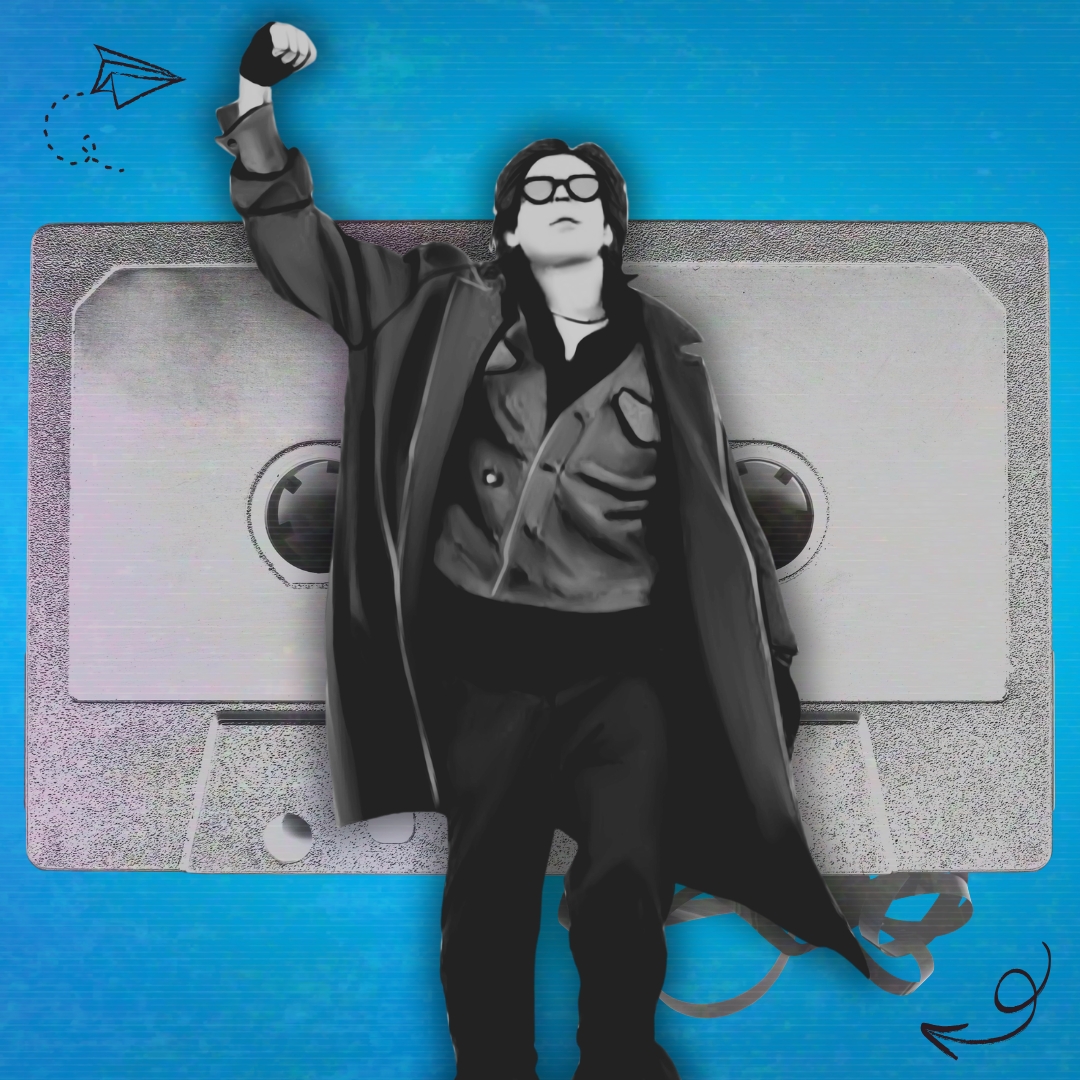
Don’t You Forget About Me is at Assembly Roxy, Downstairs, 5 – 31 Aug 2026 (not 17 & 24)
Book NowAuthor Profile

- The Recs SCD - Steve Coats-Dennis
Latest entries
- 27 August 2026Edinburgh Fringe 2026Playback ★★★★
- 27 August 2026Edinburgh Fringe 2026Kate Butch: A Kate in the Hand is Worth Two in the Butch ★★★★★
- 26 August 2026Edinburgh Fringe 2026It’s A Mystery! ★★★★
- 25 August 2026Edinburgh Fringe 2026Cathy ★★★★★