
Actor, writer and multi-instrumental musician Callum Patrick Hughes has become a Fringe fixture having performed in hit shows Thirst, How Can I Help You, and God Is Dead And I Killed Him in 2023, 2024 and 2025, respectively. This year, he returns with a brand new show: a unique adaptation of Nathanael West’s 1939 novel, The Day of the Locust.
The Recs is delighted to get a chance to find out more from the show’s co-writer and performer himself.
Hello Callum. This year will be your fourth Edinburgh Fringe in a row. You can’t keep away! What is the lure of the Fringe? What brings an experienced performer like yourself back again and again?
I almost can’t believe it’s been four years on the trot! I’d wanted to do the fringe ever since I was a teenager and in my 20s I’d had some experience helping others make their shows… but it wasn’t until a few people said – ‘Come on – when are you gonna put your money where your mouth is and do one yourself?’ that I really took it seriously. Since then I’ve been lucky enough to have the support of The Pleasance who have invited me back each year which has given me the privilege of cultivating an audience who know me, my work and are always interested to see what I bring each year. And as a theatre-maker – there really is no other place like Edinburgh – it’s Disneyland for artistes like me – it’s hard to stay away!
Before we chat about your new show, I wanted to touch upon your first show, Thirst. Not only did it have a sold-out run at the Pleasance, but you also won the prestigious Mervyn Stutter Pick of The Fringe award. That’s a pretty high bar for your first solo show. Was it a challenge – how do I follow that?
Looking back, Thirst was an incredible debut. Not only was it my first time at ‘Fringe but it was also my first time presenting an autobiographical show that touched on a lot of personal topics. I had no expectations for how it was going to be received – but The Fringe really does welcome authenticity and new work like no other place I’ve found. I think that’s ultimately what connected with people. It was amazing to speak to audience members and receive messages from people saying ‘that’s the first time I’ve seen addiction talked about like that’ and it made the whole experience that much more special.
Many Edfringe performers will often bring back hit shows the following year, but you like to create something new each time. Is that the artist in you wanting to explore your creativity?
You’re right – it can be intimidating writing that ‘difficult second show’…. And many suggested simply reviving Thirst for a second year… but the warm reception really spurred my on to write about the next chapter. It’s oddly easier to sell a show that talks about nearly dying… it’s much harder to write and market a show that deals with the messy subject of staying alive, and re-learning who you are in your thirties. Happily, that second show, How Can I Help You saw many audiences return to hear that next chapter and it ended up speaking to even more people as a result.
I think the key is to remember it’s not a competition – even those of us who want to top every show we make have to remember that it’s the moments we create live that stay with people. Being present and focussing on what you care about will translate far better than trying to ‘come up’ with something you THINK people will like. Art never works that way. And that’s not what the Fringe, in my opinion, is really about. That’s what makes it special.
Speaking of something new, we come to your new show, Day of The Locust. The novel by Nathanael West, published in 1939, is one of those books whose reputation has grown, especially after the author’s death. How did you happen upon it?
When I’m not at the Fringe – I work mainly in the commercial and education sectors – specialising in Actor-musicianship and in particular American Theatre. I trained in American Theatre Arts, lived in the states and have always had a fascination with ‘Americana’. Last year I worked on an adaptation of ‘They Shoot Horses Don’t They?’ which really spoke to me. Hollywood in the 30s, 40s and 50s has such nostalgia surrounding it – but when you look into these times and what people like Horace McCoy and Nathanial West were writing about – there are SO many parallels with today’s landscape. They’re writing about people coming from all over the country, and indeed the world, to gather in one city in the hopes of realising their artistic dreams. To discover who they are and find their tribe.
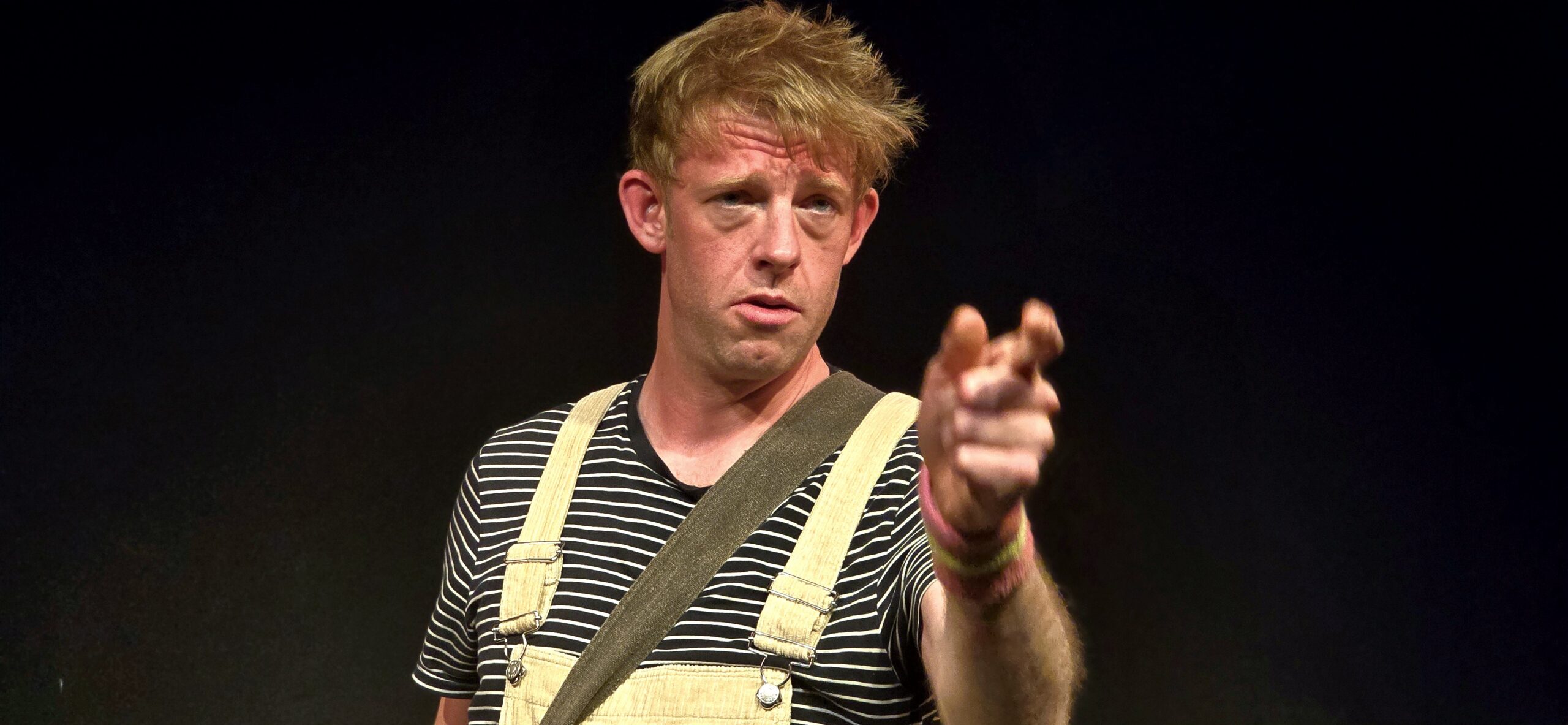
What is it about Day of The Locust that made you want to turn it into a piece for the stage?
It was my long time collaborator, David Shopland who suggested looking at this time-period again and he gave me Nathanial West’s Novel. We were both so inspired by it we started talking about an adaptation rather than writing a whole new piece… and when we realised that we wouldn’t have to pay for exorbitant rights – it seemed destined for us. These (sometimes forgotten about) writers are talking about riots and unrest, protests and identity politics, economic injustice and immigration… all these themes are front and centre in today’s media landscape – and I can’t think of a better place to draw that parallel than the Edinburgh Festival Fringe.
Disillusionment with the American dream feels super relevant to the times we are living in. What parallels are you drawing between the Hollywood of the 1930s of the novel and the world of today?
Despite the more generalised parallels I’ve mentioned above, I think people often associate Hollywood and LA with entertainment, glitz and glam… but they often forget it’s historically a place of people-power. You name an important time in American history and Civil Rights in particular – you can find a photograph of LA’s people taking to the streets. David and I are particularly taken with the way people are resisting Trump’s ICE agenda and the way LA’s protests against injustices like this throughout history take a role. Immigration is hugely important in both the novel and today’s media cycles – and so that is an important theme for our version.
And live music plays an important role in telling this story. What can audiences expect musically?
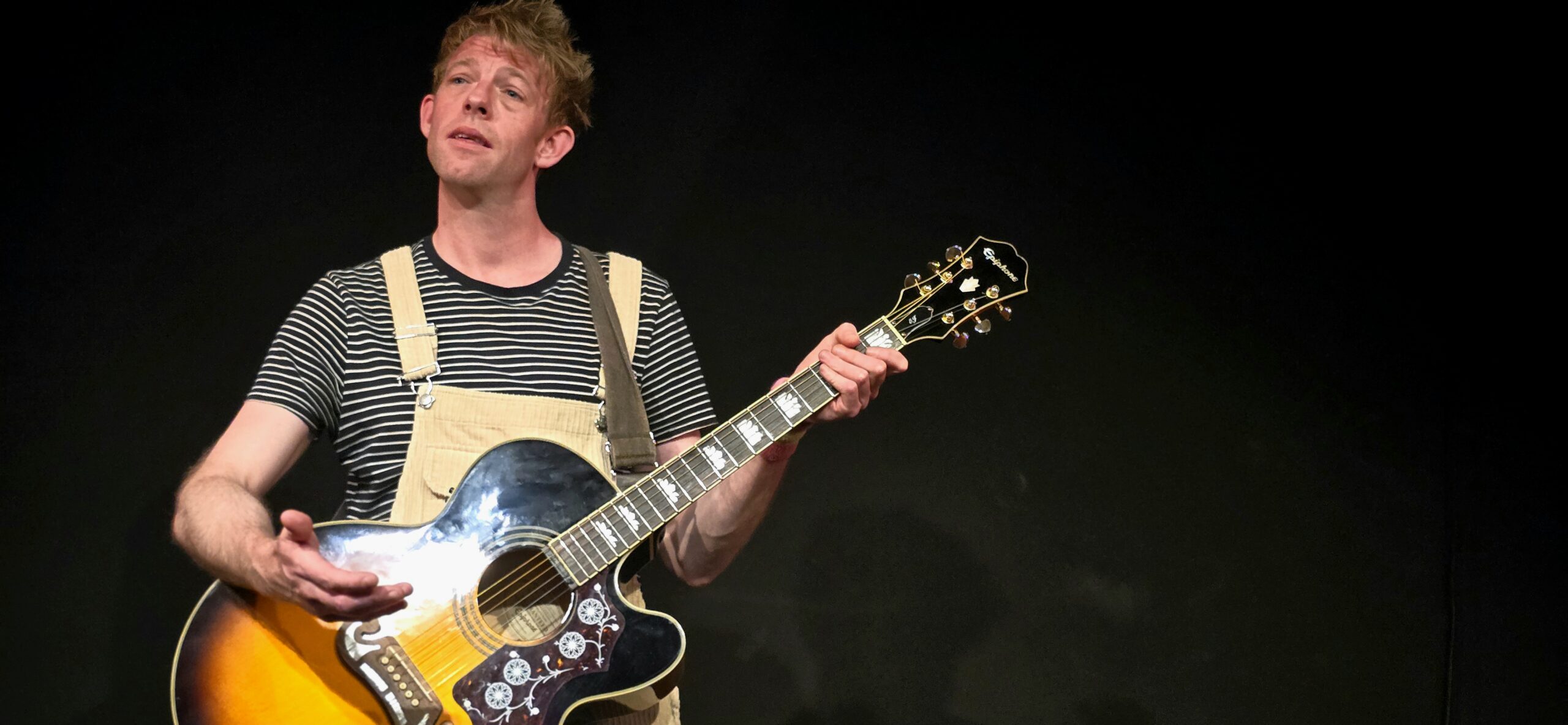
Unlike my precious three shows at the Fringe… this time… we’re going electric! As an actor-musician I’ve always seen underscore, songs and dialogue as different forms of music. The music of a line spoken is just as important as the notes strummed on a guitar… this time however I’m really leaning into the time-less nature of West’s novel. We’re using loops, soundscapes and effects much more than usual and I’m looking forward to showing the audience how underscore (like that in a film) is created live and in the moment.
This show marks something of a move away from the strongly autobiographical material of your last three shows. What has motivated that? Have you mined yourself enough? Is there a desire to look outwards?
That’s a really interesting question. Whilst I feel it’s nice to be taking a break from such personal, autobiographical performances – I actually feel just as connected to this material as any of my other solo shows. Perhaps that’s the nature of performance. Whether it’s music or theatre of film, or all forms of art – i think it’s impossible not to leave something of ourselves on stage and with the audience. Even the novel itself touches on that very nature of making art … what is gives us and also…what it takes from us. I’ve no doubt I’ll make another, more autobiographical piece again in the future… but right now – this is what is exciting me… and it’s of course a return to my American Theatre roots!
One of the strange bits of trivia about Day of The Locust is that it features a character, a former accountant, called Homer Simpson. Against the part-riot-part-protest-song tone of your show, is the incongruity of Matt Groening’s iconic cartoon character of the same name something that has to be navigated around?
I wondered if you’d ask about that! I think it’s really telling that Groening used that name for what became such an iconic character. All Groening’s names are chosen for a reason. Bart is an anagram of BRAT, Springfield is the most common name for a town in the all of the US – so perhaps there’s something about the cartoon character we associate Homer Simposon with drawing on the challenges faced by Homer in West’s story… Whenever pop culture borrows from a classic – I see it not as something to be navigated around – but leaned in to! Intertextuality is a tool we can have a lot of fun with… and nothing good has ever been made from avoiding something just for convenience. I like to face things head on!
What are your hopes for Day of The Locust at the Fringe – and do you hope that audiences will get from the show?
My hopes are the same for every fringe – that the piece will connect with the audience and invite them in to reflect on the world we are sharing, how we are shaping it together and a reminder that we have more influence than we perhaps realise. I hope that those who know the source material will enjoy this radical reimagining – and I hope that those who’ve never read the novel will go away wanting to read it! I want to celebrate the melting pot that is the creative arts and the cities it creates – whether it be Los Angeles or Edinburgh – and hold both the positives and challenges we face not only as artists in an increasingly difficult economic landscape, but also as humans in an increasingly divided world.
Although this show is not about my own recovery as an addict or my neurodiversity or religion… every show I make reminds me of a phrase: ‘The opposite of addiction is connection’. If you’re coming to the theatre – you want connection – and if you’re coming to one of my shows – you’re gonna get it!
Day of the Locust Tickets
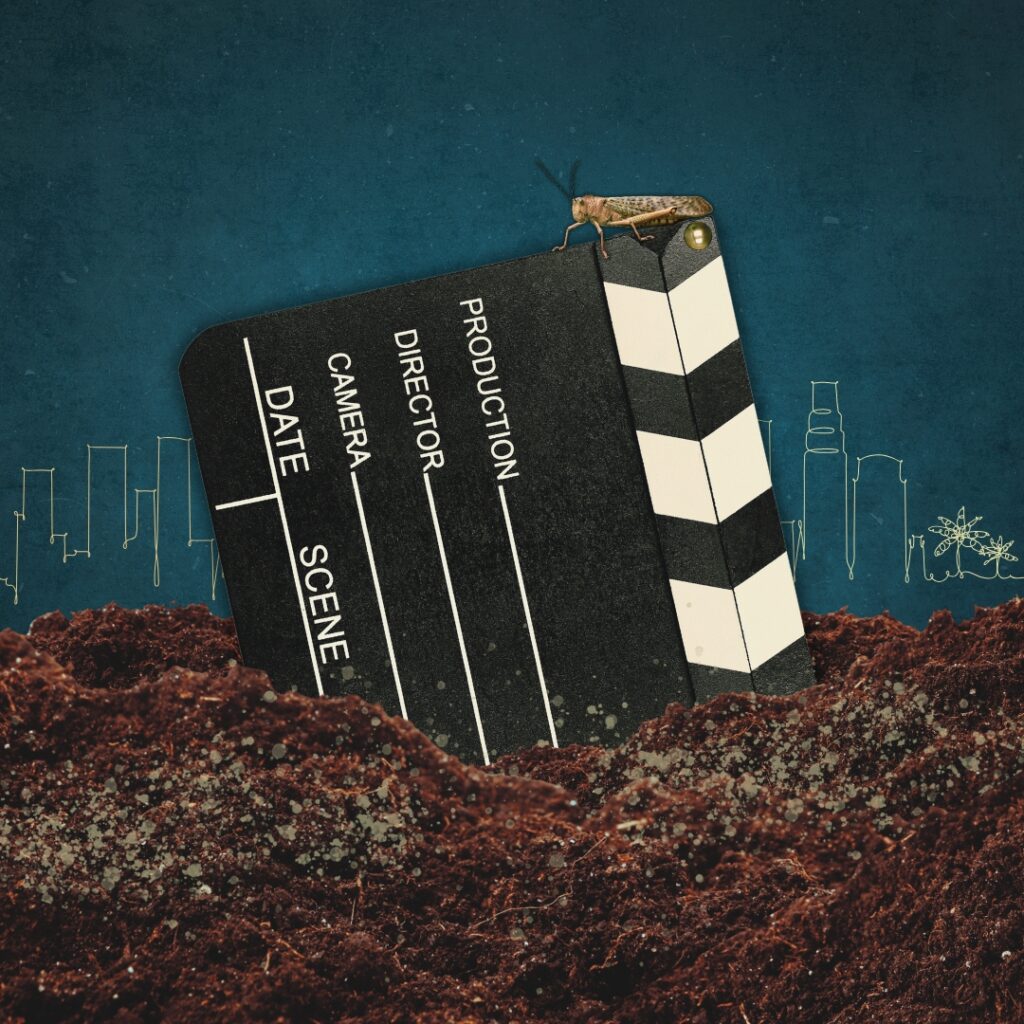
Day of the Locust is at Pleasance Courtyard, Attic, 5 – 31 Aug 2026 (not 17 & 24)
Book NowAuthor Profile

- The Recs SCD - Steve Coats-Dennis
Latest entries
- 27 August 2026Edinburgh Fringe 2026Playback ★★★★
- 27 August 2026Edinburgh Fringe 2026Kate Butch: A Kate in the Hand is Worth Two in the Butch ★★★★★
- 26 August 2026Edinburgh Fringe 2026It’s A Mystery! ★★★★
- 25 August 2026Edinburgh Fringe 2026Cathy ★★★★★