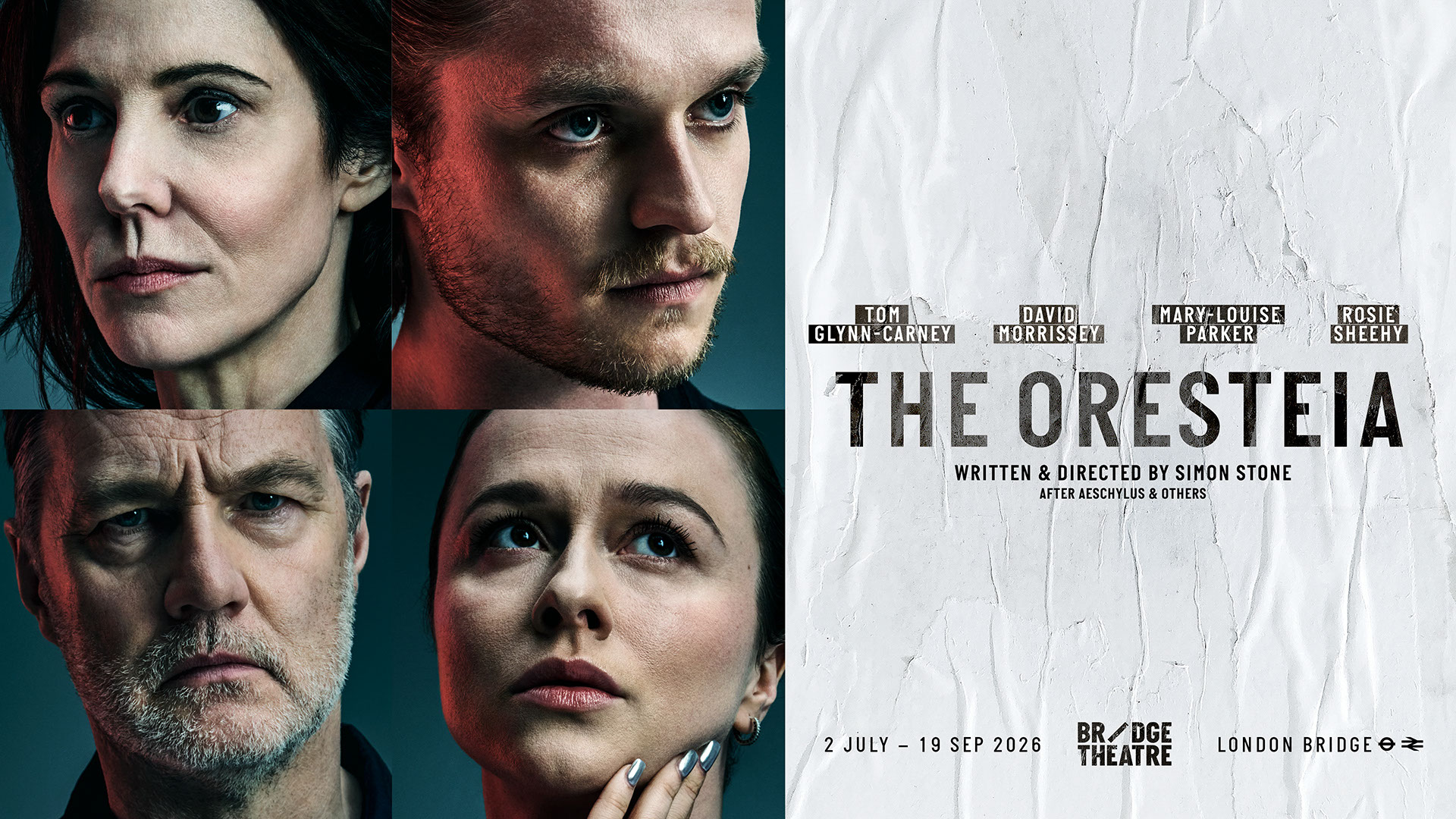
The Oresteia – Bridge Theatre ★★★★
By The Recs JDH 6 hours agoSimon Stone’s full-length, full-bodied gore-fest ‘The Oresteia’ arrives at the Bridge Theatre on this long, hot summer.
Whilst this week saw the premiere screening of Christopher Nolan’s ‘The Odyssey’ in its full IMAX glory, another Greek myth-inspired drama is making its appearance a few miles down the Thames near Tower Bridge. Australian writer and director Simon Stone (The Lady from the Sea, Phaedra, Yerma) has loosely based his storyline on the classical trilogy by Greek tragedian Aeschylus, first performed in Athens half a century before Christ. Stone’s scenario places a contemporary dysfunctional family into a similar murderous cycle of revenge killings, but with far less judgement and moralising than its predecessor. So, can this bold and bloody reimagining of a classic tragedy teach us anything about human nature and the need for justice in society, as the original did? Well, the jury is out on that one. It does, however, give us over three and a half hours of grippingly grisly action and some outstanding acting.
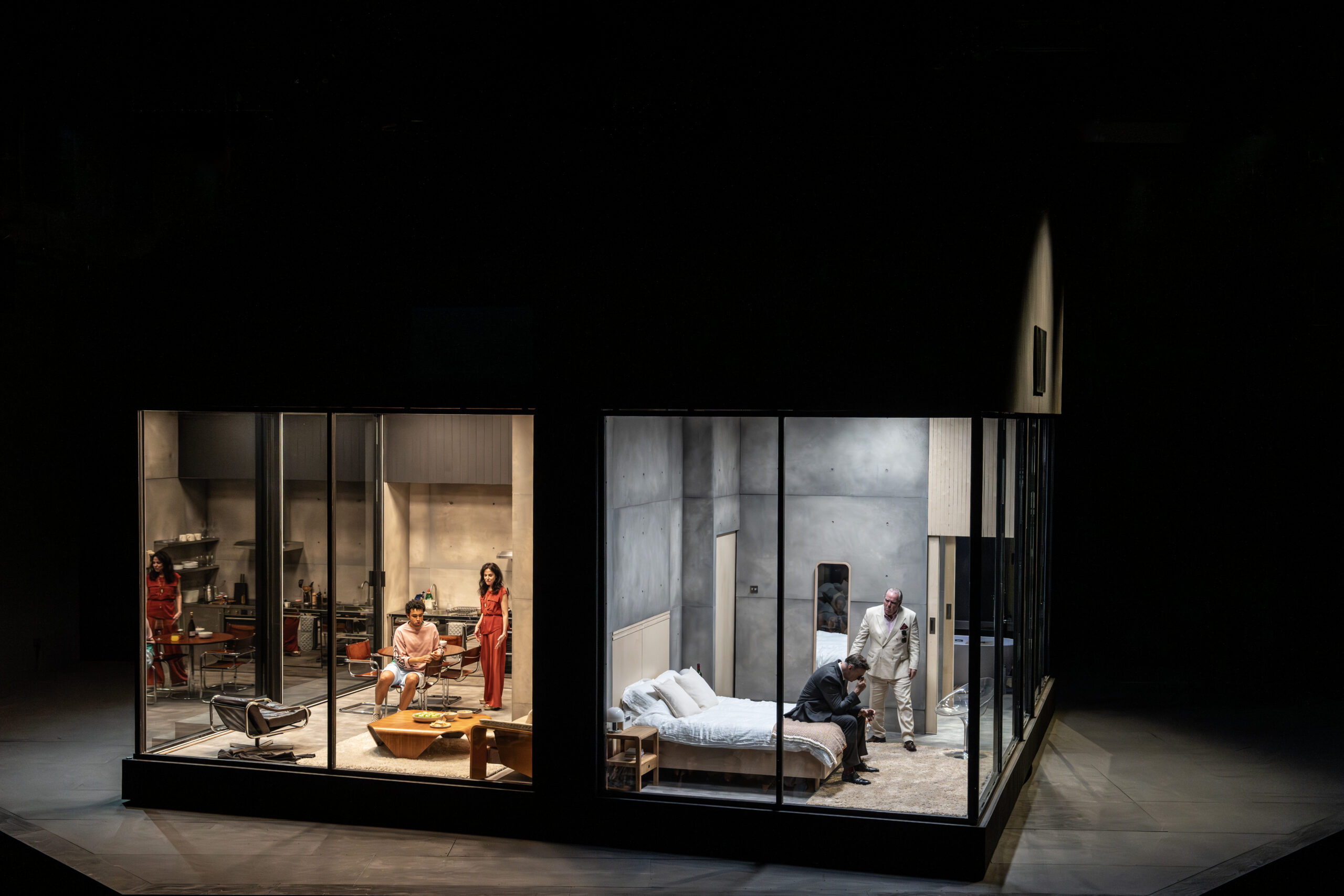
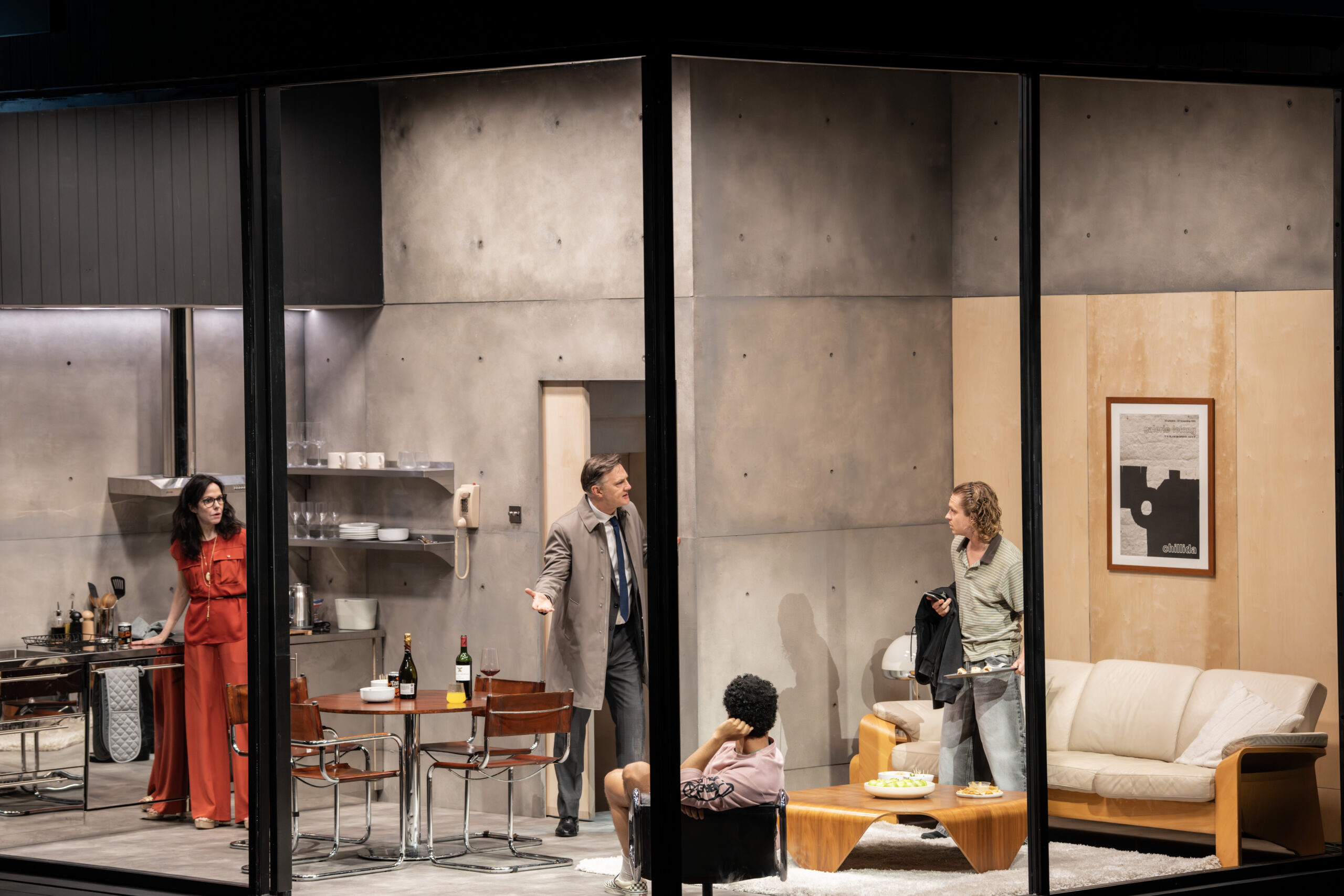
The show starts with a flashback to preparations for a party placed somewhere near Sevenoaks, Kent, in 2016. Set designer Lizzie Clachan has worked with Stone before and now delivers an impressive, rotating, two-storey Brutalist house composed of exposed concrete walls and large glass windows. As the house spins around to a sudden cacophony, we see glimpses of its modernist architecture: the bedrooms, the open-plan kitchen, the bathroom, the hallway and its front door. It is clean and functional, about to be filled with its dysfunctional occupants as they gather for the birthday celebration.
Here we are introduced to the extended family who will go on to live out and die by the curse placed on the House of Middleton. There is the American mother, Montie, chastising her arms-dealing British husband, Chris, for his poor work-life balance. There are the sons, daughters and cousins, brought up in privilege and despising their parents. There are family secrets and whispers about inherited schizophrenia. Then we are in 2026, and by the cliffhanging end of the first act, we know some of the dreadful murderous things that have happened in the intervening years.
After a short interval, Stone’s second act, subtitled ‘The Reckoning’, starts to fill in the gaps and explore the motivations underpinning the killings. The final act is more frenetic, jumping around the decade with short, intense, blood-soaked scenes and more revelations about the Middleton family dynamic and the protagonists’ states of mind.
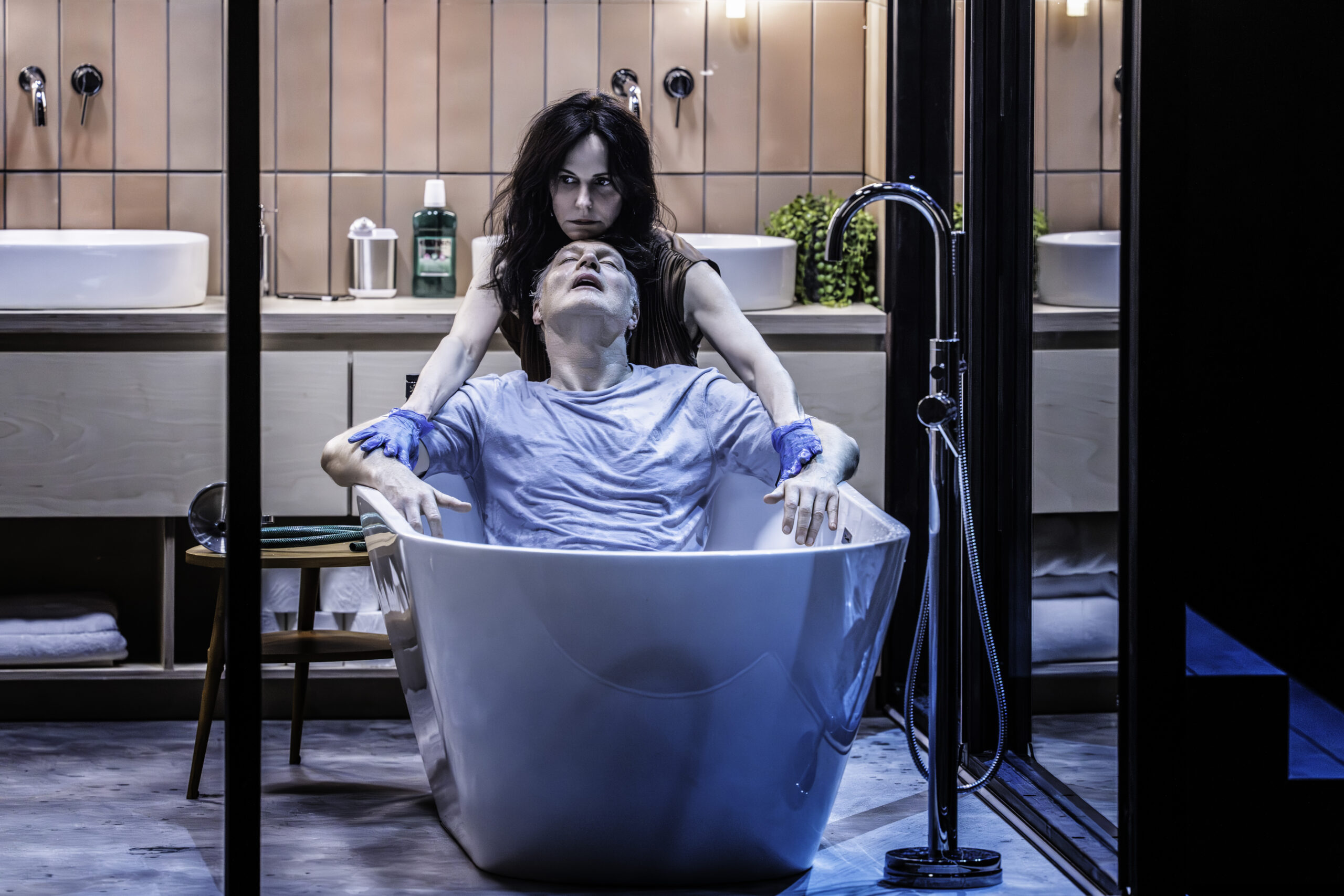
Award-winning actor Mary-Louise Parker tackles the unsympathetic character of vengeful wife Montie with calculating vehemence and sarcasm. From the outset, she snappily delivers her acidic lines with insincere smiles and simmering resentment. Parker commits entirely to her character’s Lady Macbeth qualities as she manipulates and coercively controls her new husband into helping her murder her old one. Stone even gives her a soliloquy at the start of the second act where she powerfully recounts her most disturbed yet unrepentant alcohol-fuelled dreams. She is chillingly cold and brittle throughout, shrill and infatuated with just one of her children, imbuing Montie with a gutsy, sardonic determination to avenge that child’s death. Her talents are matched by another celebrated stage and screen actor, David Morrissey, as he grapples with the powerful, complex feelings and actions of his character, Montie’s first husband, Chris Middleton. Morrissey is convincing as the fallen and tormented ‘MiddleTech’ businessman trying to recover from a mistake he made in order to cover his own back. His portrayal is unloving and lacking in moral fibre but also sad, accepting and reflective. We could have hated Chris for his ethics, but Morrissey shows us a more pitiful, rueful side all the way up to his final scene.
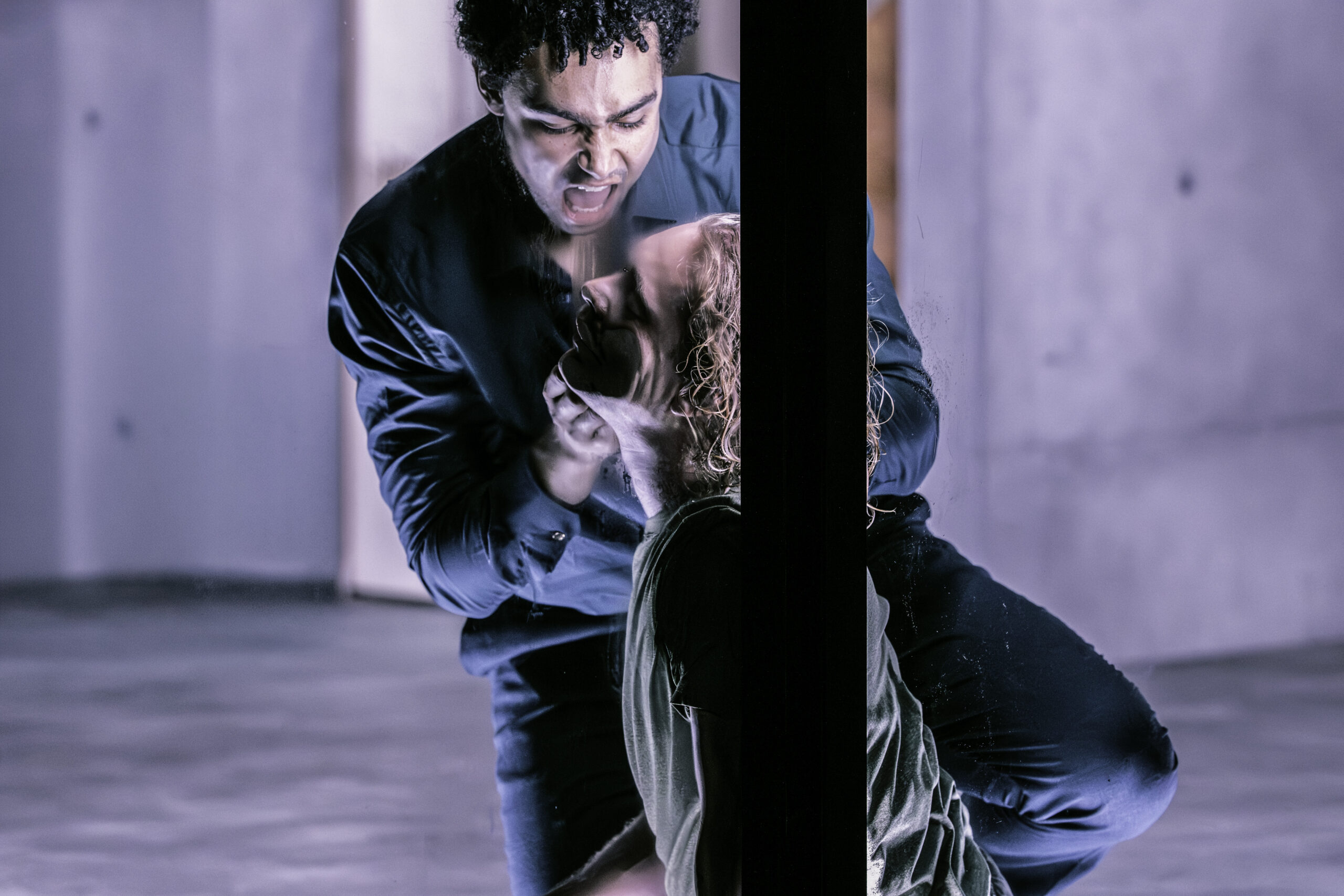
Chris’s and Montie’s only son, Augie, is hauntingly played by Tom Glynn-Carney, conveying through menacing movement and anguished conversations his otherness and mental unravelling as the show’s storyline swings forwards and backwards. Glynn-Carney carries the weight of the disjointed narrative, showing his character’s sensitivity and shocking savagery as we move from scene to scene, room to room in the revolving, time-travelling house. He is compelling and magnetic, dangerous and edgy. His performance is complemented by that given by Rosie Sheehy as his twin sisters Alice and Isobel. In the main part, Sheehy portrays a surprisingly comic, self-deprecating and insecure Alice with her upper-middle-class Kentish vowels and lolloping body language. For such a tragic setting, Stone has chosen to give Alice the unwitting humour in his play, and Sheehy plays her as awkward and diffident, unassertive and lost. She makes her the only likeable character out of the bunch.
The extended family members also display wonderful acting amongst all the shock and gore. Cousin-cum-second-husband Jerome is portrayed by John Macmillan as guileless and gullible, easily swayed by his new wife, and aware of his guilt in the proceedings. Undemanding but successful Lorenzo, son of Jerome and friend of Augie, is coolly and cogently played by Archie Madekwe right up to his final scene when he is allowed to let loose, railing against the things his friend has done. Chris’s new girlfriend Chandra is sweetly delivered by Rakhee Thakrar, giving her a troubled, fragile quality belying her broken innocence. Some other actors, like Sheehy, take on two parts over the course of the evening. Lloyd Hutchinson first comes to the house as Chris’s nasty brother and business partner Melville, strutting around, delivering ultimatums, and then returning in the crumpled guise of a Kent detective called to investigate a murder. Alyth Ross also brings two very different characters to life in the shape of Jenny, the Middletons’ cheery Scottish factotum, and Letitia, Lorenzo’s entitled fiancée.
All the actors have been supported by a creative team who have done an excellent job in conveying the feeling of life lived and died over the past ten years in rural Kent, particularly the sound crew who have the tricky task of getting audible words to our ears in spite of the fact that most of the action takes place inside impressive glass-sided boxes.
Stone has thrown a lot into this raw, intense crime drama, using some of the artistic devices we are more used to seeing on the screen. He has had the rich pickings of the best Greek tragedians and turned them into something modern, gruesome and appalling. He has conceived a piece that is equally unequivocal and convoluted, naïve and knowing. At the start of the previews, its run time was nearly an hour longer than on its opening night. To achieve this, some of the storyline has been sacrificed, and he has directed his actors to speak over each other, particularly in the establishing opening scenes, meaning that the words he has written can often be lost in the telling. We are given a satisfying ending but very little respite from the awfulness in its run-up, and no neat moral with which to walk away. What elevates this production of The Oresteia is its superb casting and top-class, red-blooded ensemble acting.
A cornucopia of cold-blooded clan conflict cleverly served up with Stone-hearted relish.
★★★★ 4 stars
The Oresteia Tickets
The Oresteia runs at Bridge Theatre, London, booking currently until 19 September, 2026
Author Profile
- The Recs JDH