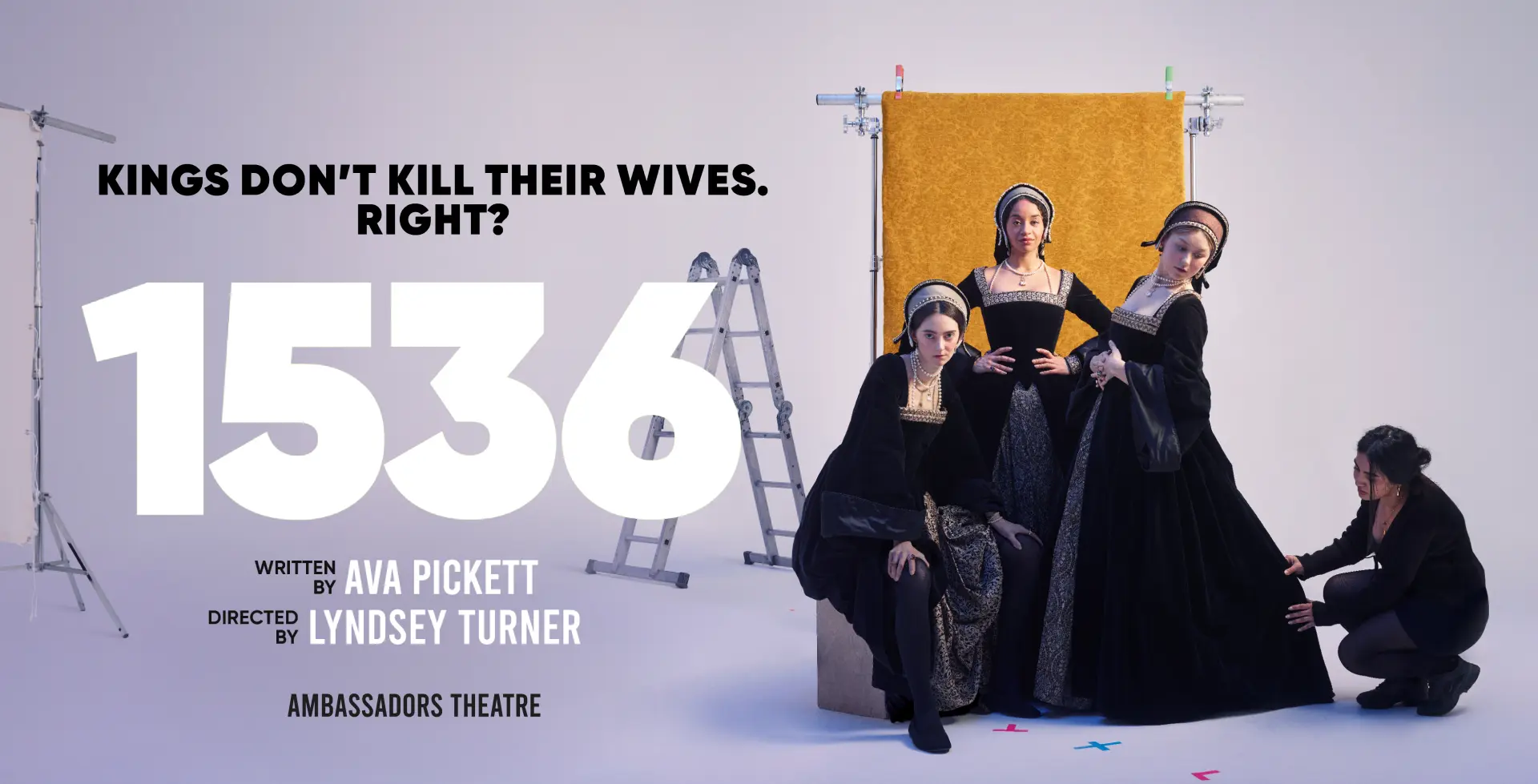
1536 is Pickett’s debut theatrical offering, following her work writing for historical television dramas such as The Great, and it delivered her first award in the shape of the 2024 Susan Smith Blackburn Prize. History aficionados will be well aware that 1536 was a year of considerable upheaval in England. This was the year that Henry VIII’s first wife died and when he had his second wife, Anne Boleyn, beheaded for alleged adultery and treasonous behaviour. He consequently went on to marry Jane Seymour less than a fortnight after Anne’s execution and forced Parliament to remove Anne’s daughter, Elizabeth, from the succession. It was a busy year for Henry as he also started to dissolve the monasteries, had to deal with a Catholic revolt in northern England, and cemented his power base by incorporating Wales into the English legal system. Of all these events, it is the incarceration and eventual execution of Anne Boleyn that play out offstage, setting up this play’s narrative arc and dangerous, volatile atmosphere.
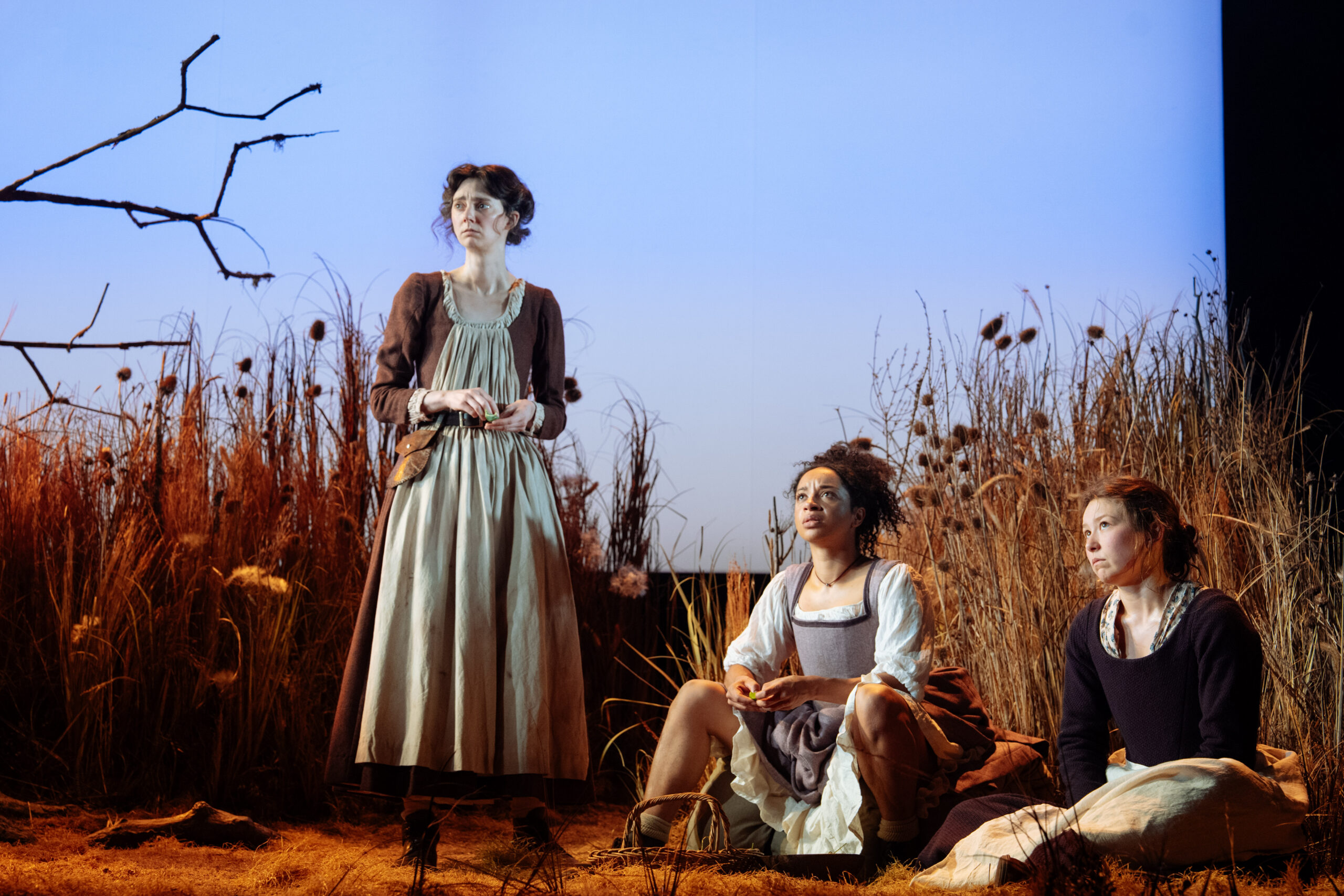
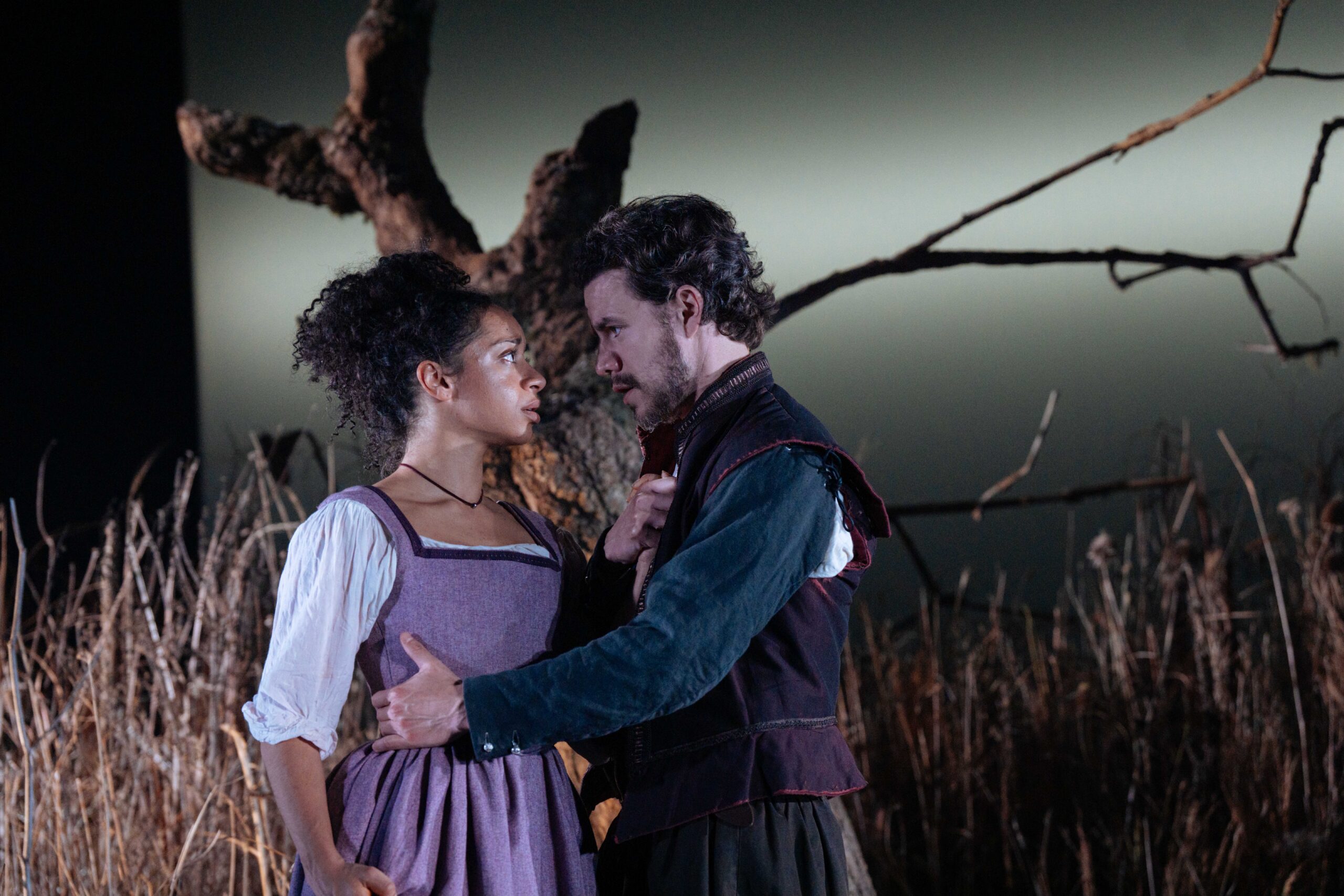
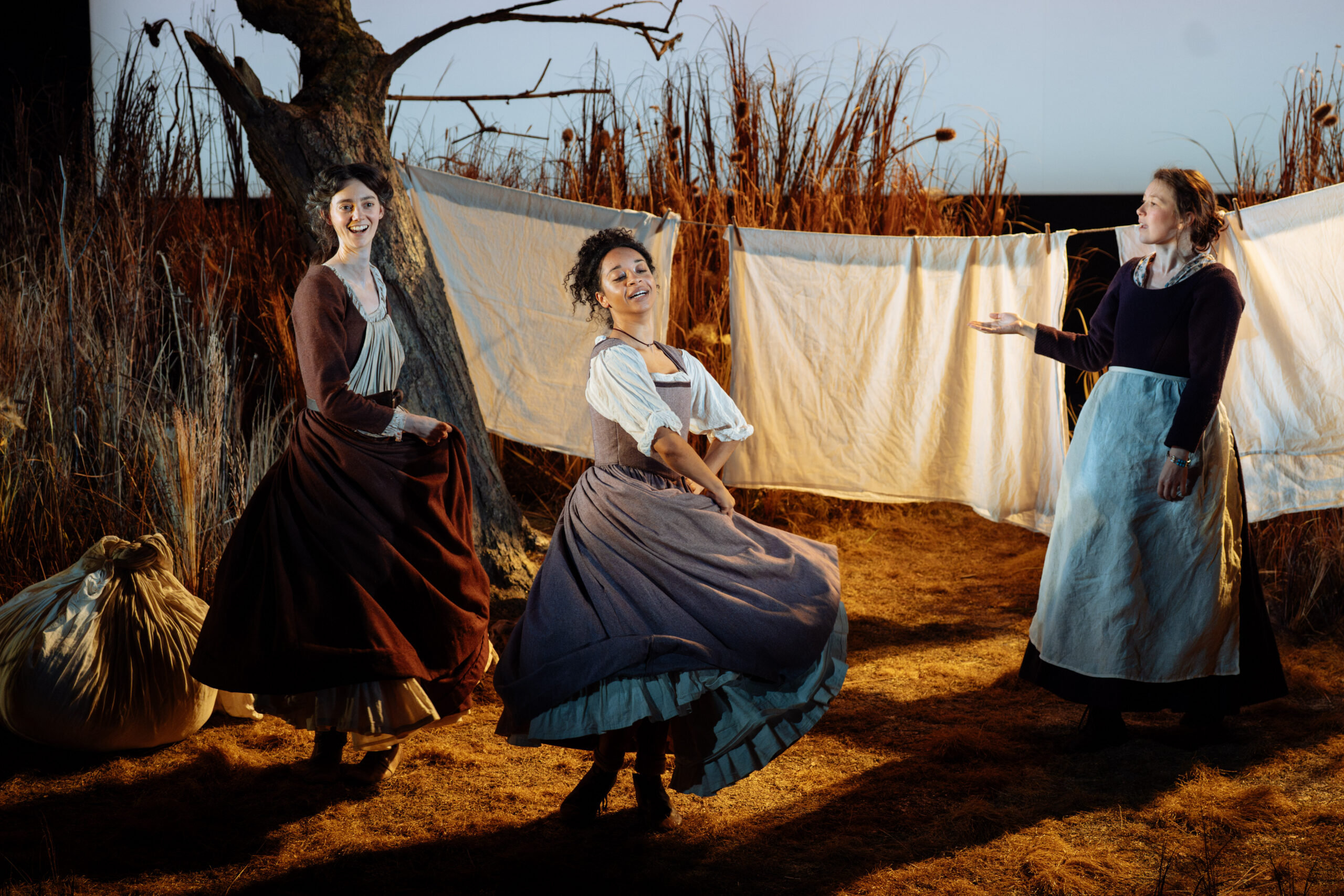
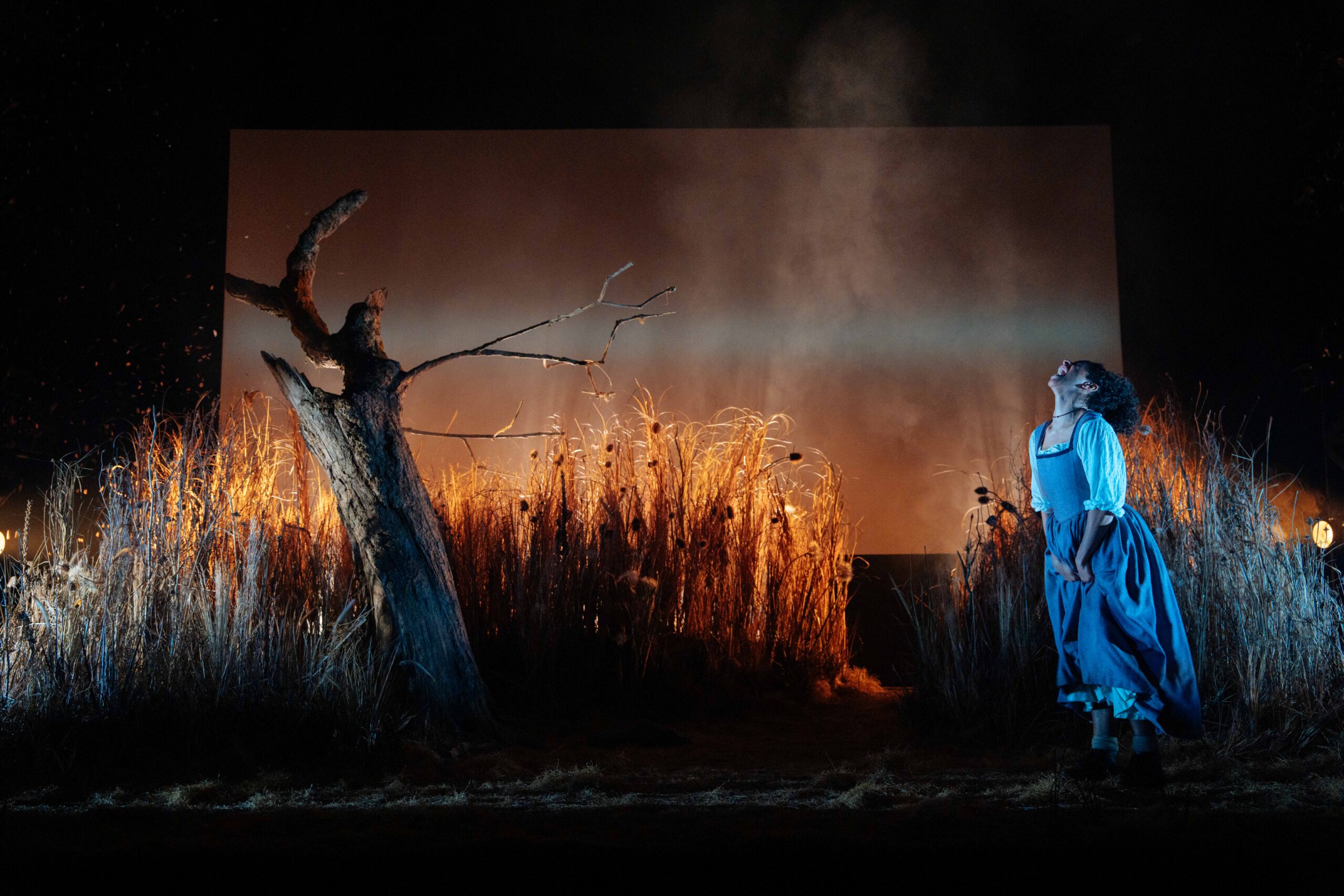
There is no curtain shielding the viewer from the action. Set and costume designer Max Jones‘ stage is already placed as if in a clearing somewhere near a village in rural Essex. The rear of the stage is dominated by golden grasses and teasels. There is a small opening cut between them, providing the only access and egress for the characters, and there is a dead-looking tree just to the left of centre. As the auditorium lights go down, the stage is plunged into darkness, only framed at the front by a rectangle of stark white LED strips, symbolic of watching the events through a giant television as the background music intensifies. When lighting designer Jack Knowles‘ warm white and amber lights come up across the stage, and the music of Will Stuart stops, we are voyeurs watching a man and a woman having noisy and enthusiastic sex against the tree.
And so we are introduced by Pickett and the direction of Olivier Award-winning Lyndsey Turner (for Chimerica) to Anna, a woman of seemingly easy virtue, and her lover Richard, whom we immediately judge as an opportunist. Turner brings confidence and ambition to 1536’s staging, creating a show that immediately pulls us into the era of the Reformation. The play takes us through a number of scenes, all set in this hot and secluded clearing and broken by the same audiovisual device used at the start, combining its specially composed music with the darkness framed by harsh LED light. We soon meet the other two women central to the storyline as they come to gossip and share stories with each other at this spot. It’s social media in another age, and their chatter starts with the news from London that Anne Boleyn has been detained against her will on the orders of the king. As well as understanding Anna to be a free-spirited woman who relishes intercourse and the feeling of being desirable to men, we find that her friend Jane is quite the opposite. She’s a daddy’s girl, simple, naïve and virginal; lined up by her father to marry the son of a local farmer. Then there is Mariella, their other friend, who is a young midwife, thwarted in love because of her lowly status. The man she really wants, William, is now married to another woman, now pregnant by him, and Mariella is one of the midwives in this woman’s employ. Pickett’s sassy, smart script is peppered with expletives, snappy one-liners and put-downs as she explores the dynamics of this friendship and the women’s various life situations.
Using the language of today’s Essex girls, on the stage, we witness the female banter directed at one another juxtaposed with reports of misogyny and recrimination in the village. Anna’s vulnerability is exposed by the similarities she shares with the doomed queen. Jane marries one of the eligible misogynists out of ignorance and duty, and it doesn’t end well. Mariella’s casual words are used against her when a terrible event occurs. The friendship is tested and ultimately breaks under the pressure just as news of the queen’s beheading arrives.