The Resistible Rise of Arturo Ui ★★★★

An irresistible interpretation of Bertolt Brecht’s ‘The Resistible Rise of Arturo Ui’.
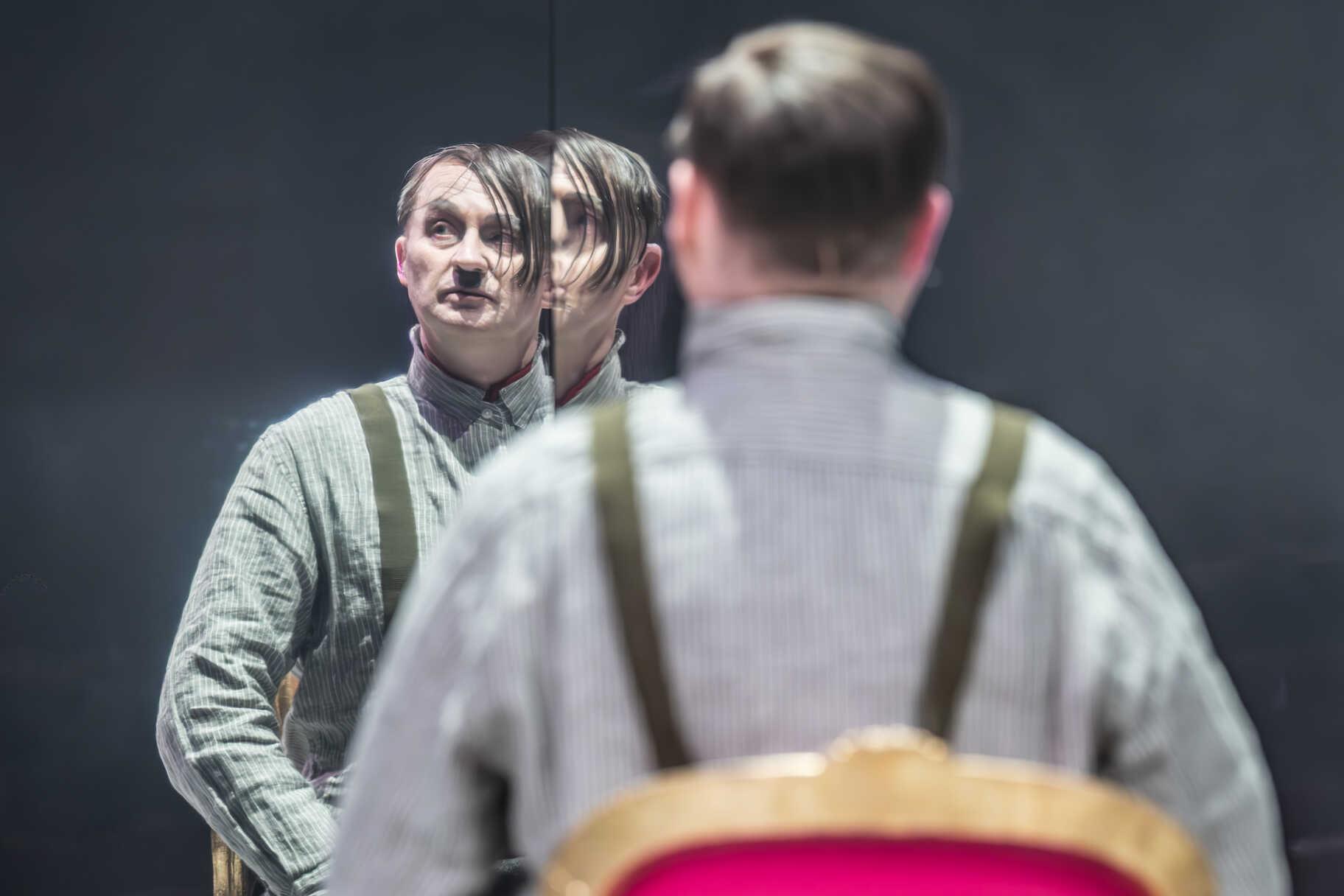
Frequent advice to aspiring writers is “Write what you know”. Bertolt Brecht fled Nazi Germany on 28th February 1933, the morning after the Reichstag fire. He moved through Europe until 1941, the year he wrote The Resistible Rise of Arturo Ui. Then, as advancing German troops made Europe an increasingly insecure refuge, Brecht escaped to the USA. Settling in LA, he worked as a screenwriter until 1947, when, on the day after testifying to the House Un-American Activities Committee that he’d never been a member of the Communist Party, he fled again, first to Switzerland and then back to (East) Berlin.
 
The scene is Chicago, during the Depression. The cauliflower trade is in crisis. Arturo Ui, a small-time gangster, spies an opportunity to seize power. Exploiting fear and economic instability, Ui manipulates the city’s cauliflower traders, corrupts its officials, and eliminates his rivals with violence. Seeking help from an actor to improve his speech and bearing, he uses stirring public speeches to gain public support, whilst his goons suppress resistance. After securing control of Chicago, he sets his sights on other cities, beginning with neighbouring Cicero, where the willing and complicit invite him in.
Images by Marc Brenner
In case there was any doubt about his intended meaning, Brecht pasted photos of Hitler and other senior Nazis into his first draft of The Resistible Rise of Arturo Ui. In case the audience, deprived of sight of that script, was unable to draw parallels to any real-world events, Brecht had a sledgehammer up his sleeve. The parallels between the rise of Ui and that of Hitler were explicitly drawn through the techniques of so-called Epic Theatre – the breaking of the fourth wall, the insertion of independent narration, and the use of placards to explain the events being represented in his parable. Thus, we are told, after a vegetable warehouse fire, the date and fallout of the Reichstag fire. After Ui orders the death of long-standing ally Roma (standing in for Ernst Rohm), we are told about the Night of the Long Knives. You likely haven’t missed that that Cicero is Austria, but Brecht will still tell you about the Anschluss.
 
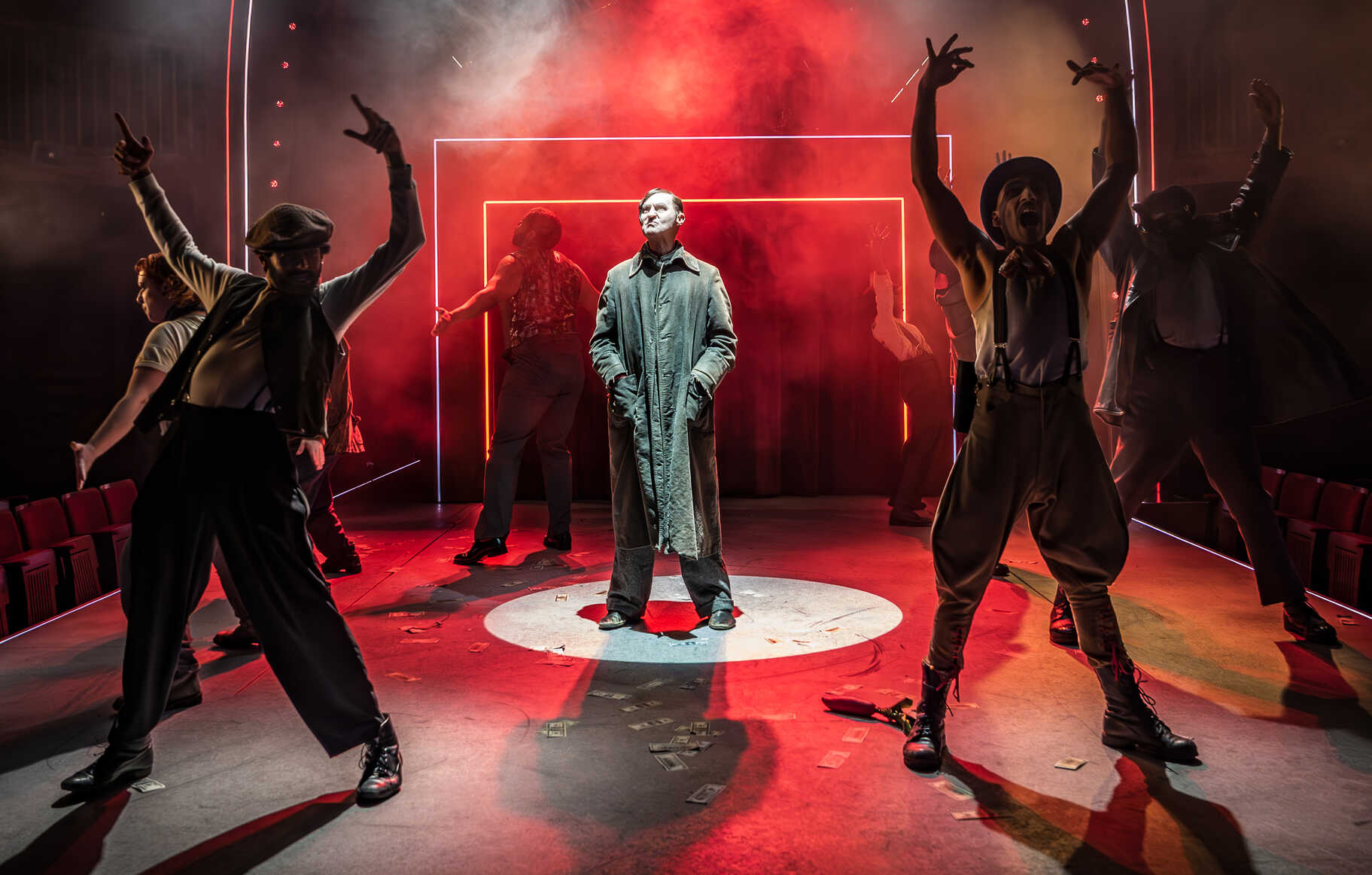
This is not, then, a subtle satire, and this production, in the hands of Sean Linden (director), is appropriately unsubtle. It is loud, lurid and ridiculous (that’s a compliment). Stephen Sharkey’s translation is as sharp as the technicoloured suits of the men of the Cauliflower Trust (set and costume design by Georgia Lowe) as they gorge greedily on a mountain of doughnuts and cauliflower heads during the Depression. The loud, rocking score is by Placebo, performed, with impeccable timing, by the excellent live musicians (Richie Hart, Woody Taylor, Charlie Ward and Toby Ollis-Brownstone). Amongst an exceptionally strong cast, two merit special attention. In fact, it is hard to shift your attention off them when they are on stage.
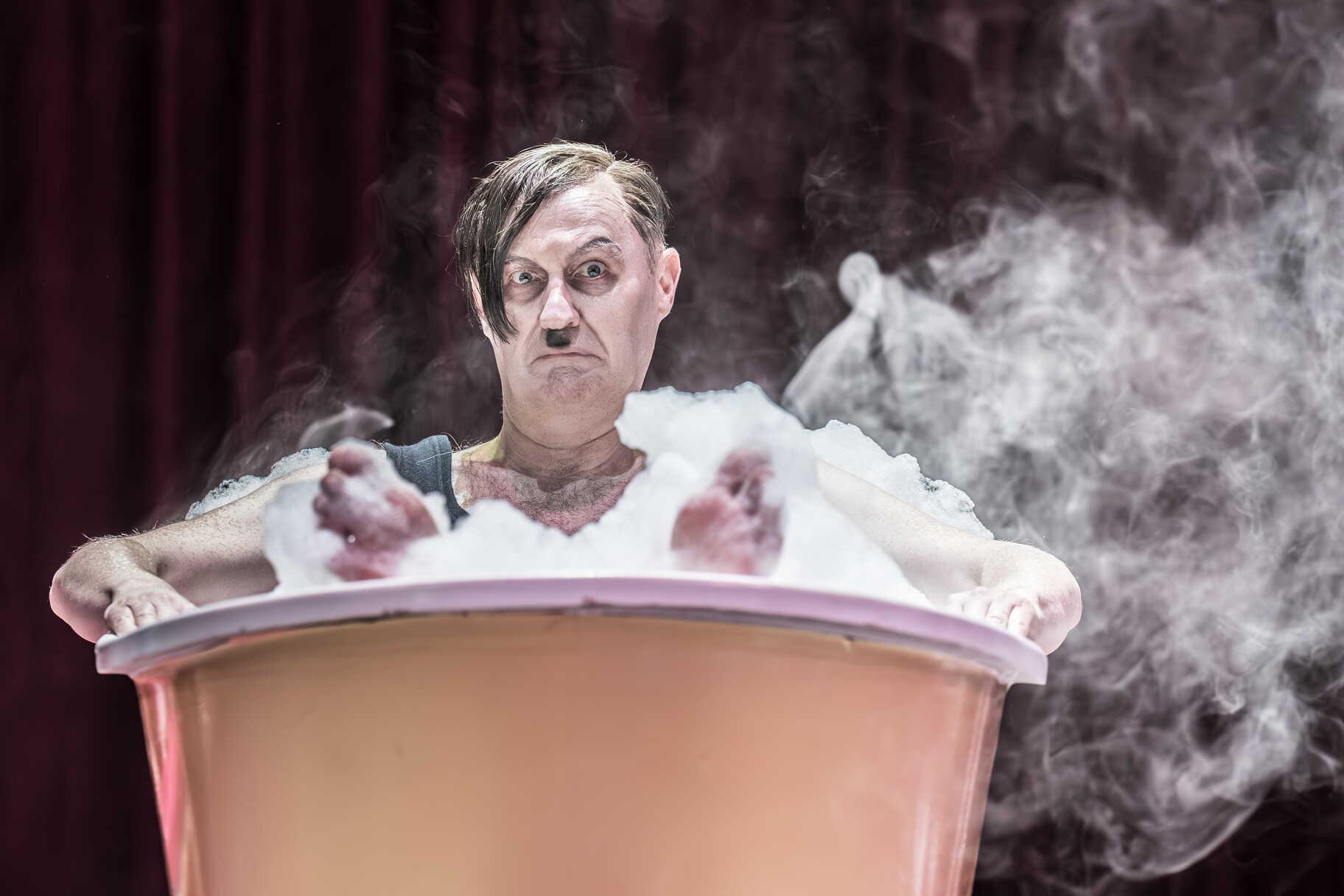
Mark Gatiss (Ui) is grotesque. Sporting a greasy black side-parting, a mouth full of gaping, rotting, flared teeth, and a small black moustache, only occasionally, but very deliberately, does his American accent take on a distinctly orange cadence. Over the course of nearly two hours, Gatiss transforms from a hunched, shuffling, shambolic, revolting man to an upright, suited, goose-stepping, revolting man.
 
The show, for a show it is, is opened by Mawaan Rizwan (The Barker/Giri). His first appearance is in staid RSC uniform, and he immediately breaks the fourth wall, drawing the audience in, forcing them to participate and to concentrate. He’s highly engaging, sharp and funny. When he reappears as Giri (Goring), he is menacing, dangerous, mad, acrobatic and hilarious; flashing crazy eyes at the audience, daring them to resist, revelling in the violence. Without doubt, Rizwan is the standout, stand-up, star of the show.
This is a funny play with a deadly serious message from someone who lived through the rise of the far right. In Brecht‘s view, the rise of Nazism was not inevitable; Hitler succeeded because he was facilitated by everyone who didn’t actively resist him, whether through fear or for personal gain. Wilfully misquoting another charismatic leader, if you weren’t against Hitler, you were for him.
 
Leafing through the programme tells you the staging of this play at this time is a political decision and taking part is a political act. Those involved have an opinion about the current political climate, concern about the ascendancy of certain politicians and a burning desire to do something. The danger, given their chosen vehicle and venue, is that they are preaching to a self-selected audience of the converted.
 
That doesn’t mean this isn’t a fantastic night out. It may be loud, brash and funny, but, when Ui and his goons appear in Nazi-emulating uniform, when the red, white and black banners unfurl, and when Gatiss, breaking character, says “the bitch that bore him is in heat again”, it packs a punch. The danger is that Brecht has hit you over the head with his sledgehammer so hard and so often over the course of the two hours that you are inured to the pain.
Part circus, part cartoon and wholly over the top, The Resistible Rise of Arturo Ui is Bugsy Malone with adult actors brandishing vegetable weapons.
A foot-tapping, laugh-out-loud romp through the rise of Nazism. A warning to the already woke. Resistance is not futile.
★★★★ 4 stars

The Resistible Rise of Arturo Ui Tickets
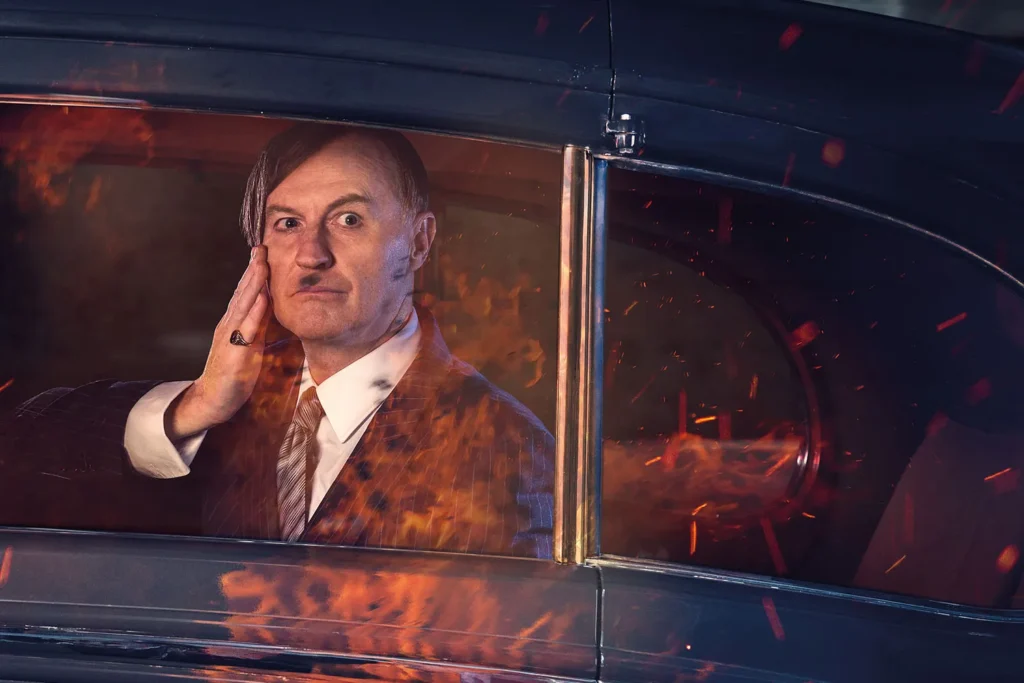
 

The Resistible Rise of Arturo Ui runs at the Swan Theatre, Stratford Upon Avon until 30 May 2026

Book Now

Author Profile

The Recs NB - Nicola Berry