Under Milk Wood – Theatr Clwyd ★★★★★

‘Under Milk Wood’ at Theatr Clwyd celebrates community, the lives we live and the lives we only dream of.
Perhaps the most famous work by Dylan ThomasUnder Milk Wood was a lifetime in the making; its characters and observations can be traced back (through school magazine contributions, letters and recalled conversations) to his teenage years, and he was still adapting it for the stage debut in New York in October 1953, handing new lines to actors as they prepared to go on stage. Likely it would have continued to evolve if Thomas hadn’t died, aged 39, the next month.

Although produced on stage and film, Under Milk Wood is a “play for voices”, a commission by the BBC for radio, although it was not broadcast until 1954, the year after Thomas died.

Thomas sets his drama in the fictional, small, Welsh, coastal town of Llareggub. At first glance, this looks authentic – the Ll is reflective of the many Welsh place names that begin with Llan (parish) – but, read from right to left, you get an immediate insight into Thomas’s humour which ripples through the play like a wave along a fishboat-bobbing sea.

Images by Richard Lakos

Under Milk Wood takes the listener to Llareggub for the day, arriving before dawn while its residents sleep and dream. We watch them wake, go about their daily chores, have their evening meal, drink in the local pub and settle back to sleep. With nothing so pedestrian as a conventional plot, the listener is taken on a gentle, meandering journey into the houses, lives and dreams of the inhabitants of Llareggub, revealing their hopes, their fears, and their humanity. 

The BBC’s original radio production in 1954 featured Richard Burton as First Voice, the narrator talking the listener through the village, its inhabitants and their rituals. Dylan Thomas himself took this role in 1953 in New York; Anthony Hopkins and Michael Sheen have also filled those shoes.

As Thomas eschewed the conventions of a plot, so Theatr Clwyd, with equal success, eschews the convention of a single narrator. In this immersive, mesmerising, dreamy production, the narration is shared across the cast. This is an ensemble effort with everyone playing their role, indeed roles. The play features some sixty-ish characters, if you count the dead fishermen and unnamed children, of which two characters are played by peg dolls in a sardine tin. The rest are distributed across the multi-rolling, multi-talented cast of eleven.

Truly, there is not a weak link in the performances. Every actor is superb. If a few performances linger longer in the memory, it is likely as much for the pathos and humanity of the characters Thomas wrote as for the actors’ appreciable talents.

Douglas Walker stands out as Captain Cat – funny, haunted, heart-breaking and completely different from his comitragic Waldo and his buffoonish Utah Watkins. Georgia Griffiths shines as Polly Garter, reviled by the other townswomen for her loose ways but full of longing for her dead love, her voice bright and clear as she sings her lament for him (Oliver Vibrans, composer; Lynwen Haf Roberts, musical director). Mrs Cherry Owen, beaten by Mr Cherry Owen (Adam Bassett) when he returns from Sailors Arms after 17 pints, is simply but devastatingly portrayed by Amy ConachanMacsen McKay plays five (named) characters with aplomb. His comic turn as Mr Pugh, submissive in life but scheming multiple painful deaths of Mrs Pugh (also Amy Conachan) in his imagination, is wonderful. He shines again as Mog Edwards enchanted with Izzi McCormack-John’s sparkling and very naughty Myfanwy Price.

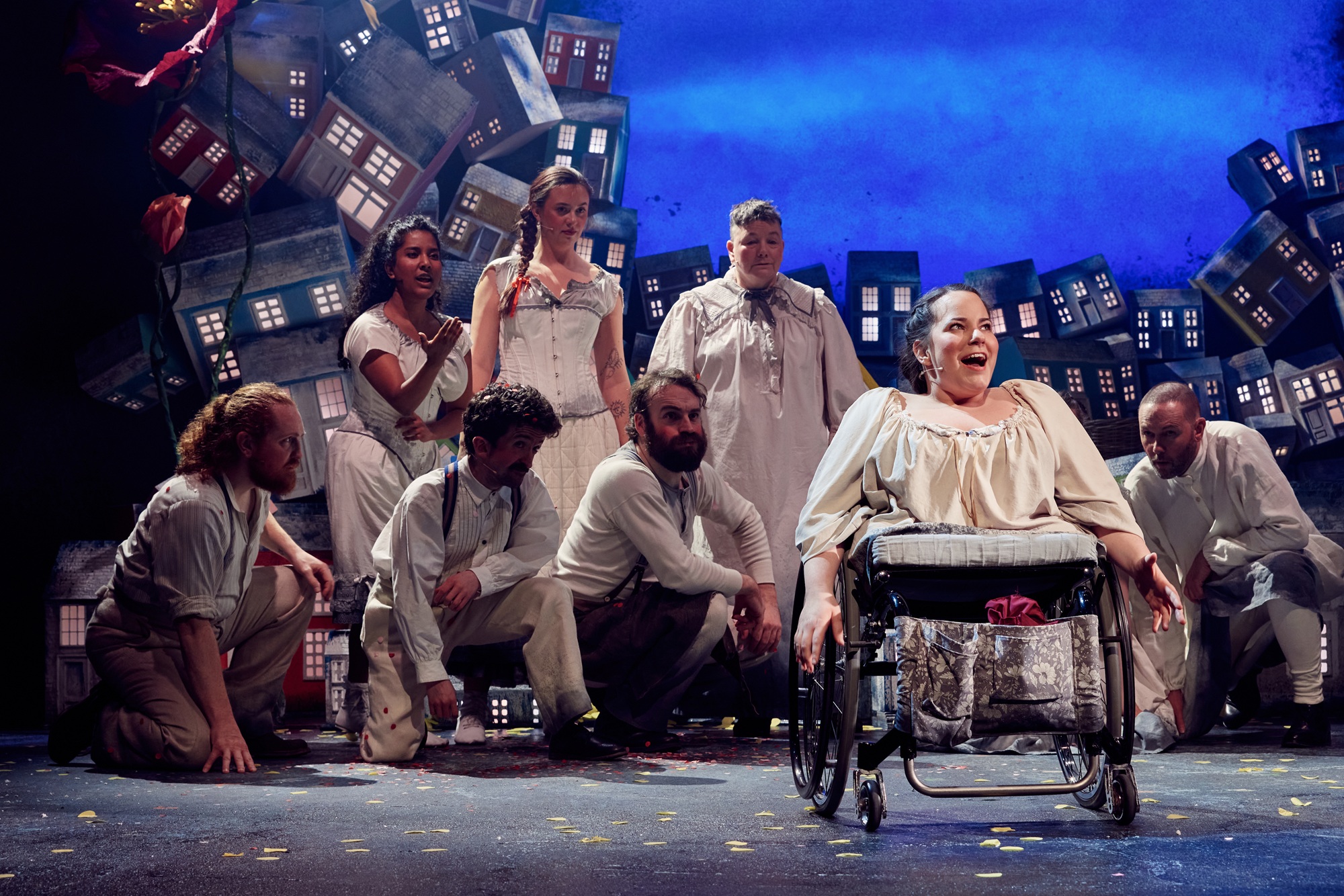
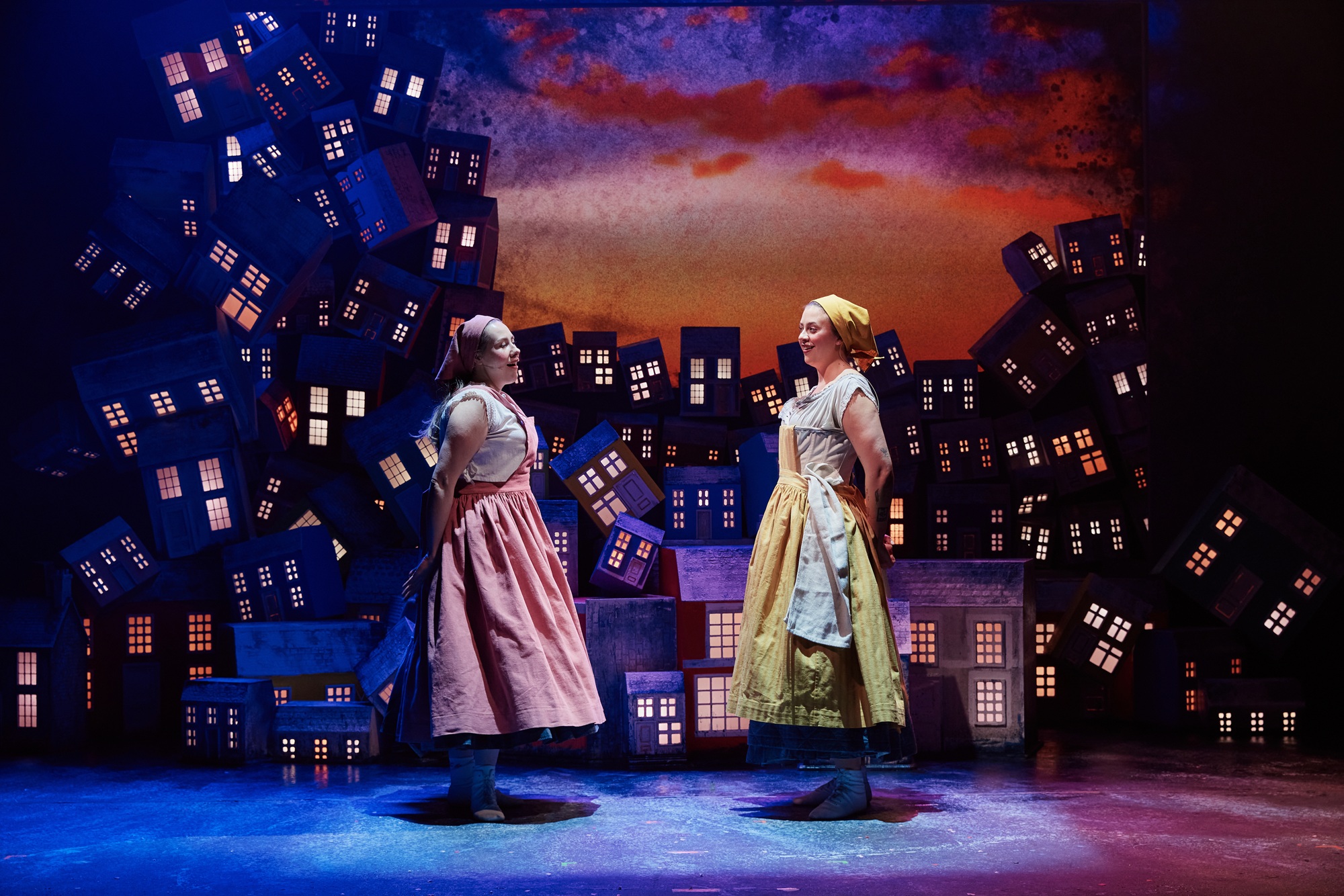
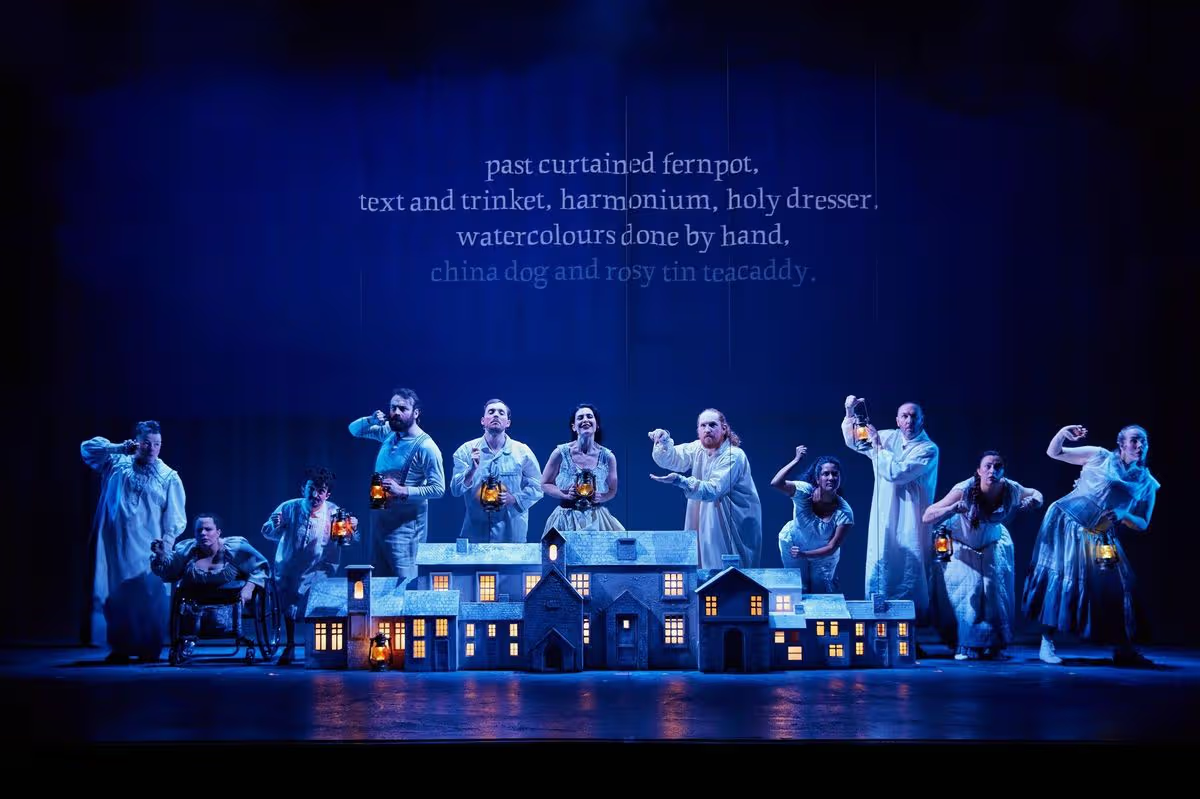
Under the direction of Kate Wasserberg, this production puts the focus on Thomas’s language and rhythm and beautifully showcases his lyricism and bawdy humour. Hayley Grindle, fresh from the success of Our Town (Welsh National Theatre with Rose Theatre), triumphs again with her set and costume design. The Guardian pinned Grindle as a “stage sensation to watch out for” in 2023 and she keeps proving them right. Once again, the staging is disarmingly simple, opening with a row of miniature houses, barely knee-high, representing the town into which the characters step. These and other houses that will seamlessly come and go during the performance are the streets, seats and steps with which the characters will interact.

Thanks to Craidd* integrated accessibility makes this show inclusive by design. On booking, the theatre emails out information (available in writing and audio) about arrival, the facilities, the staging, the characters and the available accessibility features to help everyone relax, understand and enjoy their experience. On site, before the show begins, an interactive, tactile installation allows the audience to explore props, costumes and set textures. At the performance, all the words of the play are projected onto the set as they are spoken. Simultaneously, the cast sign their own or each other’s dialogue using BSL, and the show integrates visual vernacular, which is described in the theatre’s materials as ‘a physical form of storytelling rooted in BSL but not tied strictly to it’. Several of the cast are hearing-impaired, deaf, disabled or neurodivergent; some sign throughout, and Amy Conachan dances from a wheelchair at the heart of the action.

*Craidd is a collaboration between Theatr Clwyd, Sherman Theatre, Pontio Arts, The Torch Theatre and the Royal Welsh College of Music and Drama, a shared commitment to create theatre ‘imagined, developed and delivered with access built in from the very beginning’. See more: https://www.theatrclwyd.com/visit/access/craidd

Theatr Clwyd’s Under Milk Wood is a groundbreaking, exhilarating, heartwarming, tear-inducing and laugh-out-loud funny production.

A joy-filled, life-affirming show with community at its heart ★★★★★ 5 stars

Under Milk Wood Tickets


Under Milk Wood is playing at Theatr Clwyd until Sat 4 Apr

Book Now

Author Profile

The Recs NB - Nicola Berry