Zamboni – A Play, A Pie and A Pint ★★★★
By The Recs GM - Giorgio Manzi 3 days ago‘Zamboni’ follows three ice-skating instructors in the aftermath of a freak accident.
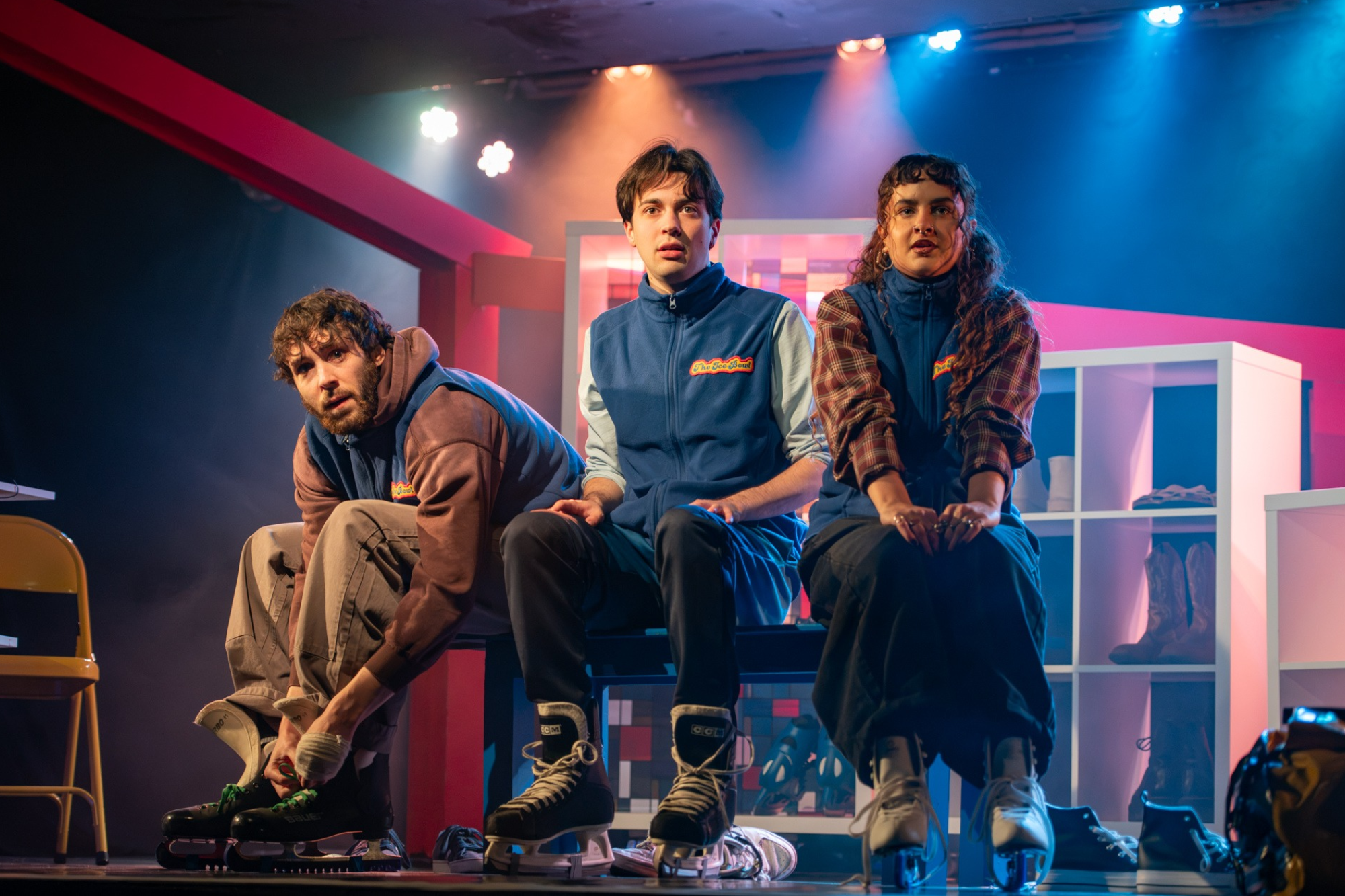
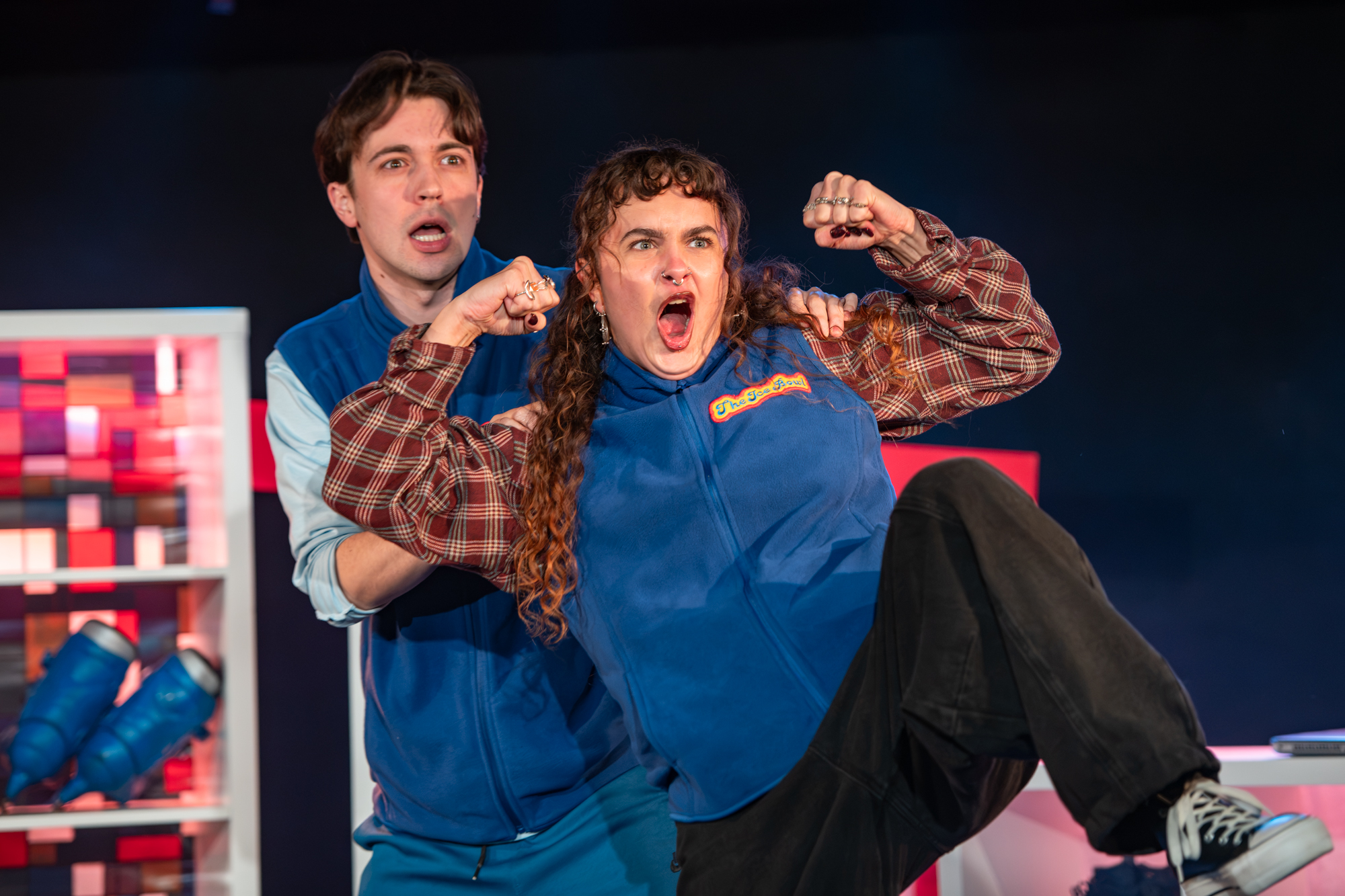
Zamboni follows three skate instructors working at a modern-day ice rink through a horrific freak accident on the ice, as they grapple with post-traumatic stress. Initially, the three young protagonists joke, tease and gossip with one another, establishing a healthy workplace camaraderie. However, the aftermath of the accident sees each spiral in a different direction. Noa seeks solace in her Jewish faith and heritage, whilst struggling not to be overwhelmed by the shock; Donal withdraws from social occasions and interactions, increasingly to his own detriment; and Gus struggles to maintain his responsibilities coaching the hockey teams alongside his preparations for a driving test. The ordeal places further strain on their relationships with one another and with the ice rink itself, which initially serves as a haven for this close-knit group. As Christmas approaches, the play explores these shifting friendship dynamics and the characters’ individual psychological struggles through a series of significant personal events, conveyed through monologues and role-doubling.
Written by Lex Joyce, Zamboni is an ice-rink dramedy exploring how workplace friendship and trauma play out in an everyday context, drawing on the humour and camaraderie of hockey subculture. As its title suggests, the Zamboni (named after the well-known brand of ice resurfacer vehicles) becomes a metaphor for the characters’ attempts to smooth over the rough surface of their collective trauma, questioning whether friendship and shared experiences can truly help them move beyond the accident.
Each character is distinct from the outset, reflecting their differing responses to the trauma they have experienced. Noa, played by Loretta Francis, is upbeat and chipper, attempting to maintain a sense of normality despite conflicting feelings of isolation. She also seeks reassurance through conversations with her former Rabbi, who has since been replaced by his son, jokingly dubbed the “Nepo-Rabbi”. This provides Noa with a source of comfort, making this interaction not only comedic but of sincere emotional significance, and Francis captures the character’s tentative attempts to reconnect with her faith with considerable authenticity.
Similarly, Gus, portrayed by Nathan Prestwich, remains fixated on passing his driving test so that he can drive home for Christmas, seemingly to assert control over an uncertain situation. Having coached the boys’ team, he has acquired a new moniker from the girls’ team: “Hockey Brutus”. This outward bravado, however, masks his recurring flashbacks of the accident. These ultimately culminate in him freezing at a crucial moment during an important matchup between the girls’ and boys’ teams.
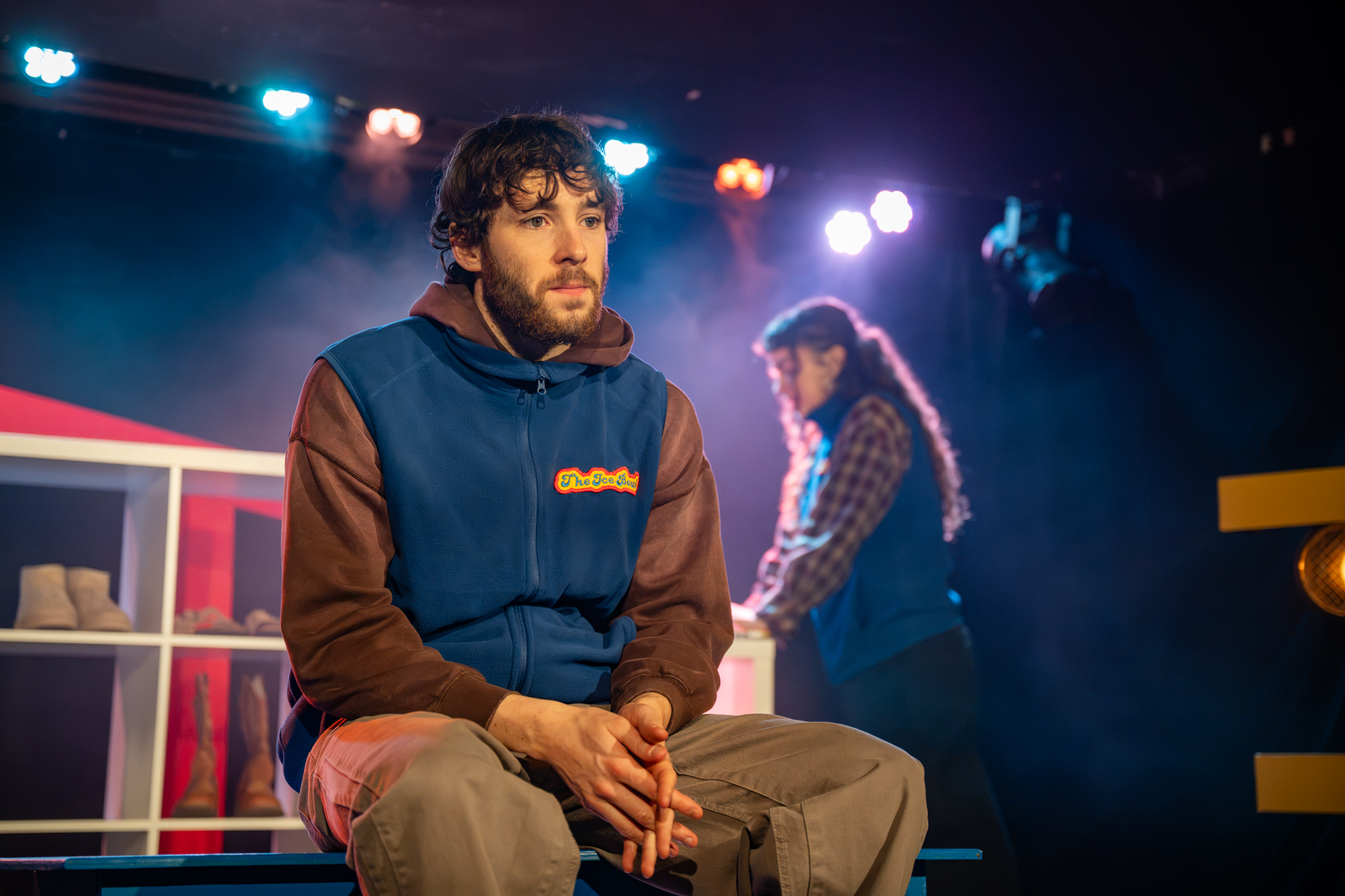
Completing the trio is Donal, played by Samuel Lee Johnston, who hasn’t been invited to the work Christmas party. He appears to accept this solitude with good grace, although his withdrawal increasingly becomes a means of avoiding social interaction altogether. This extends beyond the workplace, with Donal also refusing a family Christmas gathering and cancelling skating lessons with clients. His withdrawal consequently costs him a customer and begins to test the patience of Gus and Noa, further straining the friendship between the three.
Conveying the psychological consequences of trauma within the everyday environment of a sports workplace presents an interesting dramatic challenge. However, Joyce’s writing is attentive to how a traumatic incident affects not only the individual but also the wider workplace dynamic. The dialogue strikes a convincing balance between familiarity and nuance, lending authenticity to the workplace banter and establishing the camaraderie that underpins the trio’s friendship. Joyce demonstrates a keen ear for the rhythms of everyday conversation, allowing the humour to sit naturally alongside the play’s more emotionally vulnerable moments.
The emerging cast demonstrates a promising command of their craft, navigating the production’s shifts between comedy and emotional vulnerability with impressive assurance. Director Anna Whealing demonstrates a thoughtful approach to staging within the limited space. At times, however, the production’s effectiveness relies on the performers’ commitment to the directorial vision. Where this alignment was strongest, the chemistry between the cast becomes more convincing, and the role-doubling is executed with considerably greater fluency. The recreations of Gus’s driving test and Noa’s visit to the Nepo-Rabbi are especially successful, with both Johnson’s driving examiner and Prestwich’s religious confidant proving memorable minor characters.
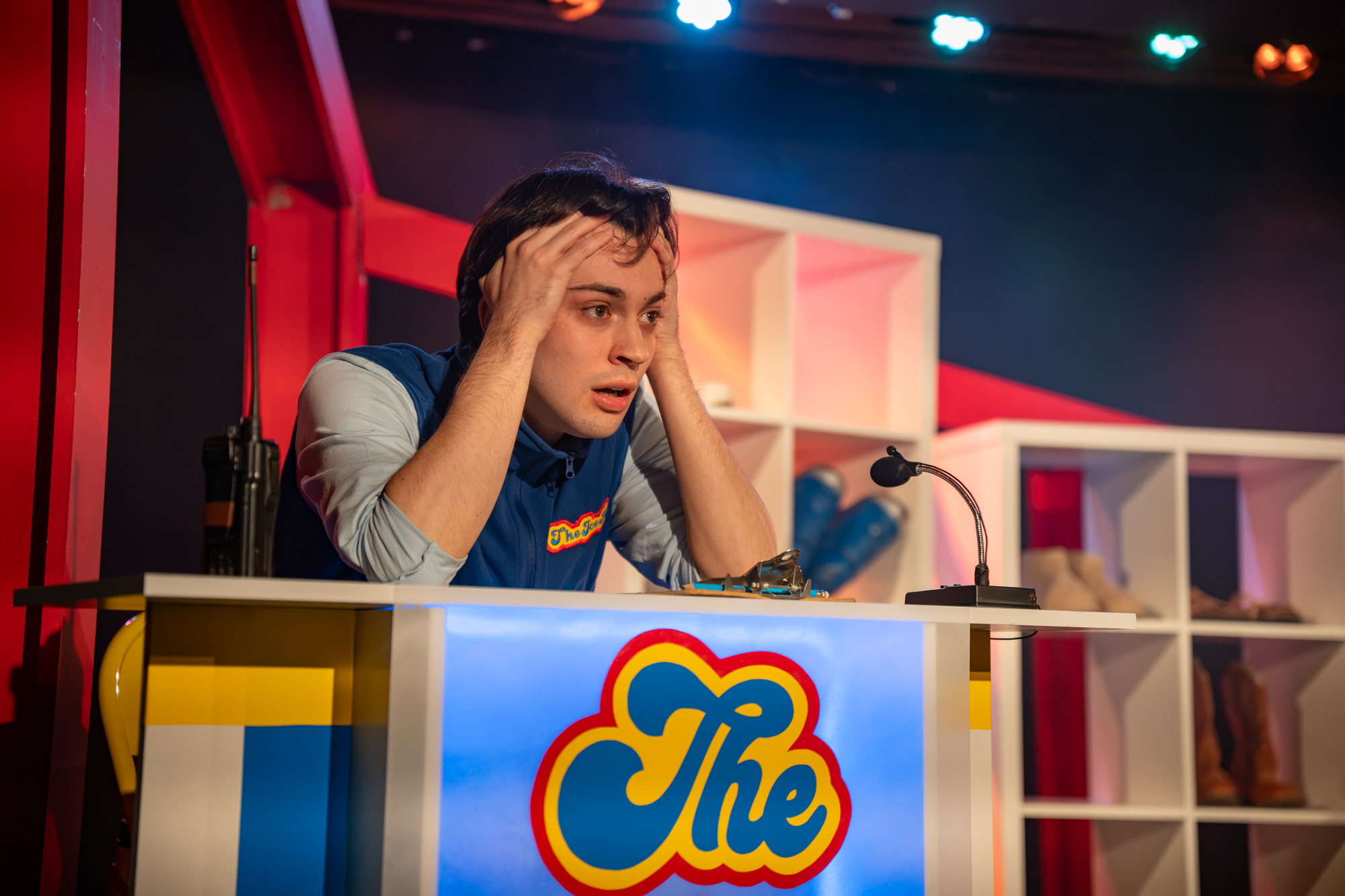
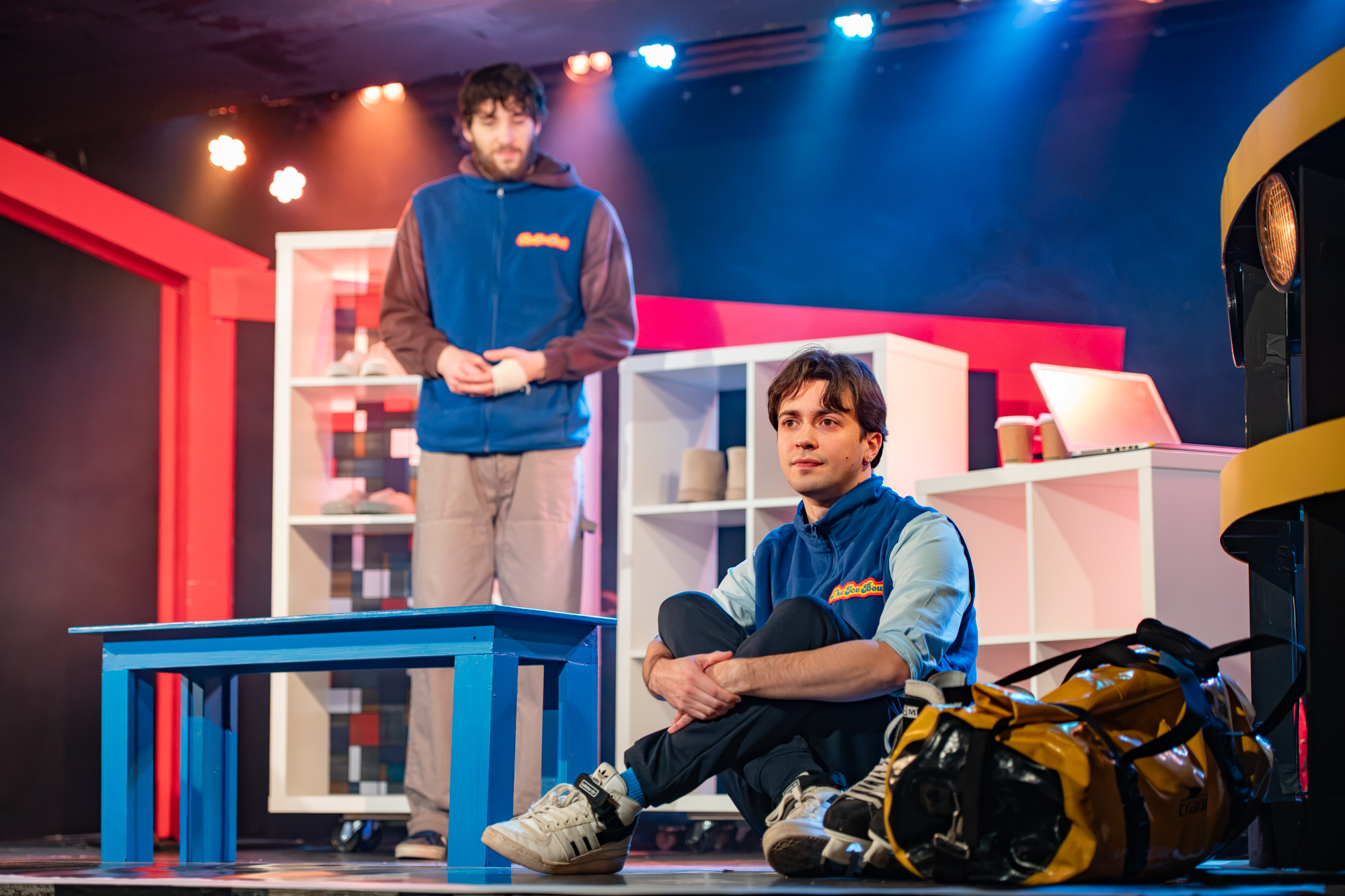
Particularly memorable is Gillian Argo‘s set and costume design, which cleverly transforms the Oran Mór’s low-ceilinged stage into an inviting, seemingly expansive space, whilst retaining a distinctly nostalgic 1980s ice-rink atmosphere. Rink railings extend out from the stage, accompanied by stadium-style floodlights, a geometric mosaic and a neon-blue Ice Bowl sign doubling as a desk, complete with a Tannoy system. The stacked shoe cupboards, filled with pairs left behind by customers exchanging their footwear for skate hire, become the centrepiece of a workplace game in which the colleagues speculate about the lives of those who once wore them. This seemingly innocuous game takes on a greater significance in the aftermath of the accident, offering a humorous yet poignant reflection of how trauma reinforces their desire to reconnect with the people around them. The rhythmic presentation of these imagined lives is particularly effective, culminating in a pair of size-five UGGs. This wonderfully specific detail provides a knowing nod to the boots’ early-2000s pop-cultural significance, evoking the childhood nostalgia retained by the protagonists.
Underpinning every tonal shift, confrontation and transition is Ross Nurney‘s lighting design. Throughout much of the play, a white underwash remains present, as though the memory of the ice itself lingers as a persistent undercurrent beneath the changing colour palettes. Elsewhere, carefully placed spotlights help define different areas of the stage and draw the audience’s attention to key moments. Likewise, Nurney’s sound design is subtle but impactful, consistently heightening the action through expertly timed ringing, alarms and sudden bangs, particularly during the staging of the accident. The transitional sequences feature a glorious selection of musical hits, including Chris Rea’s Driving Home for Christmas and The Dixie Cups’ Chapel of Love, lending the production the earnestness of a Hallmark Christmas film. Yet this never quite tips into corniness, instead providing a knowing warmth that complements the play’s humour and sharp emotional edges.
Ultimately, Zamboni finds considerable warmth in the ordinary relationships that sustain us, especially through the most difficult periods of our lives. Working within the constraints of a condensed rehearsal period, director Anna Whealing has done well to capture the tenderness and wit of Joyce’s writing. Combined with an energetic cast and the production’s distinctive visual identity, this makes for a genuinely engaging piece of contemporary theatre, balancing moments of genuine poignancy with extensive charm. The ice rink becomes more than just a workplace, representing a shared identity disrupted by trauma. The Zamboni may quite literally smooth over the ice, just as friendship and collective coping can help us navigate trauma. Yet, as Donal reminds us, it cannot help but spread the blood around first.
The ice is thin, the trauma thick, and the friendship tested ★★★★ 4 stars
Author Profile
- The Recs GM - Giorgio Manzi