There’s an understandable tendency for directors to reimagine works by William Shakespeare, to make them “relevant” to modern life and politics. But there’s also nothing wrong with a solid classic production focusing on the original script and featuring baggy Elizabethan costumes. Indeed, there’s a ton right with The Public Theater’s The Winter’s Tale currently playing in New York City.
Director Daniel Sullivan lets Shakespeare’s tale of two kings unfold naturally. There’s no subtext, no hidden meanings — just an astonishingly entertaining story about human traits, like jealousy, that are as old as time.
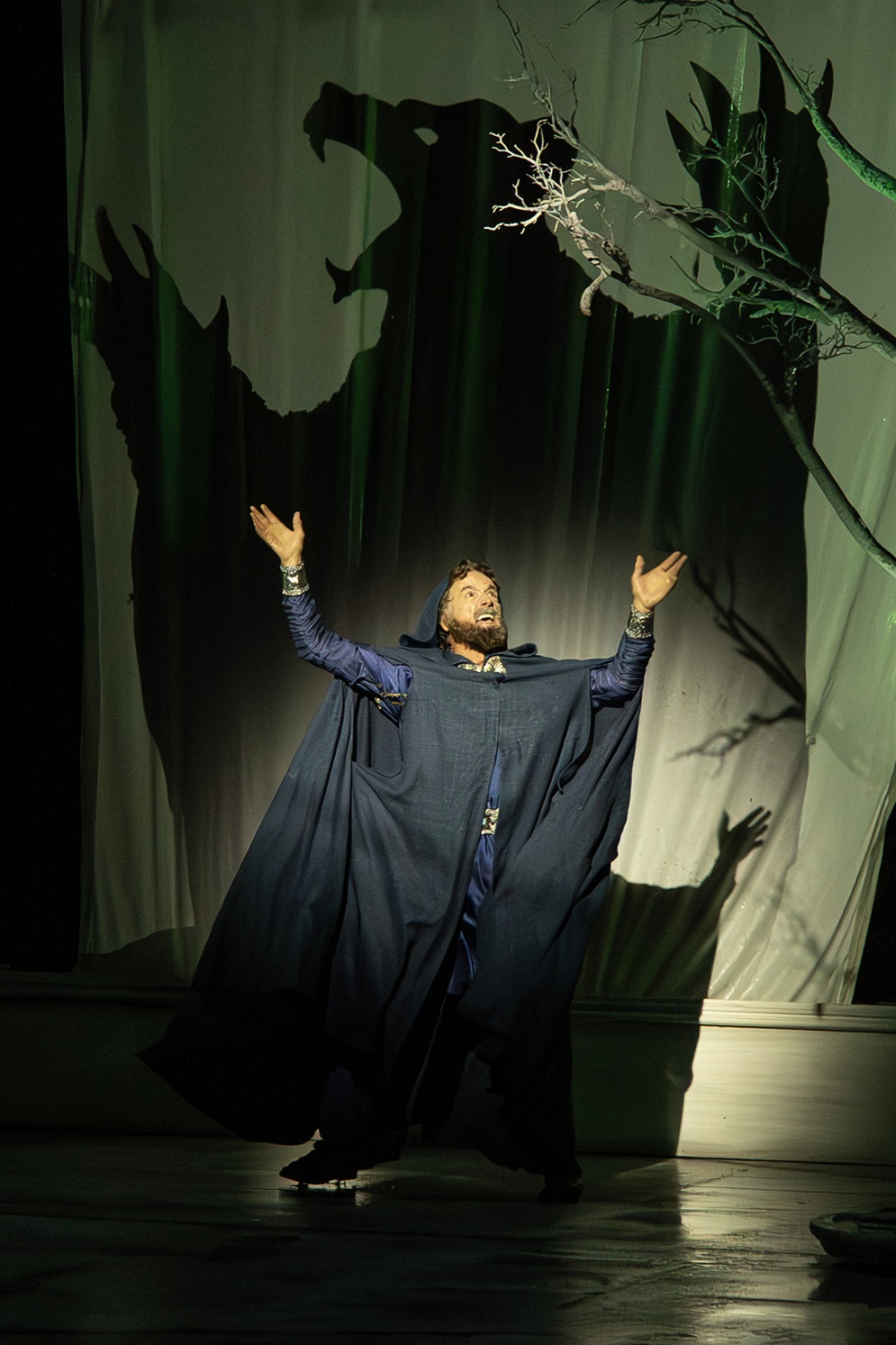
The timelessness of the story is established before the show even starts, thanks to scenic designer Maruti Evans’ giant clock on the beautifully whitewashed stage floor. Barren white trees pop against the lush green backdrop of Central Park, evoking winter on an otherwise sultry August night. As the real sun sets, the play begins and somehow the three hours and 20 minutes flies by, evoking many laughs, some gasps and even a few whoops from the audience.
Images by Joan Marcus
They were responding to the vivacious performances of this excellent ensemble cast, who deftly convey the meaning of Shakespeare’s beautiful but antiquated verse. From the opening scene, Raúl Esparza (King Leontes of Sicilia), Lily Rabe (Leontes’ wife, Hermione) and Gilbert Owuor (King Polixenes of Bohemia) establish this crew’s mastery of the sometimes tongue-tying lines while creating strong characters that are relatable to audiences accustomed to “Game of Thrones”-style drama and intrigue.
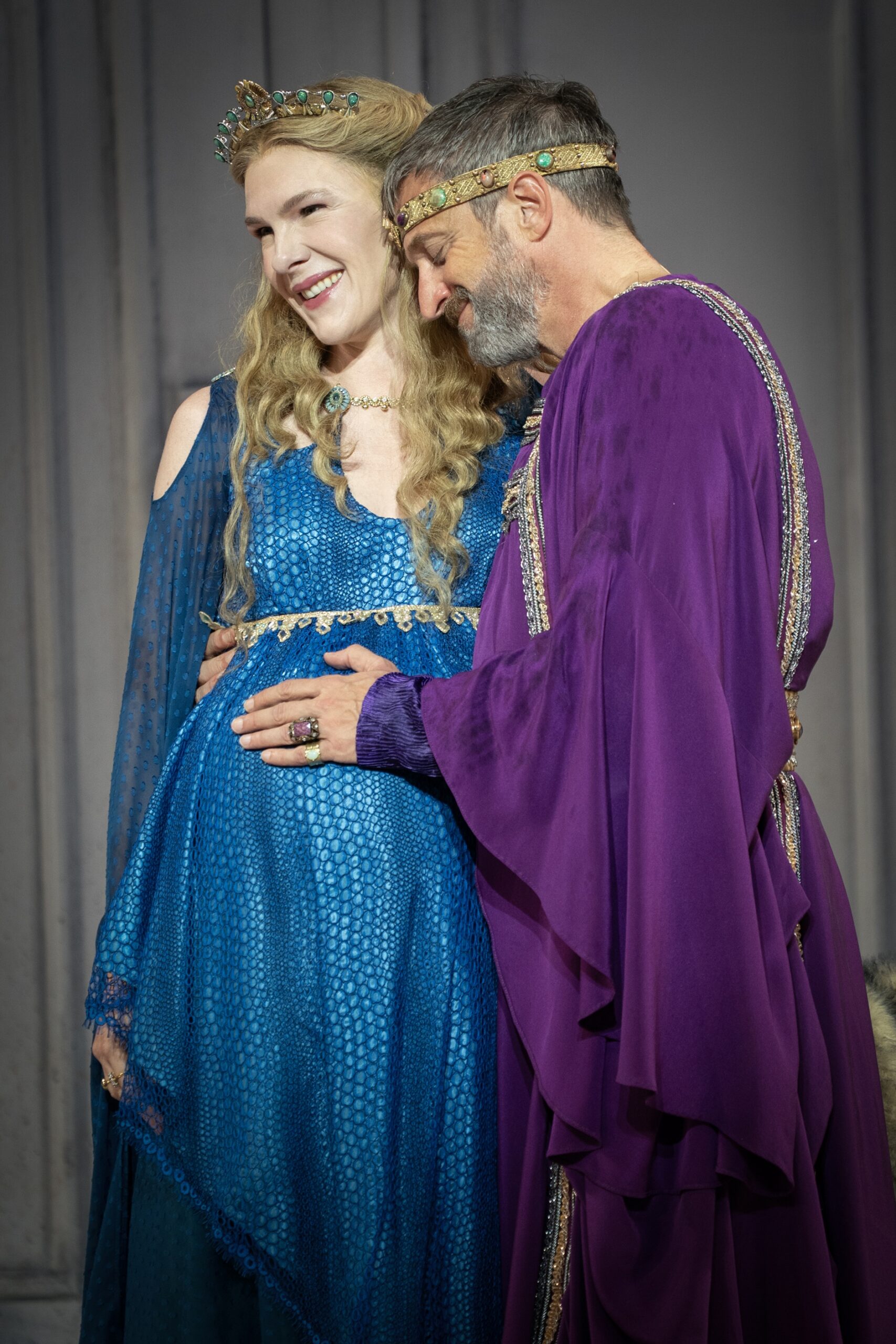
Consumed by irrational jealousy, Leontes falsely accuses his very pregnant wife of adultery with Polixenes, who is a lifelong friend. As things quickly spiral out of control, Leontes demands Polixenes be poisoned. None of this makes Leontes a particularly empathetic character, but Esparza portrays him with such depth and feeling that one does feel sympathy for him, even as he inflicts massive harm on himself and those he loves most. Even as Leontes shouts with absolute certainty that his wife is a traitor, Esparza subtly conveys a tinge of self doubt, making for a very complex personality.
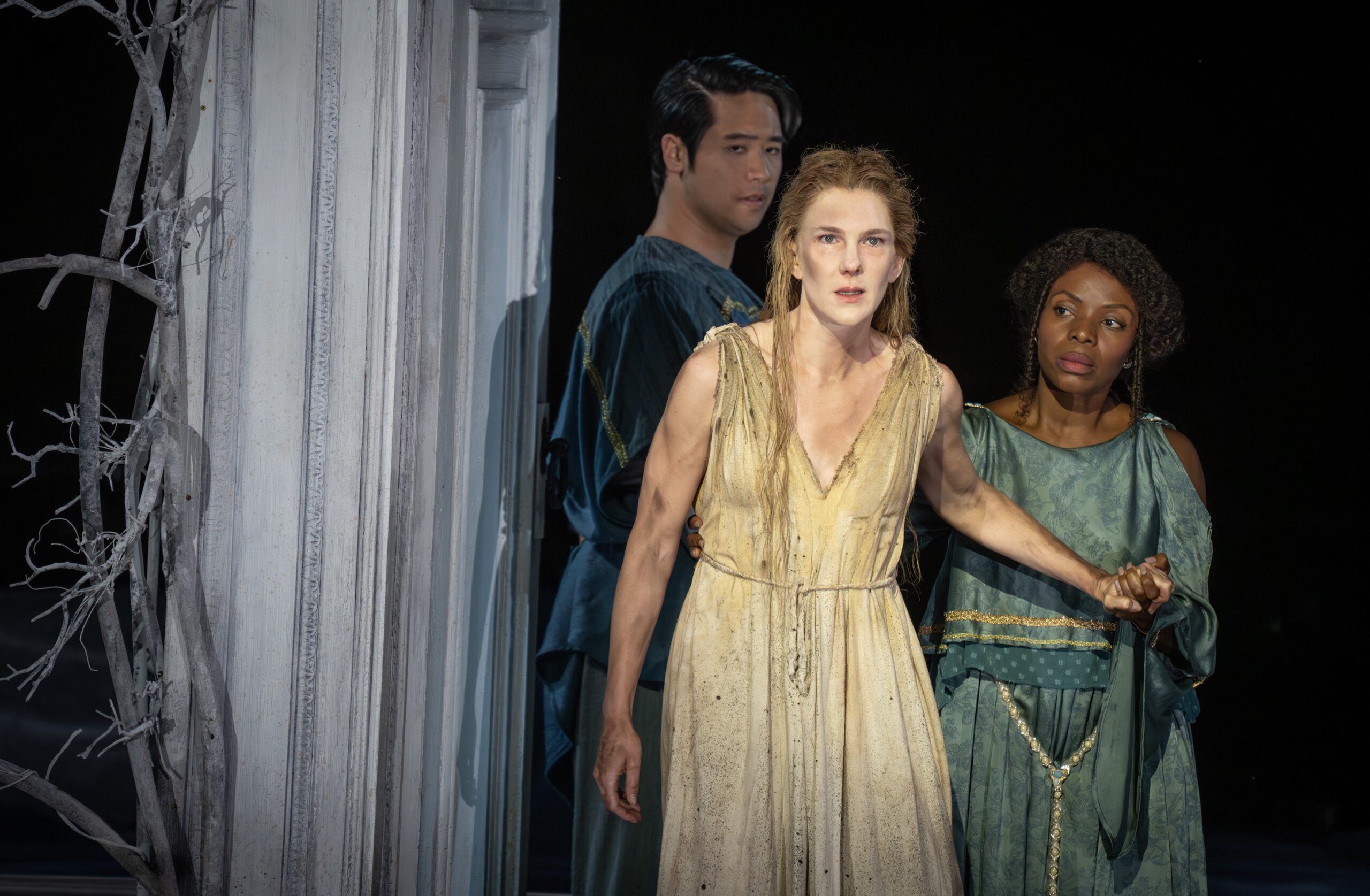
Polixenes escapes thanks to a tip from Leontes’ trusted aide Camillo (a wonderful Teagle F. Bougere), who becomes a key figure in the eventual reuniting of the quarreling kings. But before that happens, Hermione is thrown into prison where she gives birth to a daughter, who is abandoned in the wilderness by order of the king. Hermione is exonerated at trial (by none other than the Oracle of Delphi), but the happy moment dissolves into tragedy and Hermione seemingly perishes.
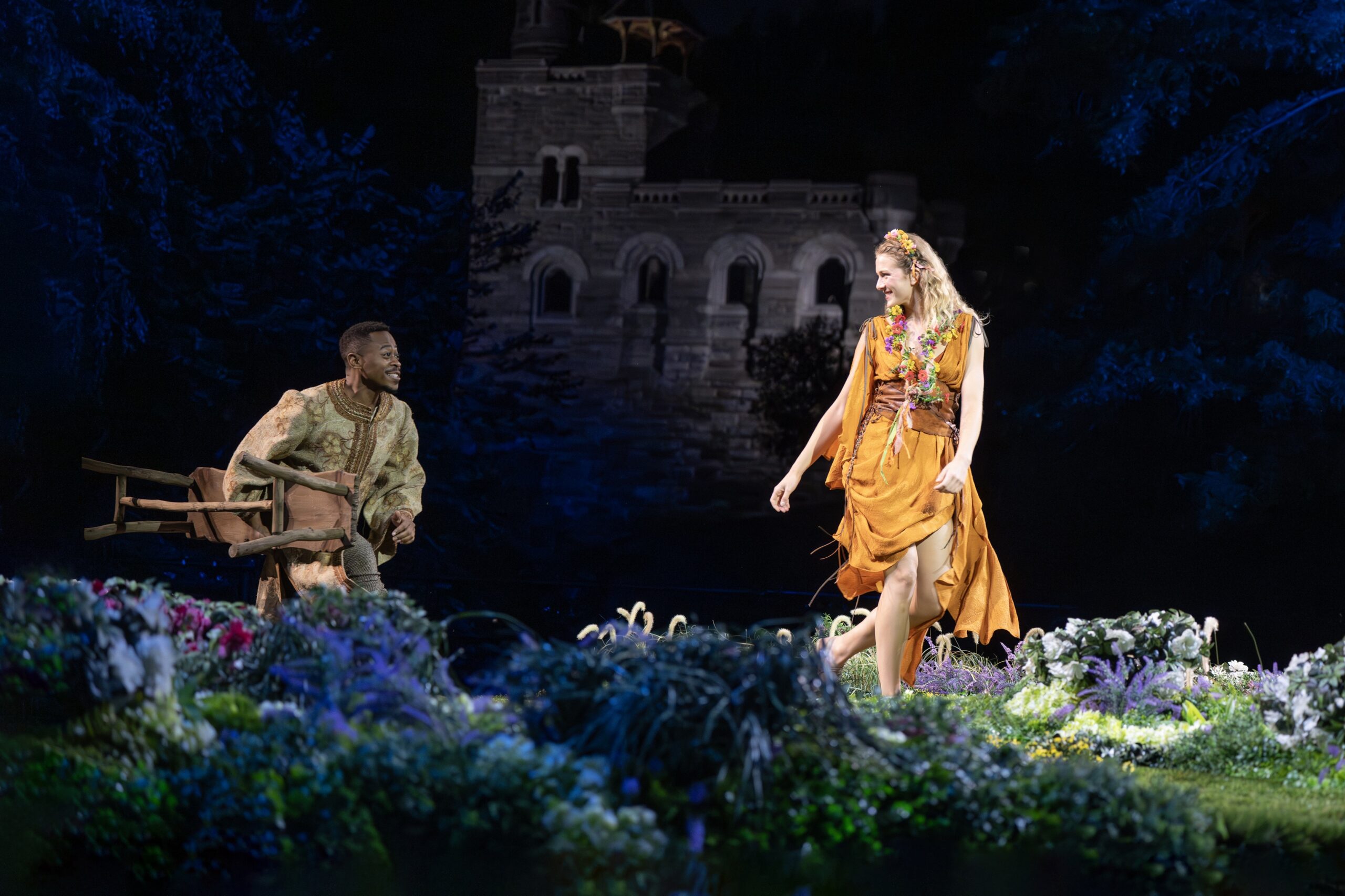
Sixteen years pass and the setting moves from icy Sicilia to idyllic Bohemia, a vibrant grass field dotted with colorful mounds of flower beds (Evans’ homage to the lush park just outside the open-air Delacorte Theater). Here lives Perdita (a radiant Isabela Ferrer), the long-lost daughter of Leontes and Hermione who knows not her own identity. Perdita is in love with Florizel (a dashing Daniel Kyri), son and heir to Polixenes, who understandably believes Perdita is the daughter to a shepherd, not his former friend Leontes.
A few standout performances from the Bohemia section merit special mention. Chuck Cooper steals the show as the happy-go-lucky Old Shepherd who finds and raises Perdita as his own. Matching Cooper’s comic chops is Michael Khalid Karadsheh, who flamboyantly plays the Young Shepherd. And Steven Skybell sings and dances a fool as Autolycus, a “trumpery” trickster (the production’s one tiny wink at our current political situation).
All of the performances are enhanced by the colorful, lush and flowing costume design by Linda Cho. The baggy costumes mentioned earlier weren’t a diss.
Everything is eventually resolved as the central characters return to Sicilia, where a life-like statue of Hermione brings about an unexpected happy ending. Whether flesh or stone, Hermione is a great heroine in a play where strong female characters dominate.
We might not consider Shakespeare a feminist, but the women of The Winter’s Tale are certainly formidable and provide a true moral compass. They forcefully confront irrational, powerful men, putting their own lives on the line — as exemplified by the noblewoman Paulina in a star performance by Marsha Stephanie Blake. Her fiery and saucy speeches speaking truth to power drew the most enthusiastic response of the evening, proving that this play from 1609 still has something to say in 2026.
Old as time but still invigorating★★★★★ 5 stars
The Winter's Tale Tickets
The Winter's Tale runs at The Revitalized Delacorte Theater until August 23, 2026