R.O.I. (Return On Investment) ★★★★★
By The Recs EM - Erin Muldoon 2 months agoIn his UK debut, ‘Return On Investment’, Californian playwright Aaron Loeb satirises the plausible.
Hampstead Theatre’s downstairs space adopts Aaron Loeb’s satirical UK debut, Return On Investment (R.O.I). Loeb is a former venture capitalist-turned-playwright with a fair share of theatrical awards under his belt. His most notable plays are Off-Broadway Ideation (a comedy/thriller about body-burying corporate consultants) and Abraham Lincoln’s Big, Gay Dance Party – he doesn’t shy from the political! And now, Loeb brings his poignant writing to the UK in a play that offers a glimpse into a very possible near future.
R.O.I is a complex play, executed with ease. It tells a story of late-stage capitalism in San Francisco through the eyes of a young, ethics-driven entrepreneur, May Lee (Millicent Wong). Her loose cannon of a mentor Paul (Lloyd Owen) adopts a ‘work father’ role. He’s an older capitalist, one who lived through the ‘golden years’. As they search for a dazzling new venture, desperate for a career take-off, ambitious and younger entrepreneur Willa McGovern (Letty Thomas) poses a life-changing idea – leaving May stranded in the eye of this imperialist storm.
Willa enters as a nervous young woman, pitching her seemingly impossible $30bn business idea for ‘preCure’ – medical care that can cure cancer and prevent fatal diseases from developing. It’s gene therapy, as a business model, written on a pack of flashcards. At first, May doesn’t buy it. But after Willa’s initial manipulation and sad orphan backstory, May and Paul invest, and she raises her first billion. Power begins to corrupt as she refuses to stop at that. She vocalises her racism and antisemitism, plans to bypass the FDA, and the play unfolds into a flurry of ethical questions. R.O.I spans many years, and the script is cyclical. It provides a darkly funny narrative for Loeb’s existential message on globalisation and the corruption of power – how it’s dangerously possible that ‘the best years are behind us’.
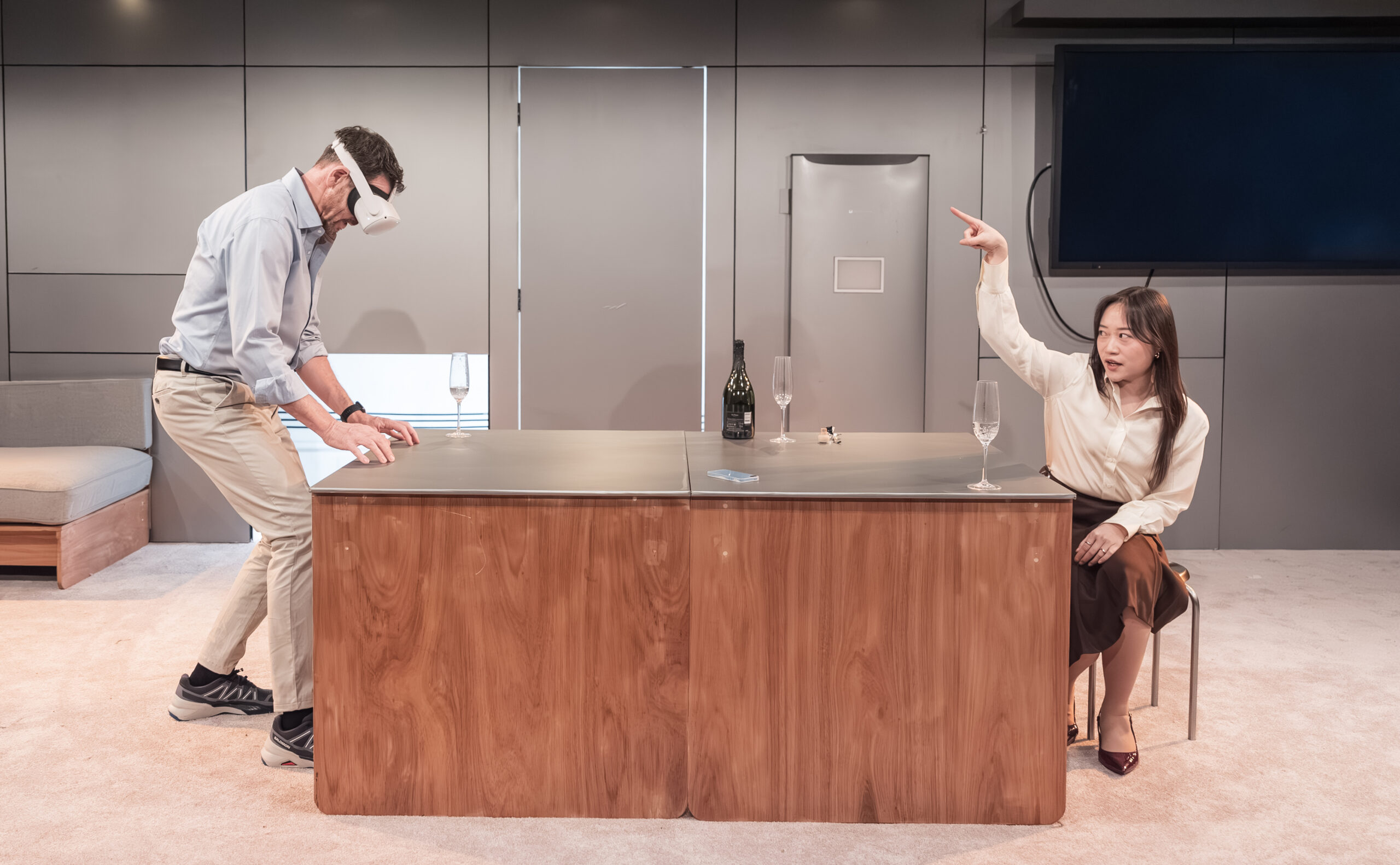
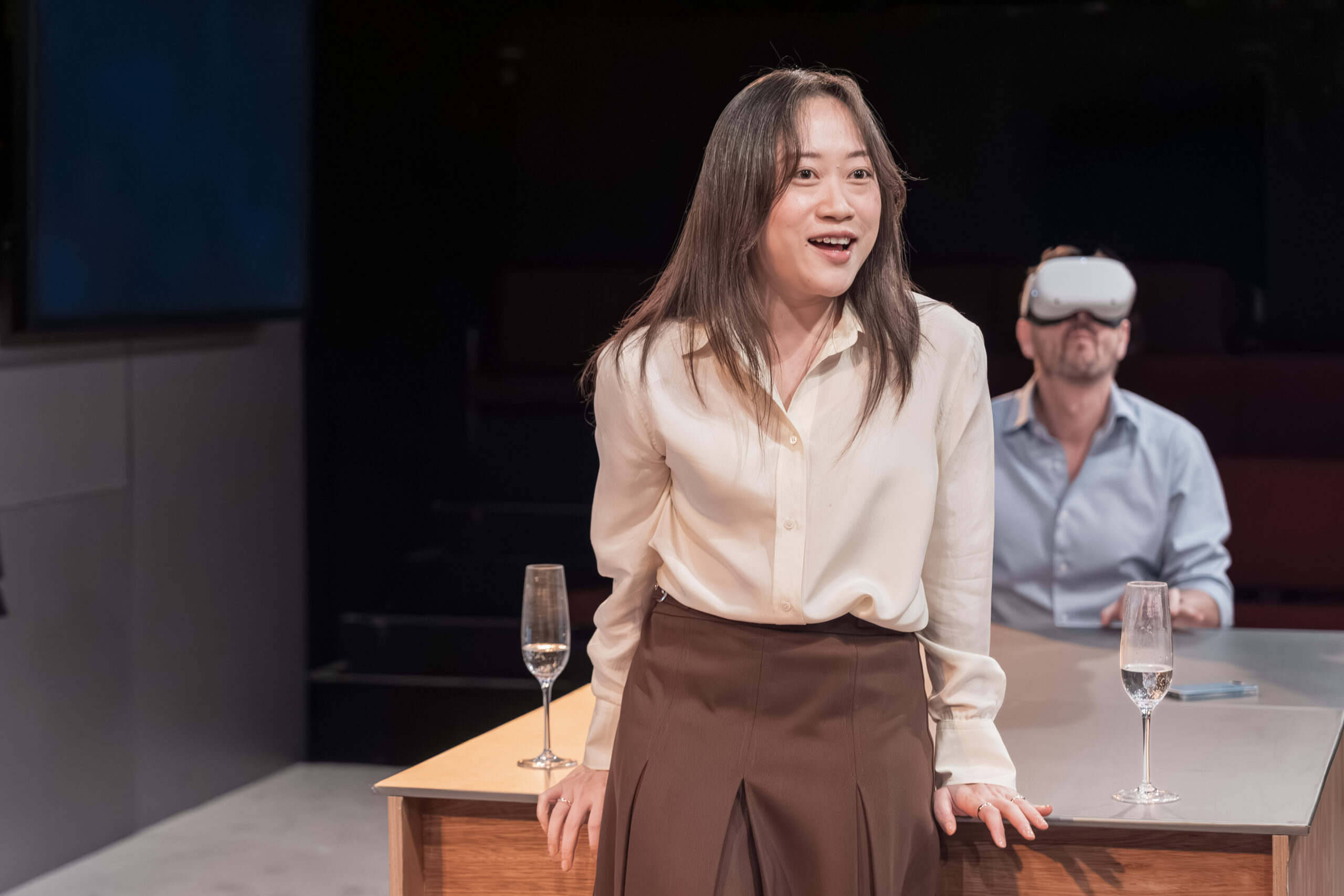
From the beginning, all actors have great chemistry, brought out by Chelsea Walker’s attentive direction. There is a moment where Paul, May and Willa celebrate their investment with a song. Designer Elnile provides a VR headset for Paul so he can ‘play the piano’ around his apartment, while Russel Ditchfield designs a jazzy score to accompany their celebration. Ditchfield’s soundtrack is incredible. Soulful, instrumental jazz contrasts the ‘clean’ aesthetics of new age capitalism with notes of Wall Street blues. When the actors sing and dance, it is a real moment of joy and hope, allowing us to celebrate with them before it all comes crashing down. Loeb’s writing and Walker’s direction are so clever, because in this script of subtext and manipulation, Walker makes it so that we are also manipulated into believing in the sociopathic Willa McGovern. Walker and Loeb are clearly a good creative match.
Though every actor in R.O.I. is stellar, Letty Thomas’ performance as Willa stands out. Her character development is tricky to make believable, but from lonely orphan scientist to evil trillionaire eugenicist, she is convincing throughout. It’s a 90-minute straight-through show, and her energy never depletes. Her bold apathy just makes her so interesting to watch; she brings out the darkest desperation in her character. Willa McGovern is a mouthpiece for the right-wing extremes of neoliberal feminism, and Letty Thomas deserves to be applauded for getting it right. Millicent Wong acts brilliantly against her as well, offering another side to this story with a Top Girls ardency to her character. May Lee’s arc is another complex story that doesn’t deserve to be spoiled here, but she does an excellent job. Lloyd Owen is a fabulous ‘peak valley douchebag’. When he isn’t playing a stereotype of an old-school capitalist trying to regain his youth, he is an intimidating, morally ambiguous man with a dark backstory. Owen’s ability to ‘flip’ between these two states is impressive and definitely worth watching. He is the voice of an elder generation, one that is really needed and really well portrayed. Last and not least, Sarah Lamb plays ‘The Woman’; she’s the first and last appearance on stage. She embodies something separate from the corporate world; she is the most human of all characters. Though her part is small, it is so important. She gives her talent to the audience, and she is just a pleasure to watch. By the end, she will break your heart.
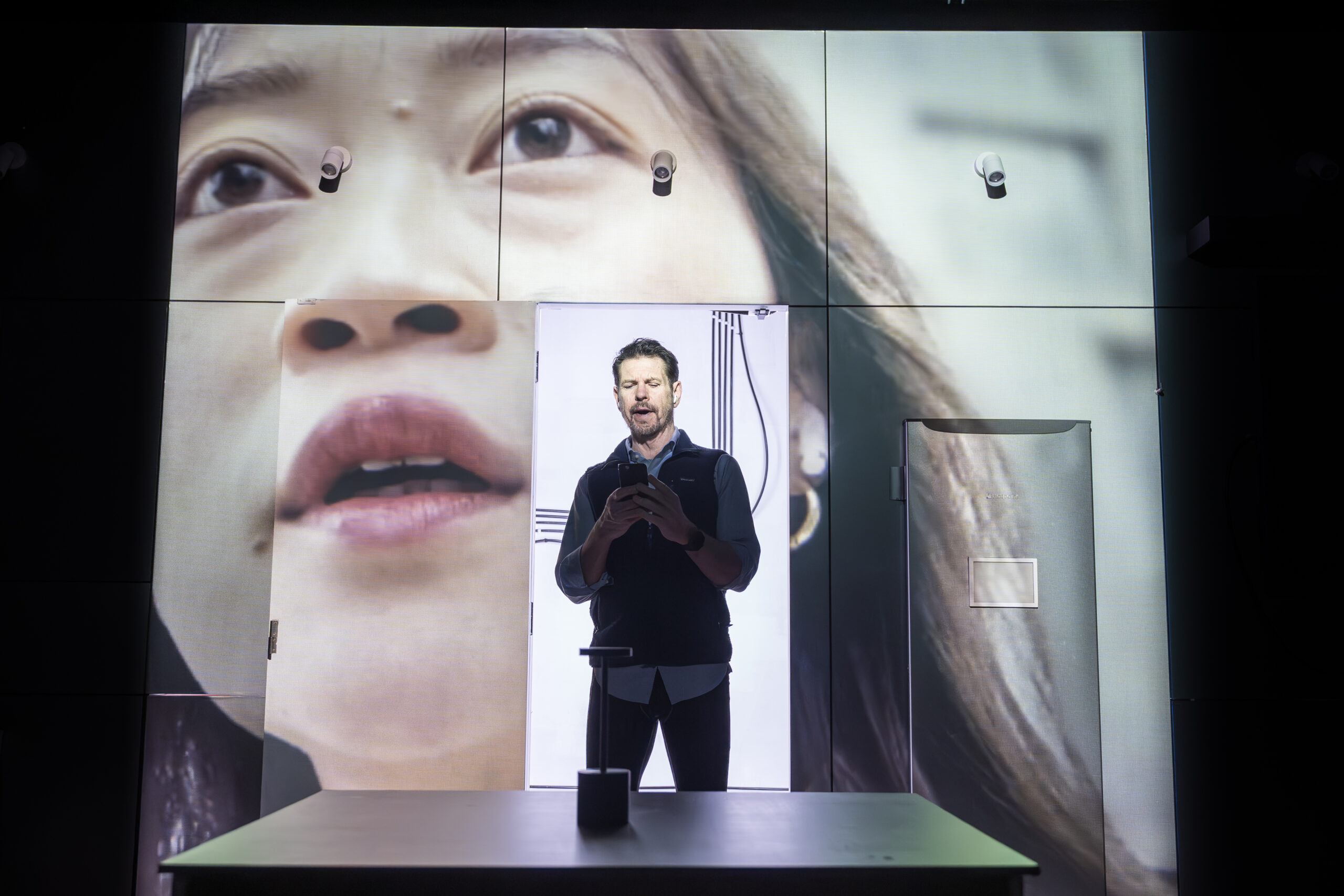
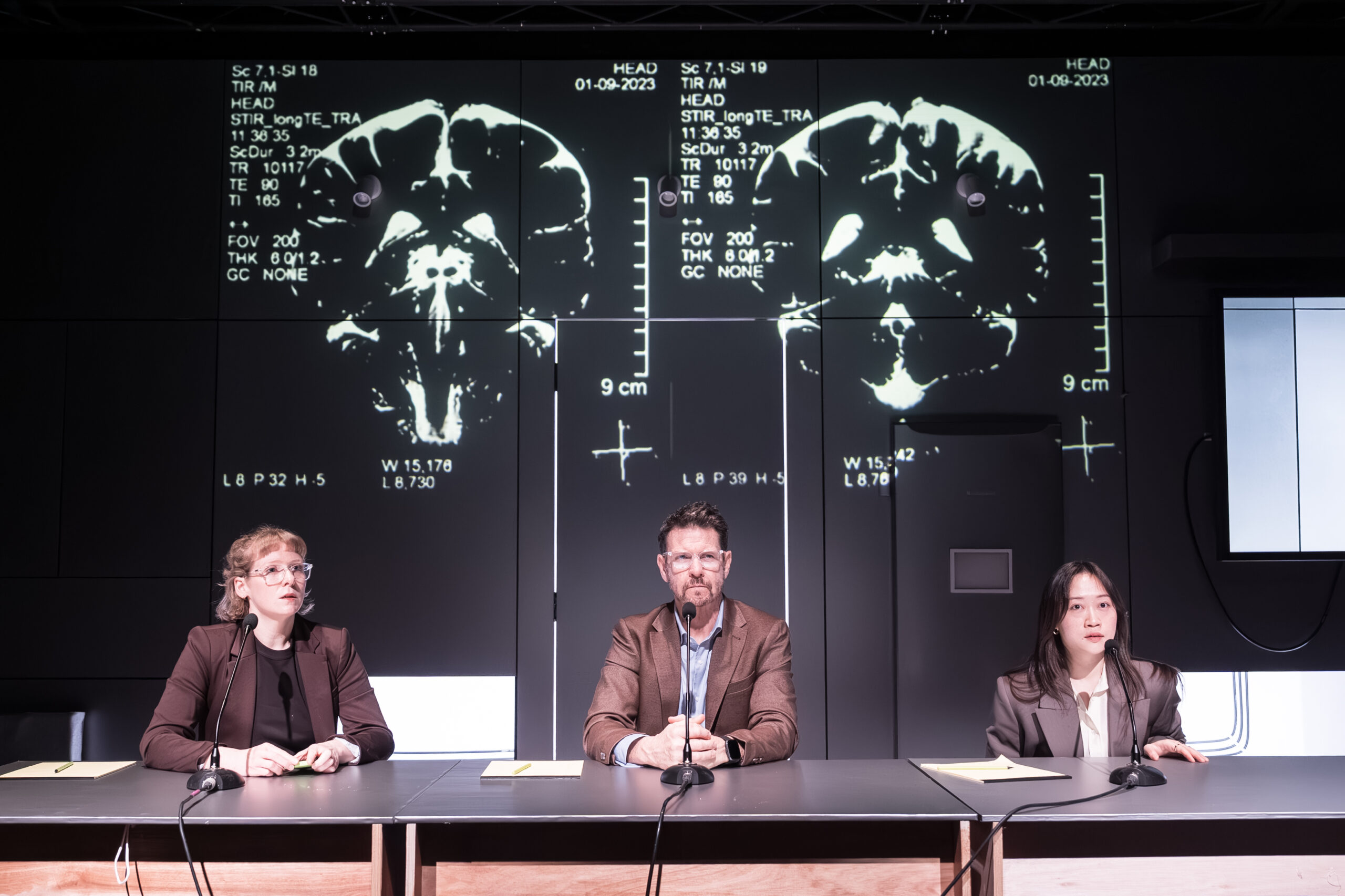
Rosie Elnile’s design is clean-cut, clinical and technological. It’s great for this fast-paced crypto drama; it offers a visual backdrop for Gen Z’s ‘raised on the internet’ culture. Yoga-practising elder millennial Paul sips Fiji water and spinach smoothies. Upcoming girlboss May Lee has mastered glass skin; she eats frozen grapes and wears heels around the house. The detail in Elnile’s design gives this play a clear identity and absolutely enhances Loeb’s satire. Even May’s apartment doesn’t have a real window; it’s just a picture of a lace curtain on a TV screen. Though Hampstead Theatre’s downstairs area is small, Elnile opens up the space with her fluorescent aesthetic and eye-catching projections – created and mapped by video designer Hayley Egan and lighting designer Alex Fernandes. Fernandes has much else to be proud of too; his lighting design is so exciting. When May becomes a hologram, she stands under a flickering spotlight. Paul’s apartment is lit from within so that white lights shine through the cracks in the back wall of this stage. It gives the idea that there is a whole dystopian world behind them.
Loeb’s concept is an intriguing one, especially at a time where tech bros seem to be ruling the lives of young men through their screens, and simultaneously, girlboss feminism strikes again. With a team of talented creatives with a clear common goal, Aaron Loeb’s play is something you could watch multiple times and still find new meanings. His use of subtext gives the actors real depth to work with, and you can tell that they all enjoy performing this! The structuring of the story is exciting – split into ‘parts’ with titles – with a jaw-dropping ending (no spoilers!). When the venture capitalists gradually lose control of the monetary reins, Loeb writes this inversion of power beautifully, in a way that does bring out the theatricality of it all. In turn, he makes a big bold statement on the dangers of placing healthcare in the hands of globalists. It’s disturbingly relevant.
Do not be put off by Loeb’s corporate themes; he uses business jargon as a tool for satire, ensuring it never feels overkill or strenuous. In an interview with Hampstead Theatre’s producer Greg Ripley-Duggan, Loeb confirms Chelsea Walker and his cast helped him weed out the ‘business truth’ to create engaging drama. It’s clear that this play is a collaborative effort. Despite its heavy themes and daunting realism, Return On Investment offers big ideas and even bigger laughs. It’s a must-watch for anybody who enjoys a bit of true, gritty theatre.
Invest in a ticket! ★★★★★ 5 stars
R.O.I. (Return On Investment) Tickets

R.O.I. (Return On Investment) runs at Hampstead Theatre until 11 April
Book NowAuthor Profile
- The Recs EM - Erin Muldoon