Antigone (This Play I Read in High School) ★★

Antigone Everywhere in ‘Antigone (This Play I Read in High School)’
Who would have guessed that a character introduced to theatre audiences roughly 2,500 years ago would emerge as the ultimate influencer of this spring’s theatre season? No sooner had Robert Icke’s superb adaptation of Oedipus left town in early February than the tragic king’s daughter stood up and demanded to be seen. Everywhere.

She’s popping up across the city: in Alexander Zeldin’s The Other Place at The Shed; Barbara Barclay’s Antigone in Analysis at La MaMa Experimental Theatre Club (because, of course, she’s in therapy—her mother was also her grandmother); and Jean Anouilh’s Antigone at The Flea Theater.

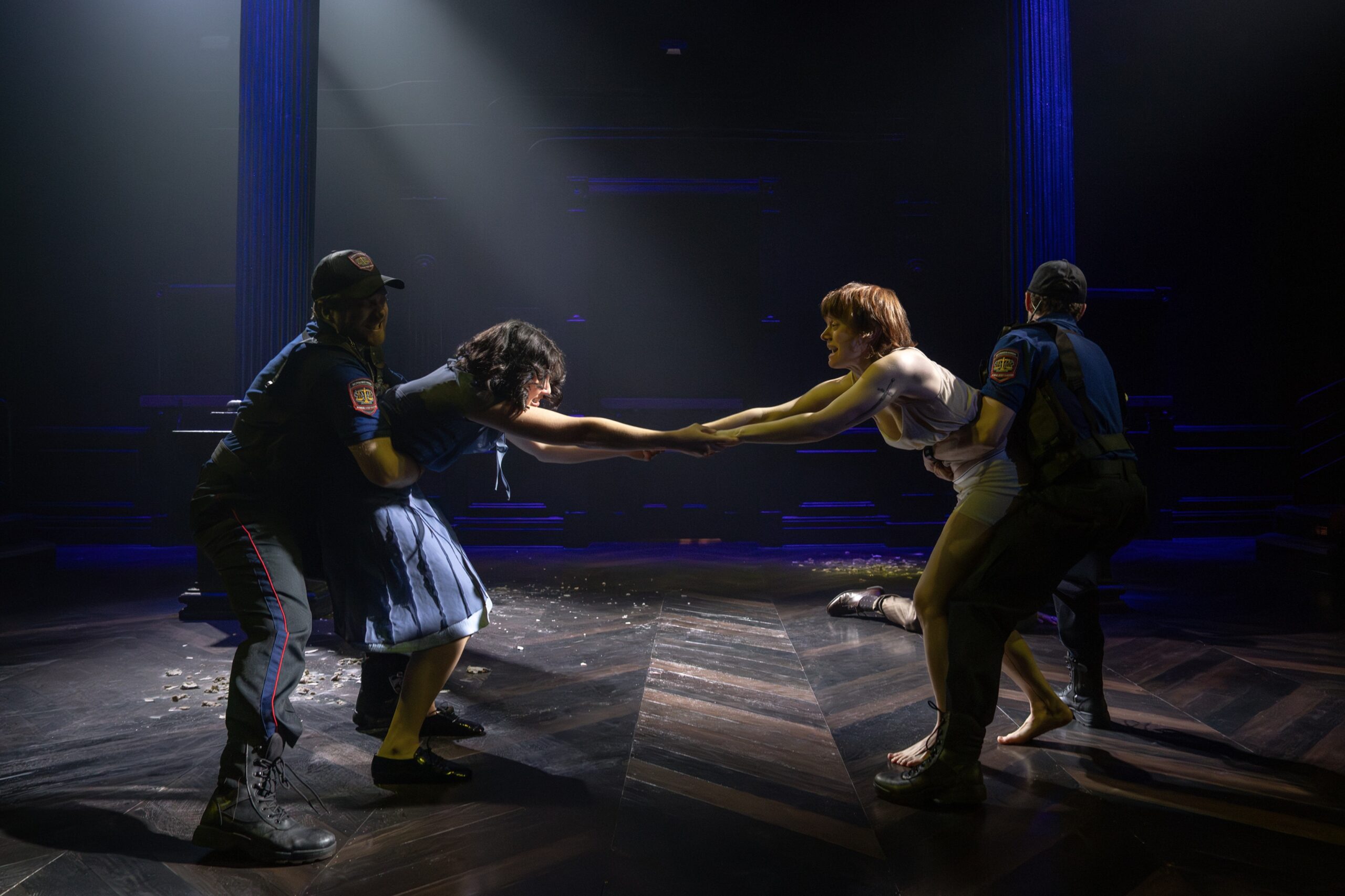
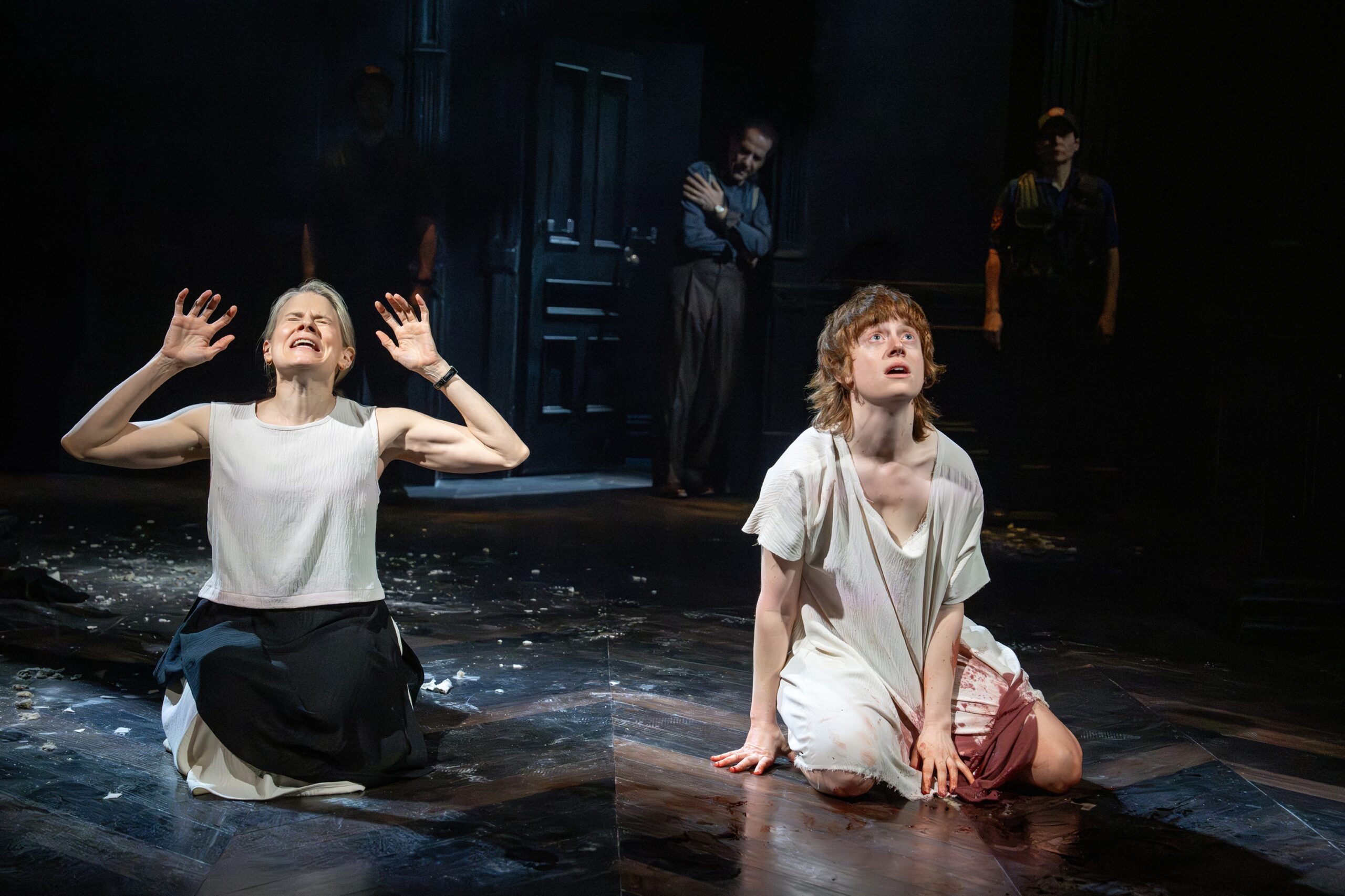
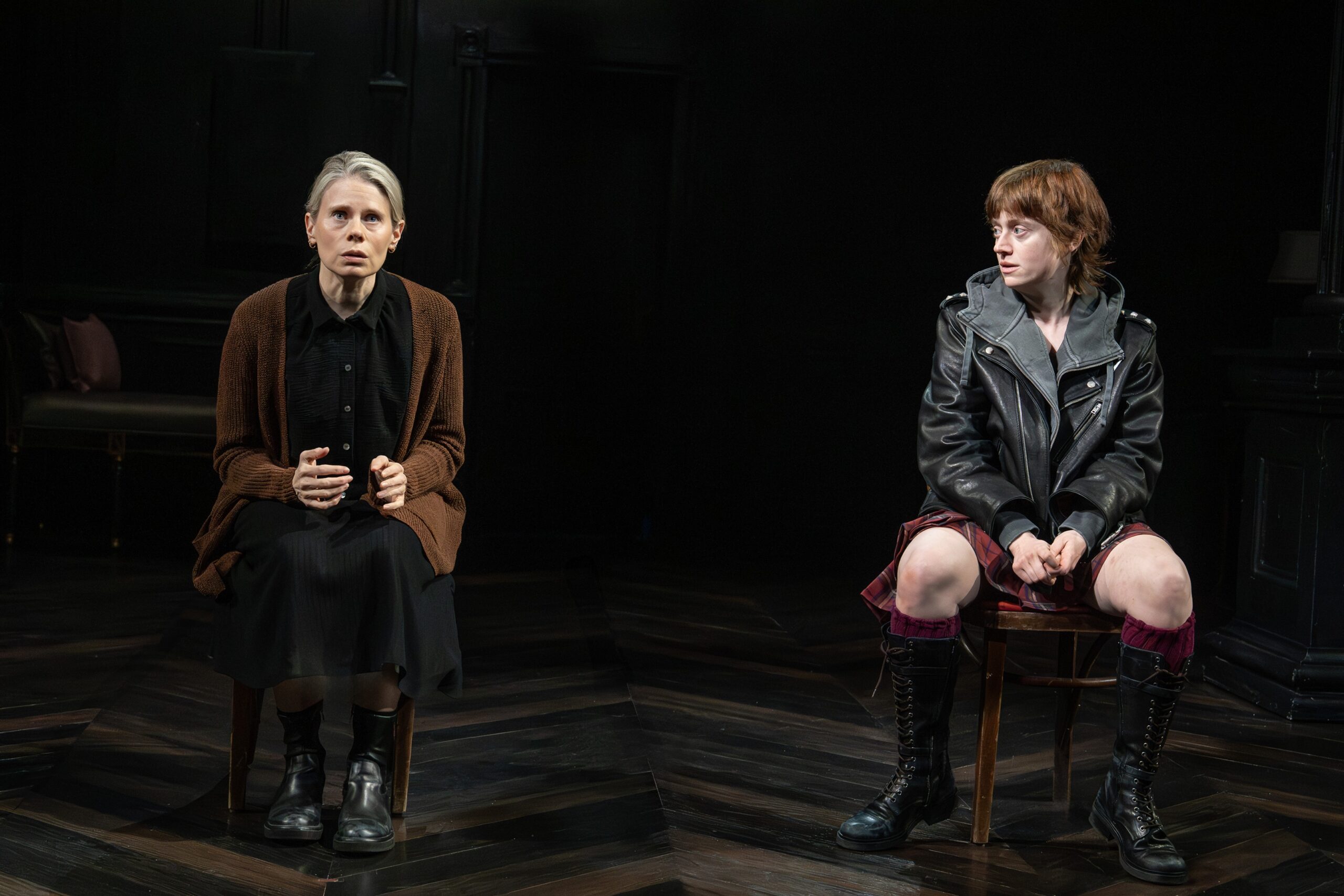
Now playwright Anna Ziegler adds her own take with Antigone (This Play I Read in High School), a new adaptation at The Public Theater that tries to connect Sophocles’ defiant heroine to the political anxieties of the present day.

Images by Joan Marcus

Rather than simply retelling Sophocles’ tragedy, Ziegler frames the story through a modern narrator named Chorus, a woman who first encountered the play as a teenager and has been puzzling over it ever since. From there the familiar characters emerge: Antigone, Creon, Ismene, and Haemon, all orbiting the question that has kept this ancient story alive for more than two millennia: What happens when personal convictions collide with the authority of the state?

The trouble is that Ziegler’s structure — with its constant back-and-forth between commentary and dramatization — quickly becomes confusing rather than illuminating. Scenes begin just as others are being explained, and the result is a play that feels far more discussed than enacted. The production is also extremely talky and often ponderous, surprising given that director Tyne Rafaeli has previously shown such a sharp sense of pacing in works like Weather Girl and Selling Kabul. Here, however, the overabundance of text goes largely unchecked.

To be sure, this play is not meant to be about men, but the male characters are so thinly drawn that they barely register as dramatic forces. The supposed love between Antigone and Haemon is never believable for a second, which makes much of the final third of the play — and its tragic stakes — feel oddly unearned. By the time Tony Shalhoub’s King Creon laments near the end, “I don’t understand what story this is,” a good portion of the audience may already be thinking the same thing.

The deeper issue seems to be Ziegler’s determination to fold a very specific modern agenda into Sophocles’ ancient tragedy. The anger about women’s control over their own bodies that drives the piece — both Antigone’s and the playwright’s — is understandable and justified. But the original play’s elemental conflict between personal conviction and state authority gets crowded out by the new framework; Antigone proves to be an uneasy container for Ziegler’s particular fury.

Fortunately, the production’s two leads rise above the conceptual rubble. As Antigone, Susannah Perkins gives an intense, layered performance that feels genuinely brave, capturing both the character’s youthful impulsiveness and her terrifying moral certainty. Meanwhile, the always dependable Celia Keenan-Bolger maintains a steady presence as Chorus, delivering reams of exposition and commentary while still grounding the evening, even as she moves pieces of scenery around.

Antigone keeps returning to the stage because the play’s central conflict—between individual conscience and the power of the state—remains eternally combustible. Ziegler clearly wants to explore how modern audiences encounter that dilemma, especially in a political moment when questions of bodily autonomy feel newly urgent. Yet this adaptation spends so much time talking about the story that it rarely allows the tragedy itself to take hold.

Too much analysis, not enough tragedy ★★ 2 stars

Antigone (This Play I Read In High School) Tickets

Antigone (This Play I Read In High School) runs at the Barbaralee Theater until 5 April

Book Now

Author Profile

The Recs RDC - Randall David Cook