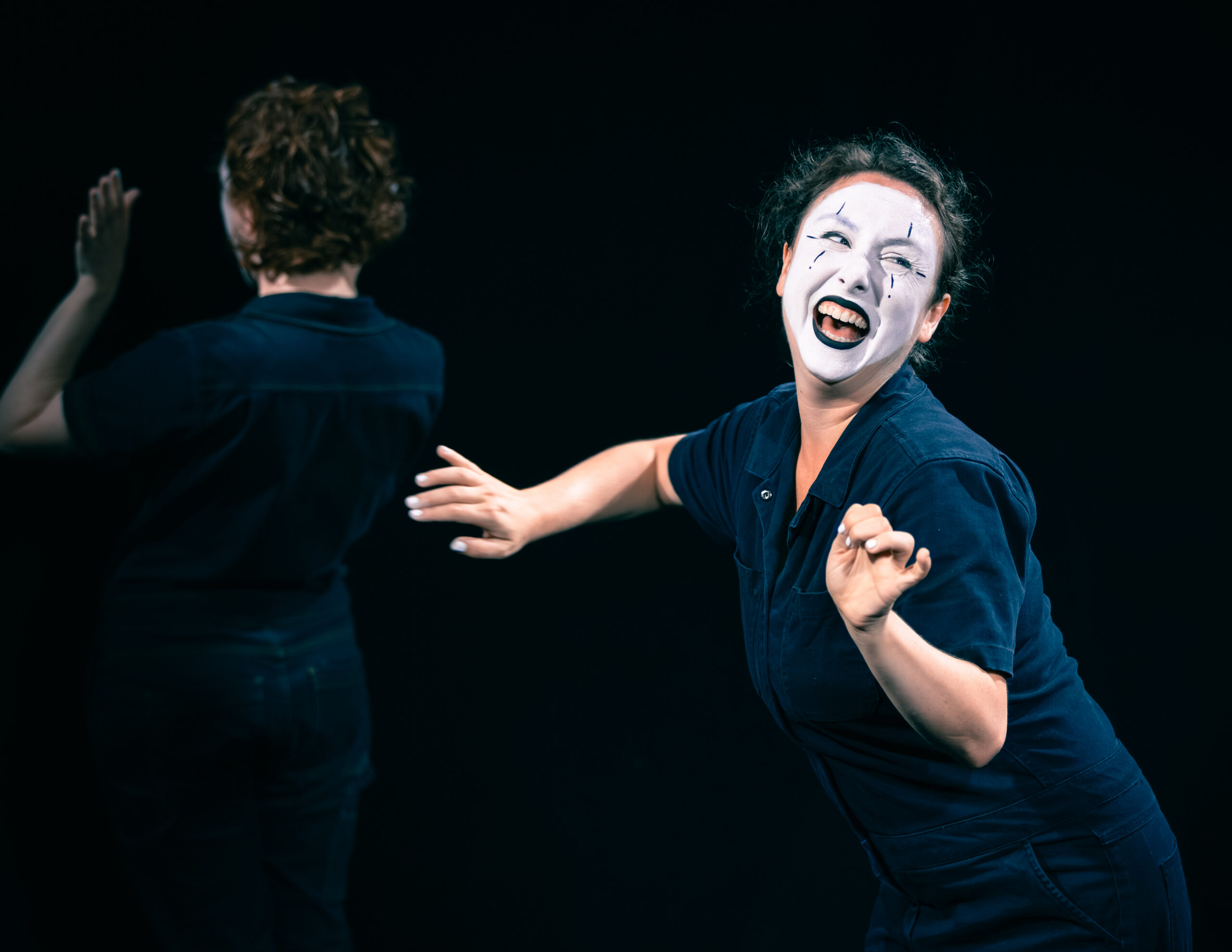
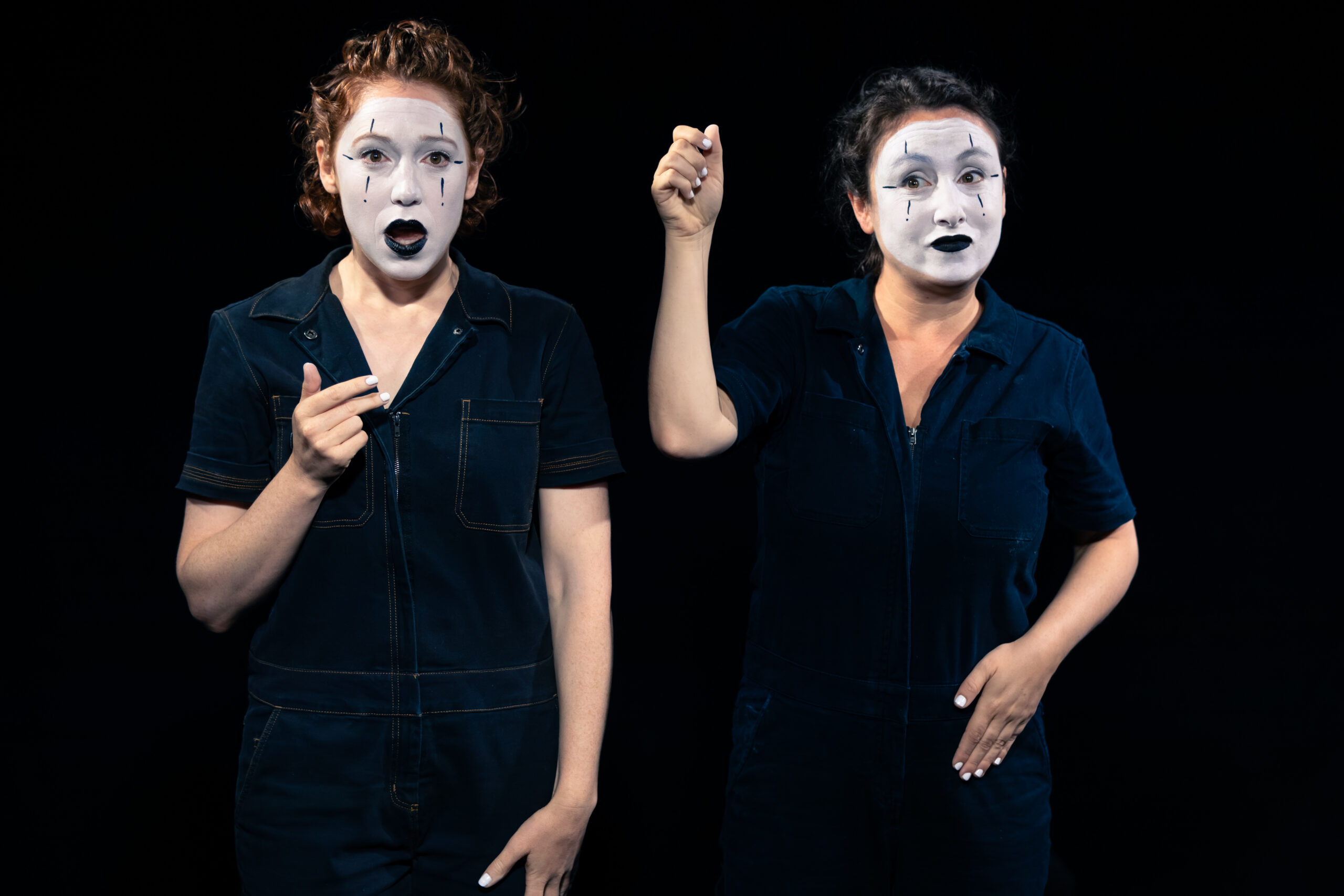
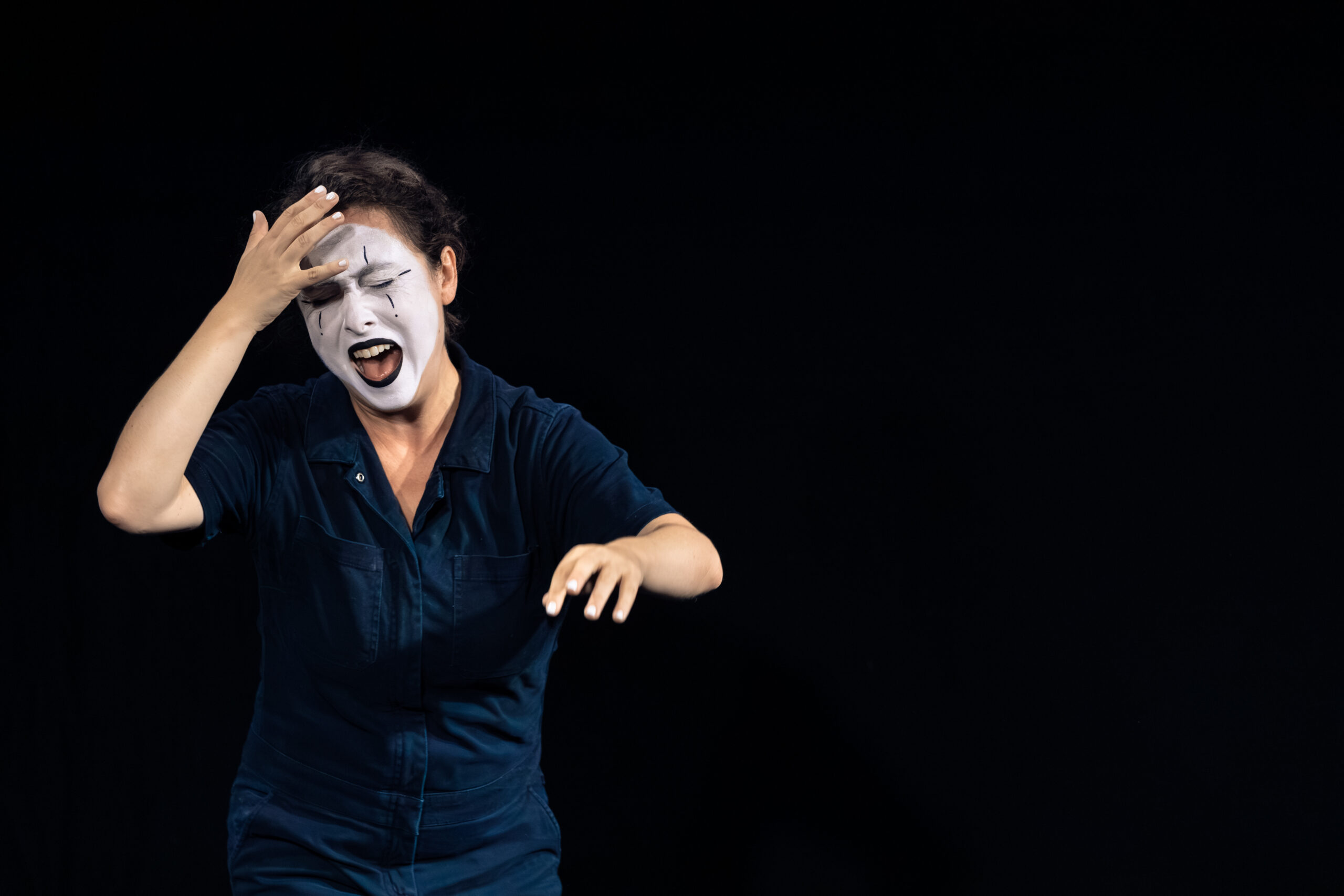
Broken Box Mime Theater returns to the Edinburgh Fringe with Double Take, a wordless celebration of humour, imagination, and the extraordinary hidden inside everyday moments. We are so happy to catch up with Artistic Director Becky Baumwoll to tell us all about it.

Hello Becky! The Recs appreciates that Double Take is wordless, but that’ll be a short Q&A if you carry that aesthetic over to this chat, haha.

I’m not wearing my makeup, so we’re good. 


Let’s start then with an easy one: for anyone who’s never experienced Broken Box Mime Theater before, what’s the perfect way to describe Double Take without giving too much away?

It’s sort of like seeing a festival of Pixar shorts, except your imagination somehow ends up doing the animation without you even trying. The vibes of each story are totally different. And the performers are just so good – really artful and precise, with lots of pathos.


The show tells eight very different stories, from a hungry snail to the birth of the universe. What drew you to that “collection of miniatures” approach rather than telling a typical continuous story? Is it like putting together a theatrical jigsaw where you can’t see it entirely until it’s completed?

Great question! I love the jigsaw metaphor. Yes I think that’s exactly right. The cool thing about worldbuilding in mime is the only limitation is the imagination of the audience. So with each piece of the jigsaw puzzle, the entire world can transform. It’s like a celebration of what your mind can do. It’s also sort of like a dim sum breakfast – there’s always someone who isn’t so into steamed buns, but don’t worry, in three minutes you can have a dumpling. 


Double Take is completely wordless, yet it promises humour, emotion, and even big philosophical ideas. What can silence achieve that dialogue sometimes can’t?

While our actors are performing, our musician, wet hands, has set us up with a brilliant original soundtrack that really brings the tone of each piece to life. However, you’re right–there’s nothing in the story that is directly told by any sort of sound. It’s amazing how it opens up the audience. For those of us who are hearing-dependent, there’s an incredible heightening of our sense of sight when we remove dialogue from our scenes. Not only do you fill in the gestures with whatever script you imagine, but there’s a sort of heightened focus that happens. Plus it’s hard to have subtext; there are no words to hide behind with double meanings. Everything is out on display, honest and clear. 

Also, does silence affect audience members differently? Are some more open? Do others find silence slightly uncomfortable?

I’ve never heard of folks being uncomfortable, perhaps because the music fills in the soundscape so beautifully. I love that this show really keys into what’s possible to communicate beyond language, so people of mixed language backgrounds can all enjoy the same stories. 


If this isn’t too controversial an assertion, mime doesn’t always have the best reputation. This doesn’t always reflect what contemporary companies like Broken Box are creating. Has redefining people’s expectations of mime become part of your mission?

Yes! In this country mime got this connotation of being corny corny corny. It is so delightful when people come with that expectation and then are blown away. In our 15 years as a company, that’s the feedback we get most. “I didn’t know mime could do THAT!” Literally just coming to the show is an experience of discovery and surprise. What makes BKBX so contemporary is that we’re telling stories in a totally natural state of movement, with no stylized twist or exaggeration. We write as a devising company of diverse artists who bring the richness of their lives to the work. 


Your press release about the show says, “This two-hander relies entirely on physical theatre and mime, making the audience’s imagination its most powerful tool.” How satisfying is it leaving space for audiences to complete the picture themselves?

So. Satisfying.

Physical performance demands extraordinary precision. I wonder how you build performances that feel spontaneous, as if they are the first time ever performed, while being so carefully choreographed.

This is the art of performance! It’s challenging and rewarding, and entirely what has taken 15 years to hone. We keep pursuing this exact phenomenon, and when it hits, it’s like magic. When we take on a new company member, there’s this amazing thing that happens: first, they learn the mime technique, then apply their acting chops to the work. But THEN, there’s this third stage of development as a mime artist, when the performer becomes entirely in control of the audience’s collaboration. The tiniest head tilt or gesture guides the audience like a conductor with a baton. The magic moments are when this expertise becomes entirely imperceptible. 


Music is the show’s only “voice.” How closely did you and composer Jack McGuire collaborate to shape the emotional rhythm of each story? Was there a lot of back and forth to make sure the soundtrack matched the tone of the narratives?

Jack, or wet hands, is our Resident Musician, and his collaboration is key to our success. Sometimes he writes the music to suit the piece, and sometimes we’re like, “Hey Jack, this one is a rainforest vibe but a horror story.” He knows exactly what to do, and weaves in and out of our rehearsal process to build the soundscape. We give each other notes way more than we give Jack notes – he’s that good.


Double Take premiered in Edinburgh before travelling to Adelaide and is now returning to the Fringe. Have there been moments where audiences have responded in ways you hadn’t expected?

We loved a reviewer in Adelaide who took his time walking through each piece, and he really saw things that we did not intend at all. It was pretty funny. We were like oy, this did not hit as we’d intended. But then at the end of the article, he was like, “I need to go back and see it again. I loved it.” It was the perfect lesson for us! The audience will see whatever they see, and even if the stories differ from our original intention, that’s okay. 


Edinburgh Fringe audiences, coming from across the globe, are famously adventurous. Does bringing a wordless show to the Fringe feel liberating because it can connect with people regardless of language or background?

Yes! Physical theater can do so much to open these doors of access. When I go to Fringe I love seeing dance, circus, magic, clown, all the non-speaking stuff. Mime is gem in that pile of treasures. For me, it defines “complex but not complicated.” It can tell the most sweeping, detailed narrative, all without a single word. When you and the person next to you don’t speak the same language but you gasp at the same time, that’s magic. 
Double Take Tickets


Double Take runs at Dairy Room at Underbelly, Bristo Square from 5 - 30 August 2026

Book Now

Author Profile

The Recs SCD - Steve Coats-Dennis