In times of social inequality, political upheaval, pandemic, international war, and the struggle for national identity, people need a saviour, a prince, if you will, to unite them. Step forward, Michael Sheen. But enough about the 2020s.
In the 13th century, Cymru’s (Wales’s) fortunes rose and fell in quick succession. In 1267, Henry III recognised Llewelyn ap Gruffudd as Prince of Wales. By 1272, the English throne had passed to Edward I and, by 1284, Llewelyn had been killed and Wales conquered. Edward built imposing English castles around Wales to control the Cymry (Welsh people) and, in 1301, gave his English son the title Prince of Wales; the gravest insult to underline England’s takeover of Cymru. If there’d been an English Football Association then, he’d probably have been the patron.
Throw in a couple of quashed uprisings and the plague, and this is the Cymru and world into which Owain Glyndwr was born, circa 1354. Far from being a rebellious peasant, Owain was one of the elites. He was educated and well-connected, inherited great wealth and large estates, fought for the next English King, Richard II, and served as King’s Marshall, keeping the peace in Wales. Gary Owen’s new play Owain & Henry explores how and why Owain went from such privileged beginnings to lead his people in rebellion against England.
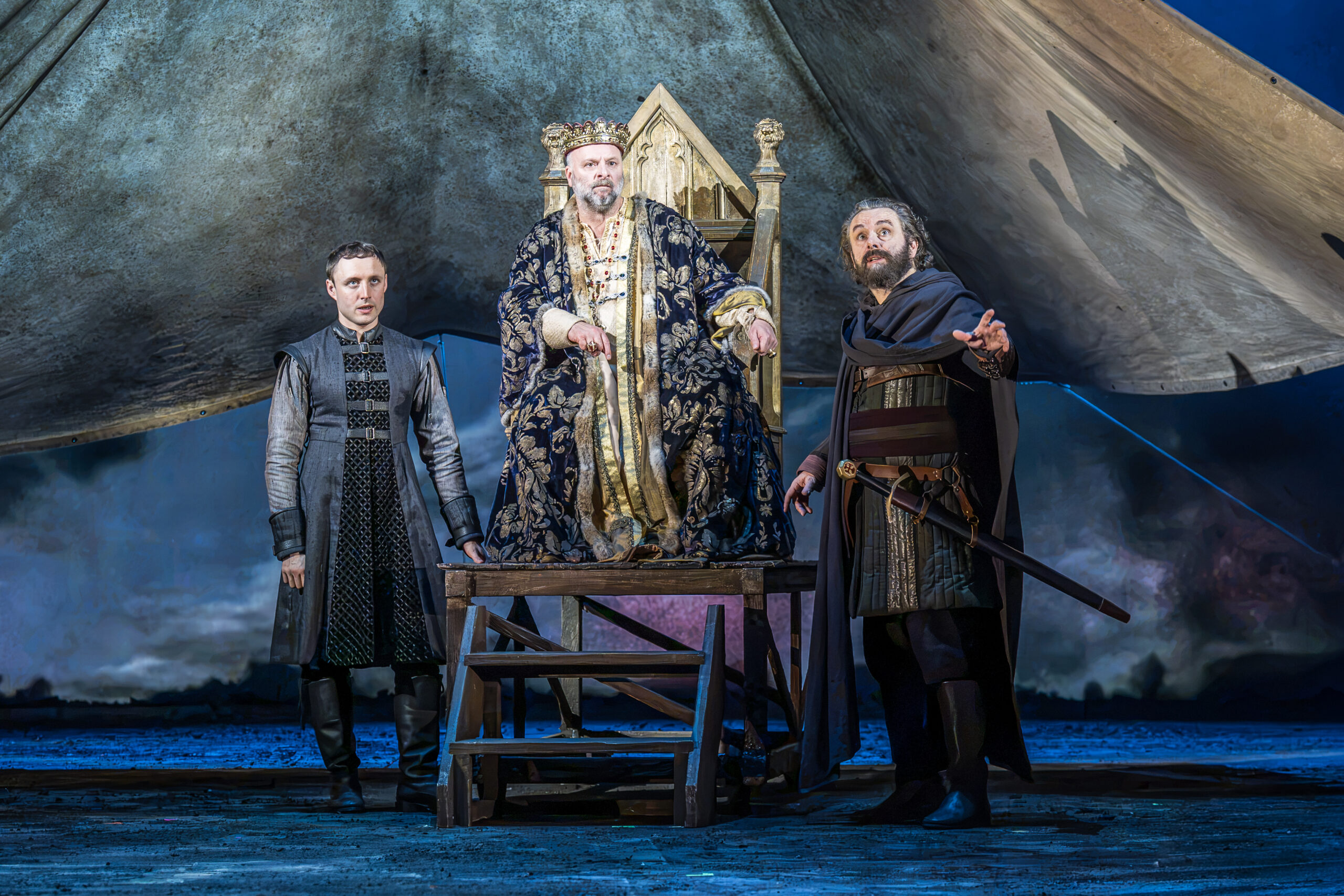
The play begins soon after Henry IV ascends the throne. Owain is at court to be humiliated and stripped of the position he held under the former King. The courtiers and Henry address Owain Glyndwr as Glendower. Michael Sheen, as Owain, addresses the audience, “And Glendower is not my name but in England it is common practice to mutilate a name they consider exotic, rather than flex the mouth to accommodate it.” Sheen has a twinkle in his eye and knowing smiles twitch around the Wales Millennium Centre.