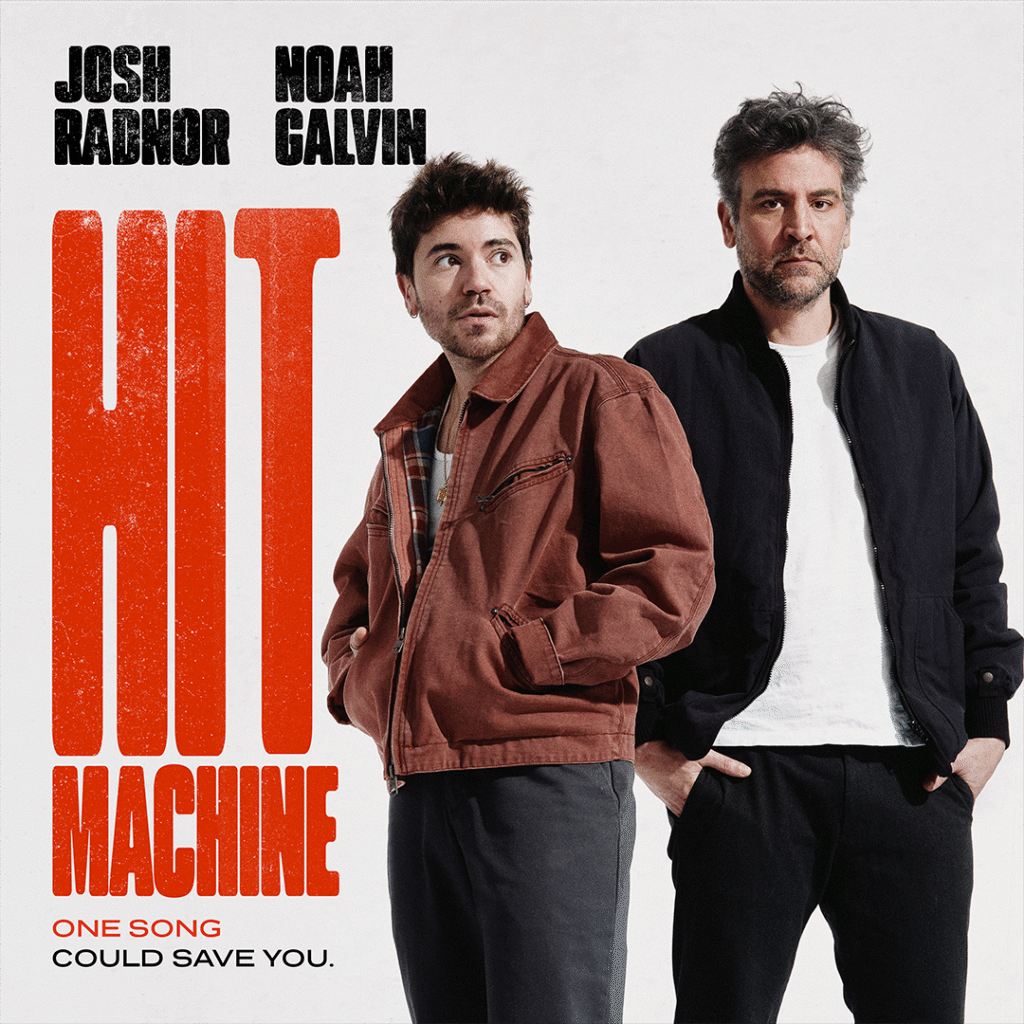
Hit Machine ★★★

Music may be the hook, but Jonathan Caren’s ‘Hit Machine’ is really an exploration of the messy harmony and discord of brotherhood.

Struggling young musician Alex (Noah Galvin) returns to successful music producer older brother Wes (Josh Radnor) for help. Help with his family home, with his music, and with rekindling their own relationship as brothers. Playwright Jonathan Caren explains how “Hit Machine is about two brothers with opposing mechanisms born from the same wound” and that “each brother is driven by a survival system he mistakes for himself.” In a conversation that starts with the need to be the better musician, it ends with two men realising their need for each other.

Images by Bautista Araya

Khalil Madovi plays Wes’ most promising and newest-signed artist, Defy the Leader, as well as sound designing the show and providing additional music to the show’s original score by Ben and CJ Harper. It is clear that although music drives the piece as the physical join that brings these characters into the same room, this is not a show about music. It is simply a tool representative of lost childhood connection and creative drive. Most clear is Wes’ refusal to use his career to help Alex’s music go further and deep embarrassment against newly collaborating with him. It eliminates the need for existing musical knowledge to connect with the piece or feeling like the script exists as a filler between songs. Music is the topic, but the need to succeed is the takeaway, allowing the audience to draw connections to their own childhood interests and family bonding points.

The show’s structure is sadly a predictable meeting, conflict, and resolution, with little room for subtext or surprise. Wes and Alex’s conversation on stage is a constant confrontation. Whether that be Alex’s musical failures, abusive parents, failing marriages, and Wes’ refusal to financially contribute to saving their family home. Caren’s honest and powerful writing style also means constantly being fed their exact thoughts and feelings.

However, what succeeds is the emotional heart of being needed. They each confess that they let the other believe they were helping them, not because they were actually struggling, but so that the other could feel needed and important. It’s a shame this distinctly resonant emotional hit is matched with otherwise quite on-the-nose, expositional dialogue and plot points.

Caren does manage to convey exactly the sibling dynamic. The constant fighting, competition, and yet deep friendship. Fully defined, they are easily real people in a real world. However, Gavin, Radnor, and Madovi portray their characters with only a percentage of this personality and fullness. The acting seems uncomfortable for the stage, swinging between strangely melodramatic and lethargic. Perhaps good for the subtleties of the camera, for the SOHO stage it feels unnatural, disconnected, and disappointing to the written characters. Wes is supposedly an egocentric hustle culture man, constantly pushing to do better and get more despite a lack of actual creative or emotional fulfilment. Radnor instead brings a slapdash performance, breaking character multiple times and lacking the ambition his dialogue tries to supply.

The production’s faults also lie with director Daniel Bailey and movement director Sam Asa Prat’s disjointed pacing. Although the dialogue and events flow together easily, choregraphed emotional moments are disjointed. This is most evident in the brothers’ physical altercation, where obviously fake hits and launches brought about unwanted chuckles from the audience in what is supposed to be a serious moment. Unrealistic stage fighting followed by unconvincing crying and long pauses break this scene into unneeded segments that are difficult to connect with.

Although exceedingly direct, Hit Machine is a heartfelt story with realistically complex characters. Disappointingly, the action on stage isn’t delivered to the same standard.

Less hit machine, more missed opportunity ★★★ 3 stars

Hit Machine Tickets


Hit Machine runs at the Soho Theatre until 15 August 2026

Book Now

Author Profile

The Recs SCD - Steve Coats-Dennis