Badgers ★★★★

A cerebral meditation on letting go.
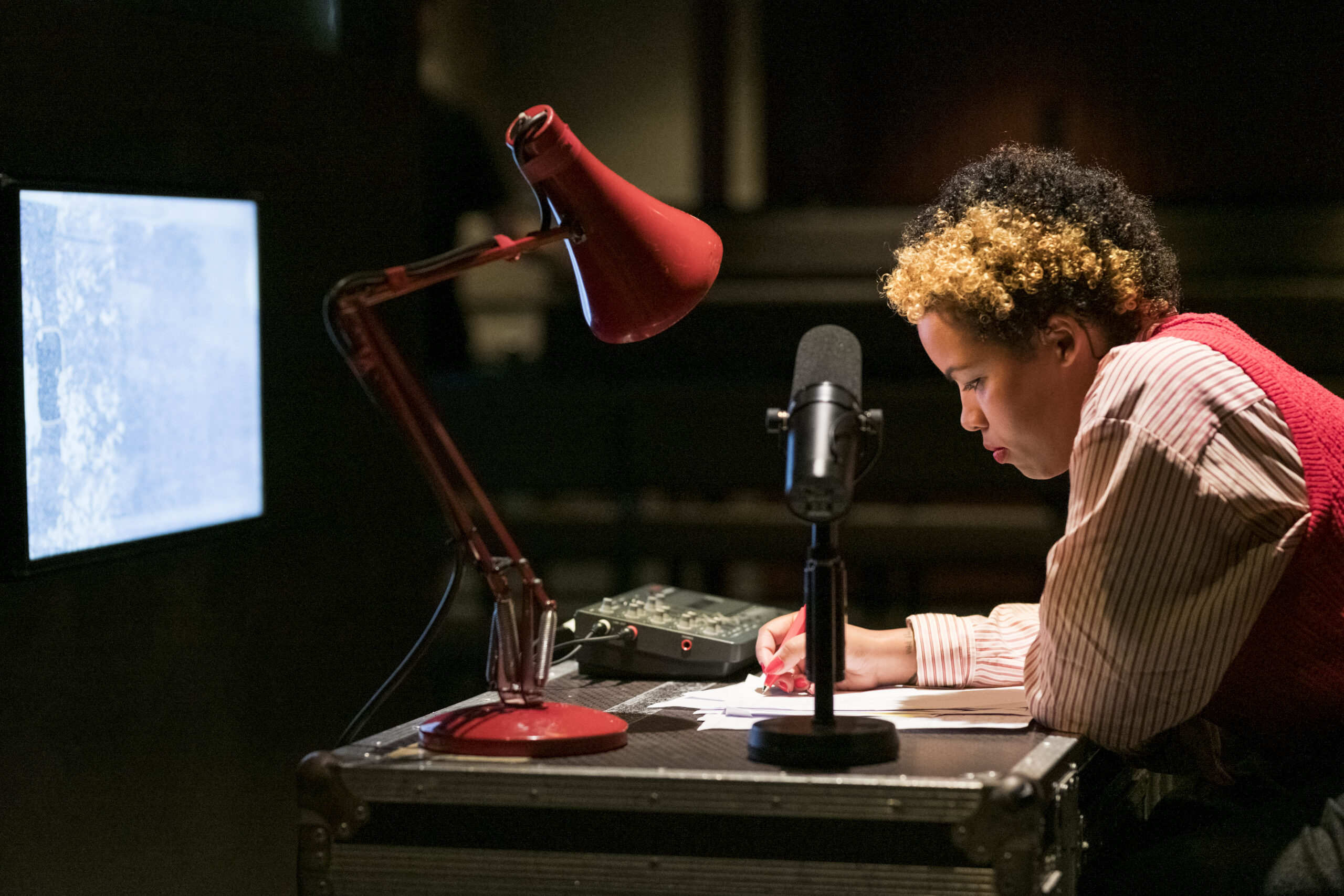
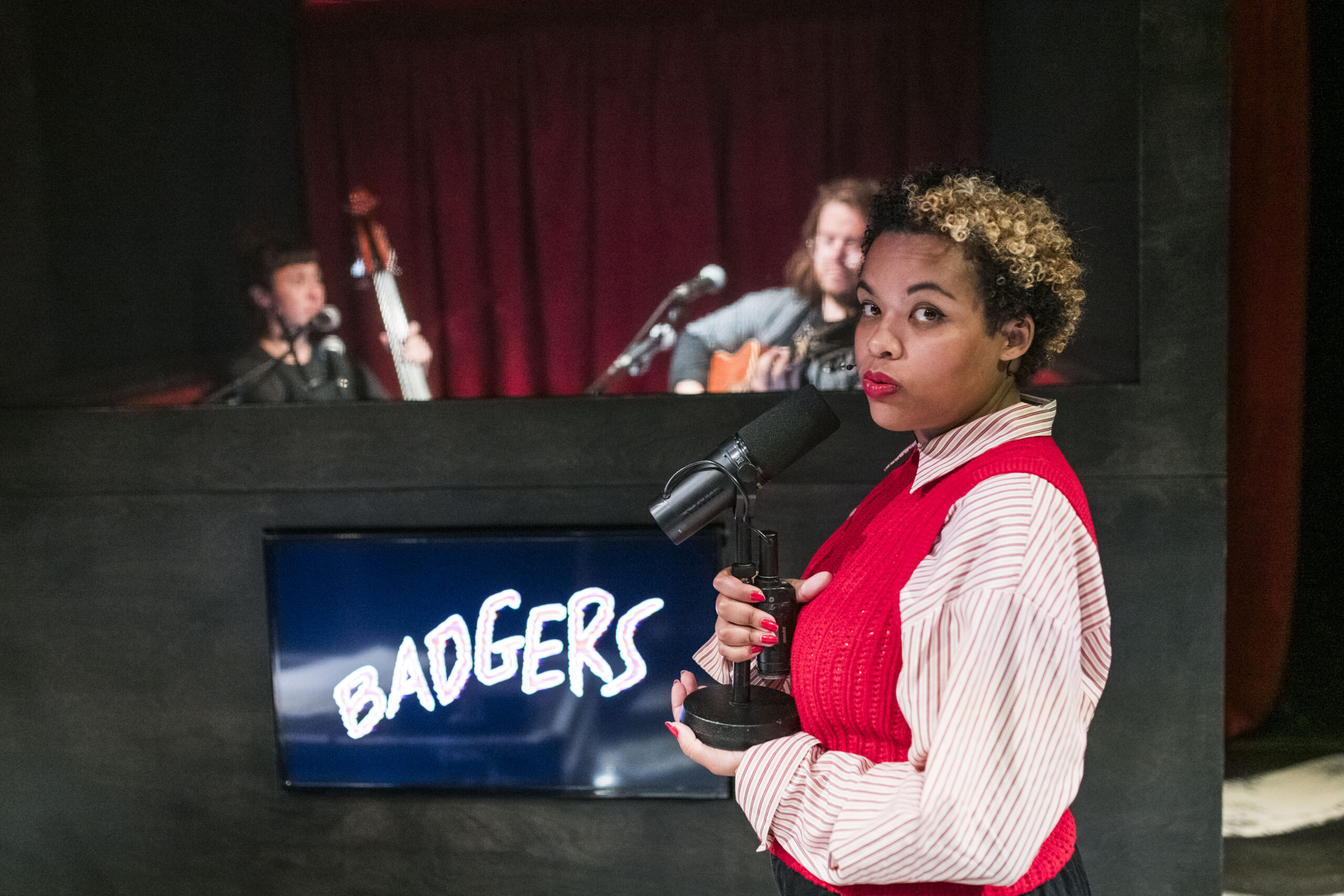
A series of clever thematic choices that link together make Badgers a deeply affecting watch. Perhaps it’s the choice of playwright and star Malaika Kegode to cast herself as a traditional oral storyteller – a decision that immediately draws the audience into a whirlwind, an expansive tale that lends itself to folklore.
 
Here is an ambitious story that starts with the disappearance of folk singer Ben, a musician who vanishes in the woods after recording sounds of nature and playing a song that has been passed to him by the mysterious Bridgette, herself a puzzling figure in a play full of puzzling figures.
 
Kegode’s knack for oral storytelling is superb. She chooses to place the audience into the shoes of Meles, a podcaster whose mother Dora was a successful journalist herself. “You are Meles.” She constantly addresses the audience in the second person. It’s immersive as it is cerebral – Meles turns into an inquisitive investigator of Ben’s disappearance when she uncovers the baffling details surrounding the case and the subsequent reifying of it as an urban legend.
Images by by Paul Blakemore

This play is a story about urban mythology. When Meles traces back the events, she pursues Bridgette—and this is where the play becomes fascinating. Bridgette’s song is an incredibly beautiful piece of music, with a darker undertone. Without spoilers, the titular “Badgers” are intrinsically linked to the song; it’s a supernatural phenomenon that Kegode uses as a means to evoke the omnipotence of nature. 

Meles’ mother is dying. She holds onto life, wanting the best for her daughter and guiding her through her investigation. Meles desperately wants her mother to get better, unable to accept the inevitable.  A delightful supporting voice by Mary Woodvine, herself the star of the mercurial folk-horror Enys Men, adds a textured voice that contrasts Meles’ bashfulness. Kegode intelligently links Meles’ inability to let things go with her own obsession with Bridgette’s song and Ben’s disappearance.

Musicians Beth Roberts and Joe Williams accompany Kegode on stage, using guitars and banjos to create an atmospheric backing track that compliments Kegode’s writing. The music has a haunting, ghostly quality – not terrifying, but rather soulful. Screens on stage depict the waves of audio recordings; archival material is broadcast as a storytelling device to show Meles’ troubling rise as a true-crime podcaster when she eventually exploits Bridgette’s story.

With so many themes being introduced at once, Badgers can sometimes feel a little crowded. Moments of clarity are important – especially when the audience is so immersed in Meles as a character – a cleaner script would allow the audience a better insight into the greater world around these characters. As Meles’ mother points out, “You have a duty of care to Bridgette”. The darker ramifications of Meles’ exploits aren’t explored in enough detail.

Nevertheless, Kegode shines as a maestro of atmosphere – there are glimmers of The Wailing with its reverence for supernatural forestry. With a keen stage presence, she embodies the characters of the story well with her physicality. She renders the unbelievable believable, the astonishing incredibly human.

 Badgers is a delightful Russian doll mystery about the darker forces of nature  ★★★★ 4 star

Edinburgh Fringe Tickets


Tickets for this show and 3000+ other titles are available to buy online at the Fringe's website

Book Now

Author Profile

The Recs BK - Brandon Kiziloz