Owain & Henry – Wales Millennium Centre ★★★★

In a work of astonishing ambition, ‘Owain & Henry’ tells one of Cymru’s foundational tales, vividly bringing the past to life on stage at the Wales Millennium Centre.

In times of social inequality, political upheaval, pandemic, international war, and the struggle for national identity, people need a saviour, a prince, if you will, to unite them. Step forward, Michael Sheen. But enough about the 2020s.

In the 13th century, Cymru’s (Wales’s) fortunes rose and fell in quick succession. In 1267, Henry III recognised Llewelyn ap Gruffudd as Prince of Wales. By 1272, the English throne had passed to Edward I and, by 1284, Llewelyn had been killed and Wales conquered. Edward built imposing English castles around Wales to control the Cymry (Welsh people) and, in 1301, gave his English son the title Prince of Wales; the gravest insult to underline England’s takeover of Cymru. If there’d been an English Football Association then, he’d probably have been the patron.

Throw in a couple of quashed uprisings and the plague, and this is the Cymru and world into which Owain Glyndwr was born, circa 1354. Far from being a rebellious peasant, Owain was one of the elites. He was educated and well-connected, inherited great wealth and large estates, fought for the next English King, Richard II, and served as King’s Marshall, keeping the peace in Wales. Gary Owen’s new play Owain & Henry explores how and why Owain went from such privileged beginnings to lead his people in rebellion against England.

The play begins soon after Henry IV ascends the throne. Owain is at court to be humiliated and stripped of the position he held under the former King. The courtiers and Henry address Owain Glyndwr as Glendower. Michael Sheen, as Owain, addresses the audience, “And Glendower is not my name but in England it is common practice to mutilate a name they consider exotic, rather than flex the mouth to accommodate it.” Sheen has a twinkle in his eye and knowing smiles twitch around the Wales Millennium Centre.

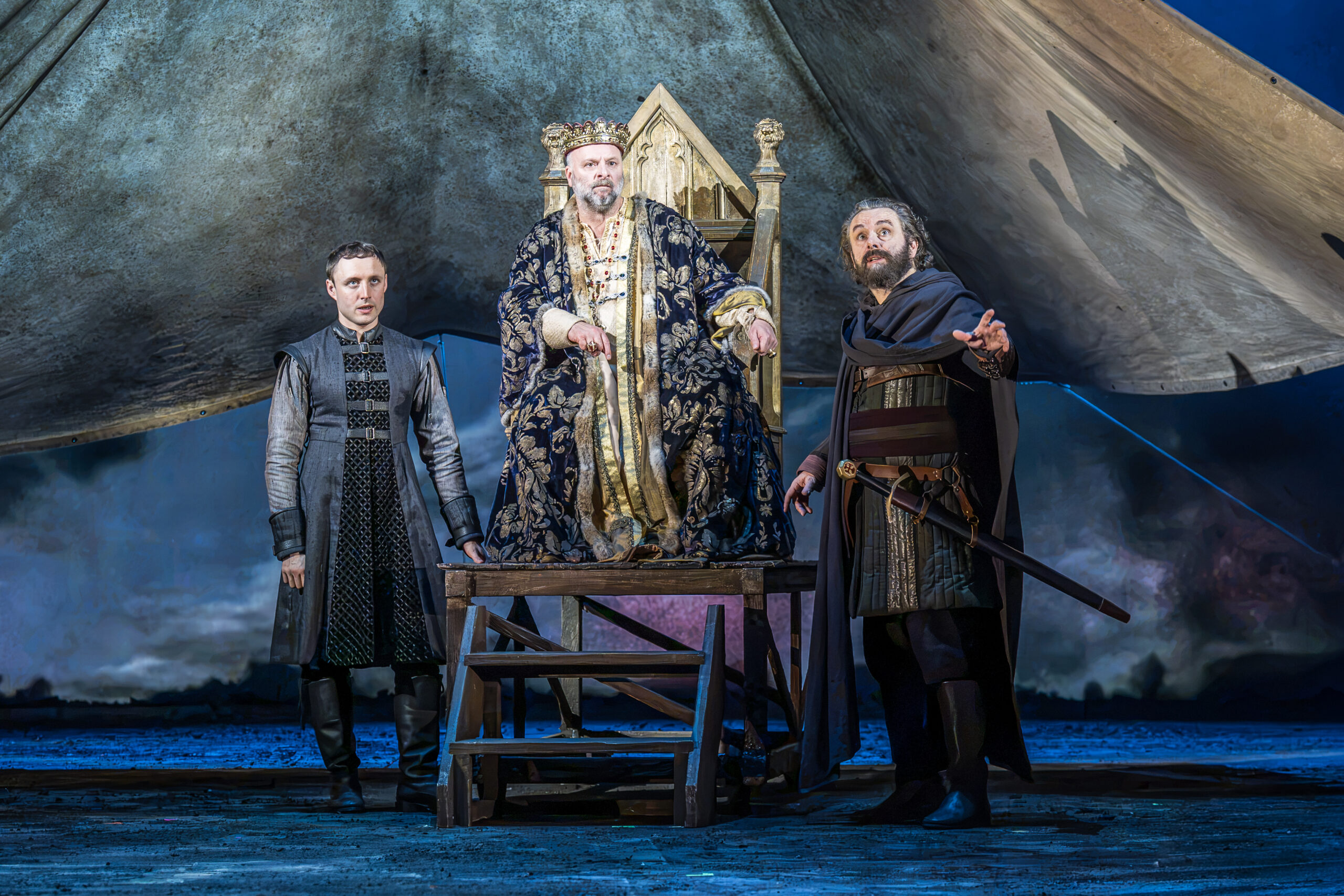
Image by Marc Brenner

In front of Owain, Henry makes his son, Prince Hal, the new English Prince of Wales. Owain is “sent home, stripped of position, of power and all dignity …” but he is alive, at least, which wasn’t a foregone conclusion of the meeting, though the alternative would have made for a much shorter play.

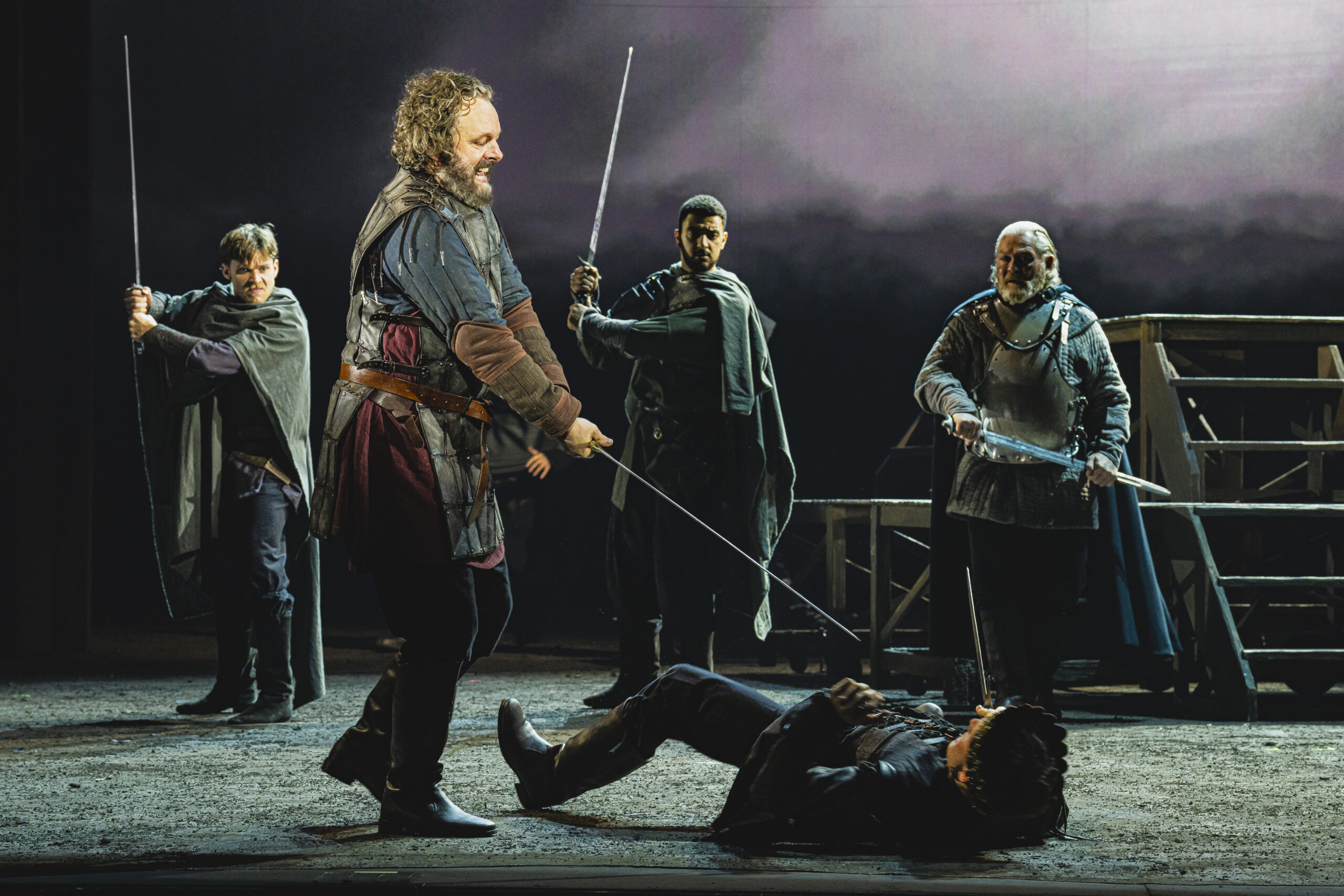
At the behest of Prince Hal, Henry appoints Baron Reginald Grey, an Englishman whose lands neighbour Owain’s, as the new King’s Marshall. Hal urges Grey to steal Owain’s lands bit by bit until Owain has nothing left. Owain has left the court cowed; they think he will not fight. Bois bach (boys), are they wrong?! Like the All Blacks in Cardiff last week, they underestimated the Welsh fighting spirit at their peril.

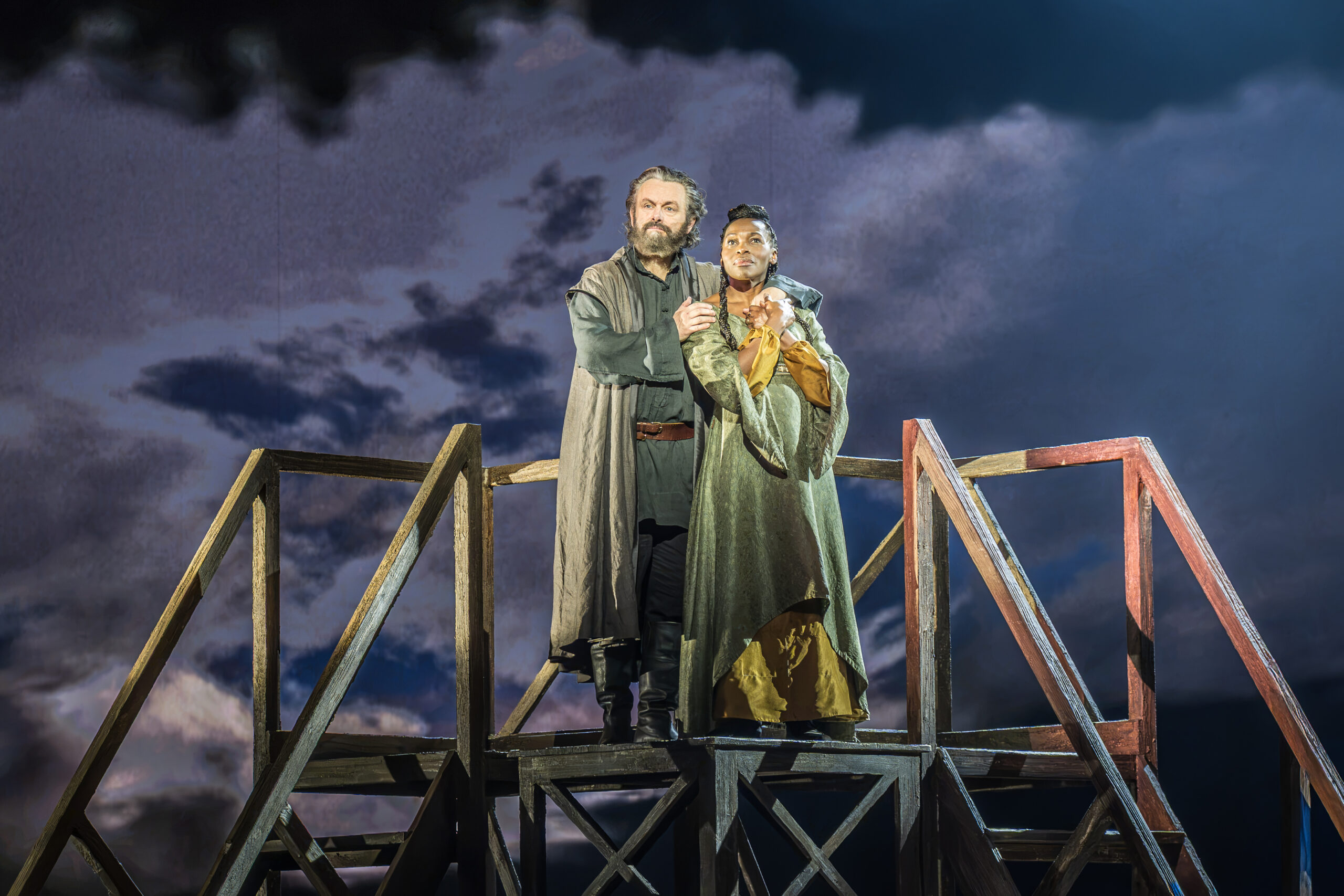
Owain’s decision to fight is spurred by Mared (Rakie Ayola), his wife, who is something of the brains behind the rebellion. His daughter Catrin (Emily Burnett) is also full of fight, and Lois (Sophie Melville), wife of one of his tenant farmers, is a one-woman English-soldier-killing machine. All the acting is of the highest calibre.

Image by Marc Brenner

Nigel Barrett imbues dislikable Henry with a humanity entirely lacking in Henry’s son, Prince Hal. Amongst a talented cast, Ned Costello’s Hal stands out; a brilliantly evil, pantomime baddy, with remarkably bad instincts who, frustratingly, gets what he wants in most dastardly style. James Wilbraham is endearing (once he’s on the ‘right’ side), falling for Catrin and learning Welsh for her, playfully illustrated by Owen using English with a Yoda-like sentence structure to reflect Welsh syntax.

The set by Jon Bausor (set designer) looks simple and is choreographed brilliantly. Often a mere swivel of the stage furniture changes the location. Sometimes two locations inhabit the same space. A throne here, a wobbly chair there, and whole countries, courts, homes and battlefields are conjured. The lighting design by Aideen Malone is magical, complementing the epic scale and drama with glimpses of a stormy cloudscape beyond a door, or lighting a single character in a darkened room with a shaft of sunlight.

What might be unexpected is the humour in this piece. Gentle laughs and a few guffaws are scattered across the play, offering light relief from a sombre subject. After all, despite Owain’s early, some might say miraculous, wins, we all know where this ends – a subdued Cymru with an English Prince of Wales, who is patron of the English Football Association.

Image by Kirsten McTernan

Owen has created an epic play of Shakespearean scale and intrigue. Like (and borrowing from) Shakespeare’s treatment of Owain in Henry IV Parts 1 and 2, this is not a documentary. It’s also not a glowing reference. Owen’s Owain is a nuanced and flawed character, something of an accidental hero. This is an immensely enjoyable play, an instant classic in the Welsh literary canon. If there’s one wrinkle, it is that, by lightening the mood, it loses a little gravitas and emotional punch. The payoff may be that it is very accessible, and it’s impossible to leave not wanting to research the true story of its hero.

Finally, it will come as no surprise to anyone that Sheen’s performance is a masterclass, as nuanced as the character he inhabits; cowed, submissive, doubting, loving, cruel, self-preserving, self-sacrificing, triumphant and beaten, wholly convincing at every turn. We run the full gamut of emotions with him. In the final words of the play, Owain/Sheen says “I am the prince God sent. This is the path I will walk.” It’s hard to know which one of them is saying it. Both are true.

Owain & Henry is a powerful retelling and reclaiming of Welsh history. Yma o hyd. Cymru is still here ★★★★ 4 stars

OWAIN & HENRY Tickets

Owain & Henry runs at Wales Millennium Centre, Cardiff until 28 November 2026

Buy Tickets

Author Profile

The Recs NB - Nicola Berry