Desire Under The Elms – Almeida Theatre ★★★★★

Ebenezer Bamgboye offers a devastating dilemma in this reimagined O’Neill classic
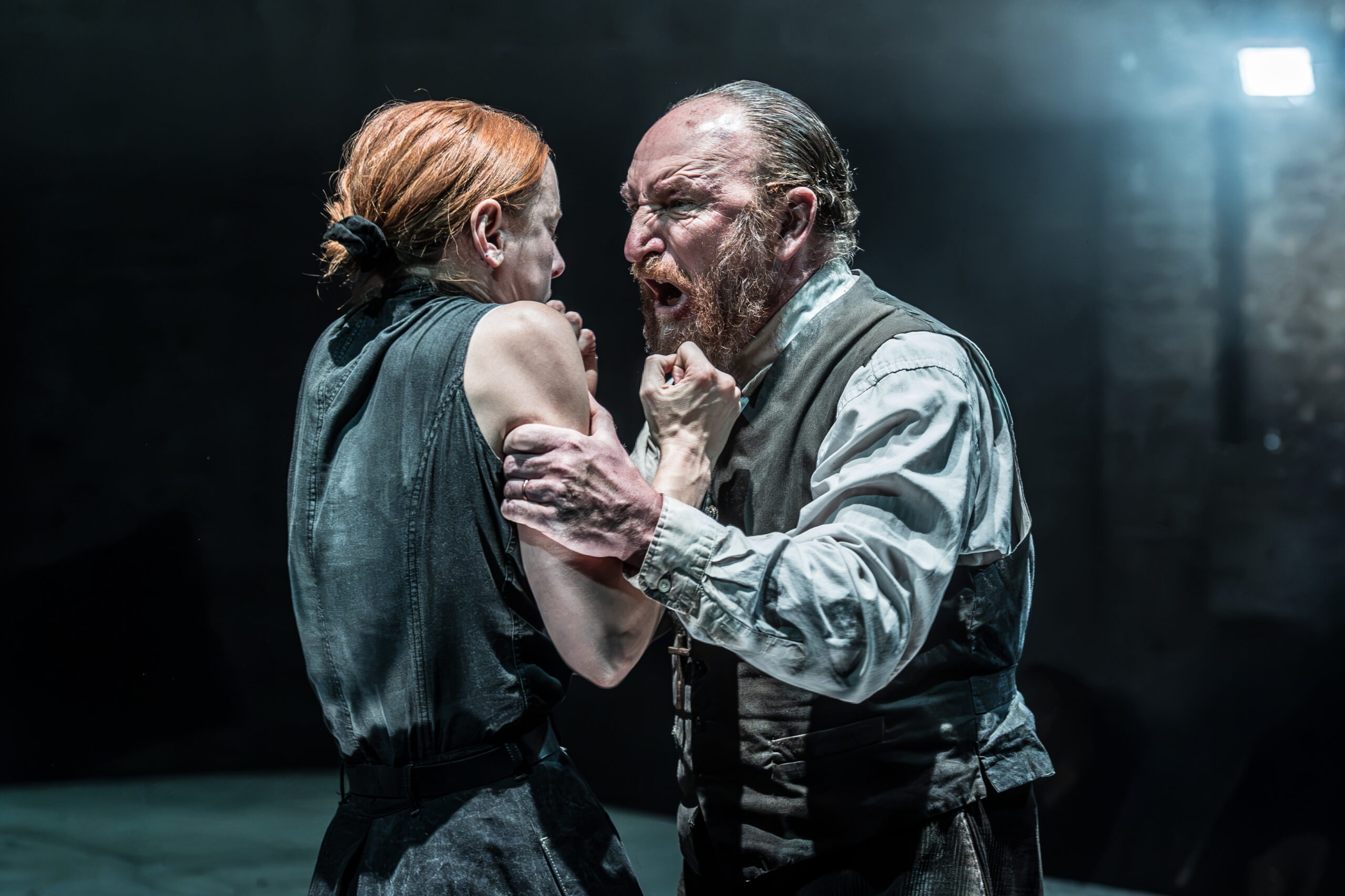
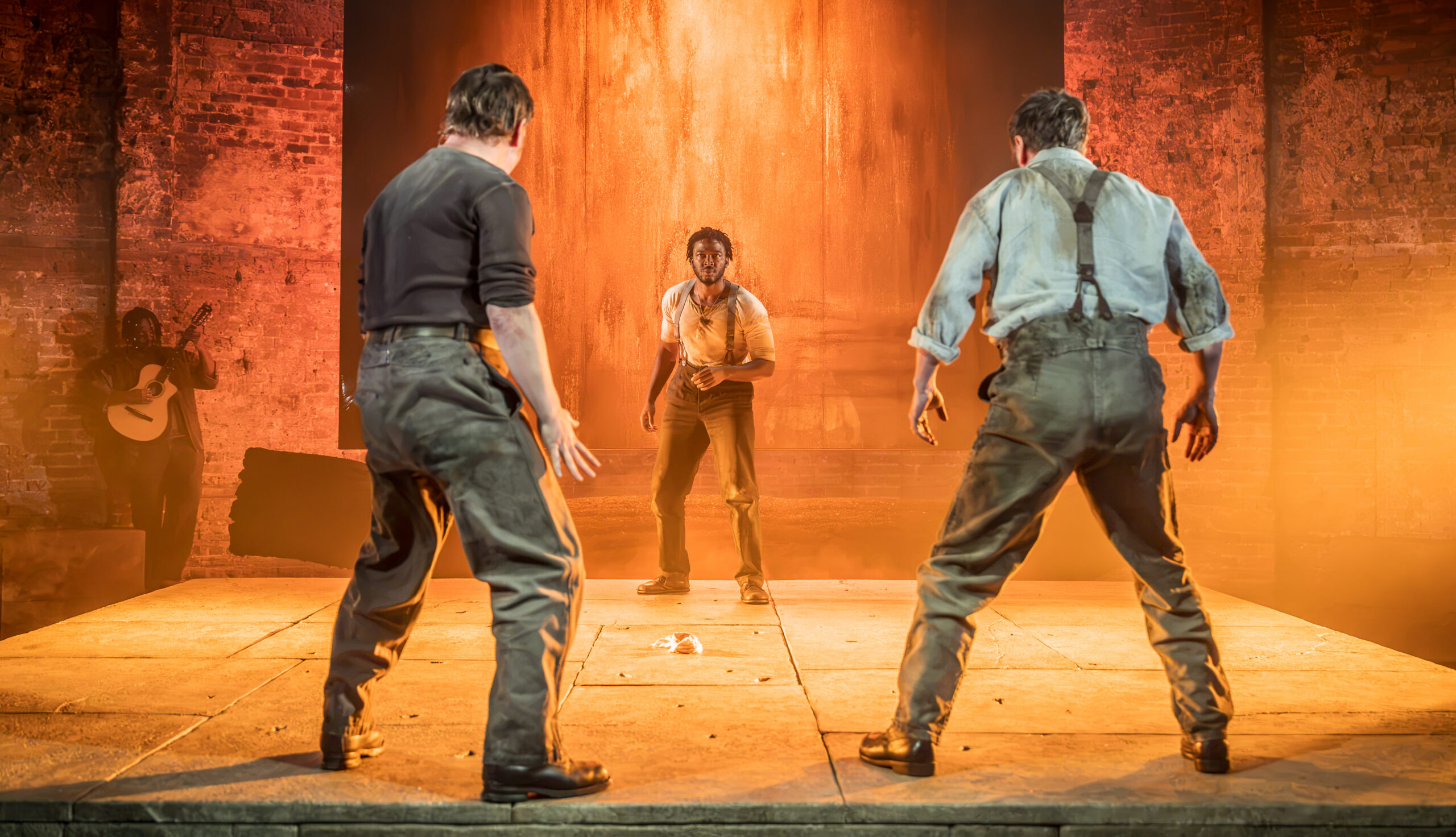
The Almeida Theatre’s cold, gray brick walls create the perfect environment for Eugene O’Neill’s farmhouse drama. Based on the story of Phaedra, Theseus and Hippolytus, Desire Under the Elms incorporates elements of Greek Tragedy and places them in rural New England, combining classic elements of American theatre with the harsh tragedy and catharsis of Euripides’ play. Directed by Ebenezer Bamgboye (previous resident director at The Almeida), this abstract take on an old classic remains chillingly Freudian with an industrial aesthetic.

This complex plot is difficult to whittle down, but at its core, Desire Under the Elms is about the extremities of desire – how a deep hunger for something can take you to calamitous and devastating ends. During a long hot summer in 1850s New England, three adult sons work endlessly on their explosive patriarch Ephraim’s farm. We meet the sons during Ephraim’s two month absence, giving the men space to discuss their escape. Having had enough of his abuse and relentless orders, the two elder, ‘bovine’ brothers Peter (Thomas Coombes) and Simeon (Jamie Beamish)plan on running away to the mountains. Overhearing this, Eben (Zackary Momoh), the youngest, builds a plan to stay and inherit the land to avenge his mother’s death. He blames Ephraim for her passing, claiming he worked her to death saying there was ‘nothing natural’ about it, and her spirit still lingers within the elms. So, when Ephraim comes back home with an attractive young wife Abbie (Kelly Gough), ready to inherit the lot, they come to realise that nobody can have it all.

Images by Marc Brenner

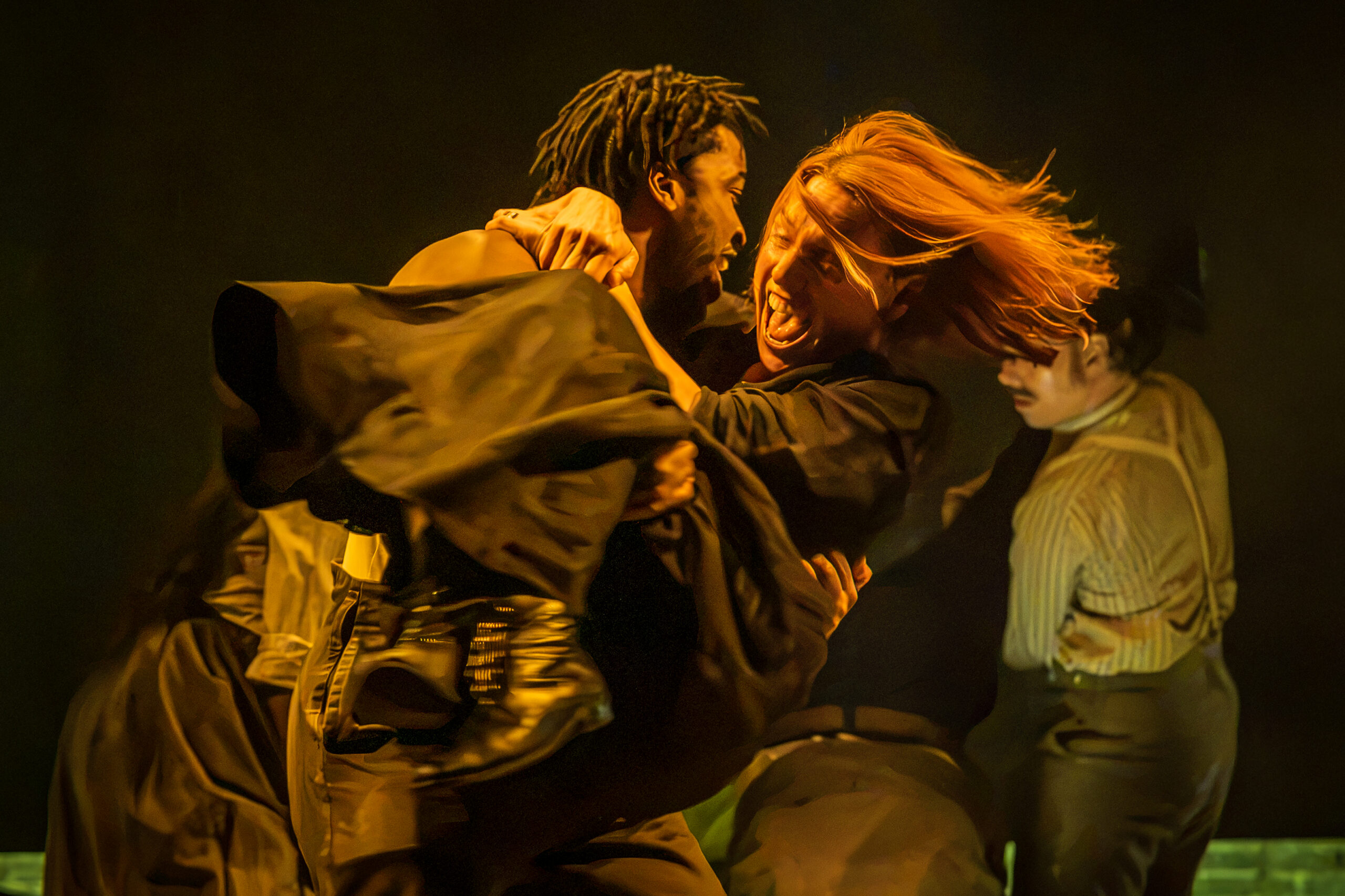
In this two-hour-40-minute run, Bamgboye’s pacing is impressive and the tension rises and falls frequently. One of the most impactful scenes is the arrival of Abbie and her initial seduction. She firstly appears almost clumsy with her words, nervous at the sight of Eben, knowing he wants the farm too. She monologues at an unresponsive Momoh until he calls her a degrading name. Then, Gough’s performance gradually becomes less southern belle and more femme fatale. This transition is so small and drawn out it may not be noticeable at first, but it’s the unspoken yet obvious unease in Eben’s physicality that replaced any dialogue that could have built tension in the same way. It’s obvious her boldness has seduced him despite him wanting it, her speech at him feels like a torturous abduction of his mind. As their relationship develops in the second half, Abbie still plays the middleman between Eben and his abuser, telling Ephraim she will birth him a baby boy in return for the farm. She has Eben’s baby, disguised as Ephraim’s. When all is confessed, Gough and Momoh perform extraordinary breakdowns, similar to the Macbeths. Bloodied hands, animalistic groaning and convulsing bodies come together to create a grotesque, raw image of guilt, grief and catastrophe.

This leads onto a bigger point about the way movement has been choreographed to translate emotion so strikingly in this piece. Movement and intimacy director Rose Ryan has made it so that the lovers seem drawn to each other by an outside force – similar to Euripides’ telling of Phaedra (where she is cursed with desire for her stepson by Aphrodite). Momoh and Gough contort their bodies around each other to translate their unstoppable attraction to each other. Choosing to go down the contemporary route for this production turns O’Neill’s traditional tragedy into something far more psychologically thrilling and visually appealing than expected.

In O’Neill’s original text, he characterises Eben as a man who has ‘the look of a caged animal’. This idea certainly translates and transcends just Momoh’s physicality, as designer Basia Bińkowska reimagines this traditional farmhouse as a prison-like cage for the actors. Placed atop a square, concrete platform, actors pace the parameters when tension is building as if they are preparing for a fight. Even Abbie’s baby is never seen, but represented by a box of light.

This Desire Under The Elms is a stunning composition, driven by unbridled talent and passion.

Heartbreaking in all the best ways ★★★★★ 5 stars

Desire Under The Elm Tickets

Desire Under The Elms runs at Almeida until Wednesday 23 December 2026

Book Now

Author Profile

The Recs EM - Erin Muldoon