Martin Guerre – Old Vic Theatre ★★★★★

This Ship-of-Theseus reworking of ‘Martin Guerre’ finally brings Boublil and Schönberg’s musical home

There are some musicals whose journey to find their voice is longer than most.
 
The Baker’s Wife is a case in point: the show has been marked with near-constant revision since Stephen Schwartz and Joseph Stein began developing it in the 1970s. Songs have disappeared, returned, moved, or been rewritten, while the book and character emphasis have repeatedly changed, until it reached critical acclaim with the Classic Stage Company’s production in New York last year. Infamously, some never find their voice: Spider-Man: Turn Off the Dark surely holds the record for the most rewrites while audiences were actually paying to watch it. The show played an astonishing 182 Broadway previews.
 
Martin Guerre belongs towards the top of that list. In some respects, it is a classic example of a musical being repeatedly rebuilt in search of the version its creators knew was hiding inside it. The original West End production at the Prince Edward Theatre opened in 1996 to decidedly mixed reviews. Following the success of Alain Boublil and Claude-Michel Schönberg’s era-defining Les Misérables and Miss Saigon would prove a tough act in terms of expectations. The problem at the heart of the original version was that while it had the characteristic soaring, stirring score with which the duo had become synonymous, the story itself wasn’t one that had the same scale. It was not the revolutionaries’ fight against injustice and inequality in 19th-century France. Nor was it love and sacrifice during the last days of the Vietnam War. It was about love, loyalty and identity in a tiny village in rural 16th-century France. Something altogether more personal than its large-scale predecessors. 
Images by Helen Maybanks

In an attempt to address the disconnect between the towering magnitude of the music and indeed of the production’s presentation with the intimacy of the story they were telling, then-producer Cameron Mackintosh did something fairly extraordinary: the production closed temporarily after its opening, underwent substantial rewriting and restaging, and then reopened in November 1996 in a significantly altered form. Not tinkering. Sheridan Morley, at the time, estimated that roughly 50% of the book, lyrics, and action had been reworked. 

It didn’t stop there. The 1998 UK touring production and the 1999 American production continued to make huge changes. Songs were cut, added and rewritten; the book was repeatedly restructured, and characters and motivations changed.

As Forbidden Broadway‘s wonderfully cutting parody song, “I am Martin Guerre”, put it: 

They changed and rewritten so much /

The costumes went from British to Dutch / 

Cut this, drop that, at least to the play / 

A new translation came every day…

And they never quite fixed the balance between the central love triangle and the religious/political milieu against which it takes place…

Until now.

Based loosely on a remarkable true story, the musical begins with Martin Guerre, a young man who is reluctantly pressured into marrying Bertrande. The villagers, driven by a Catholic fervour for fertility but infused with a feral streak of superstition, are soon up in arms as they creepily note that the virgin wedding sheets are marked by “a happy stain.” As accusations of witchcraft and smears over his sexuality fly, he flees from his village and leaves behind his wife, Bertrande, in the clutches of the mob mentality. When a man returns years later claiming to be Martin, the question of his identity threatens to tear apart this brutal community already fractured by hardship, suspicion and religious conviction. It is a compelling premise, rich with moral ambiguity, and this new production finally brings its human consequences into sharp focus.

Shorn of the writers’ familiar bombast and sweeping spectacle, stripped away of theatrical excess, this taut, lean, and pacy production reveals the vulnerable people at the core of the drama with an unblinking clarity of vision.

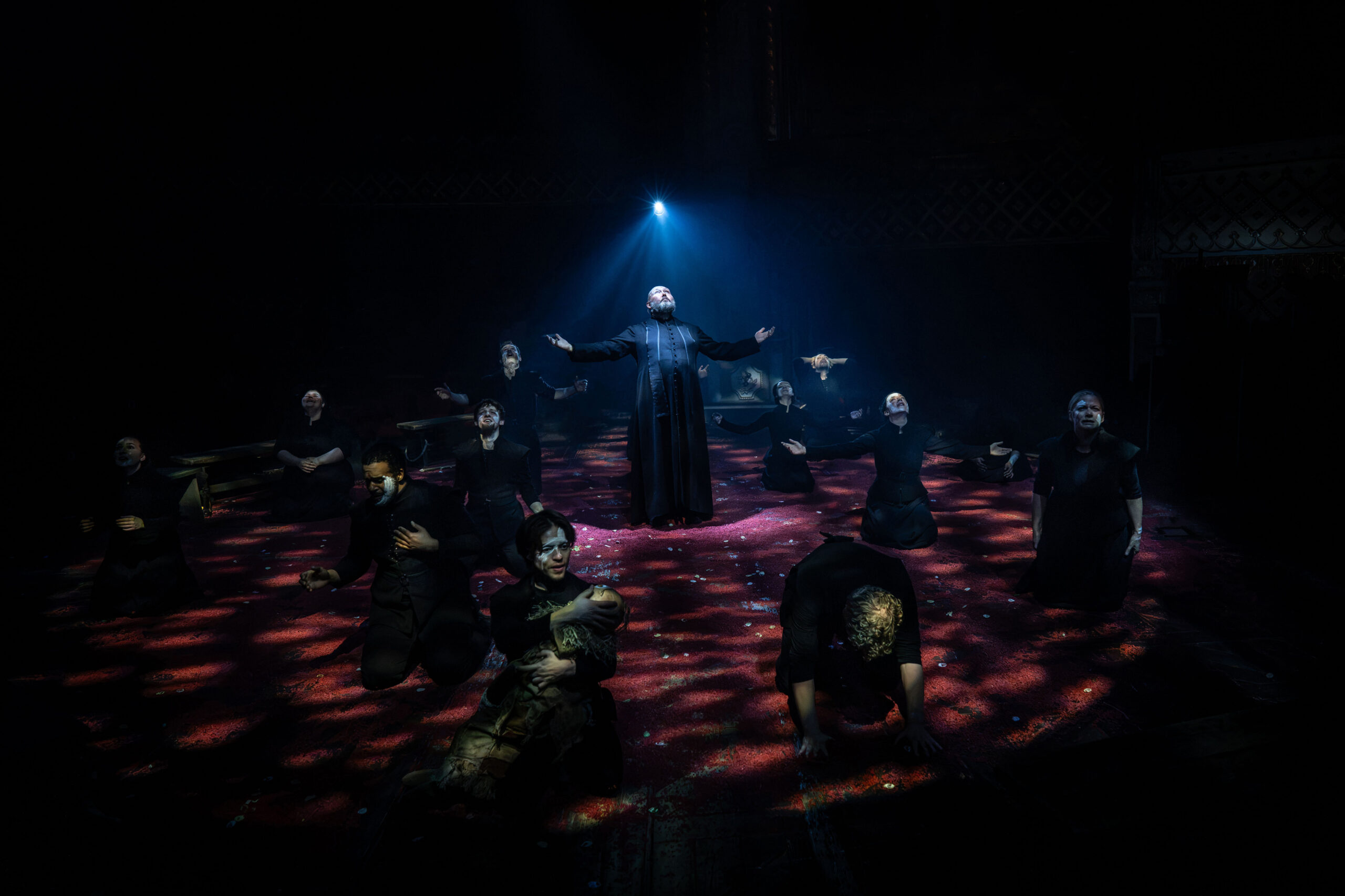
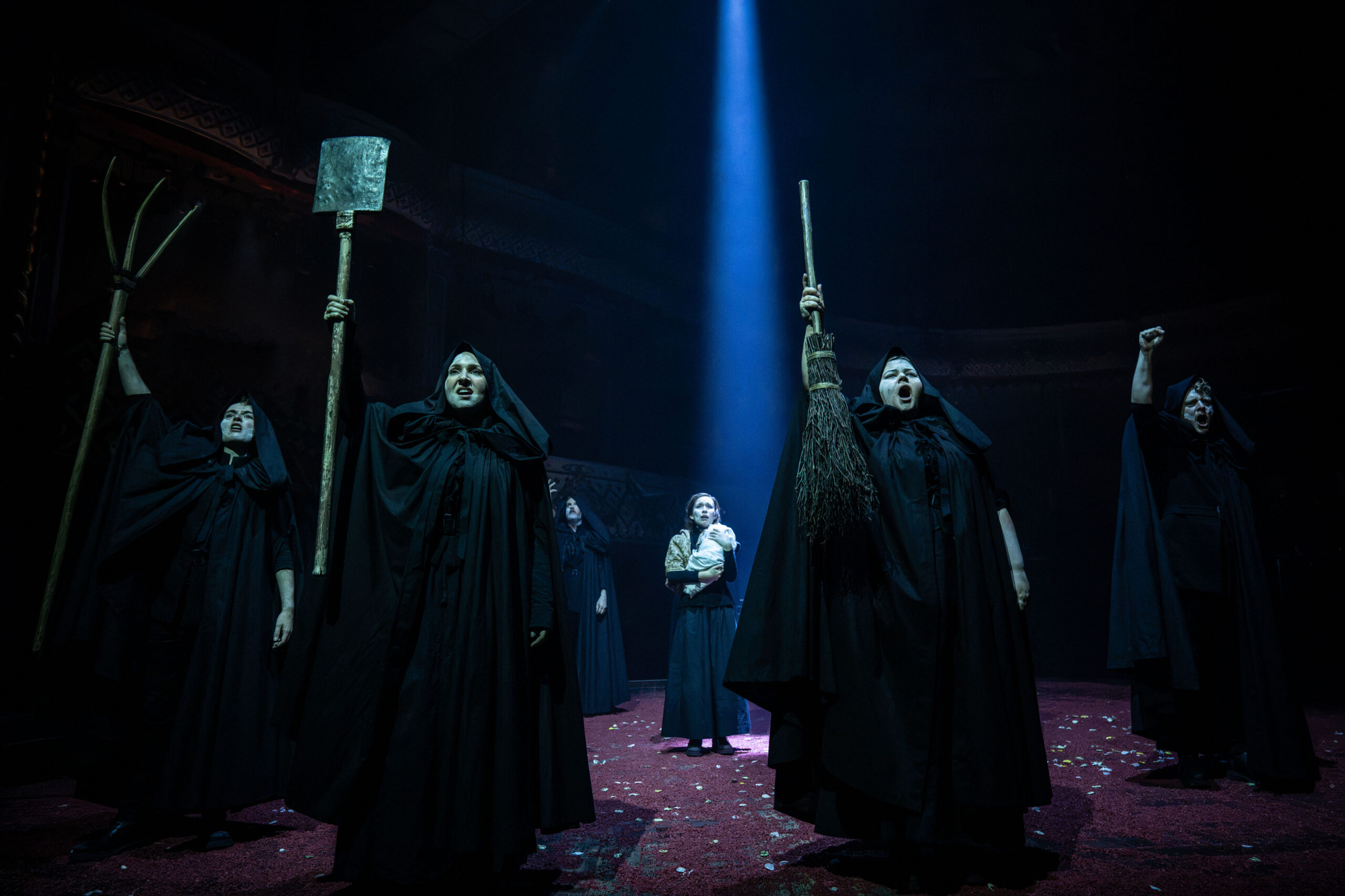
Staged in the round, with an economical set design and a running time of around 90 minutes, it trusts its performers, its music and the audience’s imagination. It is a bold decision, and an inspired one. Gestures acquire significance, silences carry weight, and the emotional repercussions of each revelation seem to travel around the auditorium. The atmosphere feels haunting, brooding, dangerous, with the village itself becoming a suffocating presence: a place where collective belief can offer comfort one moment and turn merciless the next. Rob Howell’s restrained design, enhanced by evocative lighting and Lizzi Gee’s expressive choreography, demonstrates how effectively theatre can conjure an entire world without overwhelming the people inhabiting it.

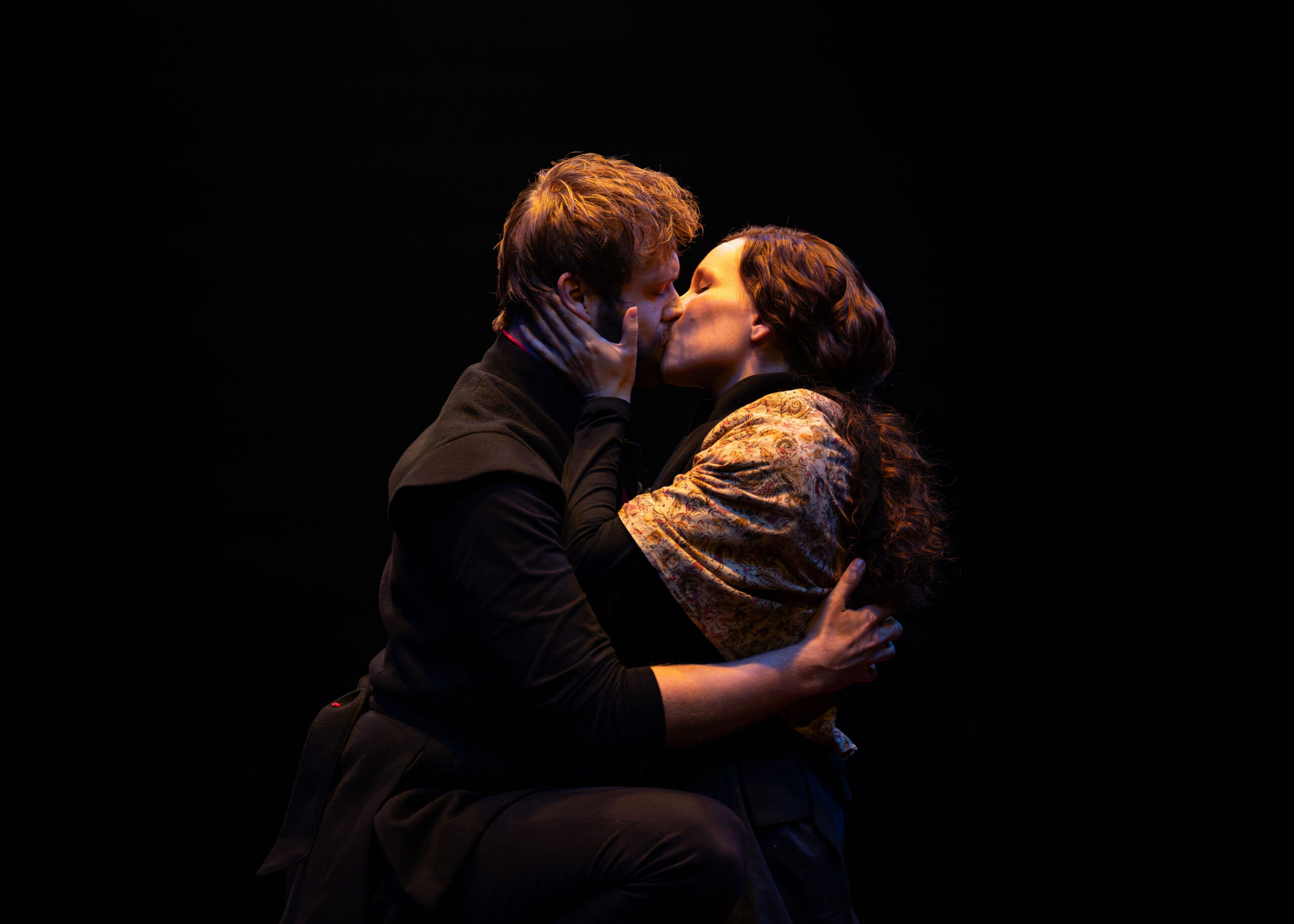
Weighting the emphasis on the couple at the heart of the story plays to the musical’s narrative strength; finally, Martin Guerre finds cohesion in the hands of the show’s sensational leading couple.

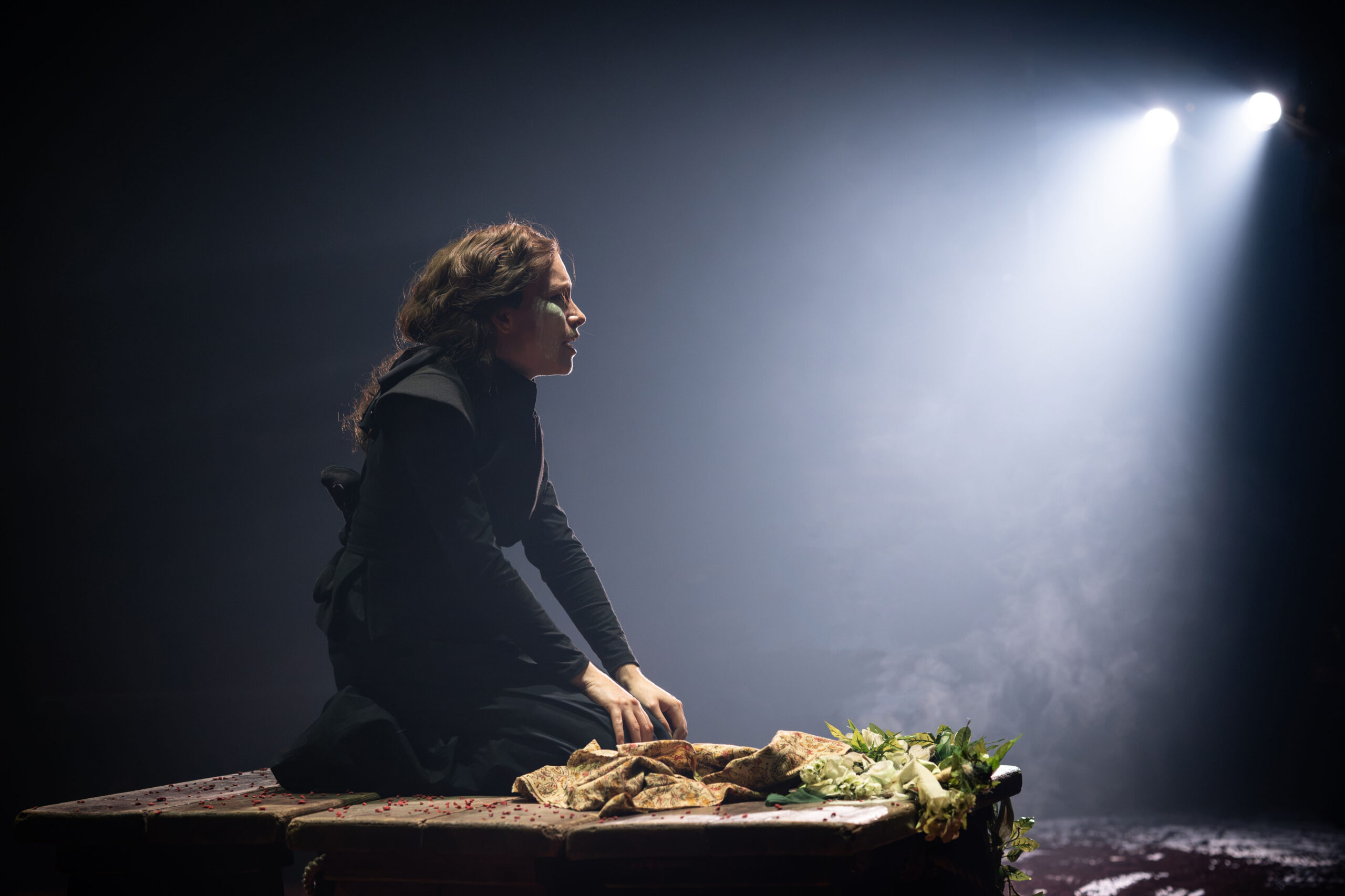
Liv Andrusier’s Bertrande is extraordinary. Rather than merely channelling the abandoned wife around whom the mystery revolves, this revival gives her a compelling emotional presence and a strength of character that anchors the evening. Andrusier combines vocal assurance and purity with an affecting sense of inner conflict, conveying a woman whose spirited determination to love, believe and survive is constantly tested by forces beyond her control. Her performance makes Bertrande’s predicament feel immediate and painfully recognisable, despite the centuries separating her from the audience. Her heartbreaking delivery of the stunning new ballad, Someday, captures that fragile persistence of hope even when happiness seems impossibly distant.

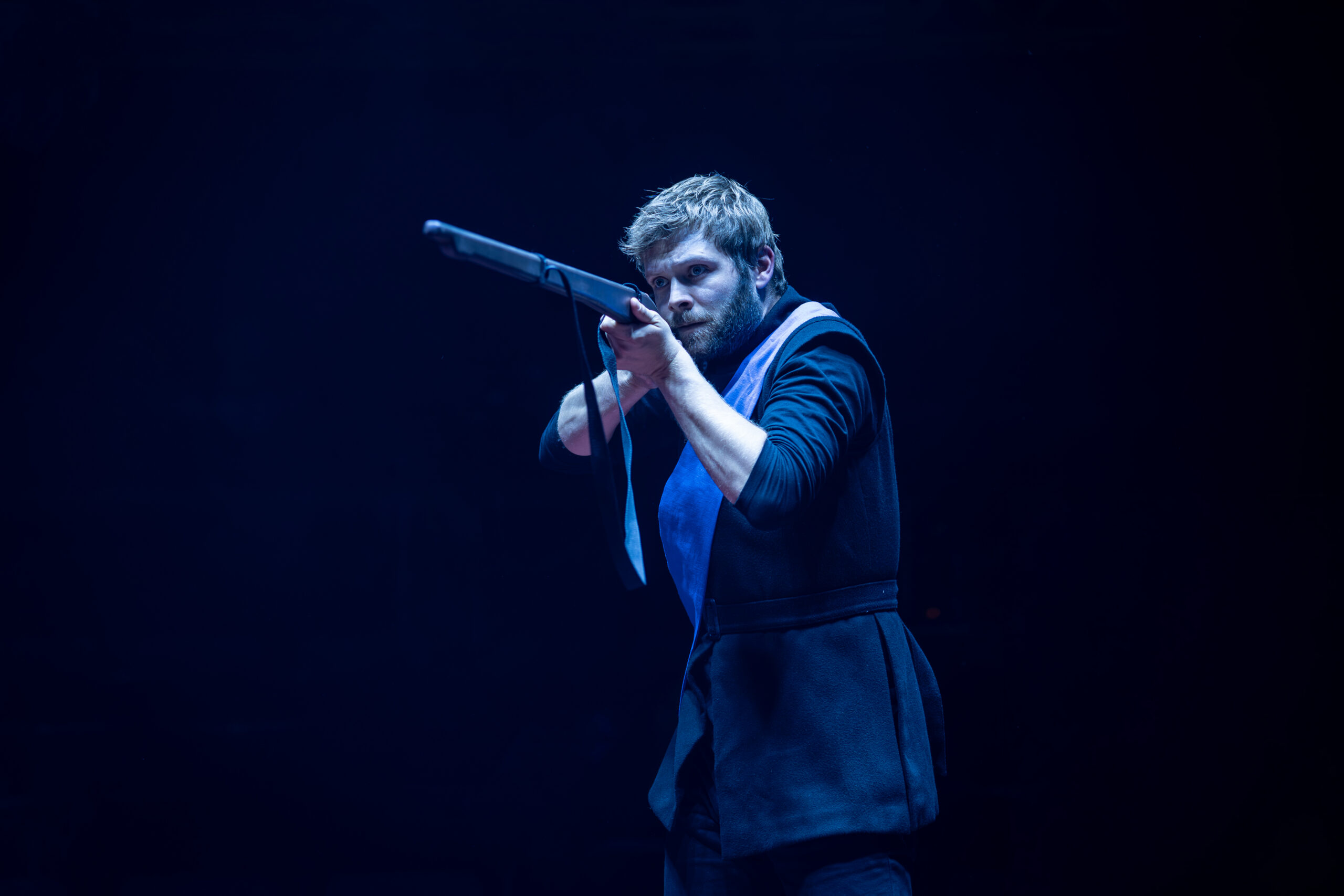
Shane O’Riordan is equally compelling, bringing warmth, yearning and uncertainty to the central male role. Handsome, with understated but tangible charisma, he is the embodiment of the man that Bertrande has yearned to return in the intervening seven years. His warm vocal performance has a natural lyricism that suits Schönberg’s melodies beautifully, and his scenes with Andrusier provide some of the production’s most affecting passages. Their voices complement one another while their characters’ emotional needs pull in different directions. The resulting tension gives the central relationship a depth that extends well beyond a question merely of whether the returning man is who he claims to be.

The supporting company is excellent, creating a vivid portrait of a rural community vacillating unpredictably between compassion and condemnation. Colin Ryan provides welcome contrast as the tale’s othered figure, Benoit, bringing moments of humanity and relief to a story otherwise steeped in anxiety. Dan Hand has a brief but affecting turn as the noticeably younger Martin. Aaron Lee Lambert makes quite the impression with his deep, stentorian tones as The Judge. Across the ensemble, the singing is impressively committed, and the collective performances give the village a convincing sense of shared history, social pressure and simmering unease.

Schönberg’s score benefits enormously from the new production’s folk-inflected textures, occasional Celtic undercurrents, and more exposed musical arrangements. The familiar sweep of his melodic writing remains, but it sits within a sound world that feels closer to the soil, the seasons and the lives of the people onstage. There is still grandeur here, particularly when individual voices rise into the full emotional force of the score, but it is grandeur earned through feeling rather than delivered by spectacle. Under Chris Poon’s musical direction, the music has space to breathe and the performers’ voices remain at the centre of the experience, lending a freshness and immediacy that typically declarative musical-theatre performances may lack.

This Ship of Theseus approach with its pared-back aesthetic will not necessarily be for everyone. Those who treasure the original production’s larger-than-life theatricality, its sweeping bombast and its more overtly spectacular ambitions may miss that expansive style. The just-over-90-minute running time may have necessitated cuts too close to the bone for some. But this new version asks for a different kind of engagement: less surrender to overwhelming spectacle, more attention to the characters’ emotional turmoil. Its compressed storytelling can also feel deliberately elusive, and its refusal to provide easy answers is part of its artistic character. But for audiences willing to meet it on its own terms, the rewards are an evening of vital, immersive musical theatre that wears its Gallic heart proudly on its sleeve.

Indeed, the production’s restraint is ultimately its greatest strength. By resisting the temptation to inflate every emotion into a grand theatrical statement, it allows the characters’ anguish, longing and uncertainty to speak with unusual directness. This is not simply a smaller Martin Guerre. It is a reconsideration of what the musical can be, and of where its deepest power resides.

For Matthew Warchus, it is a fittingly ambitious contribution to his final season as artistic director of the Old Vic: thoughtful, theatrically inventive and unafraid to challenge expectations. For Schönberg and Boublil, it offers an opportunity to revisit a work that has lived in the shadow of their greatest successes and reveal qualities that a more imposing production might have obscured. Vive Martin Guerre!

Martin Guerre – Back from the war, truly not like before ★★★★★ 5 stars

Martin Guerre Tickets

Martin Guerre runs at the Old Vic, London until 31 October 2026

Book Now

Author Profile

The Recs SCD - Steve Coats-Dennis