T.S. Eliot’s Murder in the Cathedral ★★★★

Orange Tree Theatre gives us an atmospheric new production of T.S. Eliot’s strange and unusual ‘Murder in the Cathedral’ at the St John the Divine Church in Richmond.
South-west London has become a real hub for independent theatre and creative expression. It may be the area the liberal elite flock to and can afford to live in, but it is also easily accessible by public transport, so the rest of us can benefit from the exciting, challenging works that regularly pop up in its public spaces. The latest is a community-rooted version of Eliot’s Murder in the Cathedral, his classic retelling of the killing of Thomas Becket shortly after Christmas 1170 in Canterbury Cathedral, 61 miles away from St John the Divine Church.

This Orange Tree Theatre production stars Poirot favourite David Suchet in the lead role, but it also draws on amateur performers from the local area, and its setting in a working church, rather than the company’s actual theatre space, makes the whole experience rather special. But can this new production in its appropriate location still deliver Eliot’s powerful message about personal sacrifice and the need for moral and religious duty in a functioning society? Or will the acoustics of the vast religious space mean that his words are sacrificed for the atmosphere?

Images by Marc Jenner

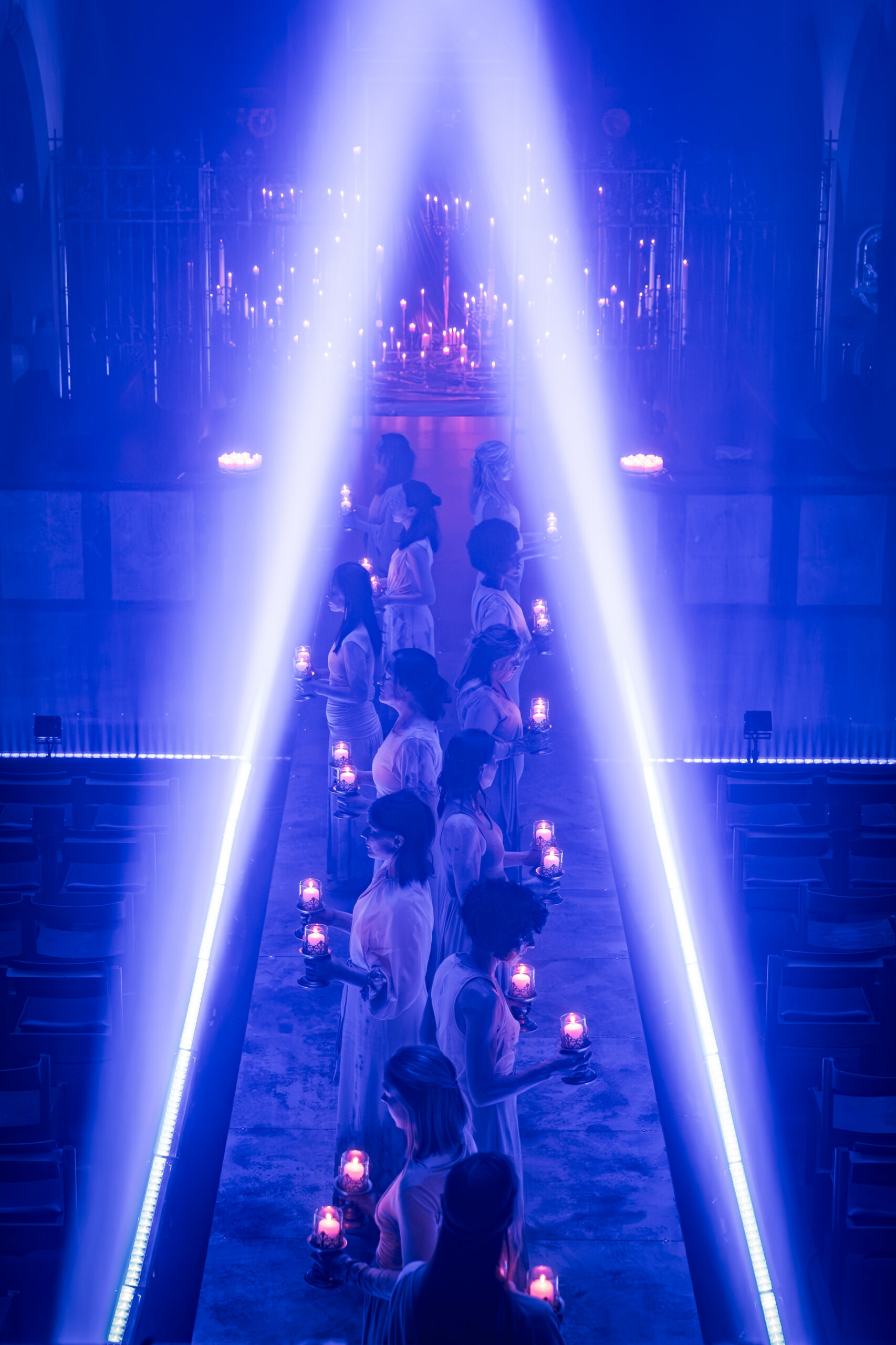
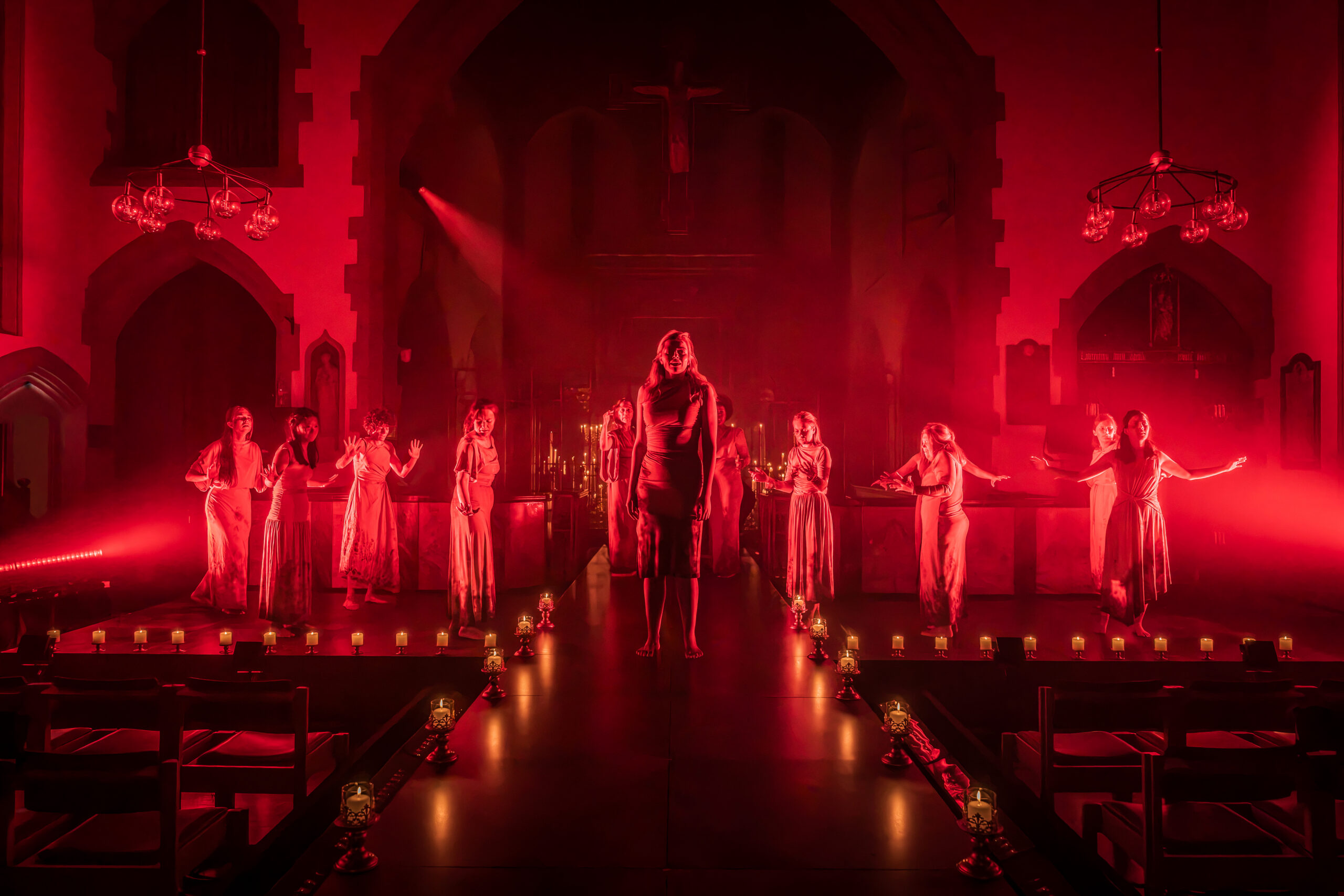
This ninety-year-old religious play is rooted in the well-known story of the former Archbishop of Canterbury’s fallout with King Henry II and his assassination by loyalists after returning from exile in France. However, Eliot doesn’t choose to use this vehicle to tell that particular plot; instead, he explores wider religious, social and political themes through a series of tormenting apparitions in the first part of the play. There is also the Greek tragedy-like chorus of the Women of Canterbury who swirl about in the mist, despairing and doom-laden.

His words are all informed by what he was experiencing as a man living in a world going through a period of huge economic and political uncertainty, just as we are living through the same troubles today. He uses verse to explore the ideas of sin as the four Tempters individually arrive to offer enticements, and Becket tries to intellectualise and resist them. We are shown pride, greed, self-interest, corruption of the powerful elite, the authority we allow our rulers and the notion of God and divine will. What will Becket choose for himself?

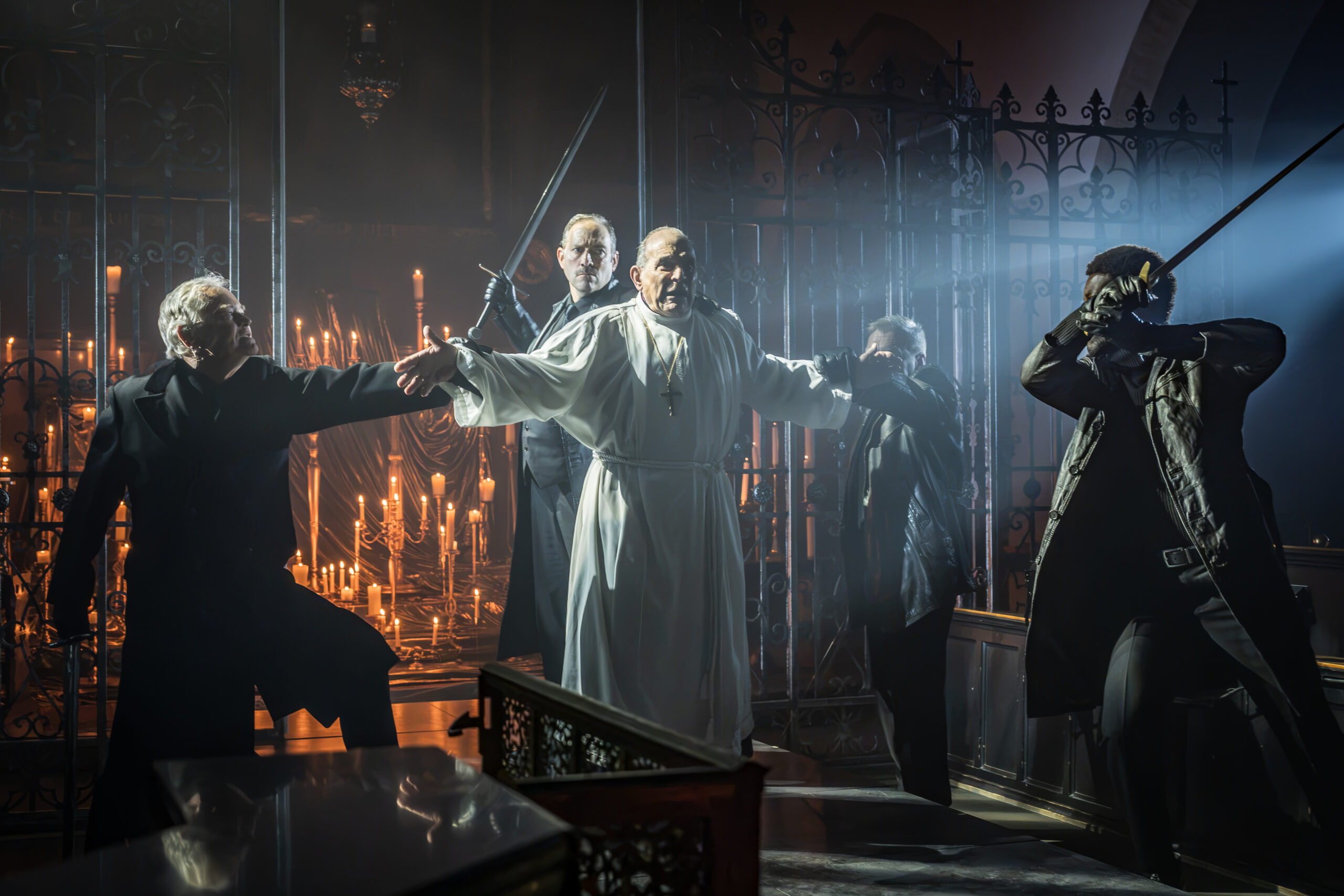
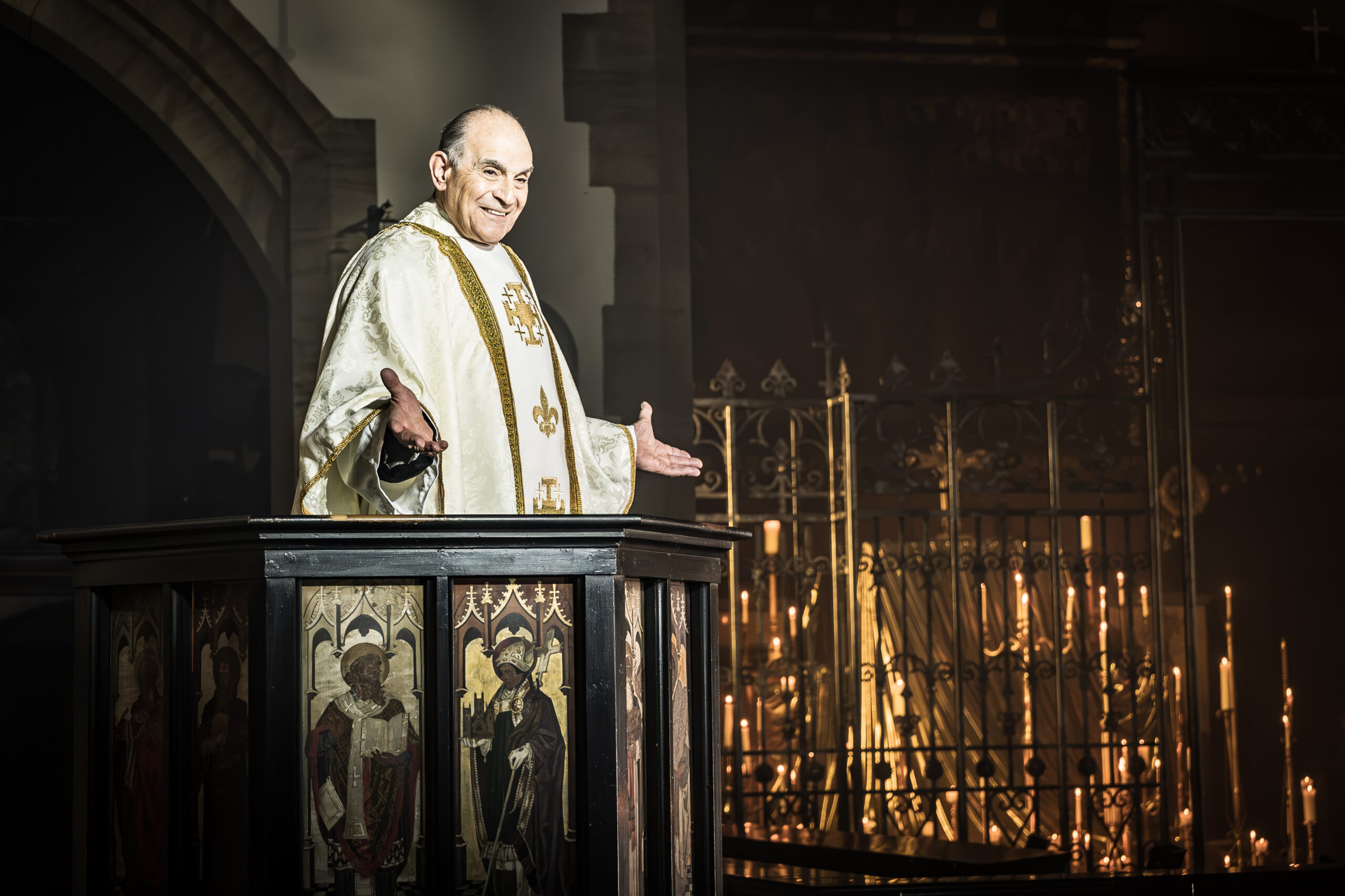
After the interval, we find ourselves part of the Christmas congregation as Becket preaches from the pulpit and predicts his death. It is not long before the king-loving knights arrive to confront him about his treacherous actions, and his fate is sealed. The whole tone of the play is suddenly interrupted by a skit where the knights attempt to justify their actions to the audience as if we were suddenly watching a popular talk television show. It’s funny but jarring when the rest of the words and music in the show deal with horror and despair. The end goes to those left behind at Canterbury, and the world still turns.

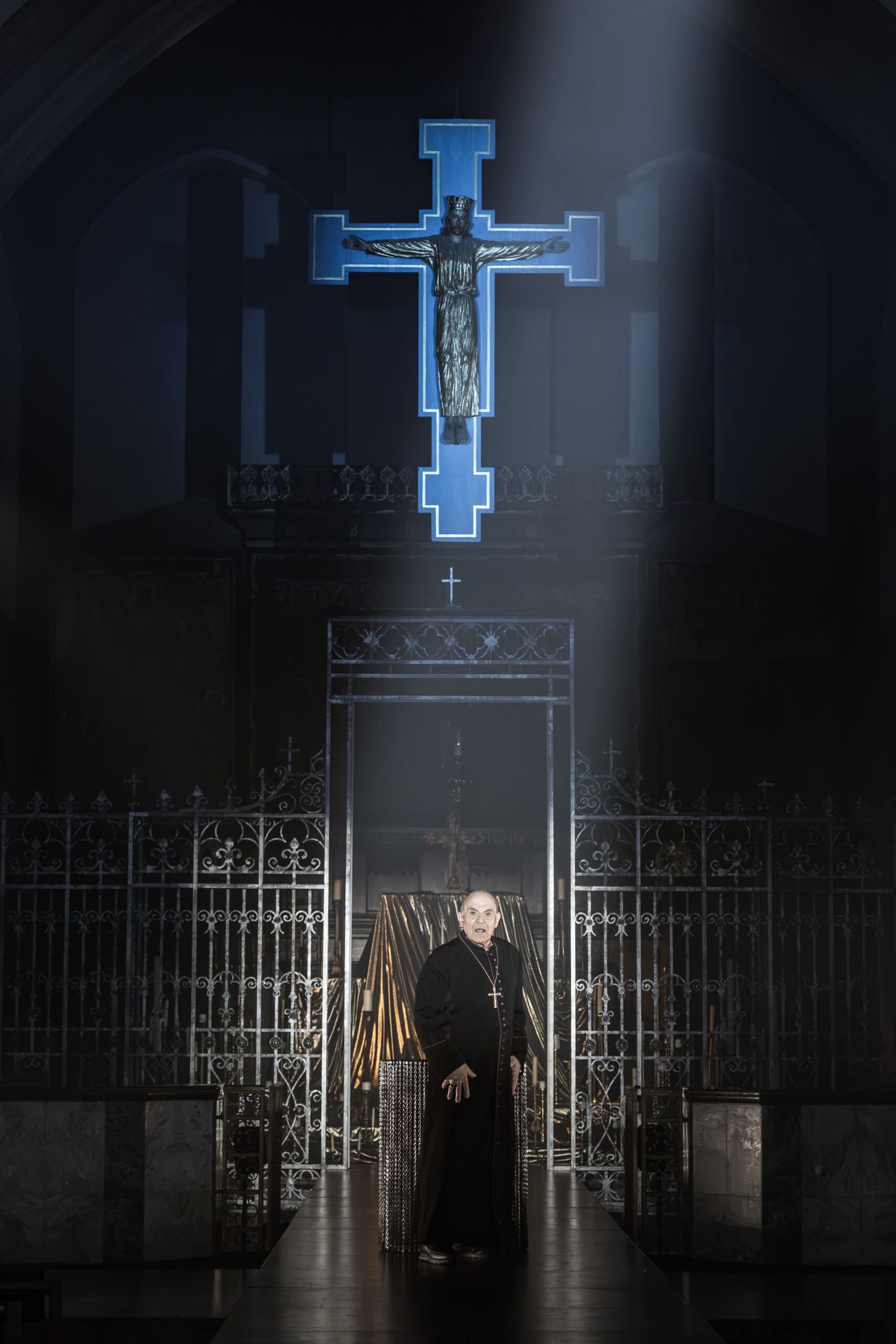
The real and working church is a gift to set designer Rob Jones, offering a lovely ethereal setting for this ecclesiastical, metaphor-laden tragedy. The audience are seated in the pews and choir, meaning that we become the congregation and are fully immersed in the performance. The stage is raised in place of the main and lateral aisles so that the actors and singers move in the shape of the cross. High above the choir hangs another cross, blue and gold, bearing Christ, and behind it is ornate metalwork to the chancel containing an opening surrounded by LED strip lighting that changes colour to suit the mood. The air is misty, and the lighting is stark. Its resonant qualities all add to the atmosphere, and the performers all wear head microphones so that all the additional speakers around the room can clearly relay their speeches to us.

The Orange Tree’s Artistic Director Tom Littler has driven this project and shaped this show into something that is genuinely collaborative across all the creative areas and supported by the community. He brought in composer Orlando Gough at the start of the process so that Gough’s modern and complex new music could be sung by a chorus of women picked and shaped in part from the choirs of London by Community Director Francesca Ellis. These eight enthusiastic and talented amateurs are led by four professional performers (Sally Cheng, Mila Carter, Chyna-Rose Frederick and Rebecca Thorn) who take more of the dialogue and underpin the choral lyrics of the Chorus. They are the first to inhabit the stage, sweeping into the nave in their stone-coloured dresses smeared with mud and moving as in a vortex which they can’t control. Thorn is banging the symbolic drum, a portent of things to come. Their costumes from Cat Fuller are the first clue that this drama is not rooted in one period but instead referencing aspects of ancient Greece, 12th-century England, the 1930s and today. The clergy’s costumes are timeless, the Tempters are more contemporary, and the Knights come clad in Fascist-inspired black leather.

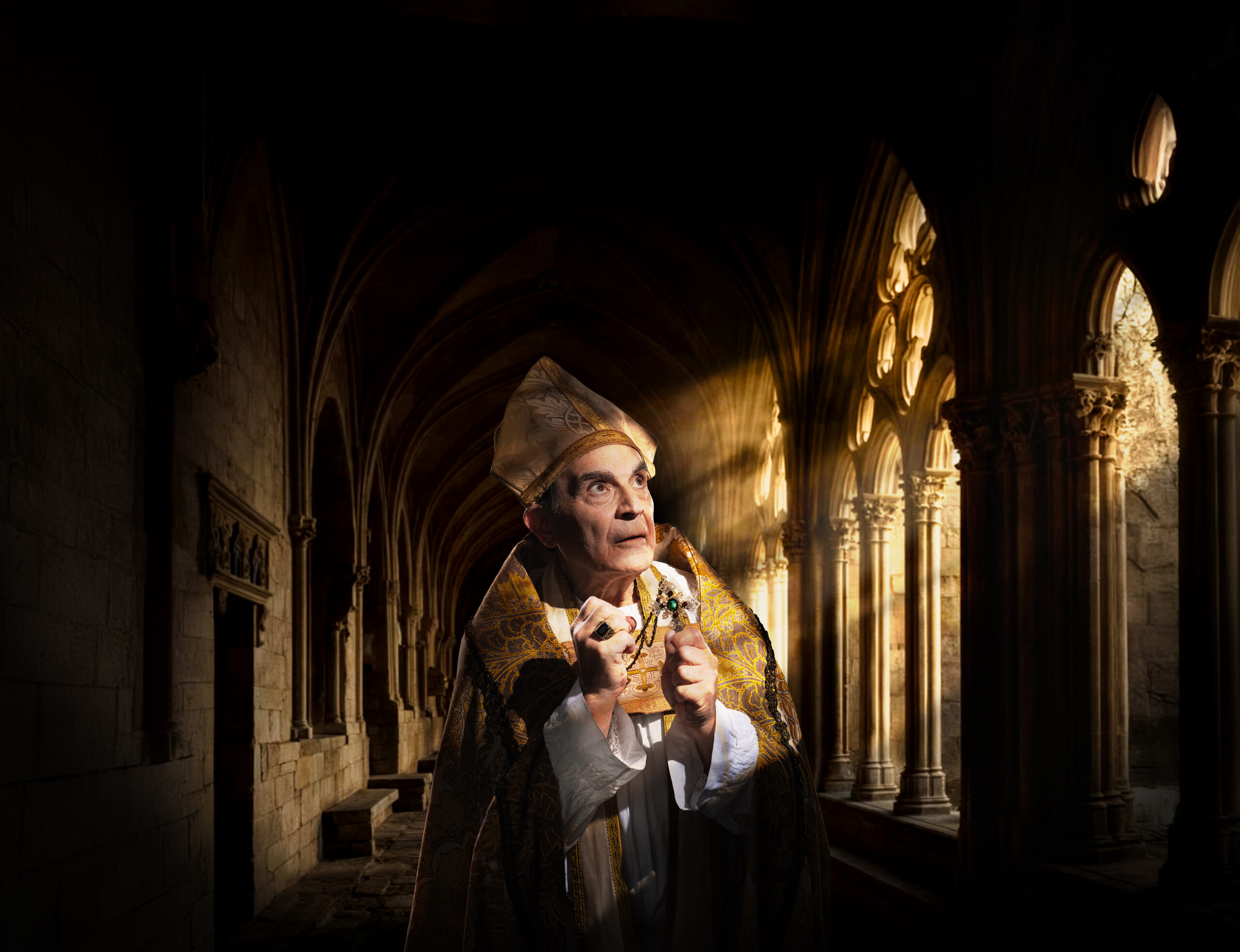
Emmy Award-winning thespian Suchet’s portrayal of Becket is thoughtful, courageous, proud and fearful. Wearing a simple black robe to resist the tempters, his gentle manner and controlled delivery of Eliot’s lines bring the archbishop alive as he wrestles with his conscience. Once he knows his path, now dressed in cream and gold, joking with his children of God, we can see the journey his character is going on. His beatific body language, combined with the shake of a man who knows he is going to die shortly, is locked into the mind long after he has left the stage. The priests of the cathedral are taken on by Mensah Bediako, Paul Hickey and Michael Lyle. Each one shows us their individual certainty of character, strong but afraid for Becket. The tempters in the first half are played by the same actors as knights in the second. Jyuddah Jaymes is the first, making his tempter attractively provocative and his knight fierce and unapologetic. Ben Caplan arrives second, clear and menacing, followed by Nick Sampson, who carries the supercilious air of the wealthy. Finally, David Yelland appears as the fourth man, taunting and full of religious fervour.

Eliot’s play is certainly thought-provoking and rich in metaphor. It shifts and stirs in an unsettling, timeless way, complemented by Gough’s disturbing vocal compositions. This production exploits its surroundings to the full, and the strong cast delivers a haunting, resonant performance. The sound guys have managed to tame the natural reverberations, meaning that the clever verse and music can be clearly appreciated.

Touché Suchet – a sin-full, sword-swinging, soul searcher

★★★★ 4 stars

Murder in The Cathedral Tickets

Murder in the Cathedral runs at Richmond's St John the Divine Church until Sat 7 November 2026 before heading to the Theatre Royal Bath between 10 – 21 November 2026

Book LondonBook Bath

Author Profile

The Recs JDH