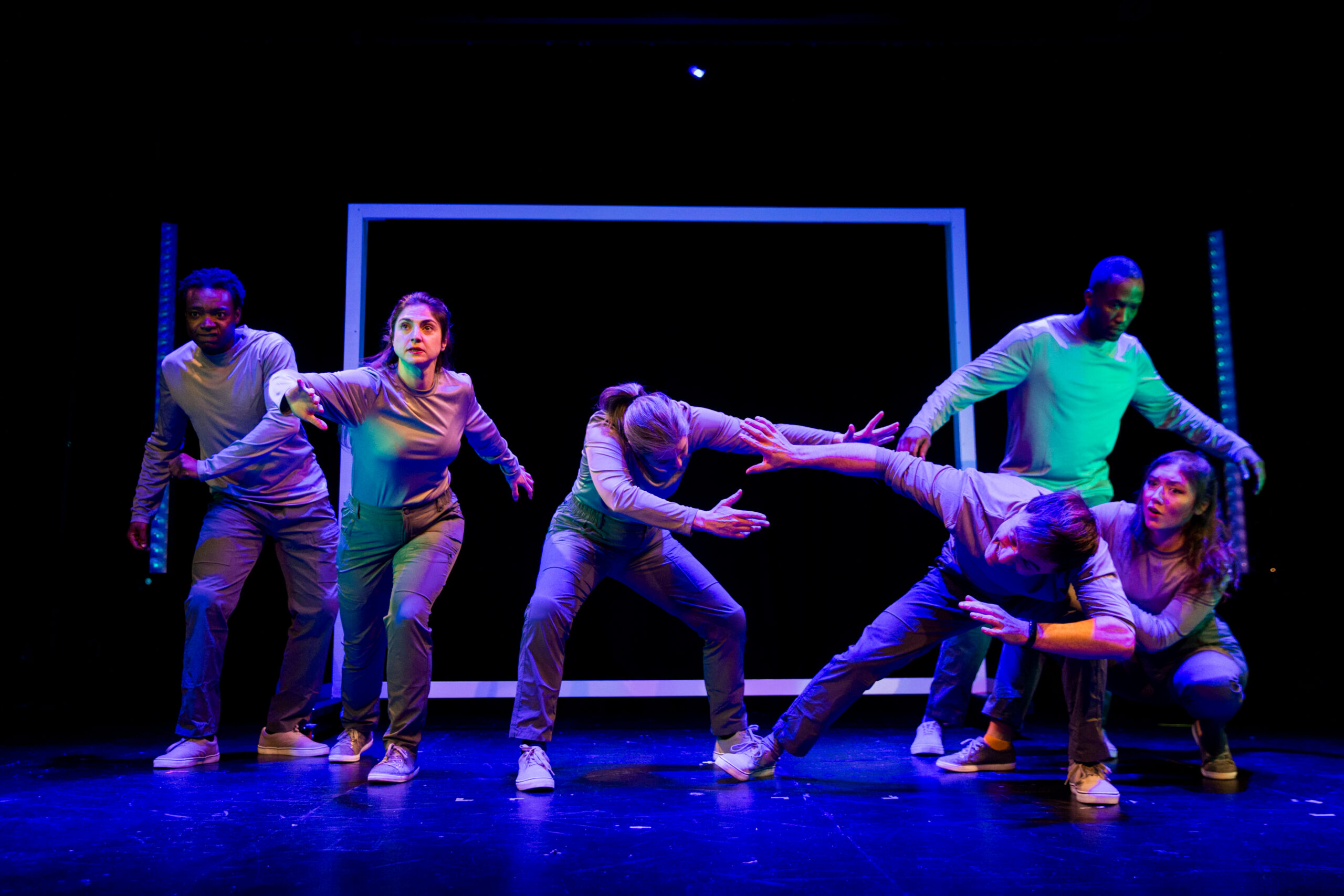
Dutch Kills makes a welcome return to the Edinburgh Fringe with Peregrinations, a wordless work of masked physical theatre and puppetry exploring migration, memory, and belonging. We caught up with director and performer Blake Habermann to talk about why stories of migration have never felt more urgent.

Thank you for taking the time to chat to The Recs about Peregrinations, Blake.

Thank you!


Let’s begin with the title itself: Peregrinations suggests both a physical journey and an emotional one. What does that word mean to you in the context of this production?

Peregrination refers to a long period of wandering or travel, for us it evoked a sense of searching, blending the human and animal aspects within the show.


The show explores migration without using any spoken dialogue. What made silence feel like the right language for telling these stories?

Gesture and movement are a universal language, present across time, space and culture. For us, the symbolic and sensory aspects of the show land differently without words, tapping into our shared history of migration.


The piece is rooted in interviews with migrants from across the world, including (for what must be very personal for them) members of your own company. At what point did you realise you had the beginnings of a theatrical work that moved beyond simply a collection of powerful testimonies?

The discourse surrounding migration in the United States often elides the human experience of borders. Our intention from the beginning was to use the mask, movement and objects to embody this humanity through the common threads present in the collected testimonials.


Images by Bjorn Bolinder

Much of the public discourse around immigration is often reduced to statistics, policies or headlines. What can theatre reveal that those conversations often miss?

Through allegory, metaphor and image we can bypass assumptions or preconceived notions and provoke an identification with the migrant experience and an acknowledgment of our shared responsibility for the conditions that drive people to leave their homes and seek a new life.


The choreography of Peregrinations draws inspiration from animal migrations as well as human movement. How did those two ideas begin to inform one another in the rehearsal room? In what way did the animal parallels elevate the story you are telling?

Animal dynamics allowed us to contrast what is perceived as natural and what was built by human hands, posing the question of our different concepts of freedom, community and identity and emphasizing the global nature of migration.


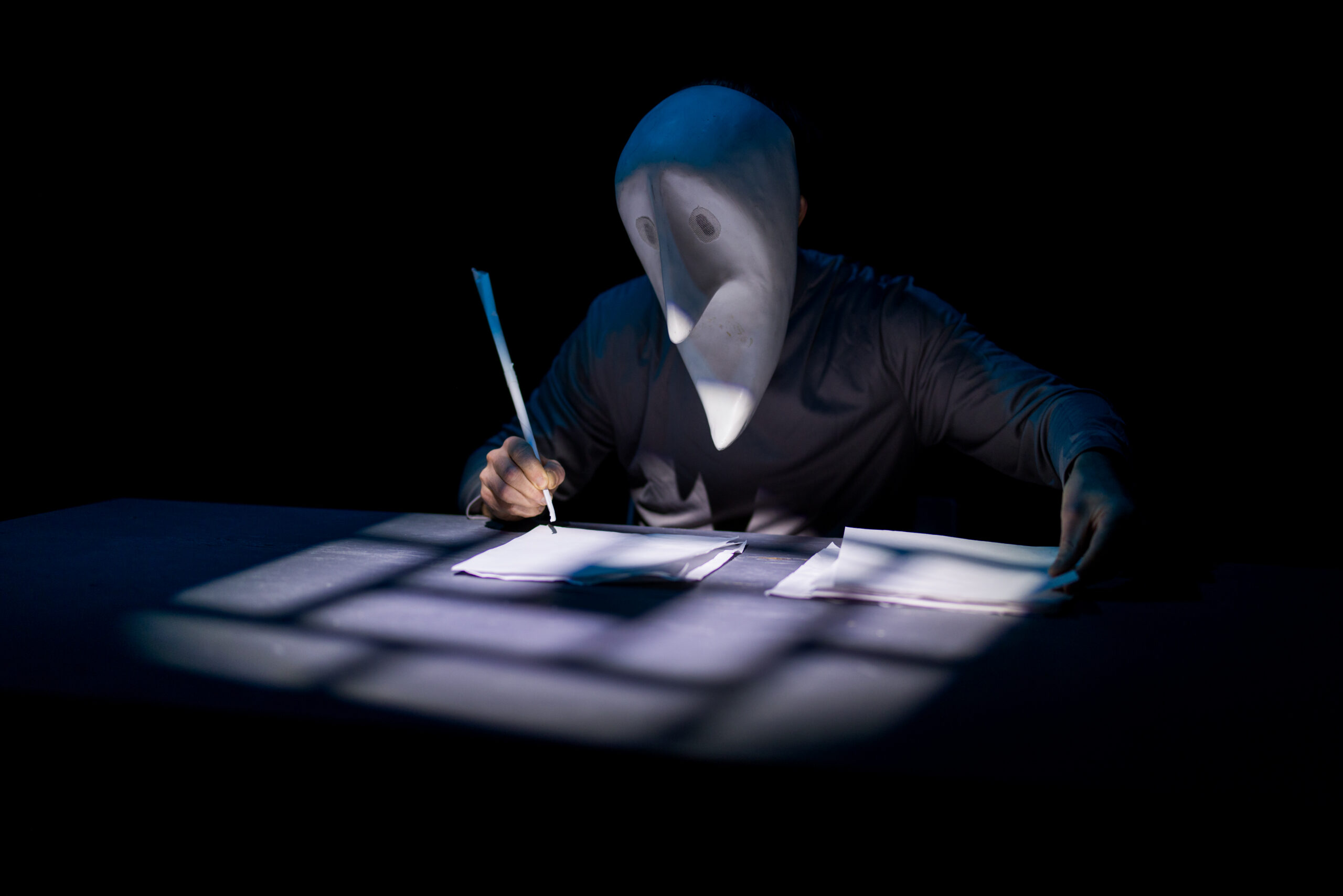
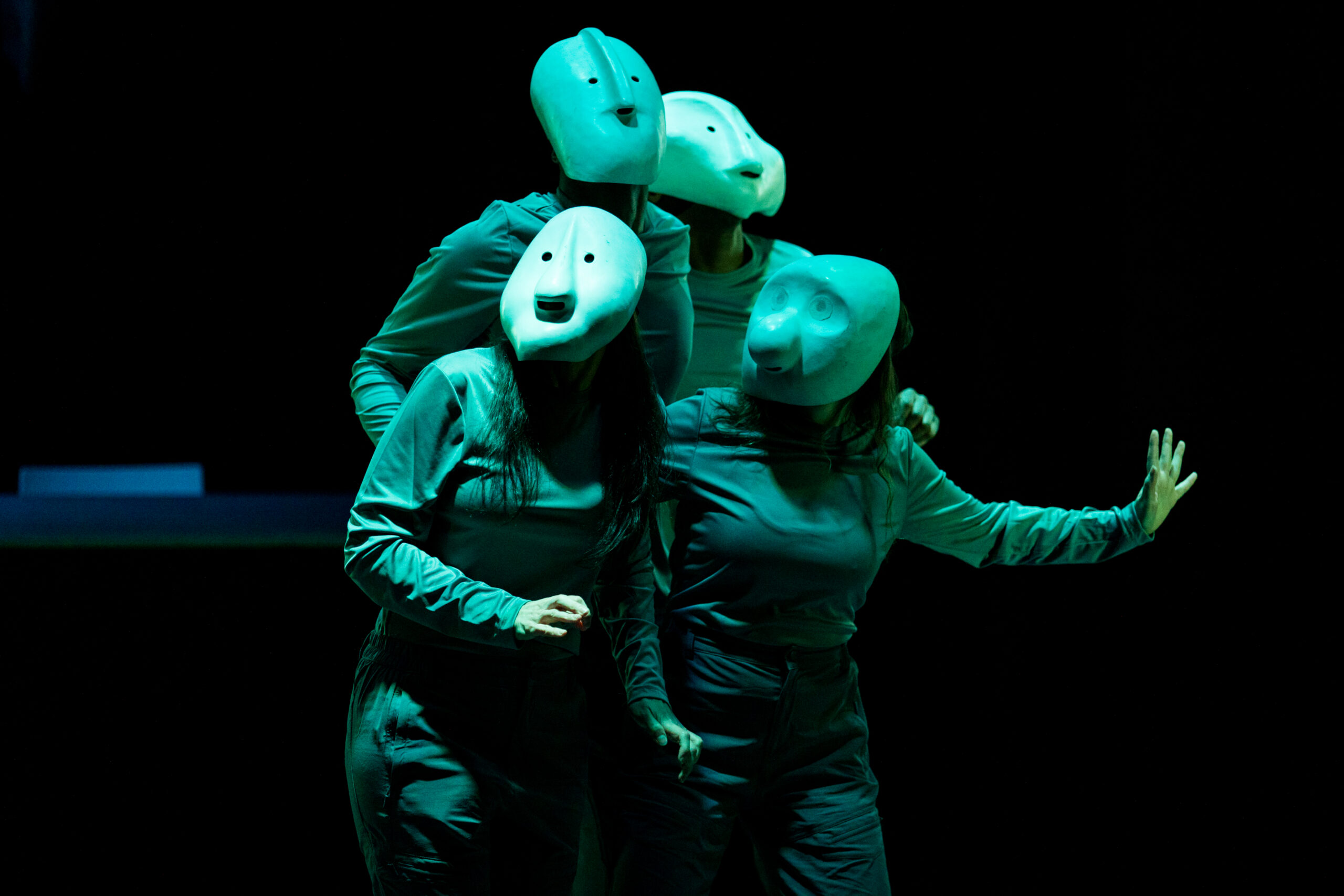
Everyone in the production wears striking Larval masks from the Basel Carnival in Switzerland. What was it about those particular masks that unlocked something you couldn’t have achieved with uncovered faces? And what effect will these have on how the audiences perceive the piece?

The larval masks are partially formed, caught between human and animal, capable of infinite transformation. We felt they served as a strong metaphor for how migrants can feel they are treated in a new place, and the systems of enforcement they encounter. Migrants are often judged, scrutinized, or shunned, their humanity, story and complexities are reduced to a stack of papers in a file. Throughout the piece our characters inhabit and engage with this identity in different ways, grappling with the division between their true selves and the mask the world wants them to wear.


Displacement is central to the show, but so is resilience. Was it important that Peregrinations leaves audiences with hope as well as reflection?

Throughout our research we came across resonant emotions of fear, hope and loss. Digging deeper, we found places where these feelings intersect and overlap. Our intention is to propel the audience through the whirlwind of emotions that can arise when a human encounters a border, leaves their home or tries to make a new one. We aspire to reframe the issue, not to propose a solution, by humanizing the migrant and examining the forces that drive them.


Dutch Kills is bringing several very different productions to Edinburgh this year, all exploring the subject of communication in different ways. Do you see Peregrinations, Double Take, Noted and Channel as speaking to one another? Or are they all distinct works?

All are distinct and you should see them to find out how! But seriously, I think each of these pieces shares a unique take on nonverbal theatre, a commitment to new ways of storytelling and experiencing sound and performance, and a deep love for the communal act of live theatre.


And lastly, Blake, this isn’t your first visit to the Fringe. Does returning to Edinburgh change the way you think about theatre making, or is every Fringe a completely new adventure? And does seeing other shows from around the world in Edinburgh spark further imagination within your mind?

Fringe is a special, one of a kind experience, especially for someone who has dedicated their life to the theatre. The entire city becomes an homage to creativity, from the street to the stage to the meadows. Every time I visit I return filled with inspiration and a sense of connection to the global arts community, which I’m eternally grateful to be a part of.

 

Peregrinations Tickets


Peregrinations is at the Edinburgh Fringe at Assembly Roxy, Central, 6 – 30 Aug 2026 (not 17 & 25)

Book Now

Author Profile

The Recs SCD - Steve Coats-Dennis