
Dracula (touring) ★★★★

Bram Stoker’s iconic character is transformed into the ballet ‘ Dracula’ to the music of Bach, Rachmaninov, Saint-Saëns, and Debussy
If the recent production of Marriage of Figaro brought a much-needed heat to the Festival Theatre in Edinburgh, Big Live’s adaptation of Dracula has brought bone-chilling dread.

Big Live is an Australian-New Zealand-based touring company that showcases a variety of classical literature adaptations, as well as traditional ballet productions. Here, they have reopened Bram Stoker’s Dracula and found within its text an emotionality that rarely is touched upon by its other adaptations.

What is retained are elements of the original plot – Dracula’s obsession with Mina and Lucy remains a central part of the narrative, and Jonathan Harker’s madness is highlighted as he reckons with the vampire’s horrifying power – and we are still given the treatment of seeing a gruesome battle between Jonathan and Dracula. The production differs in its treatment of the agency of the female characters of the story.

Images by Big Live

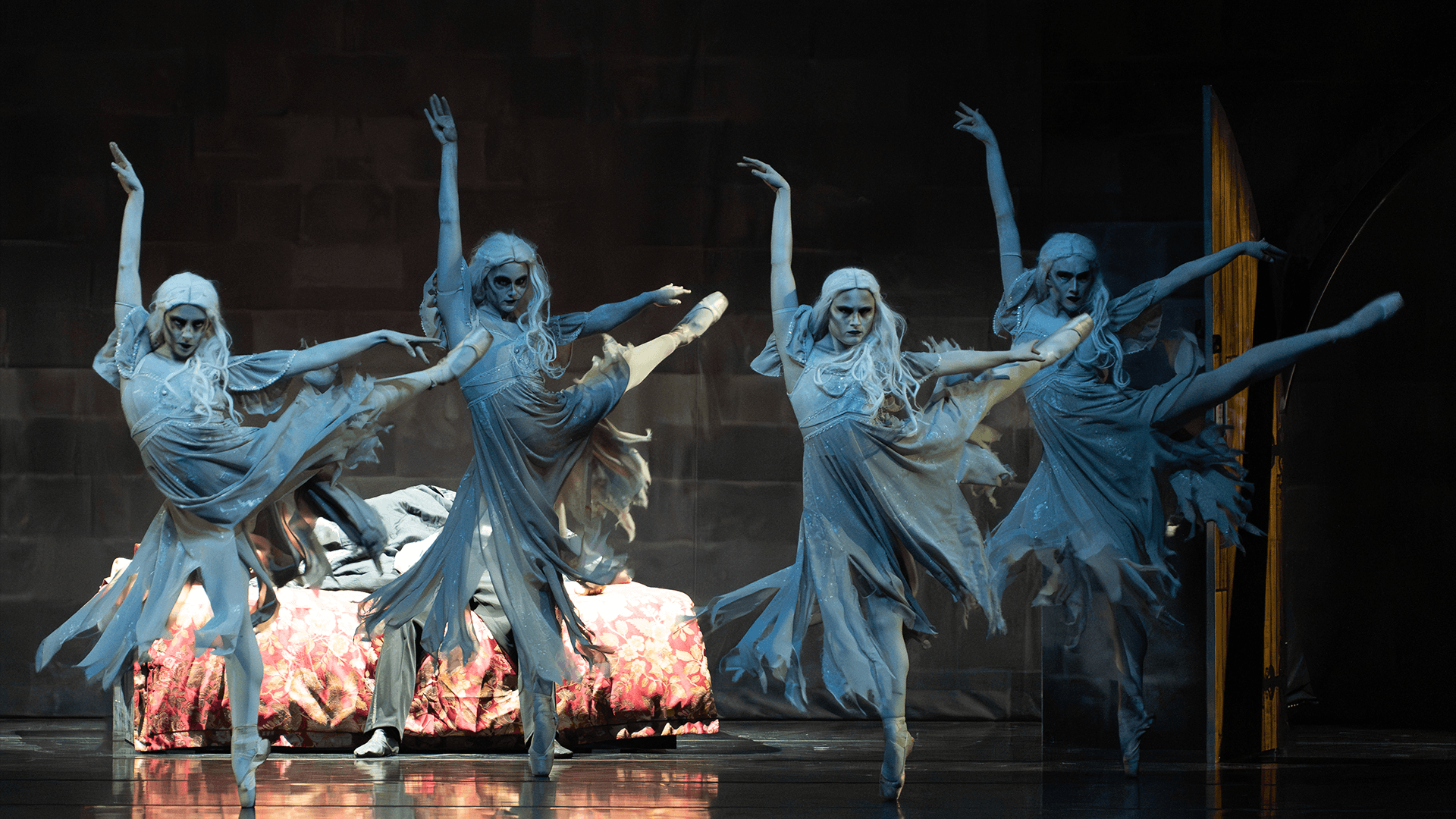
Dracula’s fixation on Mina Harker is framed as a psychological one; she reminds him of a centuries-old love that he had as a young man. Dracula has surrounded himself with a quartet of ghost women, the spirits of women that have died resisting his love, and commands them to lure the Harkers away from each other. When Jonathan Harker and Dracula battle in a spectacularly choreographed sequence, it is Mina who makes one crucial decision – ending the narrative herself.

How does Big Live’s Dracula execute these key differences in the plot? Through immaculate choreography that uses the language of ballet to convey symbolism. Choreographer Joel Burke depicts Dracula’s external mask struggling against his wounded interior, with a shift from confident pique turns to smaller, quieter movements where he simply sits on stage.

This is assisted by a fabulous performance by Bakhtiyar Adamzhan, whose Dracula is youthful and crazed; his facial expressions portray a brooding sensitivity not often captured by other, famous depictions of the character. Meaghan Grace Hinkis stuns as Mina Harker. In one particularly poignant moment, she is lifted by Dracula and held for at least twenty seconds. Her body language shows a physical harmony with the vampire, but her facial expressions suggest fear.

Potentially stealing the show and demonstrating the production’s emphasis on atmosphere and dread are the quartet of Dracula’s ghosts. Featured often in the marketing, the performances do not disappoint. Standing en pointe for the whole performance, these performers evoke the weightlessness of ghosts, and their synchronised movements are genuinely eerie.

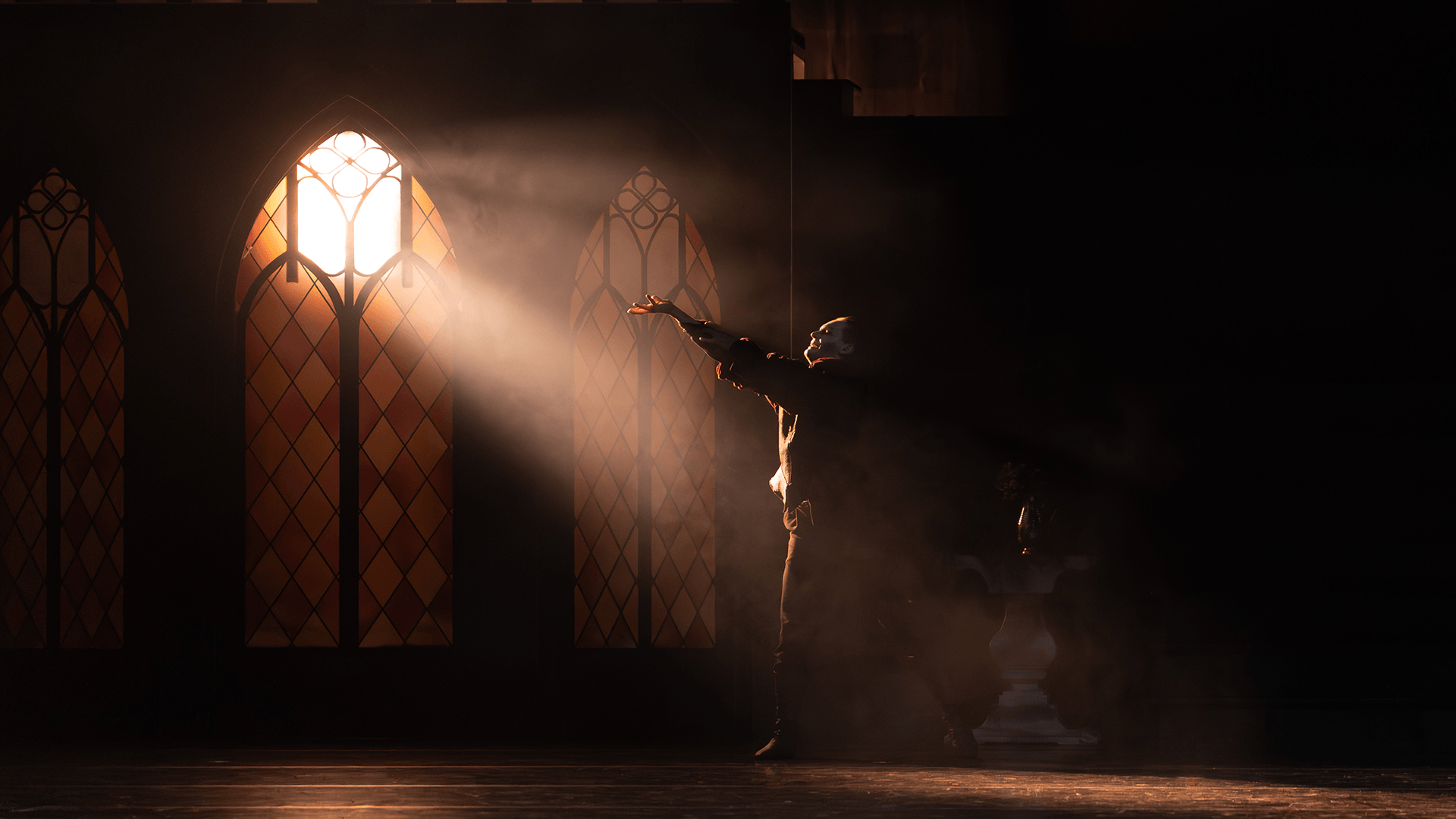
Credit is also due for the lighting. The first time the audience is introduced to Dracula as the vampire, designer Dan Sharp references the spotlighted shot of Nosferatu from the 1924 film – yet the lighting departs from the film’s use of shadows. Instead, Sharp’s lighting is dramatic and varied, knowing exactly when to light the stage up with spotlights and when to shroud the audience in complete darkness. It is akin to the effectiveness of silence, where the absence of light on stage adds to the feeling of dread.

Dracula’s only misstep, at least in the version presented in Edinburgh, is the absence of a live orchestra. The entire show uses pre-recorded music. While it’s not necessary to have live music for a ballet, it would’ve certainly filled the auditorium more sonically – some of the transitions between songs are a bit jarring.

Simply put, however, this is an extremely impressive ballet. With enough support and acclaim, there is hope that they can use the services of a live orchestra when they tour, as this would take their work to truly great heights, quite deserving of a cast of this stature.

Ballet with beauty and bite ★★★★ 4 stars

Author Profile

The Recs BK - Brandon Kiziloz