
Nikolai Gogol’s Diary of a Mad Man was written almost 200 years ago, yet actor and director Mark McAuley is bringing a remarkably contemporary adaptation. Ahead of his Fringe run, Mark talks to The Recs about reimagining a literary classic for a social media age.
Hello Mark and good to chat with you!
Great to chat with you too. Thanks for the opportunity to connect with you and your readers.
Diary of a Mad Man was first published in 1835. What was it about Gogol’s original story – about the descent into madness of a frustrated civil servant in 19th-century St Petersburg – that made you feel it still had something urgent to say today?
When I first read Gogol’s original story, I was amazed by how relevant it still felt. The setting of Russia in 1835 obviously isn’t contemporary, but the themes and human struggles at its heart absolutely are. People are the same in 2026 as they were nearly 200 years ago. Different clothes, different technology, different ways of communicating, but the same fears, desires, ambitions and insecurities. Humans are still humans. We’re not nearly as evolved as we like to think we are. At its core, the story explores the fragility of the human mind and how, under enough pressure, it can break. Sadly, that’s as relevant now as it was when Gogol first wrote it.
Rather than just updating the setting, the original story has been transported to contemporary Ireland and woven in social media, influencer culture and online radicalisation. What drove that reinterpretation, and how easy a fit was the new context?
Social media is how we communicate today. It’s an incredibly powerful tool, but it can also be an incredibly toxic one. It gives my main character (me) a much bigger audience and becomes the perfect vehicle through which to explore ambition, validation and identity. Today if you want people to see your success, you post it online. Social media has become the stage on which we perform our lives. The play explores the toxicity of ambition, and social media amplifies that perfectly. It also shows how easy it is to build an audience through outrage, sensationalism, racism or anti-immigration rhetoric. We’ve seen this happen repeatedly, particularly with the rise of the far right. The algorithms create echo chambers where your own beliefs are simply reflected back at you until it feels like everyone agrees with you. But that validation isn’t real. Eventually, it all comes crashing down.
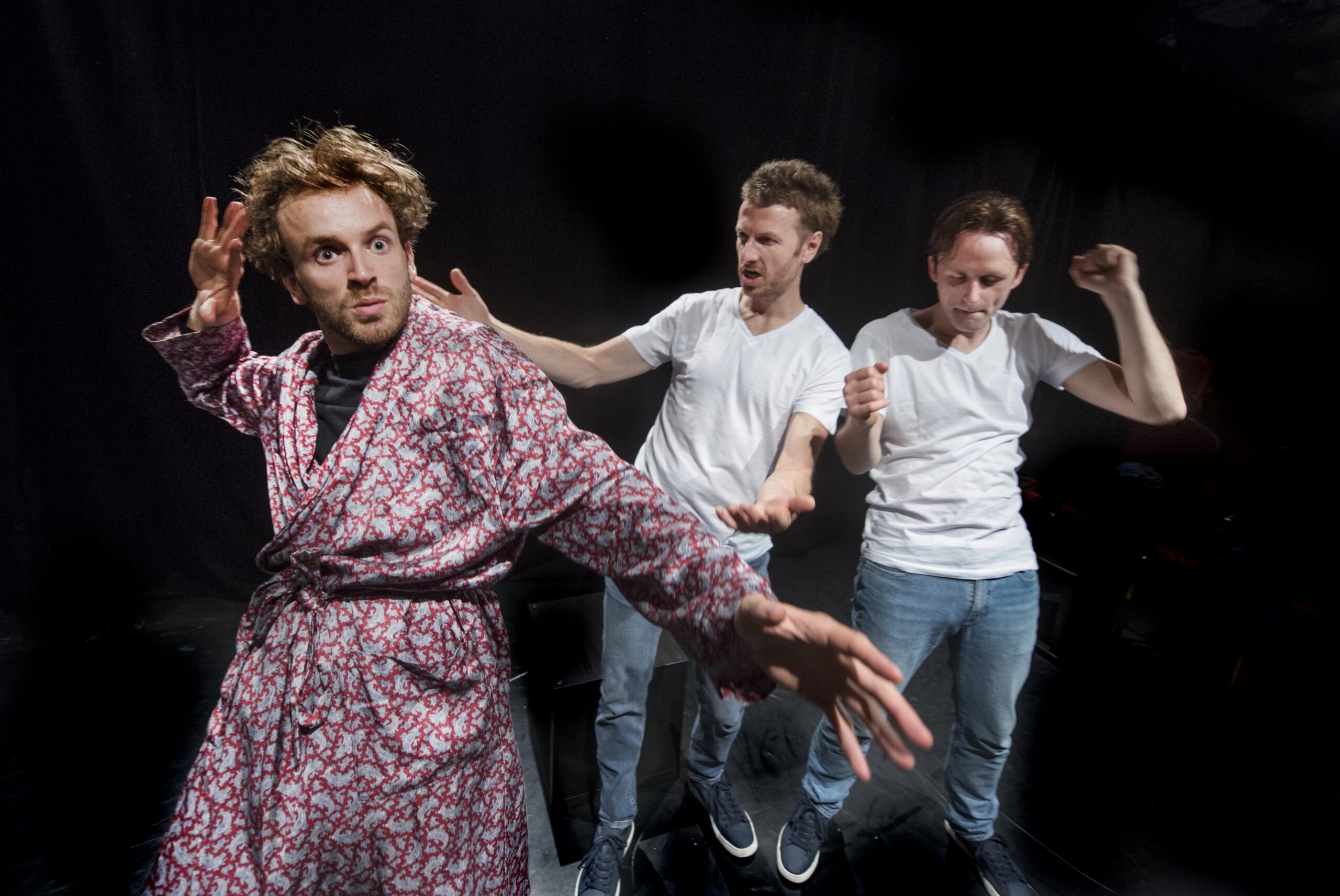
The original is told through diary entries, but your version uses projected Instagram reels to chart the character’s decline. What did that shift unlock theatrically? Relatability for a modern audience? Or more than that?
The reels have given us a whole new theatrical element. They’re projected onto the stage, adding a cinematic layer to the production, while also highlighting the contrast between the life the main character is trying to portray online and the reality of his situation. At one moment he’s talking on a reel about having a great night out with his workmates, and the next the audience sees him in a mental asylum. It explores the way many influencers carefully curate an image of themselves online, and we have a lot of fun with that. Influencers like Clavicular have been a source of inspiration in that regard. Sound and video play a huge part in the production, and hopefully they’ll really engage a modern audience.
One of the fascinating ideas at the heart of the show is that the audience becomes complicit, watching a man’s breakdown as entertainment. Was a key intent to make the audience question their own relationship with social media and online content?
One hundred per cent—including my own. No one is immune to the toxicity and addictive nature of social media and smartphones. It’s a bit like watching the very public breakdowns of Britney Spears or Charlie Sheen. A mental health crisis becomes entertainment, and we can’t seem to look away. The more chaotic someone’s behaviour becomes, the more attention it attracts, and our willingness to keep watching can end up encouraging that behaviour instead of helping the person behind it. What those people really needed was compassion and support.
Diary of a Mad Man is a one-man show – this surely is a very different challenge than working within an ensemble? What do you enjoy most about carrying an entire production on your own, and what are the biggest demands it places on you as a performer?
I love working with other actors. That sense of playing together on stage is at the heart of why I do this. It’s like being part of a team, and I do miss that. Having said that, I play multiple characters throughout the show—including two dogs—so funnily enough it never feels like I’m alone up there. I love storytelling. I love having an audience lean in because they want to hear what you have to say, and then being able to entertain them while moving them on a deep emotional level. It’s just me and the audience, and that’s incredibly exciting. I’m on stage for the full hour, so there’s nowhere to hide and no one to hide behind. It’s all on me, and I genuinely enjoy that challenge.
Something that’s rather unusual with theatre productions, you’re both directing and performing the piece. How do you know when to step back from the performer and put on the director’s hat during the rehearsal process? How do you find that distance to be objective about your own performance?
It’s a huge challenge, but I’ve acted and directed before —on stage, and on my debut feature film Awake, and on several short films—so I know to a degree what I am getting myself into. Even so, it’s incredibly demanding mentally, emotionally and physically. Especially as it’s just me performing and directing. At times I feel like a mad man running around at home and in the rehearsal room directing myself. But it’s also an incredible buzz. At the start of the process, I approach the work separately as an actor and as a director. I prepare for each role independently. As rehearsals progress, those two perspectives gradually merge until I’m doing both simultaneously. Sometimes I have to step outside myself, put the director’s hat back on and look at the bigger picture before diving back into the performance as an actor. Towards the end of rehearsals I’ll bring in people whose opinions I trust to watch the show and give honest feedback. That’s incredibly important because it’s very easy to lose perspective when you’re directing and performing at the same time.
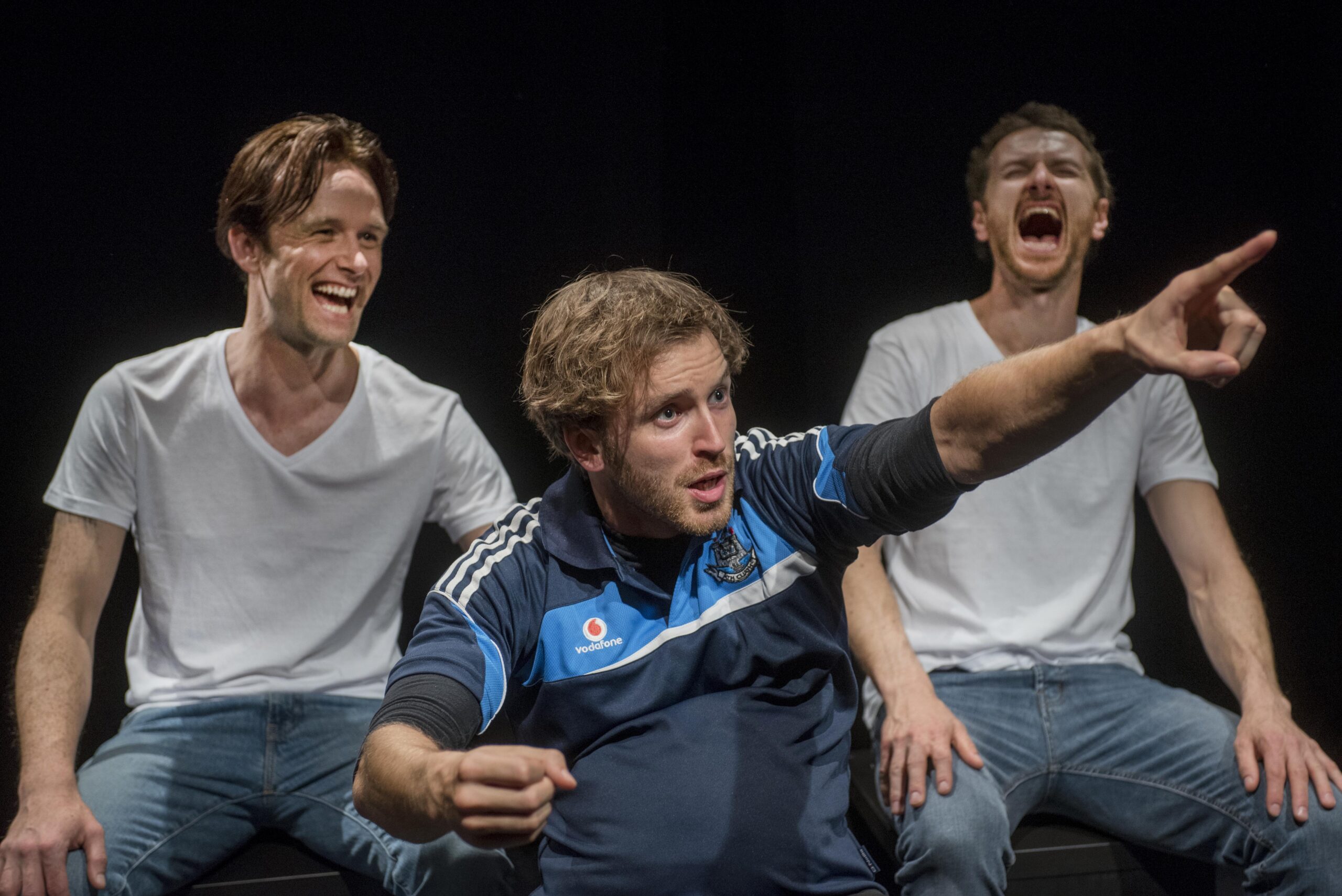
This is your second visit to the Edinburgh Fringe following A Fear and Loathing Actor in Dublin in 2019. Looking back, what are the biggest lessons you took away from that first Fringe experience?
Don’t bring a four-person show! It’s just so expensive to bring a production of that size to the Fringe. So this time it’s just one person. In 2019 it was an amazing experience, but it was very difficult to build momentum and attract attention. We came in during the second half of the Fringe, while other shows had been there since day one building reviews, word of mouth and an audience. That’s the goal this time—to be there from the start and give the show the best chance to build momentum.
And I believe that, excitingly, A Fear and Loathing Actor in Dublin is about to become a feature film, albeit with a new name?
That was always the plan, but COVID got in the way. Maybe that was for the best because it’s given me more time to develop the idea. I’m also much more experienced now, both as a performer and as a person. The film is called The Almost, and I’m working with a brilliant director based in Los Angeles, William Stribling. We’ve adapted the original script for the big screen, both in terms of its structure and the character’s journey. We’re hoping to go into production late this year or early next year, so watch this space.
Something that I don’t think we’ve ever asked a Fringe performer: with so many venues across the Fringe, choosing where to perform is almost an art in itself. What factors do you consider when deciding which venue is the best fit for your show?
The biggest factor is choosing a venue with a strong track record of attracting the right audiences. Assembly is one of the Fringe’s “big four” venues and has an outstanding reputation for producing excellent theatre while attracting audiences who are looking for thoughtful, challenging work. That made it the perfect fit for this show. They have also been brilliant to deal with since day 1. Really good people. Getting to collaborate with great people on great projects is amazing.
Finally, what are you hoping audiences are still thinking about after they’ve left the Roxy after watching Diary of a Mad Man?
I want audiences to reflect on their own complicity in this culture of spectatorship, but also on our responsibility to each other. We all have a duty to protect the vulnerable rather than simply consume their suffering. Whether that’s on a global scale—thinking about the suffering in Gaza or anywhere people are experiencing injustice—or on a personal level by checking in on a friend who might be struggling, I hope audiences leave wanting to look after each other a little more. Ultimately, the message is simple: protect the world, and protect each other. I also want them to feel like they have just seen something epic. One minute they’re laughing their asses off and the next minute they are crying. I want this play to really connect with audiences, but also to be incredibly entertaining. Putting the comedy in tragedy.
Diary of a Mad Man tickets
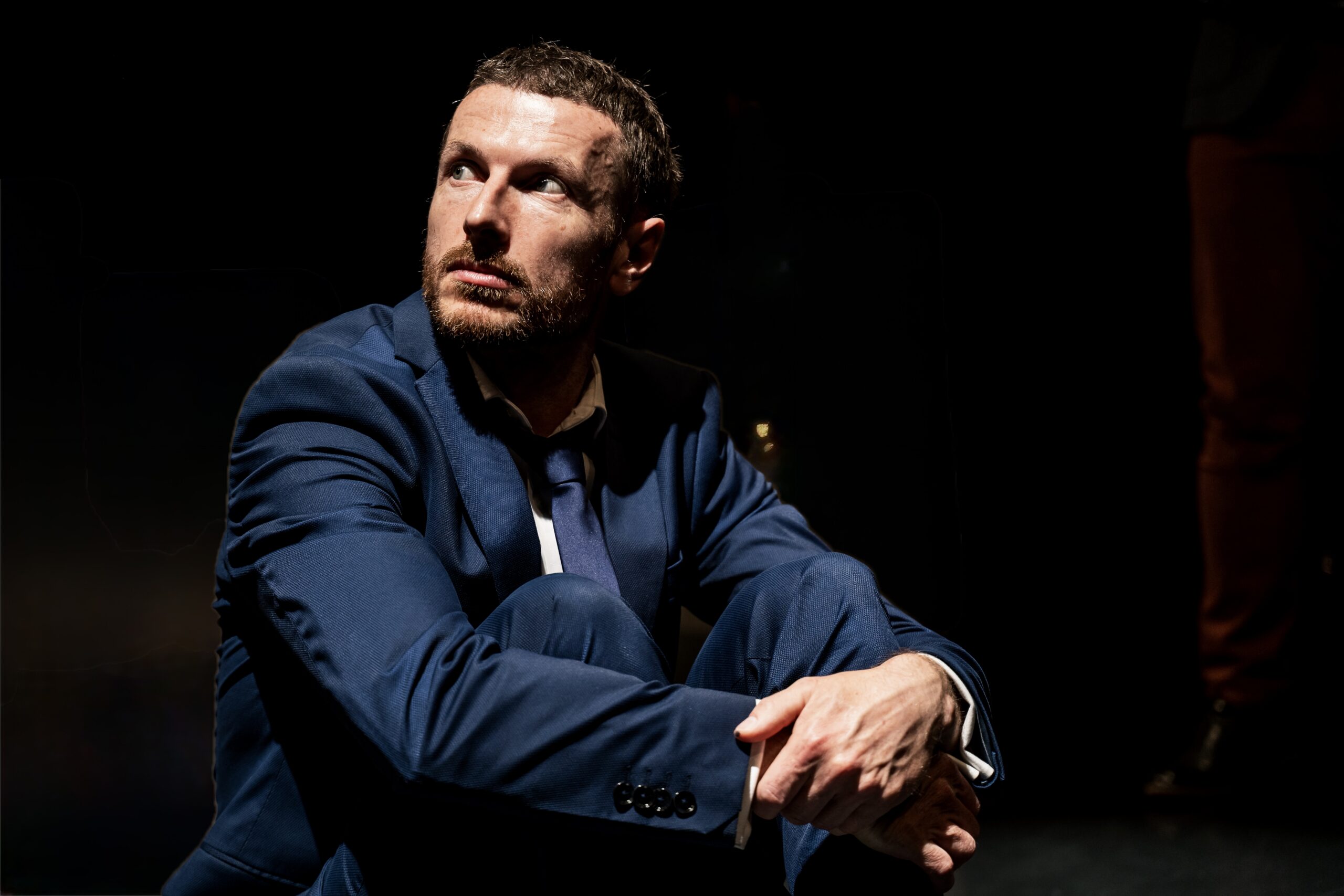
Diary of a Mad Man is at Assembly Roxy, Roxyboxy, 5 – 31 Aug 2026 (not 18)
Book NowAuthor Profile

- The Recs SCD - Steve Coats-Dennis
Latest entries
- 27 August 2026Edinburgh Fringe 2026Playback ★★★★
- 27 August 2026Edinburgh Fringe 2026Kate Butch: A Kate in the Hand is Worth Two in the Butch ★★★★★
- 26 August 2026Edinburgh Fringe 2026It’s A Mystery! ★★★★
- 25 August 2026Edinburgh Fringe 2026Cathy ★★★★★