Dark of the Moon ★★

‘Dark of the Moon’ portrays the clash of two dynamically-polarised worlds in an unlikely new musical

A fresh look at an old play. Dark of the Moon, a modern musical adaptation, has been flung stylishly into the Charing Cross Theatre by Oh Mary! associate director Georgie Rankom for a colourful and contrasting two hours and forty-five minutes of country and rock’n’roll. 

A play from the 1940s about invisible, sex-crazed witch-people living amongst the bumpkins of the southeastern United States must clearly appear as fresh meat to the enterprising musical theatre producer. A story that rests partly on generalised folklore, partly on a 16th-century song (the Ballad of Barbara Allan) and partly on a modern(ish) spritz of American Dreamin’ would also seem to be the perfect setup for a flavourful expedition into the magical Smoky Mountains. 

Images by Tom Bowles

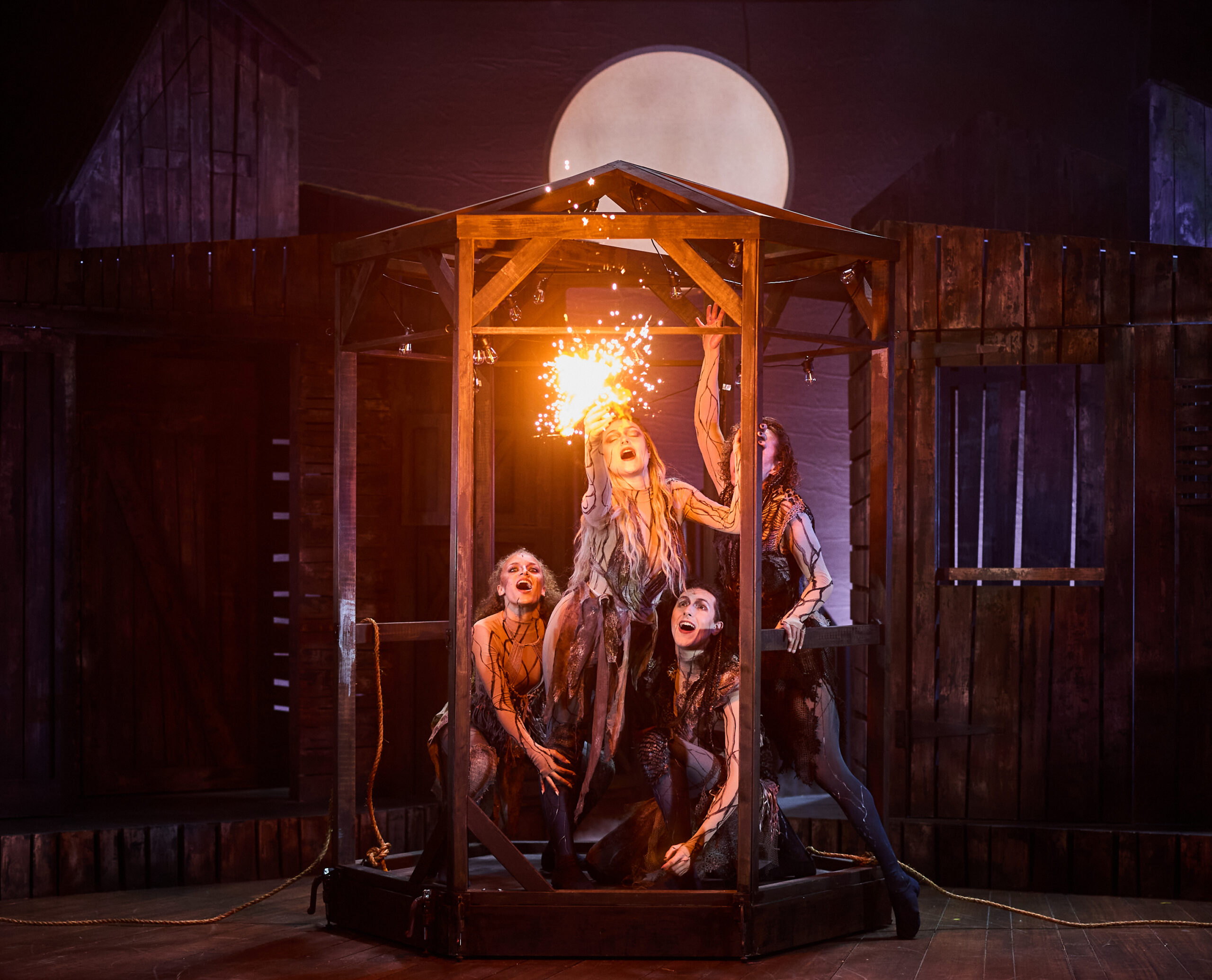
Why, then, does this musical not really come together? It is an issue of tone. The juxtaposition of the witches and villagers comes across as a crucial disconnect. The first example of this can be seen in their clothing. 

The villagers are extremely well dressed by designer Libby Todd. They look like the kind of people you might see at Central Saint Martins, with their fresh-out-the-box Doc Martens and their perfectly tailored double denim. 

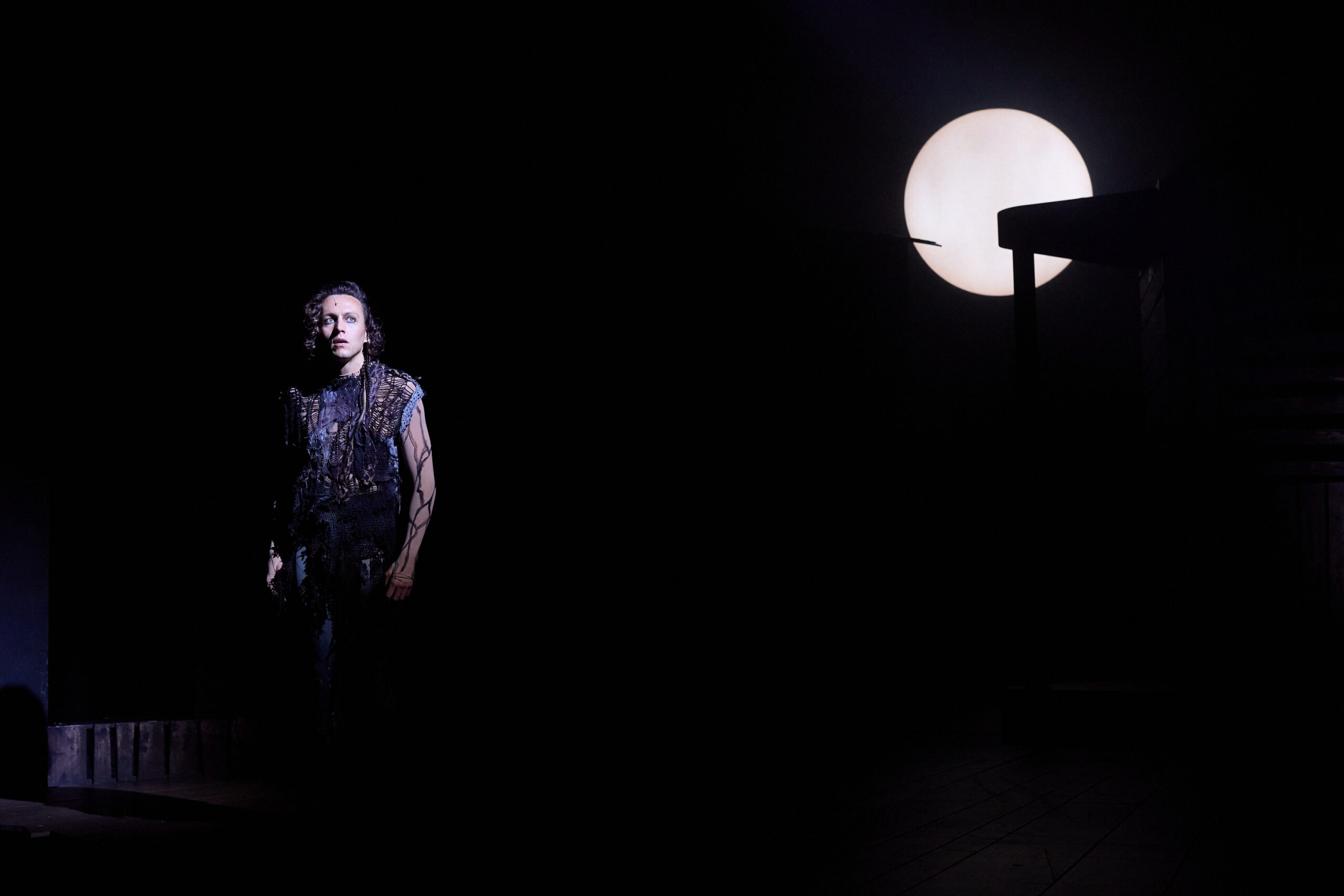
The witches, on the other hand, look like a musical theatre troupe. They wear dark makeup, tights and rags and rat tails, and they shimmy about the stage with choreographed theatre-movementy movement. Not to say the movement isn’t delightfully choreographed. In fact, all of Jane McMurtrie’s movement is extremely well rehearsed and beautifully performed throughout, especially one particularly impressive dance sequence with the townsfolk leaping about and foot slapping. 

The look of the witches is a kind of emo-glam-rock fusion, which is also the palate of their sound. They rock out hard core. The villagers, on the other hand, have a quaint bouquet of country songs. This juxtaposition should elevate the play to a new level comedically, but instead acts as a minor drawback, as the comedy inherent in the contrast isn’t really found. 

The witches’ costumes, the ridiculousness of their movement, the largeness of their musical numbers and the lack of any kind of subtlety in their dialogue or characterisation create a sense of over-the-topness and ham that ends up coming into conflict with what the play is actually about: love, grief, time, desire and death. 

The large ensemble cast of villagers and the various plot threads they weave together create a ripe tapestry for drama, but the seriousness with which this drama is taken by the characters within seems in direct contrast with the gyrating, horny witch-ladies and their constant taunting of the witch-boy (Glenn Adamson), or the silly, twanging, out-of-tune guitar ditties performed by Wills Mercado, or the simple fact that everyone is doing parody southern accents. The immortal refrain “life’s a bitch, glad I’m a witch” echoing throughout one of the opening numbers seems to be the perfect primer for an audience to not take the show seriously. 

If this contrast had been played into, it might have been carried off, but instead the result is a mishmash affair where the more dramatic moments could be read as comedy, and at the more comedic moments, the audience isn’t sure whether to laugh. This isn’t aided by the fact that the songs are a little hit-and-miss, some of them blending into one another, the content too similar, the harmony too loud or undefined, and the lyrics often inaudible through the music.
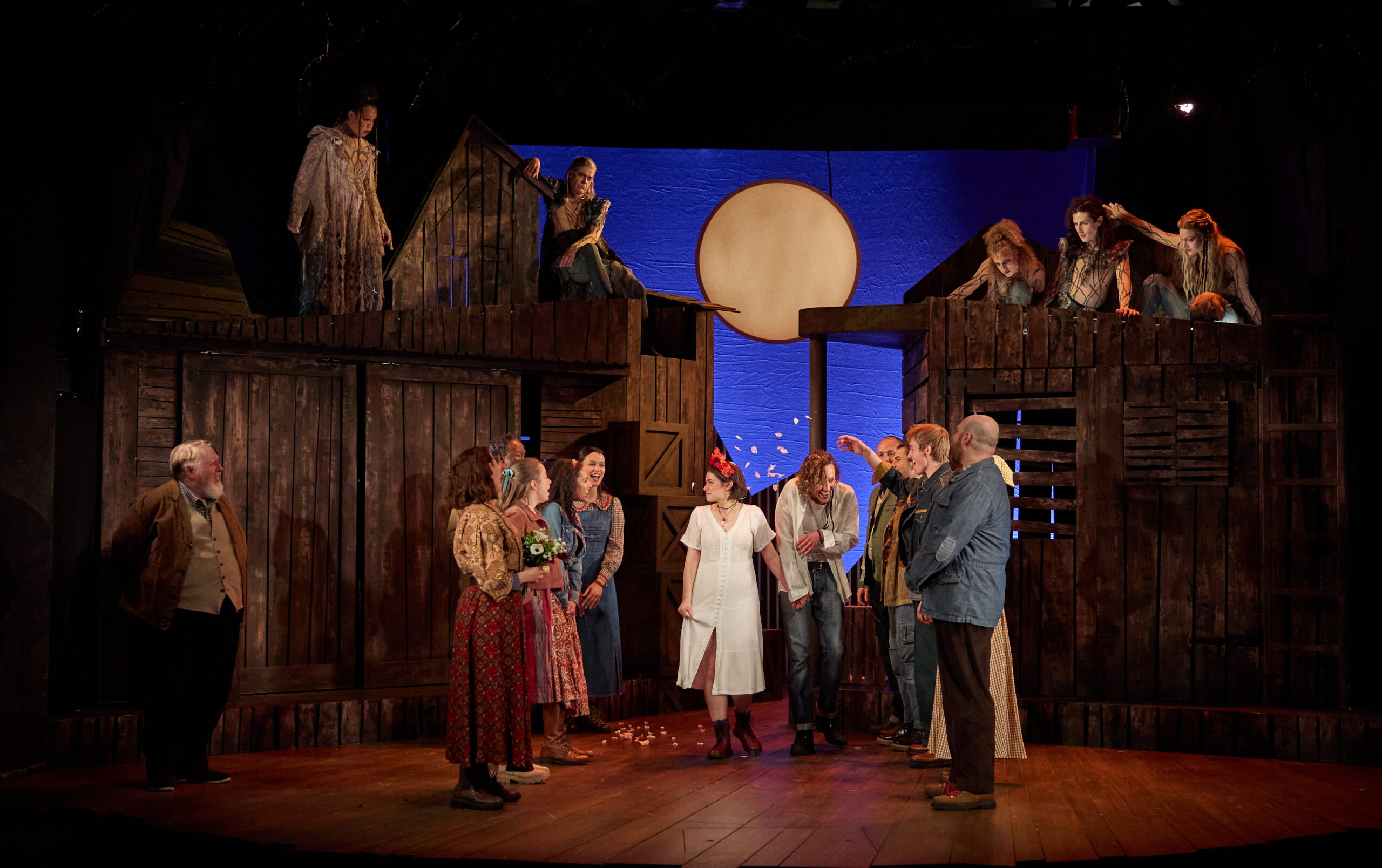
There are a few standouts in the songs – the song ‘Wildflower’, performed beautifully by leads Lauren Jones and Glenn Adamson, and the slightly underplayed short acoustic song ‘Life Sucks’, performed by Wills Mercado, as well as the big rock and roll/country blend number ‘With This Ring’, featuring the full company. The cast is full of strong singers and performers; perhaps more of these numbers have the potential to become great when given time. 

The composed background music, stings and twangs are sharp and perfectly timed, much like the rest of the play. Previously mentioned is the extremely fashionable costume work, which, alongside the tight choreography, the well-crafted lighting and gorgeous wooden set, creates a sense of quality and solidity that elevates the piece greatly. There are a few moments of great tech work coming together with movement, cast appearing and disappearing, replacing each other or quick-changing alongside vibratingly-sharp musical cues.

At its core, Dark of the Moon is a classic musical structure. A tragedy about hubris, about wanting more. It is a tale as old as tales are, taken from an 80-year-old play which, in turn, took from stories far older still. The style in which it has been made has ultimately fought back against that grounding, and the show ultimately doesn’t really find the balance between humour, style and content that it needs to take it to the next level. But, if you are interested in seeing some very technically well made Musical Theatre that will continue to deepen in richness as its cast become more familiar with the piece, this could be a show worth watching.

Bewitched, unbothered and bewilderingly uneven ★★ 2 stars

Dark of the Moon Tickets

Dark of the Moon runs at Charing Cross Theatre until 8 August

Book Now

Author Profile

The Recs FL - Finn Lanchester